Office managers often struggle with the question of how to furnish their workspace effectively, especially when balancing productivity, employee wellbeing, and budget constraints. Corporate furniture planning offers a strategic approach that goes far beyond simply buying desks and chairs. This guide explains what corporate furniture planning involves, why it matters for modern UK offices navigating hybrid work models, and how you can implement it successfully to create workspaces that truly support your team’s needs and your organisation’s goals.
| Point | Details |
|---|---|
| Strategic furniture planning | A strategic approach shapes office layouts and procurement rather than ad hoc purchasing. |
| Ergonomics and wellbeing | Ergonomic furniture improves comfort and reduces fatigue, supporting sustained productivity. |
| Hybrid work adaptability | Furniture should accommodate home and office use with adaptable desks, modular seating and mobile storage. |
| Space optimisation and budgeting | Professional planning helps maximise space and control costs through a thoughtful layout and selective furniture choices. |
Corporate furniture planning represents a comprehensive, strategic approach to designing and furnishing office environments rather than making ad-hoc purchasing decisions. This process involves analysing your organisation’s specific needs, workflows, and culture to select furniture that actively supports how your team works. Unlike simple furniture buying, corporate furniture planning involves strategic design tailored to office workflows and employee requirements.
The planning process considers multiple interconnected factors that influence workspace effectiveness. Ergonomics ensures employee comfort and health throughout the workday. Space layout optimises how people move and collaborate within your office footprint. Aesthetics create an environment that reflects your brand identity and supports employee morale. Technology integration ensures furniture accommodates the cables, screens, and devices modern work demands.
Corporate furniture planning typically addresses several key furniture categories:
This strategic approach differs fundamentally from reactive furniture purchasing, where offices acquire items as immediate needs arise without considering how pieces work together or support long-term organisational goals. Professional planning creates cohesive environments where every furniture element serves a clear purpose within your broader workspace strategy.
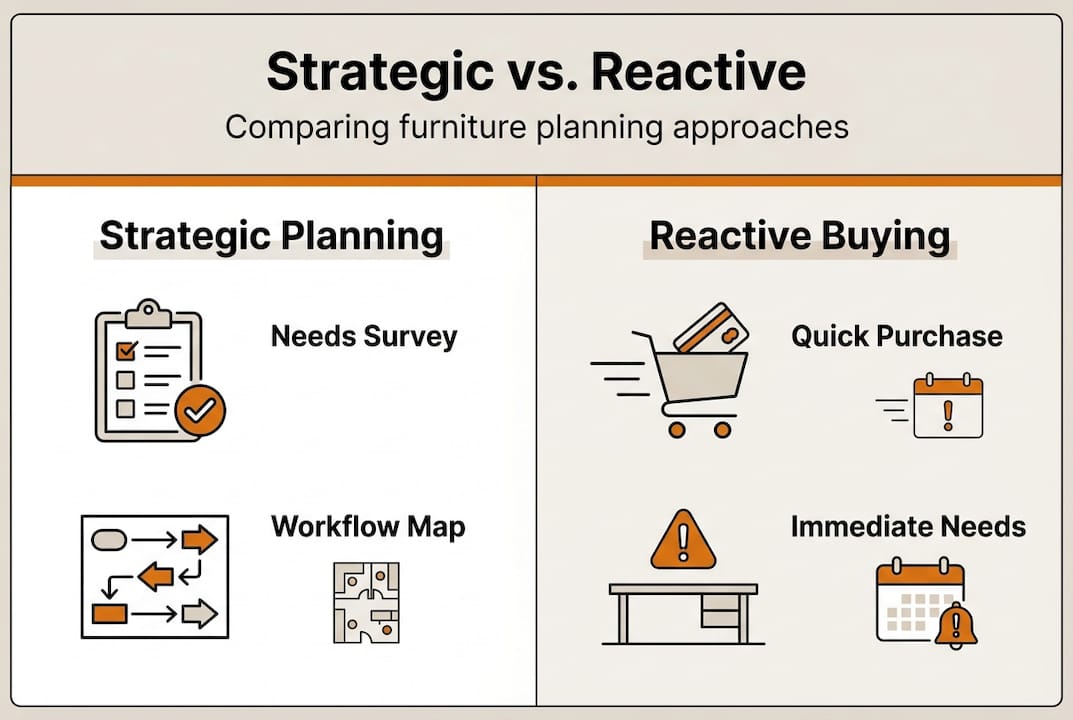
The connection between thoughtful furniture planning and workplace productivity runs deeper than many office managers initially realise. Proper furniture planning improves productivity by ensuring ergonomic comfort and workflow efficiency. When employees work in properly designed environments with supportive seating and appropriately sized work surfaces, they experience less physical discomfort and fewer distractions, allowing them to maintain focus for longer periods.
Ergonomic furniture directly impacts employee wellbeing and performance. Adjustable chairs that support natural spinal curves reduce back pain and fatigue. Height-adjustable desks allow workers to alternate between sitting and standing, improving circulation and energy levels. Properly positioned monitors and keyboards prevent repetitive strain injuries that lead to absenteeism and reduced productivity.
Hybrid working models have fundamentally changed how organisations must approach furniture planning. Hybrid work requires adaptable furniture solutions to accommodate changing office use patterns. When your team splits time between home and office, your workspace needs to serve multiple functions throughout the week.
Key furniture features that support workplace adaptability include:
Collaboration spaces require particular attention in hybrid environments. Your office becomes primarily a place for teamwork and connection rather than individual heads-down work. Furniture planning must balance collaborative areas with quiet zones where employees can concentrate when they choose to work on-site.
Pro Tip: Invest in adjustable and modular furniture from the start to future-proof your office layout. This flexibility allows you to adapt your workspace as your team grows or your working patterns evolve without requiring complete refurbishment.
Successful corporate furniture planning requires balancing multiple factors that influence both immediate functionality and long-term value. Understanding these considerations helps you make informed decisions that serve your organisation’s specific needs.

| Material | Durability | Maintenance | Cost | Best Use |
|---|---|---|---|---|
| Mesh | High | Low | Medium | Task chairs, breathable seating |
| Leather | Very High | Medium | High | Executive seating, boardrooms |
| Fabric | Medium | High | Low to Medium | General office seating |
| Laminate | High | Low | Low to Medium | Desks, storage units |
| Solid wood | Very High | Medium | High | Executive desks, conference tables |
| Steel | Very High | Very Low | Medium | Filing cabinets, storage frames |
Space planning forms the foundation of effective furniture selection. Measure your office carefully and create scaled layouts before committing to purchases. Consider circulation paths, fire safety requirements, and natural light access. Optimising workspace layout supports better use of available space and employee satisfaction.
Ergonomics should drive furniture specifications rather than being an afterthought. UK workplace regulations require employers to provide suitable workstations and equipment. Beyond compliance, ergonomic furniture reduces sick leave and boosts morale. Prioritise adjustable features that accommodate different body types and working preferences.
Aesthetics influence how employees and visitors perceive your organisation. Furniture choices communicate your brand values and culture. Contemporary designs with clean lines suit tech companies and creative agencies. Traditional wood finishes may better reflect professional services firms. Colour psychology affects mood, so consider how furniture tones interact with your existing décor.
Budget planning requires looking beyond initial purchase prices. Durability and style balance cost with appearance when selecting office furniture. Higher-quality pieces cost more upfront but last longer and require less frequent replacement. Calculate total cost of ownership over five to ten years rather than focusing solely on immediate expenditure.
Sustainability considerations increasingly influence corporate furniture decisions. Look for manufacturers using responsibly sourced materials and offering furniture take-back programmes. Durable furniture that lasts decades proves more sustainable than cheaper items requiring frequent replacement. Many UK businesses now prioritise suppliers with strong environmental credentials to support their own sustainability commitments.
Critical elements to evaluate during furniture planning include:
Pro Tip: Engage department heads, team leaders, and employee representatives early in the planning process. Their insights about daily work patterns and pain points with current furniture help you avoid costly mistakes and ensure your final selections genuinely meet user needs.
Implementing corporate furniture planning effectively requires a structured approach that moves from assessment through to installation. Following these sequential steps helps ensure successful outcomes that meet your organisation’s needs.
Conduct a comprehensive needs assessment by surveying employees about their current workspace challenges and requirements. Document how different teams use office space throughout the week. Identify specific pain points like insufficient storage, uncomfortable seating, or inadequate meeting areas. This foundation ensures your furniture choices address real problems rather than assumptions.
Measure your office space accurately and create detailed floor plans showing existing infrastructure like power outlets, windows, and structural columns. Note ceiling heights, doorway widths, and lift dimensions that affect furniture delivery. Consider future expansion plans that might require reconfiguring your layout. Accurate spatial data prevents purchasing furniture that does not fit or blocks essential access.
Develop furniture specifications based on your needs assessment and space analysis. Define required features for different furniture categories. Specify ergonomic adjustability ranges, size parameters, material preferences, and aesthetic requirements. Create a prioritised list distinguishing essential features from nice-to-have options to guide budget allocation.
Research suppliers and furniture ranges that match your specifications and budget. Request samples or visit showrooms to evaluate quality firsthand. Compare warranty terms, delivery timescales, and after-sales support. Structured planning and professional consultation improve furniture procurement outcomes significantly. Consider engaging workplace consultants for larger projects requiring specialist expertise.
Create detailed budget projections including furniture costs, delivery charges, installation fees, and contingency funds for unexpected requirements. Explore bulk order discounts and package deals that reduce per-unit costs. Factor in any disposal costs for existing furniture. Align your budget timeline with financial planning cycles to secure necessary approvals.
Develop implementation plans that minimise disruption to ongoing operations. Schedule furniture delivery and installation during quieter periods or in phases that allow teams to continue working. Coordinate with building management regarding lift bookings and loading bay access. Communicate timelines clearly to affected employees so they can prepare.
Arrange professional installation for complex items like height-adjustable desks and modular storage systems. Proper assembly ensures safety and preserves warranties. Train employees on adjustable furniture features so they gain full ergonomic benefits. Provide guidance on optimal desk and chair settings for different body types.
Gather feedback after implementation to identify any adjustments needed. Some furniture arrangements may require tweaking once employees use them in real working conditions. Address concerns promptly to maximise satisfaction with your new workspace. Document lessons learned to inform future furniture planning projects.
Pro Tip: Plan for future growth and technology upgrades when selecting furniture. Choose desks with cable management systems that accommodate evolving device requirements. Select modular storage that expands as your team grows. This forward-thinking approach protects your investment and reduces the need for premature replacement.
Transforming your workspace through strategic furniture planning becomes simpler when you partner with specialists who understand UK office needs. Furniture For Business offers comprehensive ranges of commercial furniture designed specifically for productivity and comfort. Our office chairs selection includes ergonomic task seating and executive options that support employee wellbeing throughout the workday.
Discover height-adjustable office desks that accommodate hybrid working patterns and promote healthier working postures. Browse our office storage solutions to keep workspaces organised and efficient. With free mainland UK delivery, bulk order pricing, and expert guidance, we help office managers create workspaces that truly work for their teams.
Corporate furniture planning delivers improved productivity through ergonomic comfort, optimised space utilisation that maximises your office footprint, and future-proofed layouts that adapt as your business evolves. Strategic planning also reduces long-term costs by selecting durable furniture that lasts and avoiding expensive mistakes from reactive purchasing.
Corporate furniture planning takes a holistic, strategic approach that considers workflow, culture, and long-term needs before selecting specific items. Simple furniture buying focuses on immediate requirements without considering how pieces work together or support organisational goals. Planning ensures cohesive environments where every element serves your broader workspace strategy.
Begin by conducting a thorough needs assessment, surveying employees about workspace challenges and documenting how teams actually use your office. Measure your space accurately and create detailed floor plans. Define clear objectives for what you want your workspace to achieve, then develop specifications that address identified needs whilst staying within budget parameters.
Yes, effective furniture planning is essential for hybrid work success. It ensures your office includes flexible furniture that accommodates different users sharing workstations, collaborative spaces for team connection, and adaptable layouts that serve varying occupancy levels throughout the week. Strategic planning balances collaboration areas with quiet zones for focused work.
Ergonomics sits at the core of successful furniture planning because it directly impacts employee health, comfort, and productivity. Properly specified ergonomic furniture reduces musculoskeletal problems, decreases absenteeism, and helps employees maintain focus and energy throughout the day. UK employers also have legal obligations to provide suitable workstations that ergonomic planning helps fulfil.

Phone: 0330 043 4114
VAT no. GB 991 8681 60
Company no. 07250570