Office managers across the UK face a recurring challenge: furniture that looks professional initially but deteriorates within months, forcing expensive replacements and disrupting productivity. Poor durability doesn’t just inflate procurement budgets; it creates uncomfortable workspaces that affect employee wellbeing and operational efficiency. This guide equips you with practical strategies to select, procure, and maintain office furniture that delivers lasting comfort whilst reducing long-term costs.
| Point | Details |
|---|---|
| Durability foundation | Combines robust materials like steel frames, HPL surfaces, and ergonomic design with proper procurement processes. |
| Material superiority | Steel frames and high-pressure laminate surfaces significantly outlast cheaper alternatives in commercial environments. |
| Maintenance impact | Regular upkeep extends furniture lifespan by up to 20%, protecting your investment. |
| Sizing consequences | Incorrect furniture dimensions reduce workplace functionality by up to 35%. |
| Procurement benefits | Formal durability criteria cut replacement frequency by 40% over five years. |
Successful procurement starts long before you place an order. Rushing into furniture purchases without proper preparation leads to mismatched solutions that fail to meet operational needs or durability expectations.
Begin with detailed office space planning. Measure your workspace accurately, noting column positions, electrical outlets, and natural light sources. Survey your team to understand their specific requirements, from height preferences to storage needs. Document these findings to create a clear specification framework.
Establish formal durability and ergonomic standards before engaging suppliers. Define minimum warranty periods, material specifications, and adjustment features you’ll accept. This clarity prevents compromise during negotiations and ensures consistent quality across your procurement.
Budget allocation requires realistic expectations. Quality commercial furniture represents a medium-term investment, not an expense. Plan for 6 to 8 week lead times from order to delivery, allowing adequate scheduling for installation and potential adjustments. Rushing procurement often forces compromises that undermine durability goals.
Evaluate supplier credentials thoroughly. Request detailed warranty documentation and after-sales support procedures. Procurement processes that integrate durability criteria reduce replacement frequency by 40%, improving cost efficiency significantly. A modern office furniture workflow guide can streamline your preparation process.
Key preparation elements:
Material selection determines whether your furniture lasts a decade or needs replacing within three years. The construction quality you choose today directly impacts your replacement budget tomorrow.
Steel frames represent the gold standard for commercial seating. Unlike plastic or composite bases, steel withstands constant weight shifts and movement cycles without cracking or weakening. Properly manufactured steel-framed chairs regularly exceed 10 years of daily use in corporate environments.
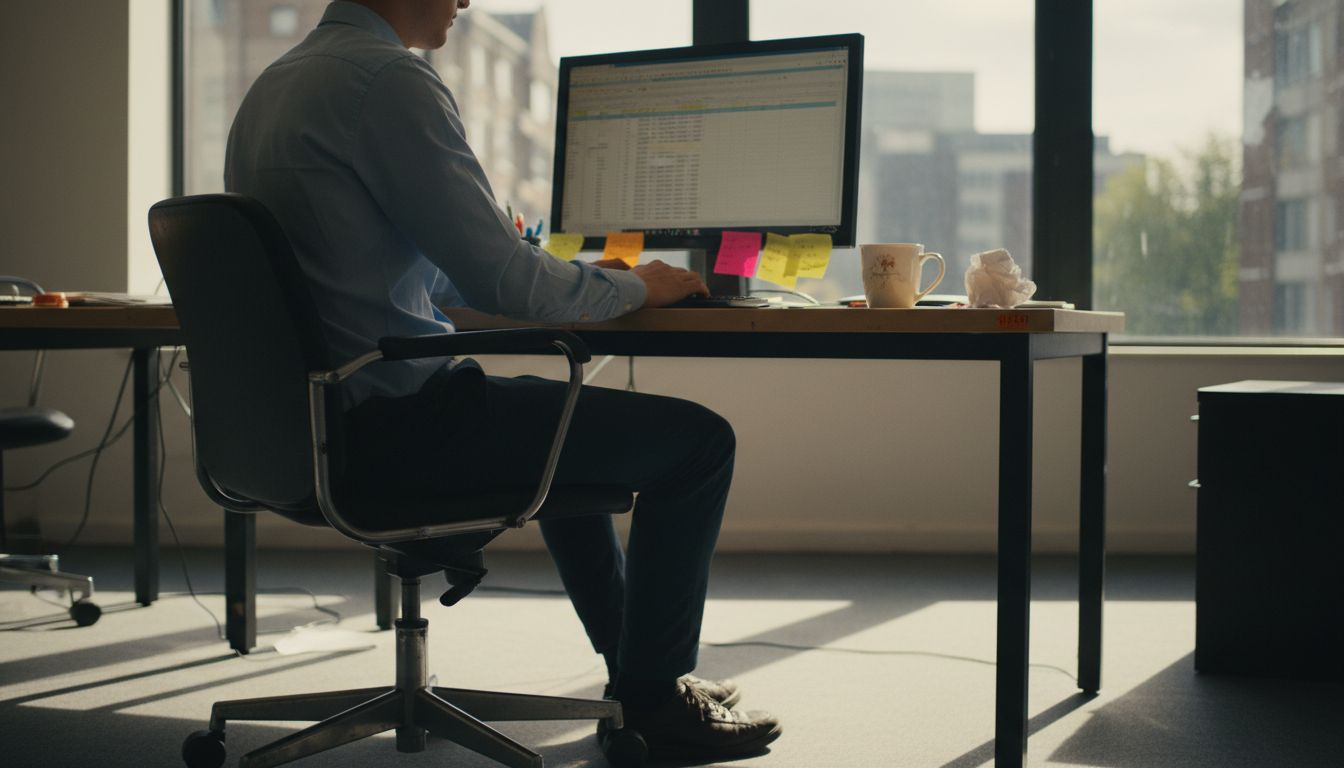
For work surfaces, laminate tops with high-pressure laminate surfaces resist scratches and stains better than veneer or melamine, extending usable desk lifespan by 25%. HPL’s dense construction handles the daily assault of keyboards, coffee cups, and stationery without showing premature wear patterns that plague cheaper alternatives.
Avoid veneer finishes on heavily used desks. Whilst attractive initially, veneers chip and peel at edges where users rest their arms or bump equipment. Melamine surfaces scratch easily and absorb moisture at seams, leading to swelling and degradation. Reserve these materials for low-traffic applications where appearance matters more than durability.
Adjustment mechanisms deserve careful scrutiny. Gas lifts should feature smooth operation across their full range with no sticking or sudden drops. Tilt mechanisms need robust construction with metal components, not plastic housings that crack under stress. Test all adjustments personally before bulk ordering.
| Material type | Typical lifespan | Best applications | Limitations |
|---|---|---|---|
| Steel frames | 10+ years | Seating, high-use areas | Higher initial cost |
| HPL surfaces | 8-12 years | Desks, tables, worktops | Limited colour options |
| Veneer | 3-5 years | Executive areas, low-traffic | Chips easily at edges |
| Melamine | 2-4 years | Budget applications only | Moisture sensitive |
Pro Tip: Request material samples before finalising large orders. Physical testing reveals quality differences that specifications alone don’t capture, particularly in surface finishes and fabric durability.
Construction quality extends beyond materials. Check joint integrity where components connect. Welded joints outlast bolted assemblies in high-stress areas. Examine edge banding on laminate surfaces; it should sit flush without gaps where moisture could penetrate. Understanding smart office furniture advantages helps contextualise how material choices support broader workplace strategies.
Ergonomic features aren’t luxury additions; they’re essential for both user health and furniture longevity. Poorly designed furniture creates discomfort that leads to misuse, accelerating wear and reducing effective lifespan.
Adjustable lumbar support prevents musculoskeletal problems that drive absenteeism whilst ensuring chairs accommodate diverse body types. When users feel comfortable, they adjust furniture correctly rather than forcing awkward positions that stress components. This proper use significantly extends chair life.
Height-adjustable desks with robust lifting mechanisms withstand thousands of adjustment cycles when engineered properly. Look for dual-motor systems in electric models; they distribute load evenly and resist sagging over time. Manual crank systems should operate smoothly without excessive force requirements that discourage regular adjustment.
Ergonomic design reduces premature wear from improper use patterns. Chairs with adequate seat depth adjustments prevent users from perching on edges, which concentrates weight on small areas and damages cushioning. Proper armrest positioning stops users leaning heavily on one side, preventing frame distortion.
Investment in ergonomic features delivers measurable returns beyond furniture longevity. Comfortable workspaces decrease absenteeism whilst increasing focus and output. The cost premium for quality ergonomic furniture often recovers within two years through reduced replacement needs and improved productivity.
Essential ergonomic features for durability:
Pro Tip: Trial different models with actual users before bulk purchasing. Individual preferences vary significantly, and hands-on testing reveals comfort and adjustment issues that specifications don’t communicate. An ergonomic furniture guide provides deeper insight into selecting appropriate features for your workforce.
Procurement processes determine whether durability intentions become workplace reality. Without structured approaches, purchasing decisions default to lowest price rather than best value, undermining longevity goals.
Integrate durability as a formal procurement requirement. Include specific material standards, minimum warranty periods, and construction specifications in tender documents. This prevents suppliers offering cheap alternatives that technically meet basic criteria whilst failing on longevity.
Plan realistic procurement timelines. Most commercial furniture requires 6 to 8 weeks from order confirmation to delivery, particularly for volume purchases or customised specifications. Rushing suppliers encourages corner-cutting that compromises quality.
Define warranty and after-sales support expectations clearly. Specify response times for repairs, replacement part availability periods, and maintenance support. Evaluate suppliers’ support capabilities as rigorously as product specifications.
Ensure accurate sizing through detailed space planning. Choosing the wrong size office furniture reduces workplace functionality by up to 35%, creating inefficiency and discomfort that forces premature replacement. Measure thoroughly and account for circulation space, not just furniture footprints.
Implement staged procurement for large projects. Order samples or small batches first to verify quality matches expectations before committing to full volumes. This approach catches issues early when corrections cost less.
Document all specifications and agreements in writing. Verbal assurances about materials or warranties create disputes later. Written documentation protects your interests and ensures accountability.
Proper procurement practices support broader workspace strategies. An office furnishing 2026 guide demonstrates how procurement fits within comprehensive workplace planning that addresses both immediate needs and long-term objectives.
Even the most durable furniture requires regular maintenance to reach its potential lifespan. Neglecting simple upkeep accelerates wear and creates safety hazards that force premature replacement.
Regularly inspect and tighten all fixings. Everyday use gradually loosens bolts and screws, particularly on seating where movement is constant. Monthly checks prevent minor looseness becoming structural failures. Keep appropriate tools accessible to facilities teams for quick interventions.
Use only manufacturer-recommended cleaning products. Generic cleaners often contain chemicals that damage specialised finishes or fabrics. Following manufacturer guidance preserves warranties whilst protecting surface integrity. Create cleaning schedules that match usage intensity rather than arbitrary frequencies.
Schedule periodic professional maintenance checks. Regular maintenance, including tightening fixings and cleaning, extends office furniture lifespan by up to 20%. Professional inspections identify wear patterns early, when repairs cost less than replacements. Document all maintenance activities to track patterns and inform future procurement decisions.
Train staff on correct furniture usage. Many adjustment mechanisms suffer damage from improper operation rather than normal wear. Brief training sessions prevent misuse whilst helping employees maximise ergonomic benefits. Include usage guidance in onboarding programmes for consistency.
Maintenance priorities:
Implementing a modern office furniture workflow helps systematise maintenance alongside other facilities management responsibilities. Proper office storage solutions also support longevity by reducing clutter that damages furniture through constant contact.
Recognising frequent procurement and usage errors helps you avoid costly consequences whilst implementing effective corrections when problems emerge.
Ignoring warranty coverage during procurement leads to 25% higher total repair and replacement costs over furniture lifecycles. Without comprehensive warranties, minor defects become expensive repairs or premature replacements. Always verify warranty terms before finalising purchases, ensuring coverage matches expected usage intensity.
Omitting durability criteria from procurement specifications significantly increases replacement frequency. When price becomes the dominant selection factor, suppliers naturally offer minimum viable quality. Formal durability requirements force consideration of long-term value over short-term savings.
Buying incorrect furniture sizes reduces workplace functionality by 35%, creating inefficiency that frustrates users and accelerates wear through improper use. Oversized desks waste valuable floor space whilst undersized seating forces awkward postures that damage both furniture and user health. Measure accurately and plan circulation paths before ordering.
Neglecting maintenance protocols shortens furniture lifespan substantially whilst escalating replacement costs. Simple tasks like tightening fixings and proper cleaning prevent minor issues becoming major failures. Establish clear maintenance responsibilities and schedules.
Corrective actions for common mistakes:
When choosing office chairs 2026, avoiding these common mistakes becomes particularly crucial as seating represents both the highest usage intensity and greatest user comfort impact. Similarly, understanding how to furnish office 2026 to cut back pain reinforces why avoiding shortcuts delivers better long-term outcomes.
Applying this guide’s recommendations delivers measurable improvements across cost, lifespan, comfort, and procurement efficiency. Understanding realistic outcomes helps set appropriate expectations whilst demonstrating value to stakeholders.
Replacement frequency typically decreases by approximately 40% within five years when procurement processes integrate durability criteria as formal requirements. This reduction directly cuts procurement workload whilst stabilising budgets through predictable replacement cycles rather than reactive purchasing.
Furniture lifespan commonly extends to 7 to 10 years with proper material selection and maintenance protocols. Steel-framed seating regularly exceeds 10 years in well-maintained environments, whilst HPL-surfaced desks maintain appearance and functionality for 8 to 12 years. These extended lifecycles dramatically improve return on investment compared to cheaper alternatives requiring replacement every 3 to 4 years.
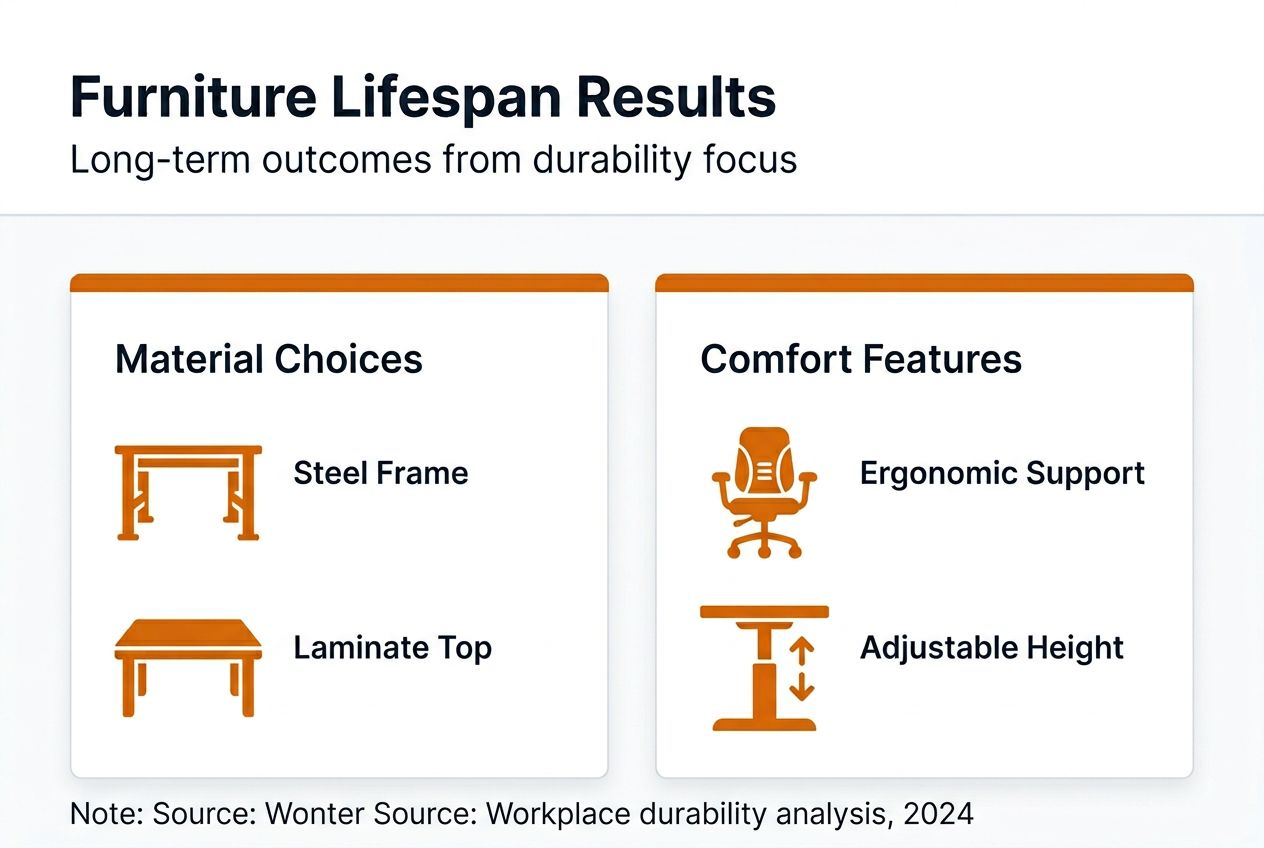
User comfort improves substantially with ergonomic, durable furniture that maintains adjustment functionality throughout its life. Employees experience fewer musculoskeletal complaints whilst productivity benefits from reduced discomfort-related distractions. These improvements support broader workplace wellbeing initiatives.
Procurement costs optimise over medium to long terms by reducing ad hoc replacement purchases that disrupt budgets. Initial investments in quality furniture appear higher but distribute costs more effectively across extended lifecycles, lowering total cost of ownership significantly.
| Approach | Initial cost | Typical lifespan | Replacement frequency | Total 10-year cost |
|---|---|---|---|---|
| Modular steel/HPL | Higher | 8-10 years | Once in 10 years | Lower overall |
| Traditional wood veneer | Medium | 4-6 years | Twice in 10 years | Medium overall |
| Budget melamine/plastic | Lower | 2-3 years | 3-4 times in 10 years | Higher overall |
These outcomes depend on implementing all recommended practices consistently rather than selecting elements in isolation. Combining proper material selection, ergonomic design, structured procurement, and regular maintenance creates synergistic benefits that exceed individual improvements.
Ready to implement these durability principles in your workspace? Furniture For Business offers carefully selected office furniture designed for lasting commercial performance. Our range combines the robust materials and ergonomic features discussed throughout this guide.
Explore our office chairs collection featuring steel frames and adjustable ergonomic support for extended comfort and durability. Browse office desks with HPL surfaces and height-adjustable mechanisms built to withstand daily commercial use. Complete your workspace with practical office storage solutions that maintain organisation whilst supporting long-term functionality. Each product is selected to deliver the reliability and performance your procurement deserves.
Durable office furniture combines robust materials like steel frames and HPL surfaces with ergonomic design and quality construction that withstands daily commercial use. It must function reliably without frequent repairs for a minimum of 7 to 10 years in typical office environments.
Select steel frames for seating and high-pressure laminate surfaces for desks to ensure scratch and stain resistance with extended lifespan. Avoid cheaper veneers and melamine in heavy-use areas where their limitations accelerate replacement needs.
Regularly tighten fixings and clean surfaces using manufacturer-approved products to prevent premature wear. Schedule periodic professional inspections to detect early wear patterns when repairs remain simple and cost-effective. A structured office furniture maintenance workflow ensures consistent care across your workspace.
Incorrect sizing reduces workplace functionality by up to 35%, causing user discomfort and operational inefficiency that forces premature replacement. Accurate measurements and thorough space planning prevent these costly mistakes whilst optimising workspace utility.

Phone: 0330 043 4114
VAT no. GB 991 8681 60
Company no. 07250570