Many UK office managers believe collaborative office furniture is simply a trend, stylish pieces that look good in open-plan offices. The reality is far more strategic. Collaborative furniture represents a fundamental shift in how we design workspaces to support hybrid teams, flexible working patterns, and genuine teamwork. This guide explains exactly what collaborative office furniture entails, which types and features matter most in 2026, and how to select and integrate these solutions effectively for your UK business.
| Point | Details |
|---|---|
| Definition and purpose | Collaborative office furniture is designed to support team interactions whilst offering flexibility for hybrid work setups |
| Essential features | Modularity, mobility, technology integration, and ergonomic design are critical for adapting to changing work patterns |
| Selection criteria | Prioritise durability, adaptability, aesthetics, and employee involvement when choosing furniture for your hybrid workspace |
| Wellbeing impact | Properly integrated ergonomic collaborative furniture can reduce back pain by 30% amongst office workers |
Collaborative office furniture differs fundamentally from traditional office setups. Where conventional furniture creates individual workstations with fixed layouts, collaborative furniture supports team interactions whilst maintaining flexibility for hybrid work models. This furniture category encompasses everything from modular desks and mobile seating to storage solutions that adapt as team sizes fluctuate.
The purpose extends beyond aesthetics. Collaborative furniture creates environments where spontaneous discussions happen naturally, where teams can reconfigure spaces quickly for different projects, and where individual focus work coexists with group activities. In 2026, with UK businesses navigating hybrid work patterns, this flexibility has become essential rather than optional.
Traditional office furniture typically includes fixed desks, stationary filing cabinets, and individual workstations that rarely move. Collaborative furniture flips this model. Think height adjustable benching systems, mobile whiteboards, modular sofas on castors, and storage units that double as space dividers. These pieces share common characteristics:
Hybrid working demands this adaptability. When your team splits time between home and office, the workspace must serve different functions on different days. Monday might require eight desks for focused work. Wednesday needs four collaborative tables for workshops. Friday sees three informal meeting zones for catch-ups. Collaborative furniture makes these transformations possible without costly refits or compromising on quality.
The distinction matters for procurement teams. Ordering traditional office desks and chairs creates static environments. Specifying collaborative furniture builds dynamic spaces that evolve with your business needs. This shift affects everything from initial budgets to long-term space planning. Understanding these differences helps you make informed decisions that genuinely support how your teams work today, not how offices functioned a decade ago.
Storage presents another key difference. Traditional filing cabinets anchor to walls. Collaborative office storage moves with teams, creating temporary boundaries or opening spaces as needed. This flexibility proves invaluable when team structures change or projects require different spatial arrangements.
Several furniture categories dominate collaborative workspace design in 2026. Height adjustable desks and modular seating rank amongst the most popular for their adaptability. Benching systems allow multiple workers to sit together whilst maintaining personal space. Mobile pedestals provide individual storage that travels between workstations. Acoustic panels create privacy without permanent walls.
Seating options have evolved significantly. Traditional office chairs serve individual desks. Collaborative seating includes modular sofas that reconfigure into different shapes, stools with 360-degree swivel for quick conversations, and perching stools for brief stand-up meetings. Many pieces incorporate castors, making spatial reconfigurations effortless. Upholstery choices now prioritise durability and cleanability, essential when furniture serves multiple users daily.

Desks in collaborative environments serve varied purposes. Height adjustable options accommodate sitting and standing throughout the day, supporting wellbeing whilst enabling quick posture changes during long meetings. Flip-top tables fold away when not needed, maximising floor space. Collaborative tables often feature integrated power and data ports, eliminating cable chaos during team sessions. Surface materials withstand heavy use, from laminate finishes to solid wood tops that age gracefully.
Storage solutions have become multifunctional. Mobile pedestals store personal items whilst doubling as additional seating during impromptu gatherings. Tall storage units divide spaces without permanent construction, creating temporary meeting zones or quiet areas. Lockers replace fixed desks for hot-desking teams, giving everyone secure storage regardless of where they sit each day.
Pro Tip: Invest in furniture with multiple functions to maximise value. A storage unit on wheels can serve as a space divider, additional surface, and archive solution, adapting as your needs change without requiring new purchases.
Technology integration separates basic furniture from truly collaborative pieces. Built-in wireless charging pads eliminate cable clutter. USB ports and power outlets embedded in table surfaces keep devices charged during long sessions. Cable management systems hide wires whilst keeping them accessible. Some advanced pieces include integrated screens or whiteboards, creating all-in-one collaboration hubs.
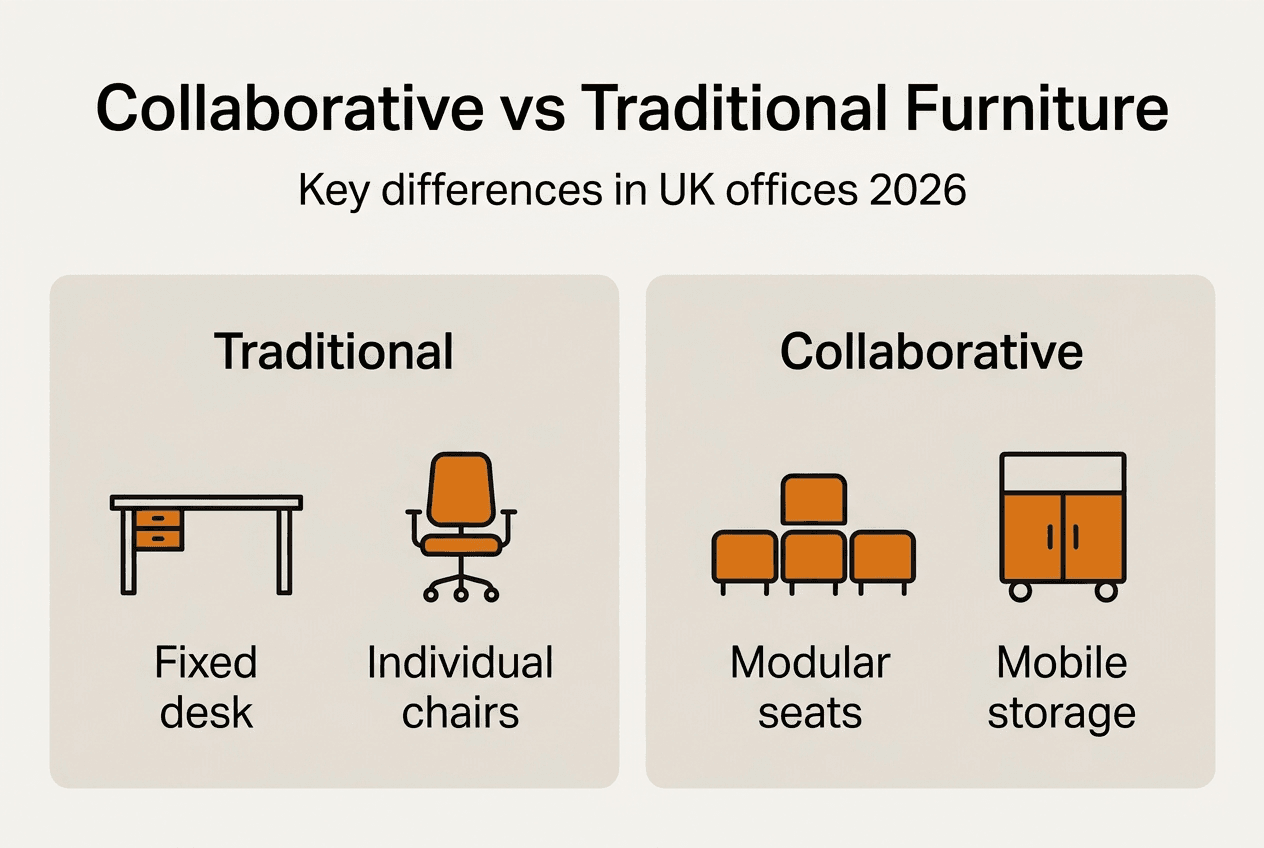
| Feature | Traditional furniture | Collaborative furniture |
|---|---|---|
| Mobility | Fixed position | Wheels or lightweight |
| Configuration | Static layout | Modular and adaptable |
| Technology | Separate accessories | Integrated power and data |
| Ergonomics | Single posture | Multiple positions |
| Durability | Individual use | Heavy multi-user duty |
Ergonomic features extend beyond basic comfort. Collaborative office chairs offer adjustable arms, lumbar support, and seat depth controls, accommodating different body types within shared spaces. Height adjustable office desks promote movement throughout the day, reducing sedentary behaviour during collaborative work. Footrests, monitor arms, and keyboard trays complement core furniture, creating truly ergonomic collaborative zones.
Modularity defines successful collaborative furniture. Individual pieces connect to form larger configurations, then separate for different uses. A set of six mobile tables might combine into one large conference table for Monday’s all-hands meeting, split into three paired desks for Tuesday’s project work, and arrange as individual focus stations by Friday. This flexibility maximises your furniture investment whilst supporting diverse work styles.
Selecting collaborative furniture requires balancing multiple factors. Durability and design form the foundation, particularly when furniture serves many users daily. Commercial-grade construction withstands heavy use. Quality mechanisms in height adjustable desks endure thousands of cycles. Upholstery fabrics resist staining and wear. These durability features protect your investment whilst maintaining professional appearance.
Ergonomics cannot be compromised. Collaborative spaces still require proper support for extended work sessions. Adjustable seating accommodates different body types. Desk heights suit various tasks from typing to sketching. Lighting complements furniture placement, reducing eye strain during team sessions. Poor ergonomics undermine collaboration by creating discomfort that distracts from productive work.
Aesthetics matter more than many procurement teams initially recognise. Furniture appearance affects how employees perceive and use spaces. Cohesive design languages create professional environments that clients trust. Colour psychology influences mood and energy levels. Mixing textures adds visual interest without overwhelming spaces. Beautiful furniture encourages use, whilst dated or mismatched pieces get avoided regardless of functionality.
Adaptability determines long-term value. Furniture that serves only one configuration becomes obsolete as your business evolves. Modular systems grow with your team. Mobile pieces relocate as departments shift. Neutral finishes transition between design trends. This adaptability extends furniture lifespan significantly, improving return on investment beyond initial purchase price.
Pro Tip: Create a furniture evaluation checklist scoring each option on durability, ergonomics, aesthetics, and adaptability. This systematic approach prevents emotional decisions whilst ensuring selections genuinely meet your hybrid work requirements.
Your evaluation checklist should include:
Involving teams in furniture selection increases adoption rates. Survey employees about current furniture pain points. Test pieces with representative users before bulk orders. Gather feedback on prototypes or showroom visits. This involvement creates ownership whilst surfacing practical concerns you might miss. People use furniture they helped choose far more enthusiastically than imposed solutions.
The selection process should follow clear steps:
Balancing cost and quality requires looking beyond initial prices. Cheap furniture fails quickly, requiring replacement within months. Quality pieces last years, spreading costs over extended periods. Calculate cost per year of expected service life rather than comparing sticker prices. Factor in warranty coverage, repair options, and supplier reputation. The comprehensive buying guide explores these considerations in depth.
Consider your specific hybrid work patterns when selecting furniture. Teams that hot-desk need more mobile storage and fewer fixed workstations. Departments with regular client meetings require furniture that transitions quickly between work and presentation modes. Creative teams benefit from informal seating that encourages brainstorming. Understanding these nuances helps you specify furniture that genuinely supports your unique requirements rather than generic office needs.
The modern office furniture workflow guide provides frameworks for mapping furniture choices to actual work processes, ensuring selections enhance rather than hinder productivity.
Successful integration starts with ergonomic setup. Even the best collaborative furniture fails if positioned poorly. Monitor heights should align with eye level. Keyboard positions should allow relaxed shoulders. Seating should support natural spinal curves. These principles apply whether someone works individually or collaboratively. Proper furniture integration reduces back pain significantly when combined with ergonomic principles.
Layout strategies determine how effectively furniture supports collaboration. Create distinct zones for different activities rather than scattering furniture randomly. Designate areas for focused work, collaborative sessions, informal discussions, and private calls. Use furniture placement and types to signal appropriate behaviours in each zone. Collaborative tables near windows encourage creative thinking. Quiet corners with individual desks support concentration. This intentional zoning helps teams navigate hybrid spaces intuitively.
Collaboration zones benefit from specific furniture arrangements:
Wellbeing extends beyond physical comfort. Collaborative furniture choices affect mental health and job satisfaction. Providing options empowers employees to control their environment. Some days require heads-down focus at individual desks. Other days thrive on energetic group work at collaborative tables. Offering both through thoughtful furniture selection demonstrates organisational care for employee needs.
The ergonomic furniture guide details specific setup recommendations for various furniture types, helping you maximise wellbeing benefits through proper implementation.
| Furniture type | Primary productivity benefit | Wellbeing impact |
|---|---|---|
| Height adjustable desks | Reduces sedentary time by 32% | Decreases back pain and improves energy |
| Modular seating | Increases spontaneous collaboration by 45% | Enhances social connection and reduces isolation |
| Mobile storage | Saves 15 minutes daily in material retrieval | Reduces frustration and supports autonomy |
| Acoustic panels | Improves concentration by reducing noise 40% | Lowers stress from auditory distractions |
Maintenance programmes protect your furniture investment whilst sustaining wellbeing benefits. Regular cleaning maintains hygiene in shared spaces. Periodic mechanism checks ensure adjustable features continue working smoothly. Prompt repairs prevent small issues becoming safety hazards. Scheduled deep cleaning refreshes upholstery and surfaces. These maintenance activities extend furniture life whilst demonstrating ongoing commitment to employee comfort.
Training employees on proper furniture use maximises benefits. Many workers have never used height adjustable desks or modular seating systems. Brief tutorials on adjustment mechanisms, optimal configurations, and care instructions increase adoption rates. Visual guides posted near furniture remind people of best practices. This education investment pays dividends through better ergonomics and longer furniture lifespan.
Quality office chairs with proper adjustment training reduce musculoskeletal complaints significantly. When people understand how to customise their seating, they experience fewer aches and greater comfort throughout workdays. This knowledge transforms furniture from passive objects into active wellbeing tools.
Monitor usage patterns after implementing collaborative furniture. Which pieces get used most frequently? Which configurations emerge organically? Where do people avoid sitting? These observations inform future furniture decisions whilst revealing opportunities to optimise current layouts. Employee feedback combined with usage data creates powerful insights for continuous improvement.
Furniture For Business specialises in durable, design-led collaborative furniture for UK hybrid workspaces. Our curated collections balance quality with value, helping procurement teams furnish offices for teams of 5 to 500 people. We understand the challenges of sourcing furniture that adapts to changing work patterns whilst maintaining professional aesthetics.
Our office chairs range includes ergonomic task seating and modular collaborative options suitable for dynamic team environments. The office desks collection features height adjustable systems and benching solutions that reconfigure as your needs evolve. For dedicated collaboration spaces, explore our meeting room furniture designed specifically for productive team sessions.
We offer bulk order pricing, special bundles, and easy returns, with free delivery to UK mainland addresses. Our team provides expert guidance on selecting furniture that genuinely supports your hybrid work requirements, not just generic office solutions.
Collaborative office furniture comprises pieces designed specifically to support teamwork and flexible working patterns. Unlike traditional fixed workstations, these items prioritise mobility, modularity, and adaptability. Examples include height adjustable benching systems, mobile storage units, modular seating, and reconfigurable tables that accommodate changing team sizes and work styles throughout the day.
Hybrid work requires spaces that serve different functions on different days. Collaborative furniture enables quick reconfigurations without costly renovations. Mobile pieces move easily between layouts. Modular systems expand or contract as team sizes fluctuate. Technology integration supports seamless transitions between individual and group work. This flexibility proves essential when some employees work remotely whilst others occupy the office on varying schedules.
Prioritise durability through commercial-grade construction and quality mechanisms that withstand heavy multi-user environments. Seek ergonomic design with adjustable features accommodating different body types and work styles. Ensure adaptability through modular configurations and mobile elements. Consider aesthetics that align with your brand whilst creating welcoming spaces. Technology integration including power access and cable management adds significant practical value.
Yes, significantly. Ergonomic collaborative furniture reduces physical discomfort by supporting proper posture during extended work sessions. Height adjustable desks decrease sedentary behaviour, lowering back pain risk by up to 30%. Modular seating options allow posture changes throughout the day. Well-designed collaborative spaces also enhance social connection, reducing isolation common in hybrid work models. The combination of physical comfort and social support creates measurable wellbeing improvements.

Phone: 0330 043 4114
VAT no. GB 991 8681 60
Company no. 07250570