Private office furniture is often mistaken for generic office décor, but it’s a strategic investment that balances security, brand identity, and functionality for hybrid working. UK office managers and procurement teams face the challenge of selecting furnishings that deliver durability, design, and value for teams of 5 to 500 employees. This guide clarifies what private office furniture truly means, explores essential features and innovations like acoustic pods, and provides actionable selection criteria tailored to UK businesses in 2026.
| Point | Details |
|---|---|
| Private office furniture ensures security and brand identity | It supports lockable, exclusive-use environments with tailored functionality for businesses. |
| Essential features include lockable desks and ergonomic chairs | Design-led acoustic solutions enhance privacy and focus in hybrid workspaces. |
| Acoustic pods offer certified sound reduction | Innovations like the HushFree S Hybrid provide distraction-free zones meeting ISO standards. |
| Selection affects productivity and client impressions | Choosing the right furniture impacts staff wellbeing and professional atmosphere. |
Private office furniture refers to furnishings designed specifically for lockable, secure, and exclusive-use office environments. Unlike general office furniture, which serves open-plan or shared spaces, private office furniture integrates features suited to privacy, security, and hybrid working demands. The terms ‘private office’ and ‘serviced office’ often overlap, with the latter describing a service model that includes management of cleaning, reception, and utilities. However, private office furniture focuses on the physical elements that create a functional, secure workspace rather than the service wrapper around it.
Understanding this distinction helps procurement teams avoid confusion when sourcing furniture. Serviced offices typically come pre-furnished, but businesses outfitting their own private offices need to select pieces that reflect their brand identity and operational needs. Private office furniture encompasses executive desks, ergonomic chairs, lockable storage, and acoustic solutions. These elements support not just comfort but also data security, confidentiality, and a professional atmosphere that impresses clients and attracts talent.
Essential elements of private office furniture include:
Private office furniture plays a critical role in supporting durable office furniture strategies and aligns with broader B2B office furniture procurement goals. By selecting furnishings that balance aesthetics with functionality, UK businesses create workspaces that enhance productivity, safeguard assets, and reflect their values. This foundation sets the stage for exploring the specific features and benefits that make private office furniture a strategic investment.
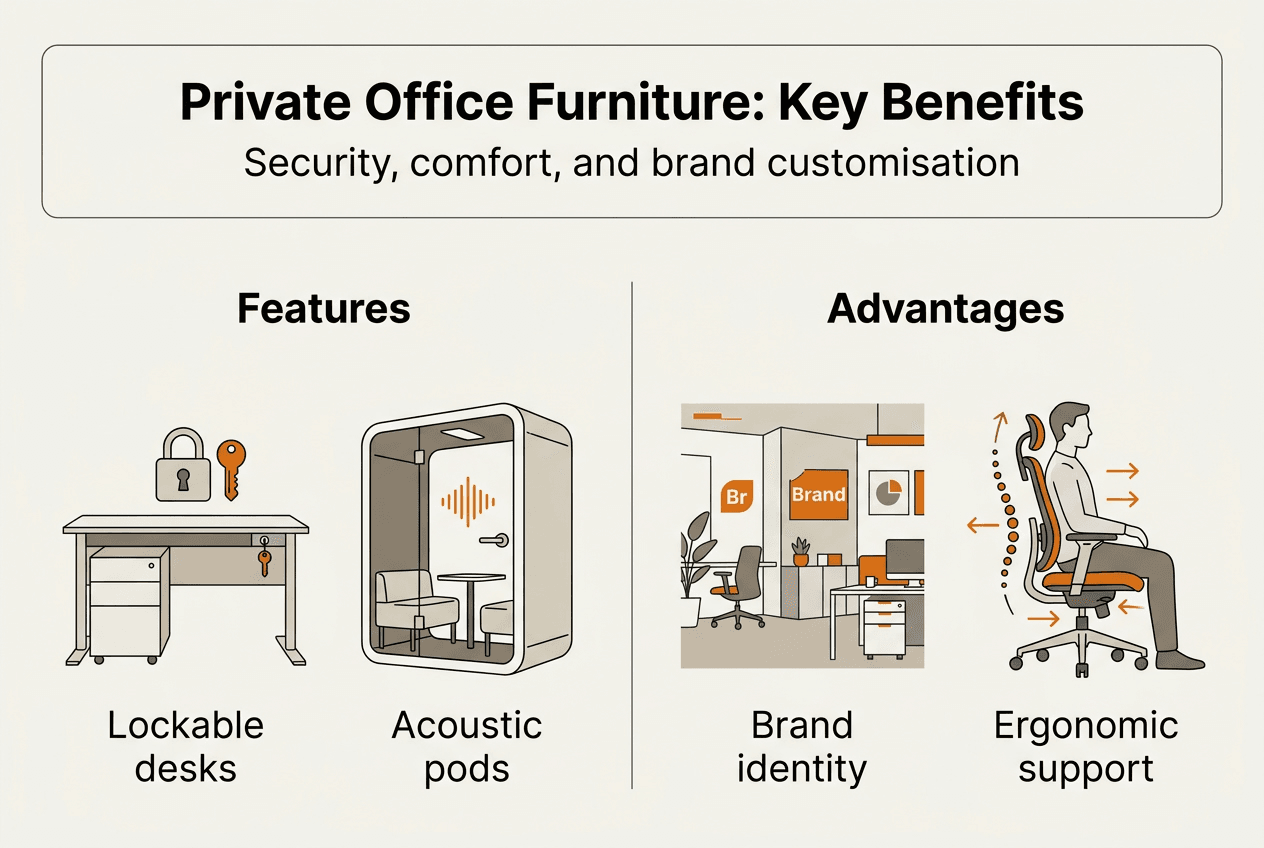
Private office furniture delivers tangible advantages that extend beyond basic workspace provision. Security features integrated into desks, cabinets, and storage systems protect physical data, equipment, and confidential documents. Private offices offer enhanced security compared to open-plan layouts or co-working spaces, making lockable furniture essential for businesses handling sensitive information. This security extends to controlled access, where only authorised personnel can enter the space, reducing risks of data breaches or equipment theft.
Brand customisation represents another significant benefit. Private offices allow for brand identity customisation, enabling businesses to select furniture colours, materials, and styles that reflect their corporate image. This flexibility supports cohesive interior design across multiple private offices, reinforcing brand recognition and creating a professional atmosphere that impresses clients and partners. Custom furniture also accommodates specific operational needs, such as height-adjustable desks for hybrid workers or modular storage for growing teams.
Private office furniture supports productivity in hybrid working environments by providing ergonomic setups and acoustic privacy. Ergonomic chairs and desks reduce physical strain, improving staff comfort and reducing absenteeism linked to musculoskeletal issues. Acoustic solutions, including panels and pods, minimise distractions from neighbouring spaces, enabling focused work and confidential discussions. These features contribute to enhanced staff wellbeing, which directly impacts retention and performance.
Additional benefits include:
Pro Tip: Request a detailed specification sheet from suppliers to clarify security features like locking mechanisms, load capacities, and customisation options before committing to bulk orders.
“Private offices create a professional environment that impresses clients and attracts top talent, making furniture selection a strategic decision rather than a purely functional one.”
By prioritising these features, UK businesses position themselves to support executive office design strategies that balance aesthetics, functionality, and security. The next section explores how modern innovations in acoustic pods and ergonomic design further enhance private office environments.
Modern private office furniture incorporates innovations that address hybrid working challenges and evolving workplace expectations. Acoustic pods have emerged as soundproof workspaces that enhance focus in open or hybrid office plans. Acoustic pods like the HushFree S Hybrid provide sound reduction of 30.2 dB, creating a distraction-free zone for confidential calls, video meetings, or concentrated tasks. These pods integrate seamlessly into private offices or adjacent open areas, offering flexibility for businesses balancing individual and collaborative work.
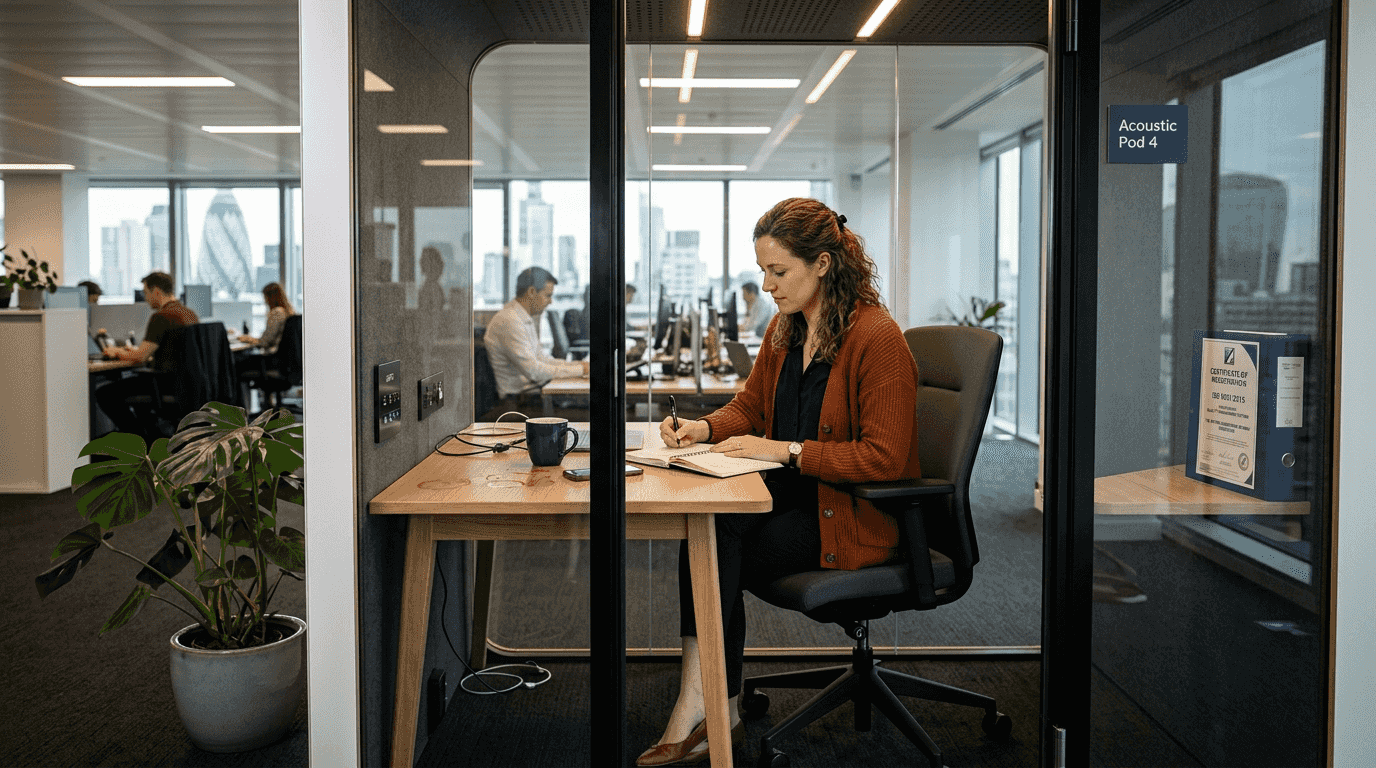
The HushFree S Hybrid exemplifies the technical sophistication available in 2026 acoustic solutions. The HushFree S Hybrid meets ISO 23351-1:2020, an internationally recognised acoustic standard, ensuring reliable performance. Below is a summary of its key specifications:
| Feature | Specification |
|---|---|
| Sound reduction | 30.2 dB |
| ISO compliance | ISO 23351-1:2020 |
| Lighting | Adjustable LED with daylight simulation |
| Ventilation | Quiet fan system with air circulation |
| Dimensions | 1200mm x 1200mm x 2300mm (W x D x H) |
| Power | Integrated power sockets and USB ports |
Ergonomic furniture remains foundational to private office setups. Height-adjustable desks, lumbar-support chairs, and monitor arms reduce strain and improve posture, essential for hybrid and in-office work. These features address the physical demands of extended screen time and varied working positions, supporting staff health and productivity. Ergonomic furniture also signals to employees that their wellbeing is valued, enhancing morale and retention.
Key ergonomic and acoustic considerations for 2026 include:
Pro Tip: Choose furniture models and pods meeting recognised standards for health and safety compliance, such as ISO certifications for acoustics and BSI standards for ergonomic design, to ensure long-term value and staff protection.
These innovations support office comfort improvements and align with strategies to furnish offices to cut back pain. By integrating acoustic and ergonomic solutions, UK businesses create private offices that balance focus, collaboration, and wellbeing. The following section provides actionable guidance on selecting private office furniture tailored to your business needs.
Selecting private office furniture requires a structured approach that balances quality, value, and hybrid working needs. UK office managers and procurement teams must consider space constraints, workforce size, and operational priorities to make informed decisions. The UK flexible workspace market exceeds £2 billion, indicating strong demand for private office spaces and the furniture that supports them. This growth reflects businesses’ recognition that well-furnished private offices enhance productivity, client impressions, and staff satisfaction.
Start by assessing your space and workforce requirements. Measure available square footage, accounting for circulation paths, storage needs, and future expansion. For teams of 5 to 500 employees, consider modular furniture that scales as headcount grows. Hybrid working patterns also influence selection, as private offices may serve rotating staff or hot-desking arrangements. Prioritise durability, design, and ergonomics to ensure furniture withstands daily use and supports varied working styles.
Security features warrant careful evaluation. Lockable desks, cabinets, and controlled access systems protect sensitive materials and equipment. Review supplier offerings to confirm what’s included, such as warranties, delivery, and installation. Balancing aesthetic with functionality ensures furniture reflects your brand while enhancing productivity. For example, executive desks with integrated cable management maintain a tidy appearance while supporting technology needs.
Follow this step-by-step checklist for procurement:
This structured approach aligns with broader office furniture buying guides and supports informed decisions across office desks, office chairs, and office storage categories. By following these steps, UK businesses position themselves to create private offices that balance security, comfort, and professionalism.
Furniture for Business offers a curated range of durable, design-led private office furniture tailored for UK businesses. Our selection includes ergonomic chairs, executive desks, and secure storage solutions suited to hybrid working environments. Whether you’re outfitting a single private office or furnishing multiple spaces for teams of 5 to 500 employees, our product pages and guides provide detailed specifications to support informed decisions.
Explore our office desks collection for executive and height-adjustable options, browse office chairs for ergonomic seating certified to support posture, or review office storage solutions for lockable cabinets and filing systems. We deliver free to the UK mainland and offer bulk order pricing, easy returns, and expert guidance to help you create productive, comfortable, and professional private offices.
Private office furniture refers to furnishings designed specifically for lockable, exclusive-use office environments. It includes executive desks, ergonomic chairs, secure storage, and acoustic solutions that support privacy, security, and brand identity.
Private office furniture focuses on the physical pieces like desks, chairs, and storage that outfit a secure workspace. Serviced office furniture is part of a broader service model that includes management, cleaning, and utilities, often with pre-furnished spaces.
Prioritise lockable storage for security, ergonomic chairs and desks for comfort, acoustic solutions for privacy, and design-led pieces that reflect your brand. Ensure furniture meets recognised health and safety standards for durability and performance.
Acoustic pods provide sound reduction of up to 30.2 dB, creating distraction-free zones for confidential calls, video meetings, or focused work. Models like the HushFree S Hybrid meet ISO 23351-1:2020, ensuring reliable acoustic performance in hybrid working environments.
Regular cleaning with appropriate materials, periodic checks of locking mechanisms and adjustable components, and prompt repairs of any damage extend furniture lifespan. Request maintenance guidelines from suppliers and schedule annual inspections for high-use pieces.
Yes, private office furniture enhances security, staff comfort, and client impressions, directly impacting productivity and retention. Durable, ergonomic pieces reduce replacement costs and support hybrid working strategies, delivering long-term value for businesses of 5 to 500 employees.

Phone: 0330 043 4114
VAT no. GB 991 8681 60
Company no. 07250570