Many office managers believe any office furniture works equally well, but that’s a costly mistake. B2B office furniture meets strict durability and ergonomic standards designed for commercial environments. Understanding these differences protects your investment and improves workplace wellbeing. This guide explains what defines B2B furniture, why it matters for UK offices, and how to choose wisely for corporate and hospitality settings.
| Point | Details |
|---|---|
| B2B furniture differs fundamentally from retail options | Commercial-grade furniture meets British Standards for durability and heavy use |
| Ergonomics directly impact employee health and productivity | Proper furniture reduces musculoskeletal disorders by up to 60% |
| Price misconceptions lead to higher long-term costs | 50% of low-cost furniture fails within 24 months |
| Structured procurement frameworks improve outcomes | Decision frameworks reduce procurement errors by 35% |
B2B office furniture serves professional environments where durability and performance matter most. Unlike consumer-grade pieces designed for light home use, commercial furniture complies with British Standards such as BS EN 1335 and meets rigorous commercial requirements. Furniture For Business specializes in these professional-grade solutions.
Commercial furniture withstands constant daily use across multiple shifts. A typical office chair might support different users throughout the day, accumulating usage patterns that would destroy residential furniture within months. Manufacturing processes incorporate reinforced frames, commercial-grade mechanisms, and materials tested for extended lifecycles.
British and European standards govern safety, durability, and ergonomic design. BS EN 1335 specifically addresses office seating, while other standards cover desks, storage, and meeting furniture. These regulations ensure products perform reliably in demanding business settings.
Key characteristics distinguish B2B furniture:
Corporate environments prioritize ergonomics and professional aesthetics. Hospitality settings balance guest comfort with brand experience. Both require furniture that maintains appearance and function despite intensive use. Understanding these distinctions helps procurement teams specify appropriate solutions rather than settling for inadequate alternatives.
Durability determines total ownership costs more than initial purchase price. Business furniture endures far greater stress than residential pieces, making construction quality critical. Low-cost furniture often fails within 1-2 years, creating replacement expenses and operational disruption.
British Standards establish minimum performance requirements through rigorous testing. Manufacturers subject chairs to 100,000+ cycle tests simulating years of use. Desks undergo load testing exceeding typical office demands. These standards separate temporary solutions from long-term investments.
Material selection dramatically affects lifespan:
| Material | Durability Rating | Typical Lifespan | Best Use |
|---|---|---|---|
| Steel frame | Excellent | 10+ years | High-traffic areas |
| Aluminium | Very good | 8-10 years | Executive furniture |
| High-density foam | Good | 5-8 years | Task seating |
| Engineered wood | Good | 7-10 years | Desks and storage |
| Plastic components | Poor | 2-4 years | Budget applications |
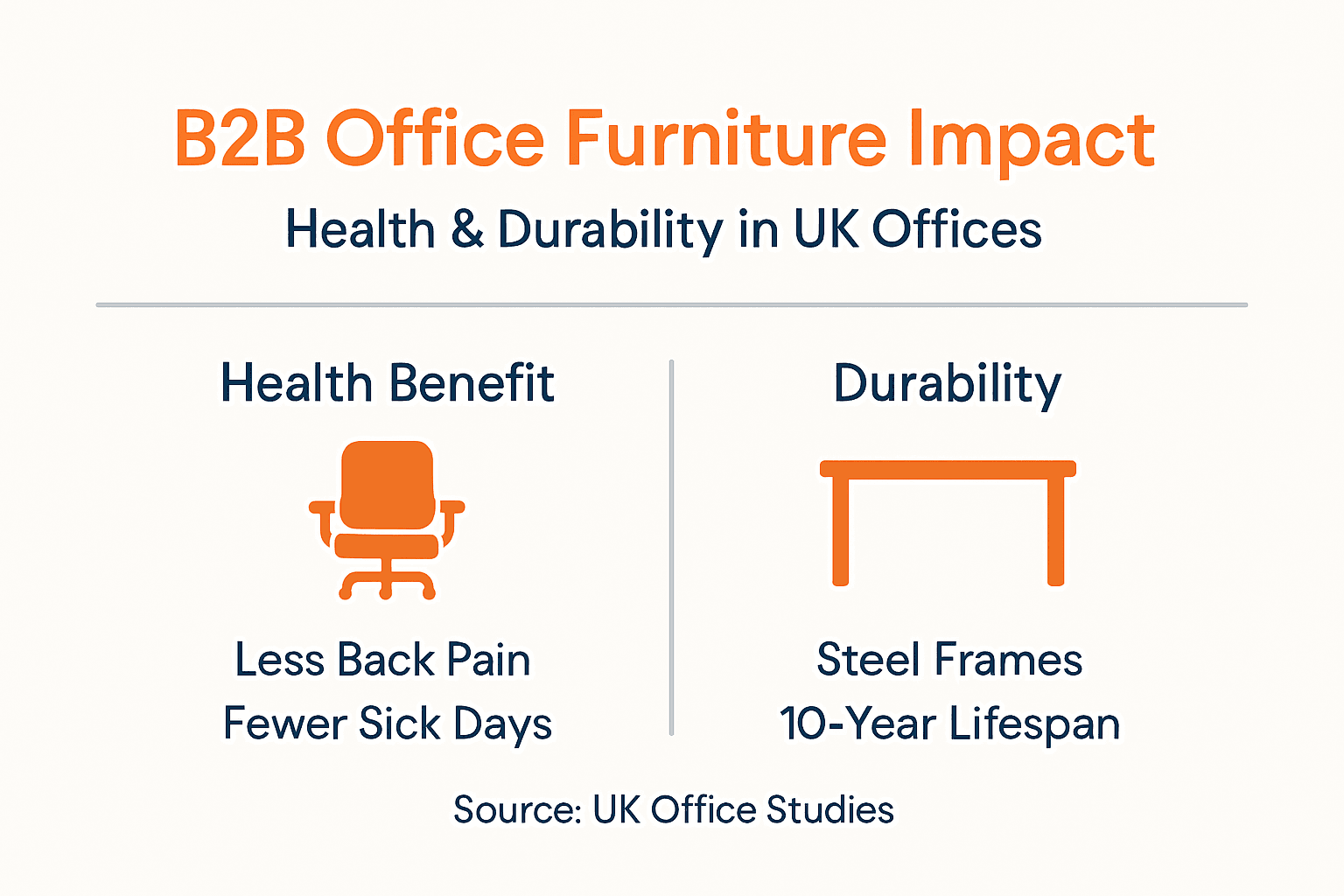
Steel frames provide superior strength and longevity. High-density foam maintains shape and support far longer than standard cushioning. Commercial-grade fabrics resist pilling, fading, and tearing better than residential alternatives.
Pro Tip: Calculate total cost of ownership by dividing purchase price by expected lifespan. A chair costing £400 lasting 10 years costs £40 annually, while a £150 chair failing after 2 years costs £75 annually.
Investing in quality office storage furniture prevents replacement cycles that disrupt operations. Durable furniture maintains professional appearance throughout its lifecycle, protecting brand image. Budget allocation should prioritize longevity over initial savings, especially for high-use items like task chairs and workstations.
Ergonomic design directly impacts employee health and organizational productivity. Poor furniture forces uncomfortable postures, leading to chronic pain and reduced focus. Ergonomic office furniture reduces musculoskeletal disorders by up to 60%, simultaneously cutting absenteeism and improving work quality.

Corporate offices require highly adjustable furniture accommodating diverse users. Task chairs need seat height, depth, lumbar support, and armrest adjustments. Desks benefit from height adjustability enabling sit-stand transitions. These features let each employee configure their workspace optimally.
Certification matters significantly. Look for chairs meeting BS EN 1335 standards or carrying ergonomic certifications from recognized bodies. Generic “ergonomic” claims without backing often indicate minimal actual benefit. Verify certifications before procurement.
Key ergonomic features include:
Hospitality environments balance ergonomics with aesthetic appeal. Restaurant seating must comfort guests during extended dining while complementing interior design. Hotel workspace furniture serves short-term users requiring immediate comfort without extensive adjustment. Design becomes equally important as function in guest-facing areas.
Pro Tip: Involve actual users in furniture trials before large purchases. A two-week trial reveals comfort issues that showroom testing misses, preventing costly mistakes.
“Investing in proper ergonomic furniture isn’t an expense, it’s a productivity multiplier that pays dividends through reduced health claims and improved employee satisfaction.” – UK Workplace Health Initiative
Selecting appropriate ergonomic office chairs requires understanding your workforce demographics and work patterns. Technical teams spending 8+ hours seated need maximum adjustability. Hot-desking environments benefit from intuitive controls requiring minimal setup. Review comprehensive office chair selection guidance before finalizing specifications.
Procurement teams frequently fall victim to myths that compromise furniture investments. Correcting these misconceptions prevents expensive mistakes and improves workplace outcomes.
Cheaper furniture saves money. Initial savings disappear when lower-cost furniture fails durability standards within 1-2 years. Replacement costs include new purchases plus disposal fees, delivery charges, and installation time. Productivity losses during replacement compound expenses. Quality furniture costing twice as much but lasting five times longer delivers superior value.
All ergonomic chairs provide similar benefits. Marketing teams label nearly everything “ergonomic” regardless of actual features. Chairs lacking proper lumbar support, seat depth adjustment, or synchronized mechanisms offer minimal ergonomic value despite claims. Certification and adjustability range separate genuine ergonomic furniture from marketing hype.
Retail and B2B furniture are comparable. Consumer furniture targets light residential use patterns. Commercial furniture withstands continuous multi-user operation under demanding conditions. Construction quality, materials, and testing protocols differ fundamentally. Retail furniture in commercial settings fails prematurely, creating false economy.
Warranty coverage is mostly similar. Warranty terms vary dramatically between suppliers. Some offer comprehensive coverage including labor and parts for 5-10 years. Others provide minimal warranties excluding normal wear or limiting coverage to manufacturing defects. Supplier reliability during claims matters equally. Strong warranties backed by responsive service protect investments.
“The bitterness of poor quality remains long after the sweetness of low price is forgotten. This truth applies doubly to office furniture where failures disrupt operations and impact employee wellbeing.”
Understanding these realities helps procurement teams make informed decisions. Shopping at specialized business furniture suppliers ensures access to commercial-grade products rather than residential alternatives marketed to businesses.
Successful furniture procurement requires structured evaluation beyond price comparison. Decision frameworks reduce procurement errors by 35% by systematically assessing critical factors.
Follow this evaluation sequence:
Define requirements clearly. Document user demographics, work patterns, space constraints, and aesthetic preferences. Specify must-have features versus nice-to-have options. Clear requirements prevent scope creep and mismatched solutions.
Verify standards compliance. Confirm furniture meets relevant British Standards and carries appropriate certifications. Request test reports demonstrating durability performance. Standards compliance ensures minimum quality thresholds.
Assess supplier reliability. Evaluate supplier track record, financial stability, and customer references. Strong suppliers provide consistent availability, responsive service, and reliable warranty support. Weak suppliers create procurement headaches regardless of product quality.
Calculate total ownership cost. Include purchase price, delivery, installation, maintenance, and expected replacement timeline. Factor in productivity impacts from ergonomic benefits or failures. Total cost reveals true value beyond initial pricing.
Test before committing. Arrange trials with actual users in real work settings. User feedback identifies comfort issues and operational concerns before large investments. Testing reduces post-purchase regret.
Additional procurement considerations:
Pro Tip: Create standardized furniture specifications for different roles. Standardization simplifies procurement, eases maintenance, and enables bulk purchasing discounts while ensuring appropriate furniture for each position.
Modular systems offer particular value in dynamic environments. Reconfigurable office desks and storage solutions adapt to changing team sizes and work patterns without wholesale replacement. Flexibility extends furniture lifecycle and protects investment value.
Sustainability increasingly influences procurement decisions. Look for furniture using recycled materials, low-emission manufacturing, and end-of-life recyclability. Environmental responsibility aligns with corporate values while often indicating quality construction.
Real-world examples demonstrate B2B furniture benefits across UK business sectors. These cases illustrate return on investment and practical outcomes.
A London financial services firm replaced budget chairs with certified ergonomic seating across 300 workstations. Initial investment totaled £120,000 versus £45,000 for budget alternatives. Over five years, the durable chairs required zero replacements while budget chairs needed two full replacement cycles. Total cost advantage exceeded £60,000, while musculoskeletal complaints dropped 58%, reducing health-related absence.
A Manchester hospitality group furnished a new hotel with commercial-grade furniture rather than residential pieces. Despite 40% higher upfront costs, furniture maintained appearance and function through four years of intensive guest use. Comparable hotels using residential furniture faced replacement within 18 months, ultimately spending double while managing renovation disruptions.
A Birmingham technology company implemented height-adjustable desks throughout their development team. Post-installation surveys showed 73% of employees reporting reduced back pain. Productivity metrics improved 12% within six months, attributed to better focus and reduced discomfort. The modular desk system later accommodated team expansion without additional furniture investment.
A Leeds legal practice selected a furniture supplier offering comprehensive 10-year warranties and local service. When mechanism failures occurred on three chairs during year four, the supplier replaced components within 48 hours at no cost. Competitor warranties would have required expensive repairs or replacements, validating the supplier selection criteria.
Key lessons from successful implementations:
These examples validate the B2B furniture procurement framework. Initial investments in quality deliver compounding returns through extended lifecycles, reduced maintenance, improved user satisfaction, and operational continuity. Review additional case studies demonstrating successful furniture programs. Consider workplace environment improvements that complement furniture investments for comprehensive workspace optimization.
Applying these insights requires access to quality commercial furniture meeting UK standards. Furniture For Business specializes in durable, ergonomic solutions designed for demanding professional environments.
Our curated selection serves corporate offices and hospitality venues requiring reliable, long-lasting furniture. Every product meets British commercial standards, ensuring your investment delivers years of dependable service. Explore durable ergonomic office chairs with certified adjustability and commercial-grade construction. Browse customizable office desks accommodating diverse work styles and space requirements. Discover space-saving office storage combining functionality with professional aesthetics. Our team provides expert guidance matching furniture solutions to your specific needs, backed by comprehensive warranties and responsive UK support.
UK office furniture should comply with BS EN 1335 for seating and relevant British Standards for desks and storage. These standards ensure products withstand commercial use patterns through rigorous testing. Verify manufacturer certification and request test documentation before purchase.
Certified ergonomic furniture provides properly designed adjustability reducing strain on spine, shoulders, and wrists. Uncertified products often lack critical adjustments despite ergonomic marketing claims. Certification guarantees furniture meets established health and safety criteria, directly reducing musculoskeletal disorder risk.
Low-cost furniture typically fails within 24 months, requiring expensive replacement cycles. Poor ergonomics increase employee discomfort and health complaints. Inferior materials and construction compromise professional appearance as furniture deteriorates. Total ownership costs exceed quality alternatives due to shortened lifecycles.
Comprehensive warranties protect against premature failures and defects throughout furniture lifecycle. Strong warranties reflect manufacturer confidence in product quality. Responsive warranty service minimizes downtime when issues occur. Extended coverage significantly impacts total cost of ownership calculations and risk management.
Corporate furniture prioritizes individual adjustability and long-term user comfort for dedicated workstations. Hospitality furniture emphasizes aesthetic appeal, immediate comfort without adjustment, and durability across diverse short-term users. Both require commercial-grade construction, but design priorities and adjustment mechanisms differ based on usage patterns.
Modular furniture adapts to changing workspace needs through reconfiguration rather than replacement. This flexibility extends furniture lifecycle and protects investment value as teams grow or reorganize. Modular systems accommodate varied work styles and space constraints while maintaining consistent professional appearance throughout the office.

Phone: 0330 043 4114
VAT no. GB 991 8681 60
Company no. 07250570