Outdated executive office design can quietly undermine productivity and tarnish your corporate image. A well-designed office boosts focus, impresses clients, and supports executives in delivering their best work. This guide covers planning, furniture selection, layout, ergonomics, and finishing touches to help you create a modern executive workspace that balances style with function. You will learn how to assess needs, choose the right furniture, optimise workflow, and maintain your investment for years to come.
| Point | Details |
|---|---|
| Modern design and ergonomics | Combining contemporary aesthetics with ergonomic principles significantly increases productivity and comfort in executive offices. |
| Choosing the right furniture | Selecting furniture that balances comfort, style, and functionality ensures executives can work efficiently while maintaining a professional image. |
| Efficient layout planning | Maximising space and workflow through strategic furniture placement reduces distractions and enhances focus. |
| UK office furniture trends 2026 | Incorporating current trends like height-adjustable desks and sustainable materials keeps offices relevant and competitive. |
Before you begin selecting furniture or rearranging your space, assess the executive role and daily workflow. Does the executive spend most of the day in video calls, reviewing documents, or hosting in-person meetings? Understanding these patterns helps you determine space needs and prioritise features. A sales director hosting frequent client meetings requires a larger meeting area, whilst a finance executive focused on detailed analysis benefits from enhanced desk space and privacy.
Identify ergonomic requirements early. Ergonomic furniture reduces discomfort by up to 90% in UK offices, making it a worthwhile investment for executive health and performance. List essential furniture items: a spacious desk, an adjustable executive chair, adequate office storage for files and supplies, and accessories like monitor arms or keyboard trays. Consider technology integration from the outset. Plan cable management solutions to keep power leads and data cables hidden, maintaining a clean aesthetic whilst ensuring easy access to charging points and connectivity.
Plan room aesthetics carefully. Lighting should combine natural light with adjustable task lighting to reduce eye strain during long work sessions. Colour schemes influence mood and focus, so choose calming neutrals or accent colours that align with your corporate branding. Incorporate brand elements subtly through artwork, upholstery colours, or desk accessories to reinforce company identity without overwhelming the space.
Pro tip: Create a checklist of must-have features versus nice-to-have additions before shopping. This keeps you focused on essentials and prevents budget overruns on decorative items that add little functional value.
| Requirement category | Key considerations |
|---|---|
| Workflow analysis | Daily tasks, meeting frequency, privacy needs |
| Ergonomic needs | Chair adjustability, desk height, monitor positioning |
| Technology | Cable management, power outlets, video conferencing equipment |
| Aesthetics | Lighting quality, colour palette, brand alignment |
| Storage | Document filing, personal items, office supplies |
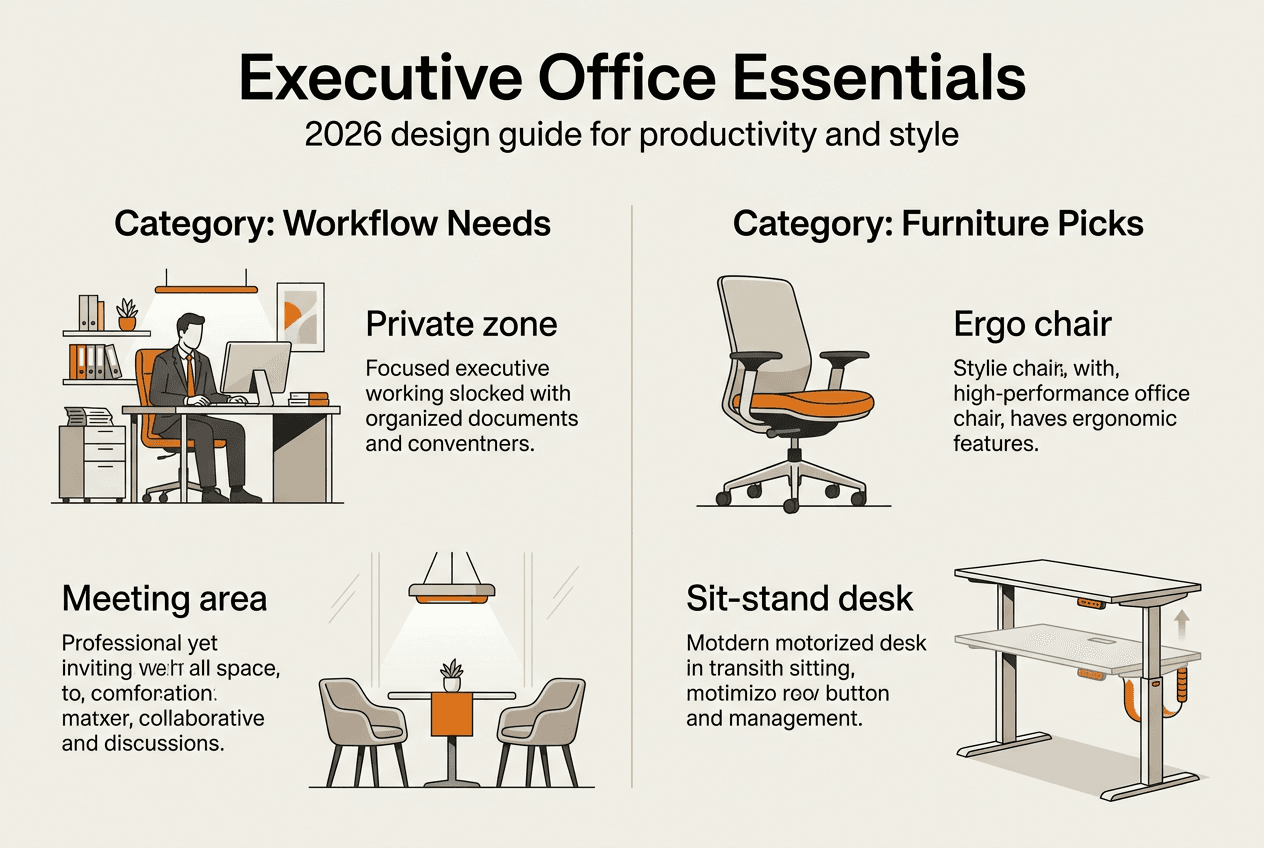
Once you have mapped out requirements and essentials, you gain clarity on what to prioritise when selecting furniture. This preparation prevents costly mistakes and ensures every purchase directly supports productivity and style goals. Moving from planning to execution, the next step involves choosing specific furniture pieces that deliver both ergonomic benefits and visual impact.
Executive chairs form the foundation of office comfort. Compare premium office chairs by examining ergonomic features like lumbar support depth, armrest adjustability, and seat tilt mechanisms. Materials matter too: leather conveys traditional authority, whilst mesh offers breathability for warmer offices. Test adjustability ranges to ensure the chair accommodates different body types and working positions. A chair with limited height adjustment frustrates taller or shorter users, reducing its ergonomic value.
Height-adjustable desks improve posture and focus in office settings, making them increasingly popular in 2026. Analyse whether a height-adjustable or fixed desk suits your executive’s work style. Height-adjustable models allow alternating between sitting and standing, reducing fatigue during marathon work sessions. Fixed desks cost less and offer stability for users who prefer consistent desk height. Choose executive desks with sufficient surface area for dual monitors, documents, and a phone without creating clutter.

Integrated storage solutions keep essentials accessible whilst maintaining tidiness. Pedestals under desks provide drawer space for files and supplies without consuming floor area. Credenzas behind the desk offer additional storage and display space for awards or personal items. Executive office storage should match desk finishes to create visual cohesion. Avoid mismatched wood tones or conflicting metal finishes that undermine the professional aesthetic.
Style options convey professionalism and modernity. Contemporary designs with clean lines and minimal ornamentation suit tech companies and creative agencies. Traditional styles with wood veneers and brass accents appeal to law firms and financial institutions. Select finishes that align with your corporate culture whilst remaining timeless enough to avoid looking dated in three years. Trendy colours or patterns may seem appealing now but can appear outdated quickly.
Pro tip: Request samples or arrange showroom visits before committing to large furniture orders. Sitting in a chair for five minutes reveals comfort issues that product photos cannot show. Testing desk height adjustments ensures mechanisms operate smoothly and quietly.
| Furniture type | Key selection criteria | Common mistakes to avoid |
|---|---|---|
| Executive chair | Lumbar support, armrest range, material breathability | Choosing style over ergonomics, ignoring weight capacity |
| Desk | Surface area, height adjustability, cable management | Undersizing for dual monitors, neglecting storage integration |
| Storage | Capacity, accessibility, finish matching | Buying standalone units that clash with desk style |
| Accessories | Ergonomic benefit, aesthetic fit, build quality | Overbuying decorative items with no functional purpose |
With furniture choices clarified, attention shifts to arranging these pieces for maximum efficiency. Strategic layout planning transforms individual furniture items into a cohesive, productive workspace.
Arrange furniture to create clear zones within the office. Dedicate one area to focused work with the desk positioned to minimise distractions, ideally facing away from high-traffic doorways. Establish a separate meeting zone with comfortable seating for informal discussions or small group consultations. Storage should sit within easy reach but not dominate sightlines. This zoning approach helps executives mentally shift between tasks, improving concentration during deep work periods.
Ensure pathways remain uncluttered for ease of movement. A cramped office forces awkward navigation around furniture, wasting time and creating frustration. Leave at least 90 centimetres of clearance around desks and chairs to allow comfortable movement when seated or standing. Position filing cabinets and storage units against walls rather than in the middle of the room to maximise usable floor space.
Optimising workspace layout enhances focus and reduces distractions, making thoughtful furniture placement crucial for productivity. Use lighting strategically to boost mood and reduce eye strain. Position desks perpendicular to windows to benefit from natural light without screen glare. Add adjustable task lighting for overcast days or evening work. Colour influences energy levels, so incorporate accent colours through artwork or upholstery rather than painting entire walls in bold hues that may overwhelm.
Incorporate noise management solutions in open-plan offices or shared executive suites. Acoustic panels on walls absorb sound, reducing echo and conversation bleed from adjacent spaces. Soft furnishings like rugs and upholstered chairs dampen noise more effectively than hard surfaces. Position the desk away from shared walls with meeting rooms to minimise disruption during conference calls.
“Strategic furniture placement transforms an ordinary office into a productivity engine, where every element supports focus and efficiency rather than competing for attention.”
Layout optimisation checklist:
Effective layout planning requires balancing aesthetics with practicality. A beautiful office that hampers workflow fails its primary purpose. Regularly review your office furniture workflow guide to identify friction points and adjust furniture placement as work patterns evolve. From layout planning, attention turns to adding finishing touches that elevate the space and implementing maintenance practices to preserve your investment.
Select tasteful art and plants that fit corporate style without overwhelming the space. A single statement piece creates more impact than multiple small prints scattered randomly. Plants improve air quality and add warmth, but choose low-maintenance varieties like snake plants or pothos that tolerate office lighting conditions. Avoid overly personal decor that might alienate clients or colleagues with different tastes.
Use ergonomic accessories to enhance comfort and efficiency. Monitor arms free up desk space whilst positioning screens at optimal eye level, reducing neck strain. Keyboard trays allow proper wrist alignment, preventing repetitive strain injuries during extended typing sessions. Footrests support shorter users whose feet do not reach the floor comfortably. Browse office accessories that solve specific ergonomic challenges rather than buying generic items that gather dust.
Keep storage organised to maintain productivity. Implement a filing system that makes document retrieval quick and intuitive. Label drawers and shelves clearly so anyone can locate items in your absence. Regularly purge outdated files and supplies to prevent clutter accumulation. Proper maintenance preserves furniture longevity and appearance, protecting your investment for years.
Schedule regular cleaning and furniture care. Dust accumulates on surfaces and in crevices, degrading air quality and making the office look neglected. Vacuum upholstered chairs monthly to remove debris and allergens. Wipe down desks and storage units with appropriate cleaners that do not damage finishes. Leather chairs benefit from conditioning treatments every six months to prevent cracking and maintain suppleness.
Pro tip: Inspect furniture quarterly for wear indicators like loose screws, sticking drawers, or fraying upholstery. Addressing minor issues immediately prevents them from escalating into expensive replacements. Keep manufacturer contact details and warranty information accessible for quick reference when repairs become necessary.
Maintenance schedule:
Finishing touches and consistent maintenance transform a functional office into an impressive workspace that supports executive performance. These details communicate professionalism to visitors whilst creating an environment where executives genuinely enjoy spending their workday. Review workspace storage solutions periodically to ensure your organisation systems evolve with changing business needs. With design finalised and upkeep planned, exploring quality furniture options becomes the natural next step.
Furniture For Business offers ergonomic office chairs designed for executive comfort and long-term health. Their range includes height-adjustable models and traditional fixed designs to suit different preferences and budgets. Browse stylish office desks with integrated cable management and ample surface area for productive workdays.
Practical office storage solutions keep executive offices organised without sacrificing aesthetics. From pedestals to credenzas, each piece complements modern office design whilst maximising functionality. Free delivery to UK mainland addresses simplifies procurement for busy office managers.
“Furniture For Business combines quality craftsmanship with practical design, delivering office furniture that performs as impressively as it looks.”
Look for adjustable height, lumbar support, and breathable materials that accommodate extended sitting periods. Test comfort over several minutes if possible, adjusting all mechanisms to ensure they operate smoothly. Check weight capacity and warranty terms to confirm the chair will withstand daily use. Visit choosing ergonomic office chairs for detailed selection guidance.
Height-adjustable desks support ergonomic posture and focus by allowing executives to alternate between sitting and standing throughout the day. Choose a size proportional to office space and storage needs, ensuring sufficient surface area for monitors, documents, and accessories without creating clutter. Integrated cable management keeps the workspace tidy and professional. Explore options at selecting executive desks to find the ideal match.
Create distinct zones for focused work and meetings to help executives mentally shift between tasks. Keep pathways clear and position furniture to minimise distractions from doorways or high-traffic areas. Use lighting strategically to reduce eye strain and incorporate acoustic treatments in noisier environments. Review optimising office layouts for comprehensive layout strategies.
Clean regularly with manufacturer-recommended products to avoid damaging finishes or upholstery. Inspect quarterly for wear indicators like loose screws or fraying fabric, addressing issues immediately to prevent costly replacements. Vacuum upholstered pieces monthly and condition leather chairs twice yearly to maintain appearance and comfort. Consult furniture maintenance tips for detailed care instructions.

Phone: 0330 043 4114
VAT no. GB 991 8681 60
Company no. 07250570