Musculoskeletal disorders cause 40% of lost workdays in office environments globally, yet many UK businesses still underestimate the transformative impact of proper seating. Office chairs are not mere furniture. They’re critical tools that directly influence worker health, comfort, and output. Selecting the right ergonomic chair reduces absenteeism, boosts morale, and delivers measurable productivity gains. This guide equips office managers and procurement teams with evidence-based insights to make informed chair purchasing decisions that enhance workplace well-being and performance.
| Point | Details |
|---|---|
| Ergonomic chairs reduce disorders | Properly designed office chairs cut musculoskeletal issues and improve productivity in UK workplaces. |
| BS EN 1335 defines standards | British Standard BS EN 1335 sets essential ergonomic requirements for office chairs. |
| Adjustability matters most | Fully adjustable chairs offer superior comfort and health benefits over fixed alternatives. |
| Misconceptions hinder procurement | Common myths about office chairs undermine effective selection and use. |
| Training maximises ROI | Proper user adjustment and training unlock ergonomic benefits and return on investment. |
Office chairs serve as the primary interface between workers and their desks across UK workplaces. Employees spend an average of seven hours daily seated, making chair quality a non-negotiable factor in workplace design. These aren’t just functional items. They’re health interventions.
Ergonomic design directly impacts comfort, posture, and long-term well-being. Chairs that support natural spinal curves and accommodate diverse body types reduce physical strain. Poor seating forces unnatural postures, compressing discs and straining muscles. Over time, this leads to chronic pain and reduced work capacity.
The link between chair design and productivity is undeniable. Workers experiencing discomfort lose focus, take frequent breaks, and eventually require sick leave. Musculoskeletal disorders cause 40% of lost workdays in office environments globally. UK businesses face substantial costs from absenteeism tied to preventable seating issues. Investing in quality chairs isn’t optional. It’s strategic risk management.
Understanding office chair ergonomics workplace health connections transforms how procurement teams approach furniture decisions. Chairs become valued assets rather than overhead expenses. The right selection prevents disorders before they start, keeping teams healthy and engaged.
Poor seating creates a cascade of musculoskeletal disorders. When chairs lack proper support, workers compensate with harmful postures. Slouching strains the lumbar spine. Fixed armrests force shoulders into awkward positions. Non-adjustable heights create neck tension as screens sit at wrong eye levels.

MSDs develop gradually but impact significantly. Poorly designed office chairs contribute substantially to these conditions among office workers. Symptoms include persistent lower back pain, shoulder stiffness, neck discomfort, and reduced mobility. Left unaddressed, these progress into chronic conditions requiring medical intervention and extended leave.
Common MSD symptoms linked to inadequate office chairs include:
Ergonomic chairs reverse this trajectory. Adjustable lumbar support maintains spine alignment. Height adjustability ensures feet rest flat with thighs parallel to the floor. Armrests reduce shoulder load during typing. Breathable materials prevent heat buildup and discomfort during long sessions.
The productivity gains are substantial. Workers using properly fitted ergonomic chairs report fewer pain episodes and sustained concentration. Absenteeism drops as preventable injuries decline. Understanding office chair health impact helps justify initial investments through reduced costs and improved output.
British Standard BS EN 1335 provides the framework for ergonomic office chair design in the UK. This standard specifies dimensions, adjustability ranges, stability requirements, and safety features. Office chairs complying with BS EN 1335 provide measurable ergonomic benefits recognised in UK workplaces. Procurement teams should verify compliance to ensure quality and legal alignment.
Essential adjustable features define chair effectiveness:
Material selection impacts daily comfort significantly. Breathable mesh backs prevent heat accumulation in warm offices. High-density foam cushioning maintains shape over years of use. Upholstery fabrics balance durability with tactile comfort. Quality materials extend chair lifespan whilst maintaining ergonomic performance.
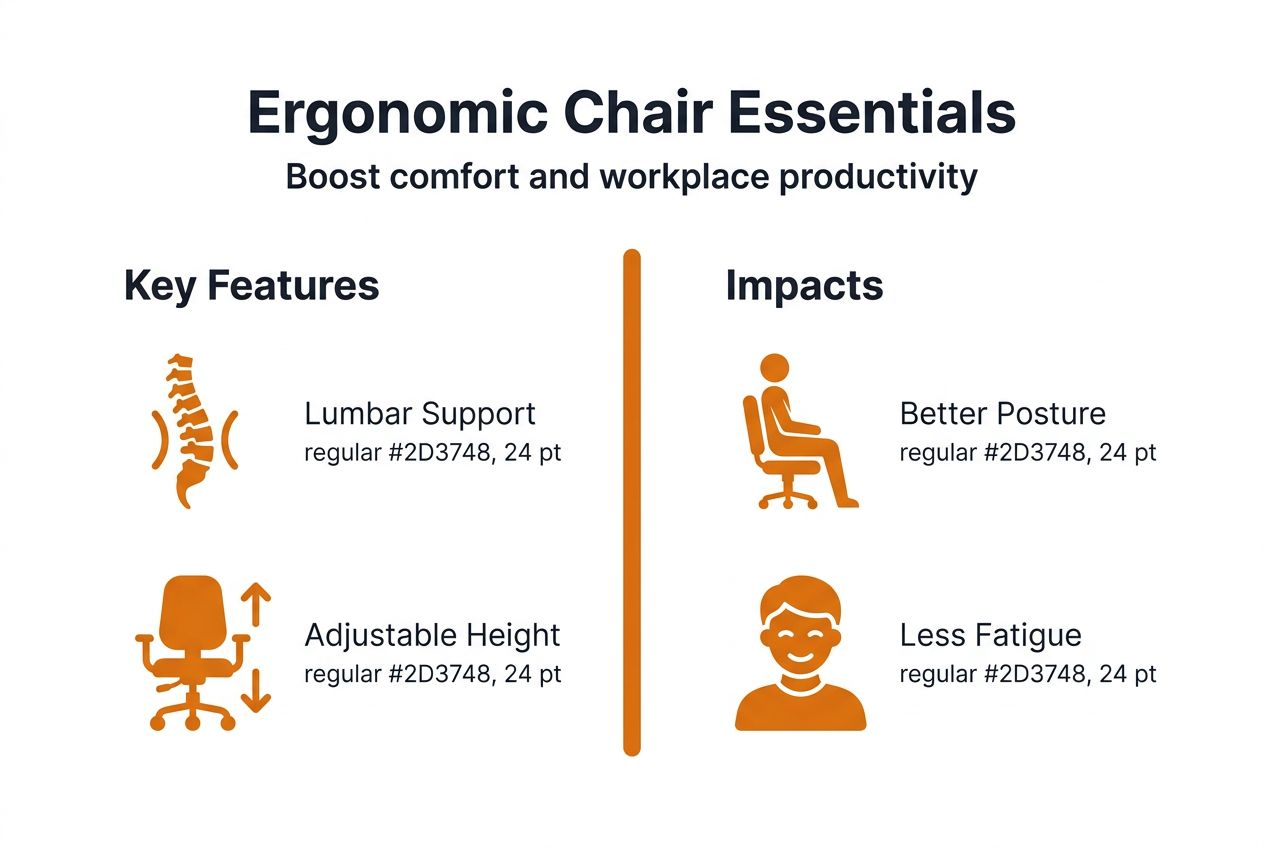
These features work together to reduce MSDs. Height-adjustable armrests reduce shoulder muscle strain during computer-based tasks by 15%. Proper lumbar support decreases disc pressure by maintaining natural lordotic curve. Seat depth adjustment prevents circulation restriction in legs.
Understanding task seating ergonomic guide principles helps match features to specific workplace needs. Not all roles require identical adjustability. Call centre operators benefit from different configurations than creative professionals who alternate between tasks. Strategic feature selection optimises both cost and outcomes.
Pro Tip: Prioritise chairs meeting BS EN 1335 standards and offering at least five adjustment points for maximum user accommodation. Comprehensive guidance on choosing the perfect office chair ensures your selection aligns with both ergonomic principles and budget constraints.
Myths about office chairs lead procurement teams astray, resulting in suboptimal purchases and frustrated workers. Clearing these misconceptions saves money and improves outcomes.
All office chairs provide similar ergonomic benefits. This is categorically false. Chair quality varies enormously. Budget models often lack essential adjustability and durable materials. Premium ergonomic chairs offer comprehensive adjustment ranges, superior materials, and proven health benefits. The difference manifests in worker comfort, injury rates, and chair longevity.
Higher price always means better ergonomics. Price reflects multiple factors beyond ergonomic design. Brand prestige, aesthetics, and materials drive costs up without necessarily improving support. Some mid-range chairs deliver excellent ergonomic performance. Focus on BS EN 1335 compliance and adjustment features rather than price alone when evaluating options.
Buying ergonomic chairs ensures benefits without user adjustment. This assumption undermines investments. Research shows only 35% of workers adjust chairs correctly without training. An expensive ergonomic chair used incorrectly provides no advantage over basic seating. Benefits require proper setup and ongoing use.
User behaviour determines actual outcomes. Workers unfamiliar with adjustment mechanisms either ignore them or configure incorrectly. Seat heights set too high or low negate ergonomic design. Lumbar support positioned wrongly provides no spine protection. Understanding office chair misconceptions prevents wasted investments.
Pro Tip: Implement comprehensive user training on chair adjustment immediately after installation. Provide visual guides at workstations and conduct ergonomic assessments quarterly. Training transforms chairs from passive furniture into active health tools. Explore ergonomic furniture guide UK principles to build holistic workplace wellness programmes.
Office chairs fall into three categories based on adjustability and ergonomic features. Understanding trade-offs helps procurement teams match chairs to specific roles and budgets.
| Chair type | Adjustment features | Cost range | Best for | Ergonomic rating |
|---|---|---|---|---|
| Fixed | None or minimal | £50-£120 | Visitor seating, short-term use | Low |
| Semi-adjustable | Height, basic tilt | £120-£250 | Light desk work, budget roles | Medium |
| Fully adjustable | Height, lumbar, armrests, depth, tilt | £250-£600+ | Intensive desk work, diverse users | High |
Fully adjustable chairs outperform fixed options by 30-50% in comfort and MSD prevention. This performance gap justifies higher initial costs through reduced absenteeism and improved productivity.
Matching chairs to job roles optimises spending:
Breathable materials become critical in warm offices or during summer months. Mesh backs allow air circulation, preventing discomfort from heat buildup. Fabric or leather options suit cooler environments or executive settings where aesthetics matter.
Pro Tip: Prioritise fully adjustable chairs where user diversity exists and workers spend over four hours daily seated. Browse office chairs selection guide to explore options matching your specific requirements and budget constraints.
Recommended models for different needs:
Successful chair implementation requires structured planning beyond purchase decisions. Follow this systematic approach:
Procurement guidelines should emphasise ergonomic compliance over aesthetics. Verify BS EN 1335 certification before purchase. Request trial periods where possible to test chairs with actual users. Negotiate bulk pricing for large orders whilst maintaining quality standards.
User behaviour determines whether expensive ergonomic chairs deliver value. Training increases correct adjustment rates from typical 35% to over 80%. Workers understanding proper setup experience fewer pain episodes and maintain productivity longer.
Measure outcomes through absenteeism tracking and employee surveys. Compare sick leave rates before and after chair upgrades. Monitor worker satisfaction scores related to comfort and physical well-being. Quantifiable improvements justify investments and guide future decisions.
One UK financial services firm replaced 200 fixed chairs with fully adjustable ergonomic models. Within six months, lower back pain complaints dropped 60% and average sick days per employee fell from 4.2 to 2.8 annually. The investment paid back through reduced absence costs within 18 months.
Learn how to cut absenteeism with chairs through strategic selection and implementation. Proper planning transforms seating from cost centre to performance asset.
Investing in ergonomic office chairs delivers measurable returns through improved worker health and sustained productivity. Chairs meeting BS EN 1335 standards with comprehensive adjustability reduce musculoskeletal disorders that cause 40% of lost workdays. These aren’t furniture purchases. They’re strategic health investments.
Compliance with British standards ensures legal alignment and proven ergonomic benefits. Prioritising adjustability accommodates diverse users and task demands. However, chairs alone don’t guarantee outcomes. Proper adjustment and user training convert ergonomic potential into real-world benefits.
Quality matters more than price alone. Mid-range fully adjustable chairs often outperform premium fixed models. Focus procurement decisions on features, standards compliance, and user needs rather than brand prestige. Strategic selection balances cost constraints with health outcomes.
Monitor implementation success through absenteeism tracking and satisfaction surveys. Quantified improvements justify investments and inform future decisions. Regular ergonomic assessments maintain proper use over time.
Emerging trends include adaptive lumbar support responding to posture changes and sustainable materials reducing environmental impact. Forward-thinking procurement teams evaluate these innovations for competitive advantage. The office furniture landscape continues evolving, but core ergonomic principles remain constant. Prioritise worker well-being through evidence-based chair selection and watch productivity gains follow.
Furniture For Business leads UK suppliers in providing commercial-grade ergonomic office chairs tailored to diverse workplace needs. Whether you’re outfitting a small startup or refurbishing a large corporate office, their extensive range matches every role and budget.
Explore comprehensive office chairs collections featuring BS EN 1335-compliant models with proven health benefits. Pair seating with height-adjustable office desks to create fully ergonomic workstations maximising comfort and output. Free UK mainland delivery and straightforward returns make procurement simple.
Pro Tip: Consult with Furniture For Business experts to assess your specific requirements and receive tailored recommendations. Their team helps match chair features to your workforce demographics and task profiles, ensuring optimal ergonomic outcomes within budget constraints.
Ergonomic office chairs support natural posture and reduce strain through adjustable lumbar support, proper height settings, and cushioning tailored to individual needs. These features maintain neutral spine alignment during extended sitting, significantly lowering injury risk and discomfort.
Prioritise compliance with BS EN 1335, comprehensive adjustability including seat height, lumbar support, and armrests, plus breathable materials for comfort. Match specific features to job roles and daily task demands for optimal results. Review task seating ergonomic guide principles to align selections with workplace needs.
Implement structured adjustment training workshops and distribute visual guidance materials at each workstation to increase correct use beyond the typical 35%. Regular ergonomic assessments and periodic reminders help maintain proper posture habits long-term. Strategic approaches to cut absenteeism with chairs include ongoing education and workplace wellness programmes.
For intensive desk work and diverse user groups, fully adjustable chairs outperform alternatives by 30-50% in comfort and MSD prevention, justifying higher initial investment through reduced absenteeism and improved productivity. For short-term visitor seating or occasional use, more basic options may suffice without compromising outcomes.
British Standard BS EN 1335 specifies requirements for office work chairs including dimensions, adjustability ranges, safety features, and ergonomic design principles. Selecting chairs compliant with this standard ensures legal requirements and health objectives are met whilst providing workers with proven ergonomic benefits.

Phone: 0330 043 4114
VAT no. GB 991 8681 60
Company no. 07250570