Many office managers believe choosing sustainable furniture means sacrificing comfort or contemporary design. Research shows 67% of users find sustainable furniture as comfortable as traditional options, debunking this myth entirely. This guide clarifies what sustainable office furniture genuinely means, explores certifications and lifecycle impacts, and provides practical procurement strategies tailored to UK workplaces navigating hybrid work demands.
| Point | Details |
|---|---|
| Sustainability criteria | Sustainable office furniture is defined by renewable or recycled materials, durability, recognised certifications like FSC and GREENGUARD, and end-of-life recyclability. |
| Lifecycle thinking | Extending furniture lifespan beyond 10 years can reduce carbon footprint by 50%, whilst refurbishment cuts waste by 70%. |
| Ergonomics matter | Ergonomic sustainable furniture reduces musculoskeletal disorders by 39% and supports hybrid work flexibility without compromising environmental goals. |
| Myths debunked | Sustainable furniture matches traditional options in comfort, durability, and design, with recycled materials performing as well as virgin materials. |
| UK procurement focus | Sustainable furniture costs 10-20% more upfront but saves 15% over 10 years, with local sourcing reducing emissions by 30-40%. |
Sustainable office furniture is more than a marketing label. It integrates environmental responsibility across materials, manufacturing, and disposal stages.
Sustainable office furniture is defined by renewable, recycled, or responsibly sourced materials, durability, low manufacturing impact, and end-of-life recyclability. Certifications such as FSC, GREENGUARD, and Cradle to Cradle validate these claims. Understanding these criteria helps procurement teams distinguish genuine sustainability from greenwashing.
Key sustainability criteria include:
These standards ensure your furniture investment aligns with environmental targets and supports healthier workspaces. For broader context on selecting durable office furniture, consider how longevity intersects with sustainability goals. Modern approaches to smart office furniture also integrate sustainability with technology, whilst modern office furniture workflow designs prioritise adaptability alongside environmental responsibility.
Lifecycle thinking transforms how we evaluate office furniture sustainability. Rather than focusing solely on initial purchase, this approach considers production, use, refurbishment, and disposal stages.
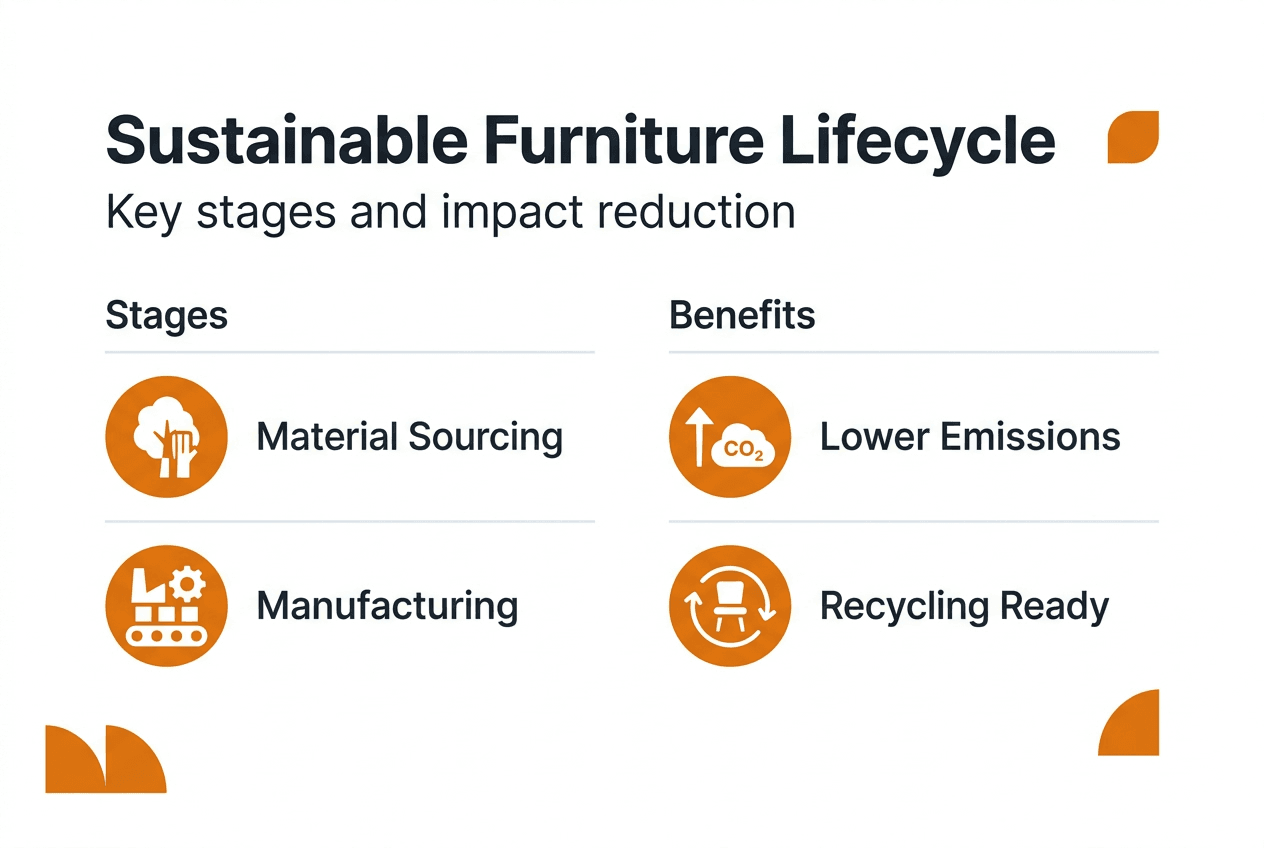
Extending furniture lifespan beyond 10 years can reduce carbon footprint by up to 50%, according to lifecycle assessments. Refurbishment programmes cut waste by 70%, directly supporting UK circular economy goals. These figures demonstrate the environmental advantage of choosing furniture built to last and designed for multiple use cycles.
Lifecycle stages and their impacts:
| Lifecycle stage | Environmental benefit | Impact reduction |
|---|---|---|
| Extended use (10+ years) | Reduced manufacturing demand | 50% carbon footprint reduction |
| Refurbishment | Waste diversion from landfill | 70% waste reduction |
| Local UK sourcing | Lower transportation emissions | 30-40% emission reduction |
| Component recycling | Material recovery | 60-80% material reuse |
For UK offices, choosing furniture with documented lifecycle credentials and refurbishment options directly contributes to corporate sustainability targets. This strategic approach balances environmental responsibility with financial prudence, recognising that longer-lasting furniture delivers both ecological and economic value.
Authentic sustainable furniture relies on verified material sourcing and transparent certification. Understanding these markers prevents greenwashing and ensures procurement decisions deliver genuine environmental benefits.
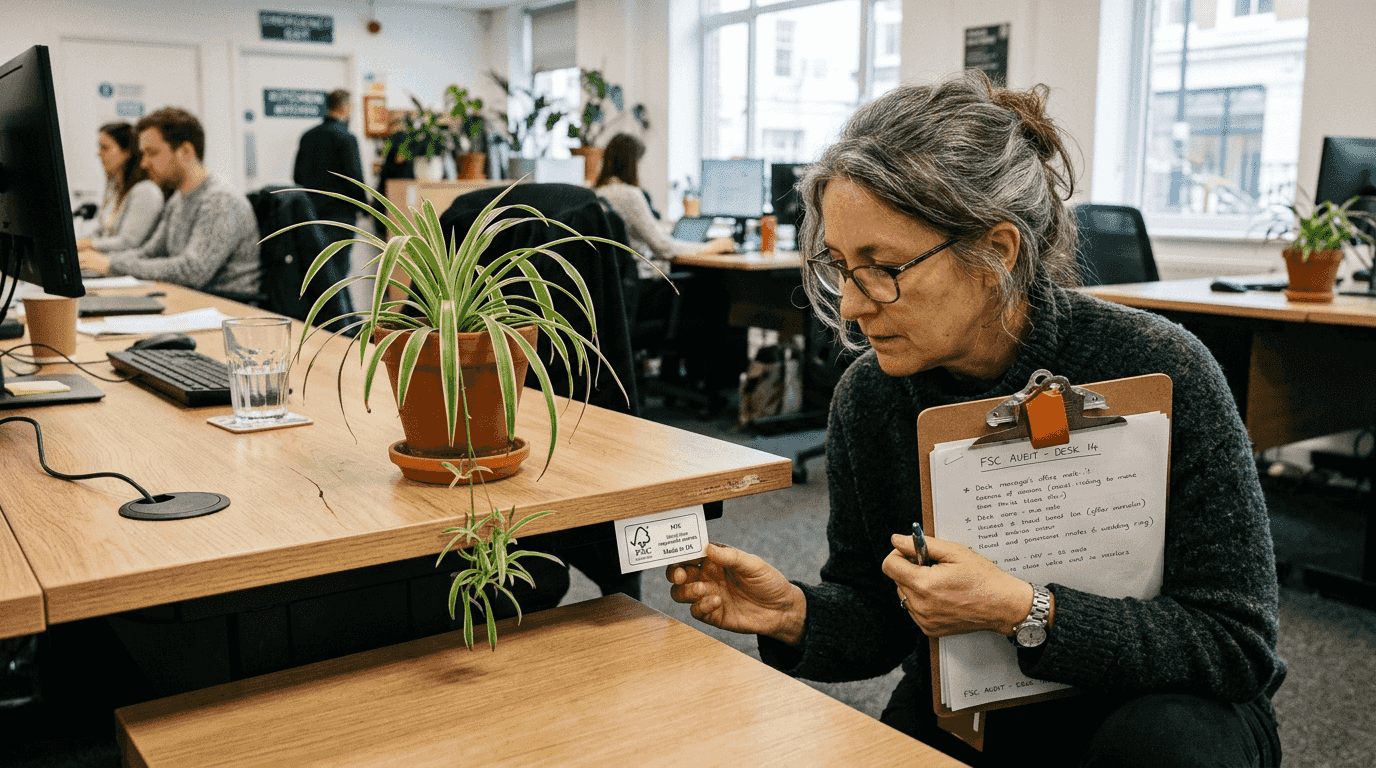
FSC certification guarantees responsible forestry management, ensuring wood originates from forests managed for long-term ecological health. BIFMA Level certification evaluates comprehensive environmental and social impacts, including material extraction, manufacturing energy, and worker welfare. GREENGUARD certification specifically addresses indoor air quality by verifying low chemical emissions, critical for employee health.
Local UK sourcing reduces transportation emissions by 30-40% compared to international supply chains. It also simplifies regulatory compliance and supports domestic manufacturing sectors. Quality assurance linked to certification builds procurement confidence, offering third-party validation of sustainability claims.
Key certifications and their significance:
When evaluating suppliers, request certification documentation and verify claims through official databases. Legitimate certifications include serial numbers and are publicly verifiable. This diligence protects your organisation from misleading environmental marketing whilst ensuring furniture genuinely supports sustainability objectives.
Pro Tip: Request material composition breakdowns from suppliers. Authentic sustainable furniture manufacturers readily provide detailed information about material sources, recycled content percentages, and end-of-life disposal options.
For UK businesses seeking comprehensive guidance on commercial furniture procurement, explore B2B office furniture considerations specific to the UK market.
Sustainability and ergonomics are complementary priorities, not competing interests. Modern sustainable furniture integrates environmental responsibility with human-centred design, particularly important as UK offices adapt to hybrid work models.
Ergonomic furniture can reduce musculoskeletal disorders by 39%, directly improving employee wellbeing and productivity. Hybrid work drives demand for height-adjustable and mobile furniture that supports varied work settings. Low-emission materials improve indoor air quality, creating healthier environments for employees spending extended periods in office spaces.
Ergonomic sustainability features:
For UK workplaces, ergonomic furniture addresses both regulatory compliance with Display Screen Equipment regulations and employee expectations for comfortable, adaptable workspaces. The connection between office chairs and productivity demonstrates how quality seating investments deliver measurable performance improvements alongside environmental benefits.
Pro Tip: Involve employees in furniture selection trials. User feedback ensures ergonomic features meet actual needs, improving adoption rates and preventing costly specification errors. Sustainable furniture that employees find uncomfortable will fail regardless of environmental credentials.
Misconceptions about sustainable furniture create unnecessary barriers to adoption. Addressing these myths helps procurement teams make informed decisions based on evidence rather than assumptions.
Research shows 67% of users find sustainable furniture as comfortable as traditional options, contradicting beliefs that eco-friendly choices compromise ergonomics. Recycled materials now match virgin materials in durability through advanced manufacturing processes. Sustainability no longer requires sacrificing design aesthetics, with leading furniture designers creating visually striking pieces from reclaimed and renewable materials.
Myth-busting realities:
Understanding these facts removes mental barriers during procurement discussions. For guidance on choosing office chairs that balance comfort with sustainability, consider how modern ergonomic designs integrate recycled materials without compromising support quality. Evidence on office chair ergonomics demonstrates that sustainable options deliver equivalent health benefits to traditional furniture.
Sustainable office furniture requires different financial evaluation than traditional procurement. Understanding total cost of ownership reveals value that upfront pricing alone obscures.
Sustainable furniture typically costs 10-20% more initially but delivers approximately 15% savings over 10 years through superior durability and reduced replacement frequency. UK companies adopting sustainable furniture reported 15-20% improvements in employee satisfaction and easier ESG goal achievement. Total cost of ownership includes durability, refurbishment potential, and health benefits from improved ergonomics and air quality.
| Cost factor | Traditional furniture | Sustainable furniture |
|---|---|---|
| Initial purchase | Baseline | 10-20% higher |
| Expected lifespan | 5-7 years | 10-15 years |
| Refurbishment potential | Limited | High |
| 10-year total cost | Baseline | 15% lower |
| Employee satisfaction impact | Baseline | 15-20% higher |
Practical procurement steps for UK offices:
For comprehensive understanding of B2B office furniture procurement in the UK context, explore bulk ordering strategies and supplier relationship management. Guidance on furnishing offices in 2026 addresses current market conditions and hybrid work considerations. When evaluating suppliers, review office furniture alternatives to ensure competitive pricing and sustainability credentials.
Translating sustainable furniture knowledge into procurement action requires systematic planning. These practical steps guide UK office managers through selection, assessment, and integration processes.
Verify furniture certifications and ergonomic standards before purchase by requesting documentation and checking official certification databases. Prioritise products with documented refurbishment or recycling options that extend useful life. Plan for hybrid office needs by selecting adaptable, height-adjustable furniture supporting varied work patterns. Engage employees through trial periods and feedback mechanisms to ensure furniture supports wellbeing and productivity goals.
Implementation steps:
UK companies adopting sustainable furniture improved satisfaction scores by up to 20% and simplified ESG compliance, demonstrating tangible organisational benefits beyond environmental impact. For detailed guidance on selecting durable office furniture, explore quality indicators and longevity factors. Comprehensive height-adjustable desk setup guidance ensures proper ergonomic configuration maximises health benefits from sustainable furniture investments.
Ready to implement sustainable furniture solutions in your UK workplace? Browse certified sustainable office chairs featuring ergonomic designs and verified environmental credentials. Explore office desks including height-adjustable models ideal for hybrid work environments.
Our collection balances quality, comfort, and sustainability to meet demanding UK office requirements. Whether furnishing new spaces or upgrading existing layouts, find expert guidance and product solutions designed for modern workplace needs. Review our height-adjustable desk setup guide to maximise ergonomic benefits from your sustainable furniture investment.
Look for FSC certification for responsible wood sourcing, GREENGUARD for low chemical emissions, and BIFMA Level for comprehensive environmental and health standards. Cradle to Cradle certification indicates full lifecycle sustainability assessment. Verify certifications through official databases to confirm authenticity.
Sustainable furniture often includes ergonomic and height-adjustable designs promoting flexibility and employee wellbeing essential for hybrid work setups. Durability and modularity support changing office layouts as teams transition between remote and office work. Low-emission materials ensure healthy indoor environments during office occupancy.
Sustainable furniture typically costs 10-20% more initially but offers approximately 15% cost savings over 10 years through superior durability and reduced maintenance requirements. Long-term value through extended lifespan and refurbishment potential justifies initial investment. Factor employee wellbeing improvements and productivity gains into total value assessment.
Yes, refurbishment reduces waste by up to 70% and extends furniture lifespan whilst maintaining quality standards through professional restoration processes. It represents a strong circular economy practice increasingly adopted across UK commercial sectors. Refurbished furniture delivers equivalent performance to new items at lower environmental and financial cost.

Phone: 0330 043 4114
VAT no. GB 991 8681 60
Company no. 07250570