TL;DR:
- Biophilic design significantly boosts attention, creativity, and reduces stress in office environments.
- Effective office design prioritizes natural light, flexible layouts, and sustainable materials for hybrid work.
- Ongoing, thoughtful space adjustments improve employee well-being, collaboration, and cost efficiency.
Adding a few plants to your office might sound trivial, but biophilic designclean%20version%20FINAL%20with%20tables%20and%20figures%20included.pdf) significantly improves perceived attention, creativity, and productivity while reducing stress. That single finding reframes what office design actually is: not a stylistic afterthought, but a direct lever on business performance. For UK office managers and HR professionals navigating hybrid working, increasing employee expectations, and sustainability pressures, the physical workspace has never mattered more. This article walks through the evidence, the principles, and the practical steps you can take to turn your office environment into a genuine competitive advantage.
| Point | Details |
|---|---|
| Design drives outcomes | Well-planned office design directly improves productivity, well-being, and retention. |
| Hybrid work needs flexibility | Flexible layouts and collaborative zones are essential for hybrid teams to thrive. |
| Biophilic elements matter | Natural light and planting produce measurable boosts in focus and creativity. |
| Sustainability adds value | Eco-friendly and circular design benefits both employee health and net zero goals. |
The UK office landscape has shifted enormously. 74% of UK organisations now operate hybrid working models, and that transition has put enormous pressure on physical office space to justify its existence. When people only come in two or three days a week, every square metre needs to earn its place. The office must offer something home working cannot: connection, collaboration, and an environment that genuinely supports performance.
The evidence linking design to measurable outcomes is substantial. Natural lighting lifts mood and reduces fatigue. Acoustic zoning cuts distraction. Thoughtful layout reduces unnecessary movement and friction. When you boost productivity by office space planning, you are not just rearranging furniture; you are engineering the conditions under which your team does its best work.
Here are some of the strongest documented impacts of office design:
The hybrid model has introduced a specific challenge: the CIPD reports that while hybrid working has positive impacts on talent attraction, retention, and financial well-being, it negatively affects spontaneous collaboration. If your office design does not actively compensate for this, you risk a workplace that feels empty and disconnected rather than energising.
“The office is no longer the default place of work. It must be the best place for certain kinds of work.”
This shift in expectation is precisely why investing in design-led furniture and thoughtful spatial planning has moved from a nice-to-have to a business necessity.
Knowing that design matters is one thing. Knowing what to design is another. The most effective office environments share a set of core principles that go well beyond choosing a colour scheme.
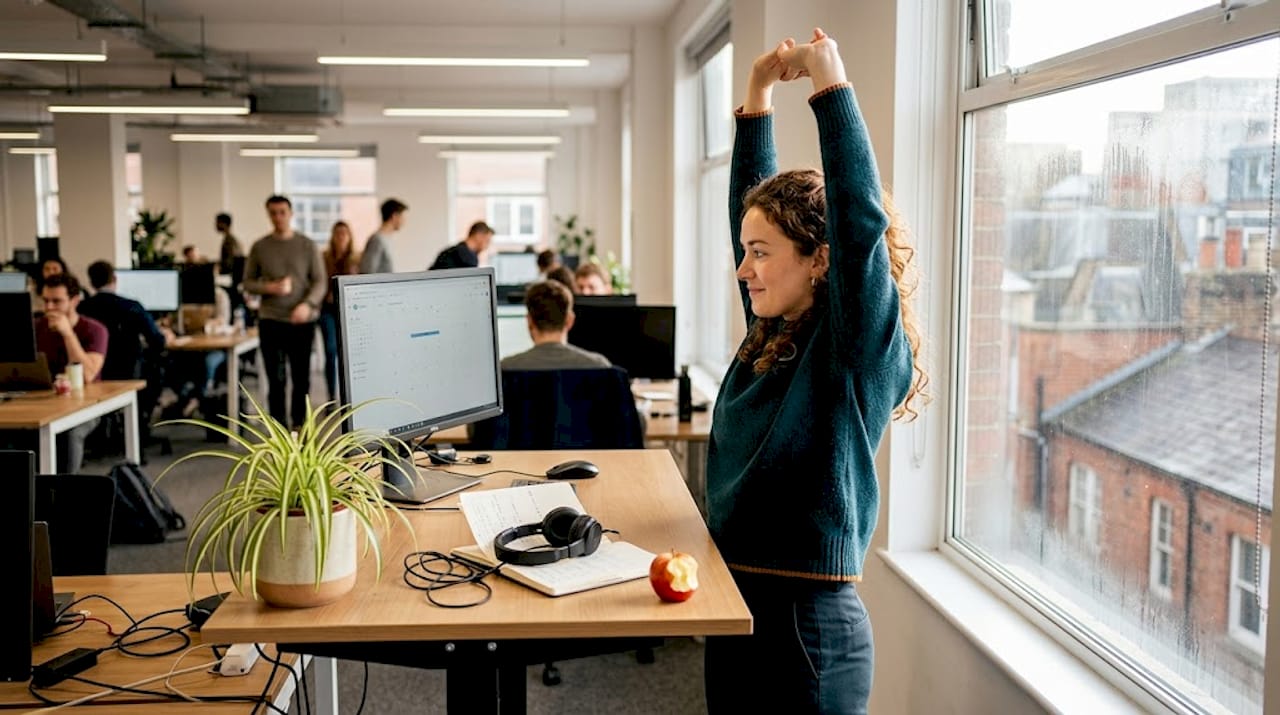
Biophilic design sits at the top of the list for good reason. Research into biophilic feature quality shows that perceived productivity in offices correlates strongly with the quality of natural features, with natural lighting and outdoor views scoring highest in occupant satisfaction. This means the investment is not just in adding a few pot plants; it is in maximising access to daylight, incorporating natural materials, and where possible, framing views of greenery.
Natural light deserves special attention. Offices with optimised daylighting report measurably better mood, lower absenteeism, and improved sleep quality among workers. If your floor plan makes natural light scarce, human-centric LED systems that mimic daylight cycles are a worthwhile substitute.
The British Council for Offices (BCO) has published guidance recommending that modern office design be people-centric, adaptable, technology-enabled, and aligned with net zero goals. These four pillars provide a practical checklist for any refurbishment project.
Here is a prioritised rundown of must-have features for effective offices:
Pro Tip: Before specifying furniture, map your team’s typical weekly activities. If 60% of their time is individual focused work, your layout should reflect that, even if collaboration feels like the priority.
| Feature | Primary benefit | Secondary benefit |
|---|---|---|
| Natural lighting | Mood and alertness | Reduced energy costs |
| Biophilic planting | Cognitive performance | Stress reduction |
| Modular furniture | Layout flexibility | Long-term cost efficiency |
| Acoustic panels | Focus and privacy | Reduced absenteeism |
| Smart technology | Hybrid connectivity | Space utilisation data |
You can also explore options around sustainable office furniture and materials that simultaneously improve indoor air quality and environmental credentials, while choosing pieces designed to improve office comfort for a wide range of users.
Principles are valuable, but your team needs strategies they can actually implement. The shift to hybrid working has prompted some of the most creative office design thinking in decades, and the results from early adopters are compelling.
The RSPCA’s hybrid redesign is a telling example. After restructuring their estate around hub spaces, touchdown areas, and dedicated collaboration zones, they saw well-being perception rise from 37% to 64% among staff, and achieved 50% savings on estate costs. That is not a marginal improvement; it is a transformation.
So what does a hybrid-ready design actually look like? Here are the core elements:
| Zone type | Furniture approach | Technology need |
|---|---|---|
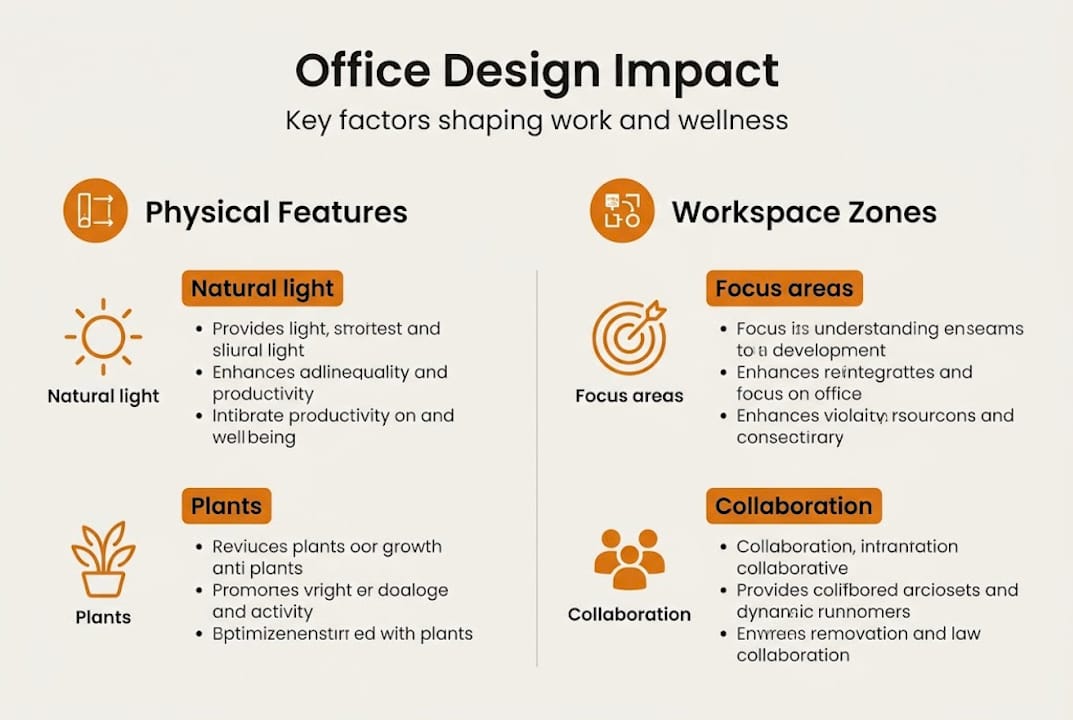
| Collaboration zone | Modular tables, soft seating | Large screen, conferencing kit |
| Focus zone | Individual desks, acoustic screens | Reliable Wi-Fi, task lighting |
| Touchdown area | High stools, café-style tables | Power sockets, laptop connectivity |
| Social space | Soft lounge chairs, informal tables | Optional screen for casual updates |
Choosing the right pieces for each zone matters enormously. Collaborative office furniture designed for group interaction differs significantly from task seating built for sustained individual work, and blurring those lines leads to spaces that serve neither purpose well.
Pro Tip: Plan for at least 20% more flexibility than you think you currently need. Work models will keep evolving, and furniture that cannot adapt becomes a sunk cost rather than an asset. Modular agile working furniture pays for itself precisely because it moves with you.
If you are starting a larger refurbishment project, reviewing a thorough office furniture buying guide before specifying will save you from costly mismatches between zone purpose and furniture specification.
Once your hybrid strategy is in place, the next layer of impact comes from aligning your office design with well-being and sustainability goals. These two aims are more closely connected than they might initially appear.
The BCO’s latest guidance is explicit: flexible, human-centric design incorporating AI and smart technology, circular economy principles, and multisensory well-being interventions is the direction of travel for offices serious about net zero. Smart sensors that control lighting and temperature based on occupancy do not just reduce energy bills; they also ensure that the environment is always calibrated for human comfort.
Here are the most impactful areas to focus on:
“Well-being and sustainability are not competing priorities. The healthiest offices for people are almost always the lightest on the planet too.”
For UK businesses with net zero commitments, the office fit-out is one of the most visible expressions of those values. Choosing eco-friendly office solutions alongside stylish and durable design demonstrates that sustainability and quality are not mutually exclusive. In fact, the most durable furniture typically has the lowest lifetime carbon footprint.
Here is something most office redesign conversations miss: the biggest risk is not spending too much on design. It is spending too little, then spending again in three years when the space stops working.
Short-term cost-cutting on office design tends to backfire in predictable ways. Cheap seating drives up musculoskeletal complaints. Inflexible layouts frustrate teams as headcounts fluctuate. Spaces that look good on day one but cannot be reconfigured become anchors rather than assets. The organisations that get this right treat design as an ongoing programme, not a one-off project.
What actually moves the needle, in our experience, is often the smallest interventions done consistently: a considered planting scheme, a modular furniture system, a well-placed acoustic screen. These changes shift workplace culture subtly but meaningfully. Staff notice when their environment has been thought about. That perception of care translates directly into engagement.
The practical lesson is to review your optimising furniture workflow regularly, not just after a major refurbishment. As hybrid models continue to evolve, the offices that stay ahead are those willing to iterate.
If this article has given you a clearer picture of what your office could achieve, the next step is finding the right furniture and solutions to bring those ideas to life.
At Furniture for Business, we supply design-led, durable commercial furniture to UK organisations of all sizes, with free delivery to the UK mainland. Whether you are sourcing office chairs to support long hours of focused work, office desks that flex between individual and collaborative use, or need to rethink your entire layout, our office design solutions cover every stage of the process. We offer bulk pricing, easy returns, and a range built for teams of 5 to 500.
Flexible zones, natural lighting, and collaborative areas help hybrid teams work effectively and feel connected. Human-centric, adaptable layouts are central to the BCO’s 2026 guidance for offices navigating hybrid working.
Biophilic designclean%20version%20FINAL%20with%20tables%20and%20figures%20included.pdf), such as adding plants and using natural light, boosts attention, creativity, and overall productivity while reducing stress. The quality of natural features, especially outdoor views and daylight, correlates most strongly with occupant satisfaction.
Yes. The RSPCA’s hybrid redesign cut estate costs by 50% and raised staff well-being perception from 37% to 64%, showing that thoughtful design delivers both financial and human returns simultaneously.
Investing in sustainable materials, circular models, and smart technology cuts emissions while keeping spaces healthy and comfortable. The BCO recommends AI-assisted systems and circular procurement as core tools for reaching net zero in commercial offices.
Phone: 0330 043 4114
VAT no. GB 991 8681 60
Company no. 07250570