Choosing the wrong conference table can derail your office refurbishment budget and leave your team with furniture that fails to support productive meetings or reflect your brand identity. Office managers across the UK face constant pressure to balance durability, design, and efficient bulk ordering when outfitting meeting spaces for teams of varying sizes. This guide walks you through a practical framework for selecting conference tables that deliver lasting value, from assessing space and seating needs to verifying quality on delivery, ensuring your 2026 office fit-out succeeds on every level.
| Point | Details |
|---|---|
| Measure space carefully | Accurate room dimensions and circulation space prevent costly ordering mistakes and layout issues. |
| Material choice matters | Selecting durable finishes like laminate or wood veneer reduces maintenance and extends table lifespan. |
| Bulk ordering saves money | Coordinating larger orders with reliable suppliers lowers unit costs and ensures design consistency. |
| Quality checks are essential | Inspecting deliveries for defects and coordinating installation timing protects your investment. |
Before you contact any supplier or browse catalogues, you need a clear picture of how your conference tables will actually be used. Start by analysing your typical meeting patterns over the past quarter. How many people attend your average team briefing? What about client presentations or board meetings? These numbers dictate your seating capacity requirements and help you avoid ordering tables that are either too cramped or wastefully large.
Measure your meeting room dimensions with precision, not guesswork. Record length, width, and ceiling height, then subtract at least one metre from each wall to ensure comfortable circulation space around the table. Measuring available space prevents costly ordering errors that force returns or awkward furniture placement. Consider doorway widths too, especially if you’re ordering larger tables that arrive fully assembled.
Table shape dramatically affects how your space functions. Rectangular tables suit formal boardrooms and maximise seating along longer walls. Oval designs soften the atmosphere for collaborative sessions whilst still offering generous surface area. Modular systems let you reconfigure layouts for different meeting types, though they require more storage space when not in use. Match your shape choice to both room proportions and meeting culture.
Don’t forget the supporting cast. Your conference table needs to coexist with chairs, AV equipment, presentation screens, and potentially storage units or credenzas. Factor in chair pull-out space, which typically adds 60-80cm behind each seated position. Cable management solutions for laptops and charging points may influence table placement relative to power outlets.
Pro Tip: Use free online room planning tools or scaled graph paper to visualise different table configurations before committing to an order, testing multiple layouts to identify the most efficient use of your available space.
Before placing any order, complete this essential checklist:
Explore office desks options to understand how conference tables integrate with your broader workspace furniture strategy, ensuring design consistency across meeting rooms and individual workstations.
Material selection determines whether your conference tables still look professional after five years of daily use or show embarrassing wear within months. Wood veneer offers natural beauty and executive appeal, though it requires careful maintenance to prevent water rings and scratches. Laminate surfaces provide excellent durability and stain resistance at lower price points, making them ideal for high-traffic meeting spaces. Glass creates a contemporary aesthetic and makes rooms feel more spacious, but shows fingerprints readily and can feel cold in traditional office settings.
Metal frames deliver structural strength and modern industrial style. Powder-coated steel resists chipping better than chrome, which can show wear at contact points. Aluminium frames weigh less, simplifying installation and future moves. Wooden legs suit heritage buildings or professional services firms wanting a classic look, though they may require periodic refinishing.
Material selection significantly impacts table durability and maintenance costs over the furniture’s working life, so prioritise surfaces that match your cleaning routines and usage intensity. A creative agency might embrace the patina that develops on reclaimed wood, whilst a law firm needs pristine surfaces for client meetings.
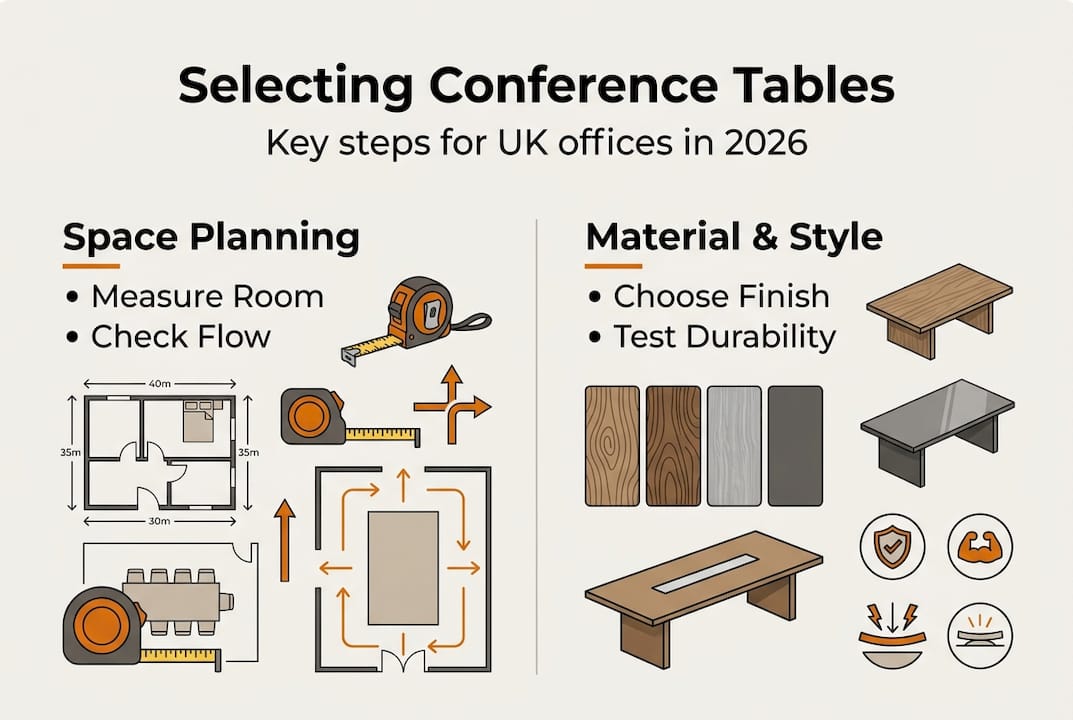
Design style communicates your brand values before anyone sits down. Traditional boardroom tables with rich wood tones and formal proportions signal established authority. Scandinavian-inspired designs with light woods and clean lines suggest innovation and transparency. Industrial styles featuring metal and reclaimed materials appeal to tech startups and creative businesses. Your conference table should feel like a natural extension of your reception area and office aesthetic, not an afterthought.
Finish colour affects room atmosphere more than most managers realise. Dark walnut or mahogany creates gravitas but can make smaller rooms feel enclosed. Light oak or white surfaces brighten spaces and pair well with glass partitions common in modern offices. Grey tones offer versatility, working across design styles whilst hiding minor marks better than pure white.
Pro Tip: Request material samples from suppliers before finalising orders, testing how finishes respond to coffee spills, pen marks, and laptop friction to ensure they’ll withstand your team’s actual working habits.
| Material | Durability rating | Maintenance needs | Visual appeal | Cost bracket |
|---|---|---|---|---|
| Laminate | High | Low (wipe clean) | Modern, versatile | Budget to mid |
| Wood veneer | Medium to high | Medium (periodic treatment) | Premium, warm | Mid to high |
| Glass | Medium | High (frequent cleaning) | Contemporary, sleek | Mid to high |
| Solid wood | Very high | High (refinishing) | Traditional, prestigious | High to premium |
Warranty terms reveal manufacturer confidence in their products. Look for suppliers offering at least three years on structural components and two years on surfaces. Verify what the warranty actually covers, as many exclude damage from normal wear or improper cleaning. Strong supplier support means faster resolution when issues arise, protecting your investment and minimising meeting room downtime.
Browse office design guides to see how conference table choices integrate with broader workplace design trends for 2026, ensuring your meeting spaces feel current rather than dated.
Bulk ordering transforms conference table procurement from a series of individual purchases into a strategic project that delivers measurable savings. When you order multiple tables simultaneously, suppliers can offer volume discounts ranging from 10% to 25% depending on quantities and product lines. Beyond price, bulk orders ensure perfect design consistency across all your meeting spaces, avoiding the frustration of discontinued lines or slight colour variations between batches.
Project management becomes simpler when furniture arrives together. You coordinate one delivery window instead of juggling multiple shipments, reducing disruption to your working teams. Installation crews work more efficiently when completing similar tasks consecutively rather than returning for individual pieces. Bulk ordering can lower costs but requires clear negotiation and timing coordination with your fit-out schedule.
Selecting the right supplier matters as much as choosing the right tables. Start by verifying their delivery coverage, confirming they service your specific UK location without surcharges. Review their lead times honestly, as custom or bulk orders typically require 6-12 weeks from confirmation to delivery. Check customer testimonials specifically mentioning commercial orders, not just individual purchases, since business-to-business service differs significantly from consumer sales.
Follow this supplier evaluation sequence:
Demand physical samples or showroom visits before confirming bulk orders. Photographs never capture texture, finish quality, or colour accuracy reliably. Seeing and touching the actual product prevents expensive disappointments when your delivery arrives. If samples aren’t possible, request detailed material specifications and finish codes you can verify independently.
Timing your order requires working backwards from your fit-out completion date. Add buffer time for potential delays, especially if ordering during peak periods like late summer when many businesses refresh offices before autumn. Communicate your absolute deadline clearly, confirming whether the supplier can guarantee delivery by that date or only provide estimated windows.
Pro Tip: Establish relationships with two or three reliable suppliers rather than always chasing the lowest quote, as preferred customer status often unlocks better service, priority manufacturing slots, and flexibility when you need urgent replacements or additions.
Common bulk ordering pitfalls drain budgets and delay projects. Over-ordering based on optimistic growth projections leaves you paying for storage or disposing of unused furniture. Under-ordering forces you back to market at higher unit prices when discontinued lines mean you can’t match existing pieces. Vague specifications lead to suppliers delivering technically correct items that don’t meet your actual needs. Ignoring delivery logistics means tables arrive when installation crews aren’t available or access is blocked.
Explore meeting room furniture options to coordinate conference tables with complementary seating, storage, and presentation equipment as part of a cohesive bulk order strategy.
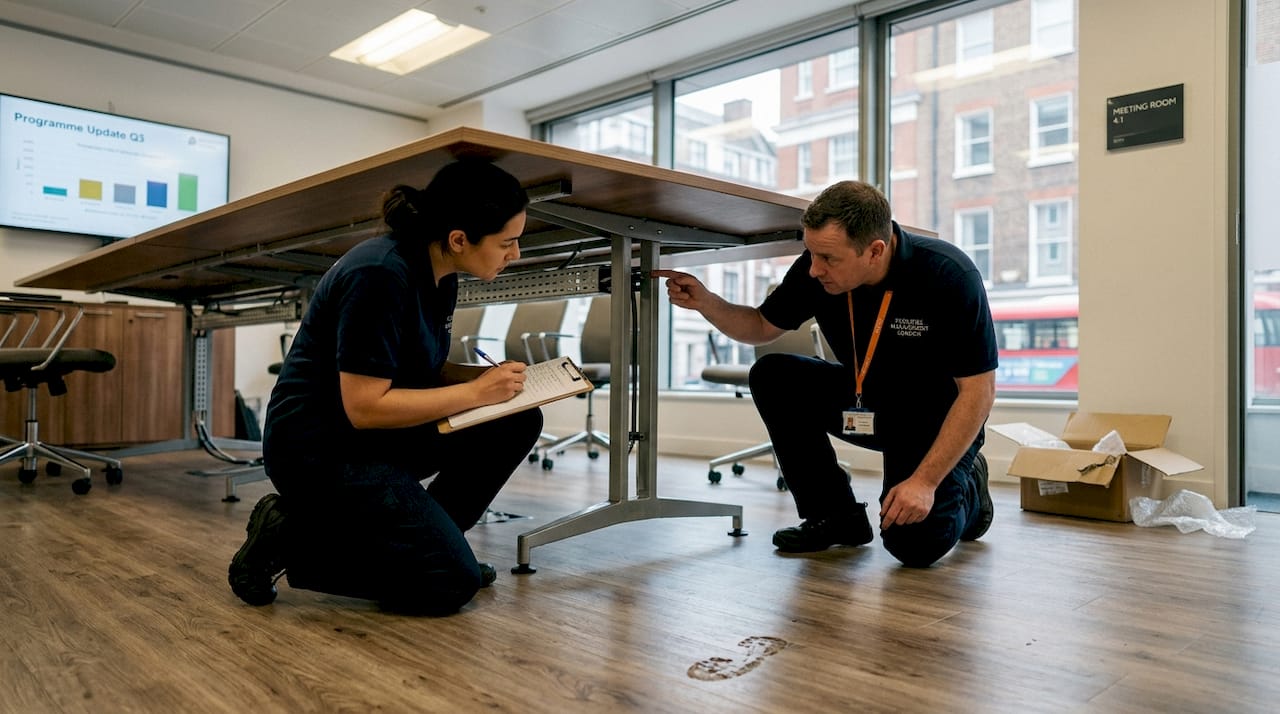
Your responsibility doesn’t end when the delivery lorry arrives. Thorough quality inspection protects you from absorbing costs for damaged or substandard items that should be the supplier’s problem. Create a systematic checking process before signing any delivery documentation, as your signature typically transfers liability from carrier to recipient.
Inspect each table immediately upon unpacking, working through this quality checklist:
Post-delivery quality checks reduce costly replacements or delays by catching issues whilst the supplier relationship and delivery records are fresh, making resolution faster and clearer.
Document everything with photographs. Capture overall views and close-ups of any defects from multiple angles. These images become essential evidence if disputes arise about damage responsibility or specification compliance. Note serial numbers or batch codes visible on tables or packaging, creating a paper trail that links specific items to your order.
Coordinate installation timing to minimise business disruption whilst ensuring adequate access and resources. Weekend or evening installations keep meeting rooms available during peak working hours, though they may incur premium labour rates. Communicate clearly with your team about which spaces will be unavailable and for how long, providing alternative meeting locations.
Pro Tip: Schedule installation at least one week before you actually need the meeting rooms operational, building in contingency time for addressing any unexpected issues without creating crisis pressure on your project timeline.
Professional installation services typically include positioning tables, levelling feet or castors, and removing packaging materials. Clarify exactly what’s included in your quote versus additional charges. If you’re managing installation internally, ensure you have adequate staff and equipment, as larger conference tables often require four people to manoeuvre safely.
Address defects or missing items immediately through formal channels. Contact your supplier within 24 hours of delivery, providing your documentation and photographs. Follow up written complaints with phone calls to ensure they’re being processed. Most reputable suppliers will arrange replacement or repair quickly for genuine manufacturing defects, but delays in reporting weaken your position.
Link quality assurance to overall meeting room functionality by testing tables in realistic scenarios before declaring the project complete. Host a test meeting to verify adequate space, comfortable seating positions, and effective cable management. This practical validation often reveals minor adjustments needed for optimal performance.
Review conference room essentials to ensure your quality verification process extends beyond tables to all supporting furniture and equipment that complete a functional meeting space.
Furniture For Business supplies conference tables designed specifically for UK commercial environments, combining durability with contemporary design that enhances your professional image. Our meeting room furniture collection includes options for every space size and budget, from compact tables for six-person briefings to impressive boardroom centrepieces seating twenty or more. We specialise in bulk orders that equip entire office floors with consistent, quality furniture whilst delivering the pricing advantages your procurement budget demands.
Browse our complete meeting room furniture options to coordinate tables with ergonomic seating and storage solutions. Our expert team provides space planning guidance and specification support, ensuring your selections meet both functional requirements and design aspirations. Explore complementary office chairs collection and office desks selection to create cohesive workspaces throughout your organisation.
Allow at least one metre of clearance around all table edges to ensure comfortable movement and chair access. This spacing accommodates people walking behind seated colleagues without disruption. For rooms with additional furniture like credenzas or presentation equipment, increase clearance to 1.2-1.5 metres to maintain easy circulation.
Laminate and melamine finishes offer excellent scratch resistance and clean easily with standard office products, making them ideal for high-traffic meeting spaces. These materials withstand daily use without showing wear patterns that plague softer woods or high-maintenance glass surfaces. Avoid untreated wood or glass in busy environments unless you’re prepared for frequent specialist cleaning and refinishing.
Many suppliers, including Furniture For Business, accommodate bulk orders with custom dimensions to fit specific room layouts or unusual space constraints. Early communication with suppliers is essential to confirm customisation capabilities, understand minimum order quantities, and factor extended lead times into your project schedule. Custom orders typically add 2-4 weeks to standard delivery windows.

Phone: 0330 043 4114
VAT no. GB 991 8681 60
Company no. 07250570