TL;DR:
- True design led furniture is built on human-centered processes, durability, and sustainability.
- It offers long-lasting performance, supports wellbeing, and aligns with environmental goals.
- Proper procurement involves verifying cycle counts, materials, joinery, and certifications to ensure quality.
Many office managers assume that “design led” is simply a polished way of saying “looks expensive.” It is not. True design led furniture is built around human-centred processes, prototyping, and sustainable materials that serve real working environments for years, not months. For procurement teams sourcing furniture for teams of five to five hundred, this distinction matters enormously. Get it wrong and you are replacing chairs and desks every three years. Get it right and you are investing in a workspace that supports productivity, wellbeing, and your sustainability commitments simultaneously. This article unpacks exactly what design led means, why it matters for UK offices, and how to procure it confidently.
| Point | Details |
|---|---|
| True design led value | Design led furniture balances style, durability, and user-centred features to enhance office environments. |
| Procurement verification | Office managers should check key engineering details and cycle counts when selecting new furniture. |
| Sustainability advantage | Circular design and serviceability features support both eco-goals and long-term cost savings. |
| Team-sized adaptability | Design led solutions work for small teams, entire departments, and growing businesses alike. |
Strip away the marketing language and design led furniture comes down to a disciplined process. It begins with research into how people actually use furniture at work, not how designers imagine they might. From there, manufacturers build prototypes and test them under real conditions, refining materials and construction until the product performs consistently across thousands of use cycles.
The executive office design guide makes clear that the best workspaces are built around function first, with aesthetics following naturally from sound engineering decisions. That is the essence of design led thinking.
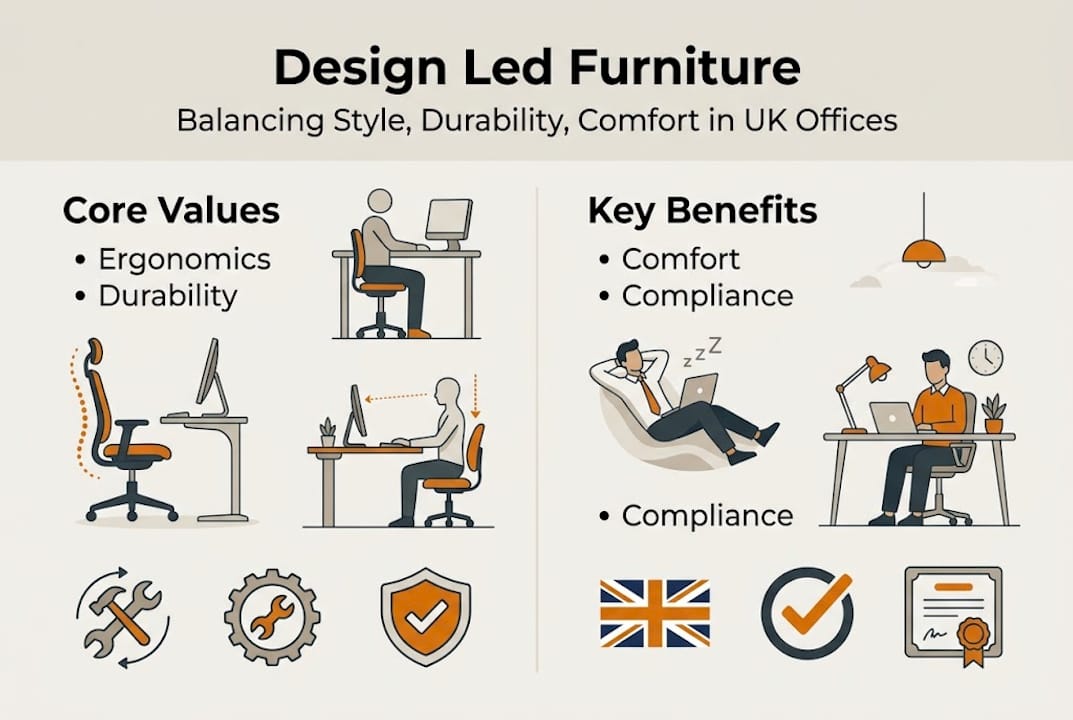
So what does this look like in practice? The mechanics of design led furniture involve human-centred design processes: research on user behaviours, prototyping in controlled environments, precise engineering using materials such as kiln-dried wood and cold-rolled steel, and circular design principles that allow for serviceability and sustainability throughout the product’s life.
Here are the core attributes that separate genuinely design led furniture from decorative imitations:
“Design led furniture is not about surface appeal. It is about building something that works better, lasts longer, and can be renewed rather than replaced.”
For office managers specifying furniture for office reception design or open-plan workstations, this framework is a practical filter. If a supplier cannot explain their prototyping process or material specifications, the product is almost certainly not design led in any meaningful sense.
The distinction also matters for compliance. UK Health and Safety Executive guidelines require employers to provide suitable seating that supports the lower back. Furniture built around ergonomic research is far more likely to meet these requirements than pieces chosen purely for visual appeal.
The gap between fast-furniture and engineered solutions becomes obvious the moment you look at real-world performance data. Fast-furniture, typically flat-pack pieces assembled from low-density particleboard and thin foam, begins degrading within eighteen months of regular use. Joints loosen, foam compresses permanently, and finishes chip. Engineered alternatives are built to a completely different standard.
Manufacturers using rigorous testing methods, such as prototyping in controlled facilities that assess comfort and ergonomics, specify materials like BioPUR foam and FSC-certified timbers, and design for reupholstery and renewal, produce furniture that maintains its performance over a decade or more.
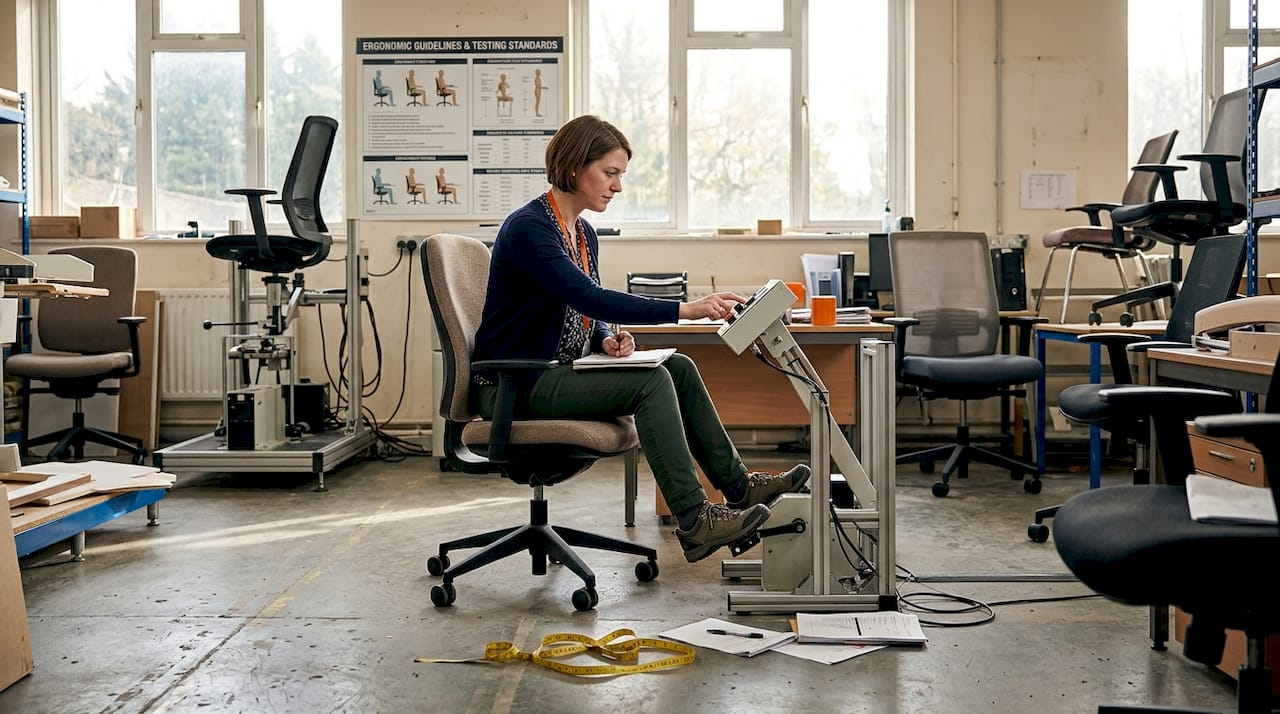
For procurement teams, this translates into measurable advantages:
| Feature | Fast-furniture | Design led furniture |
|---|---|---|
| Foam density | Low (under 35 kg/m³) | High (40 kg/m³ or above) |
| Frame material | Thin particleboard or MDF | Kiln-dried hardwood or cold-rolled steel |
| Expected lifespan | 2 to 4 years | 10 to 20-plus years |
| Reupholstery option | No | Yes |
| Sustainability credentials | Rarely certified | FSC, BioPUR, circular design |
| Total cost over 10 years | High (repeated replacement) | Lower (single investment) |
Pro Tip: When comparing quotes, always calculate the ten-year total cost of ownership rather than the unit price. A chair costing £400 that lasts fifteen years is significantly cheaper than a £150 chair replaced every three years.
The productivity argument is equally compelling. Research consistently links physical comfort to sustained concentration and reduced absenteeism. When your team is not shifting in their seats to relieve discomfort, they focus better and take fewer breaks due to back pain. Choosing durable office furniture is therefore not just a facilities decision. It is a performance decision.
For offices pursuing environmental targets, sustainable office furniture built on circular design principles also supports corporate sustainability reporting, an increasingly important consideration for UK businesses operating under ESG frameworks.
Knowing what design led furniture is and actually procuring it are two different challenges. Suppliers frequently use the term loosely, so verification is essential. Here is a structured approach that procurement managers can apply immediately.
Step-by-step procurement checklist:
The structural physics of durable furniture confirm that engineered products are built to resist the cumulative stresses of daily use, while fast-furniture fails at joints and foam cores long before its visual surface shows obvious wear.
| Verification step | What to ask | Red flag |
|---|---|---|
| Cycle count | “What is the tested sit cycle rating?” | No data available |
| Foam density | “What is the foam specification in kg/m³?” | Below 35 kg/m³ |
| Joinery | “What joinery method is used?” | Dowel or staple construction |
| Certifications | “Do you hold FSC or GREENGUARD certification?” | No third-party certification |
Pro Tip: Always request a physical sample before committing to a bulk order. Sit in the chair for twenty minutes. Press the foam. Check the joints. No reputable supplier will refuse this request.
The durable furniture buying guide offers further detail on verifying construction quality across cycle counts, foam density, and joinery, distinguishing genuinely engineered products from fast-furniture that fails early.
Design led furniture is not reserved for executive suites or flagship reception areas. Its principles apply equally to a ten-person start-up fitting out a serviced office and a five-hundred-person corporate team undertaking a full refurbishment.
The key is applying the right product category to the right environment. Here is how design led thinking translates across common workspace scenarios:
For teams managing a phased refurbishment, office furniture bundles offer a practical route to consistent quality across multiple product categories without inflating the per-unit cost. Understanding what contract furniture means is also useful context, as contract-grade products are specifically engineered for commercial environments with high use frequency.
For teams experiencing high rates of back pain or discomfort complaints, the right ergonomic office furniture can reduce these issues significantly, with wellbeing benefits that extend well beyond the furniture itself.
Here is the uncomfortable reality: most procurement decisions in UK offices are still driven by unit price and visual appeal. Buyers browse catalogues, pick what looks good within budget, and move on. The idea of requesting foam density specifications or cycle count data feels unnecessarily technical for what is, on the surface, just a chair.
But this mindset is expensive. The offices that replace their furniture every three to five years are not saving money. They are spending more, generating more waste, and repeatedly disrupting their workspace in the process.
Serviceability and sustainability are central to modern design led furniture, yet they remain the most overlooked attributes in procurement decisions focused on upfront cost. A chair that can be reupholstered at year eight costs a fraction of a replacement. A desk frame built from cold-rolled steel will outlast three generations of flat-pack alternatives.
The sustainable furniture benefits extend beyond cost too. ESG reporting, supplier ethics, and circular economy commitments are becoming standard expectations for UK businesses. Furniture procurement is a surprisingly visible part of that story.
The shift in mindset is simple: stop buying furniture and start investing in workspace infrastructure.
If this article has shifted how you think about office furniture procurement, the next step is straightforward. At Furniture for Business, we supply design led, contract-grade furniture to UK businesses of all sizes, with free delivery to the UK mainland and bulk order pricing available.
Browse our range of office chairs built to ergonomic and durability standards that genuinely match what we have described here. Explore our office desks, including height-adjustable options engineered for long-term stability. And if you are specifying breakout or reception areas, our design led soft seating collection offers circular-design pieces built for renewal. Speak to our team for bulk pricing, samples, and specification support tailored to your project.
Design led furniture prioritises ergonomic research, durability, and sustainability through human-centred processes and precision engineering, while standard pieces typically focus on appearance or low unit cost without the same structural rigour.
Check construction details including cycle count ratings, foam density in kg/m³, joinery methods such as mortise-and-tenon, and whether the product supports renewal through reupholstery options to confirm it meets genuine engineering and serviceability standards.
Yes. Design led furniture is engineered for durability and ergonomic support regardless of team size, with circular design principles making it adaptable and sustainable for businesses at every scale.
While upfront costs are often higher, engineered furniture longevity reduces replacement frequency and ongoing maintenance costs, delivering a lower total cost of ownership over ten to twenty years compared with fast-furniture alternatives.
Phone: 0330 043 4114
VAT no. GB 991 8681 60
Company no. 07250570