Budget roughly £400 to £900 for a complete workstation (desk, task chair, basic pedestal) at mid-range commercial specification, with per-person office fit-out costs typically running between £1,400 and £5,000 depending on finish and collaborative space allocation. Entry-level chairs start at relatively low prices, height-adjustable desks at modest entry points, and lockable filing cabinets rated for commercial use typically cost a few hundred pounds. The fastest way to firm up a number for your own office is to request a per-seat trade quote from Furnitureforbusiness, which supplies bundled desk, chair and storage packages with free UK mainland delivery.
Here’s how the main categories break down before you go any further:
Pro Tip: Get a written breakdown of delivery, installation and disposal of old furniture before you sign off a quote. Suppliers often quote furniture prices excluding these, and installation on a 25 desk fit-out can add hundreds of pounds you won’t see until the invoice lands.
Office furniture prices in the UK typically span £1,400 to £5,000 per person for a full fit-out, with chairs, desks and storage priced in clear, predictable bands by specification level.
| Point | Details |
|---|---|
| Set a per-person budget | Use £1,400–£5,000 per person as your working range, adjusting for finish and collaboration space. |
| Price chairs by use case | Budget chairs from £70, mid-range from £150, ergonomic/executive from £400 up past £1,000. |
| Don’t forget hidden costs | Add delivery, installation and old furniture disposal to your total before finalising a brief. |
| Order in bundles for bulk savings | Per-seat costs fall from roughly £400–£900 at 5 seats to £150–600 at 100 seats with trade pricing. |
| Request a tailored quote | Furnitureforbusiness offers bundled desk, chair and storage packages with free UK mainland delivery and warranties up to 10 years. |
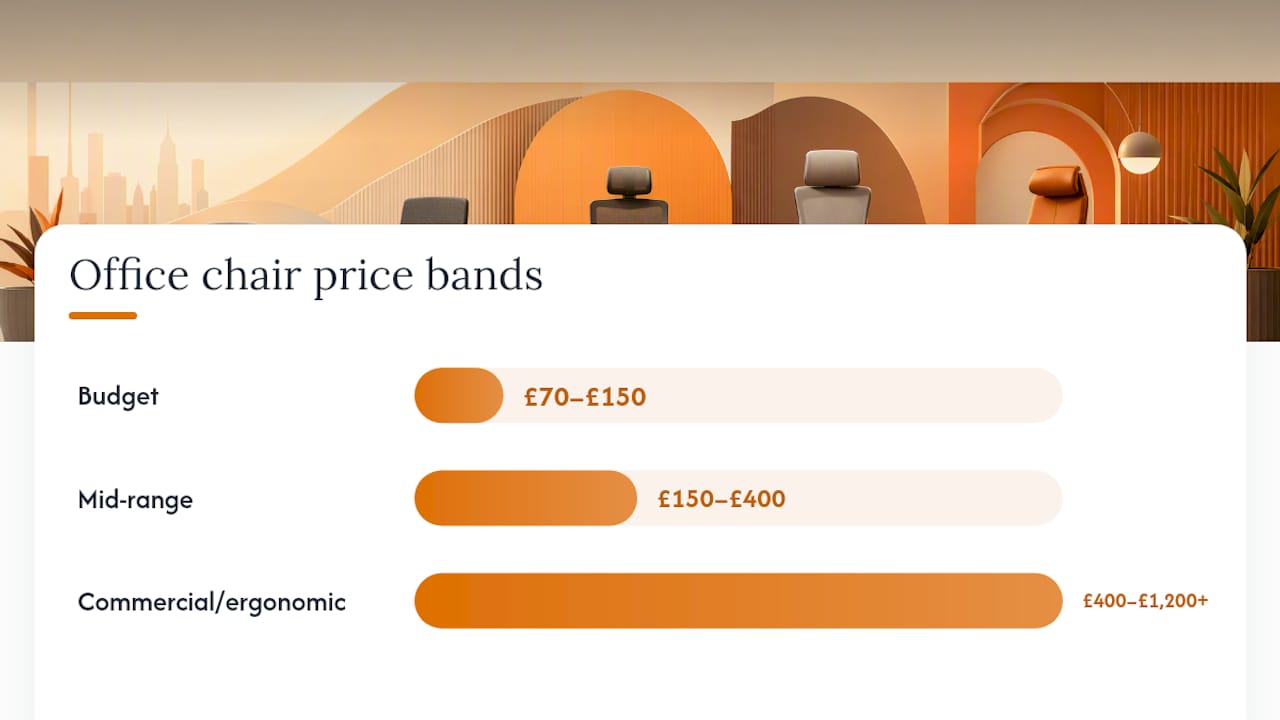
Chair pricing splits cleanly into three tiers, and the difference between them is rarely cosmetic. It’s the mechanism, the certification, and how long the chair survives a nine-hour shift.
At the bottom end, IKEA’s FLINTAN sells for £79 and carries a 10-year guarantee, a useful benchmark for what “cheap but not disposable” looks like. These chairs suit occasional-use spaces, hot-desking zones, or start-ups furnishing their first office on a tight budget. What you lose at this price is adjustability. Most budget chairs offer height adjustment only, with fixed arms and no lumbar dial.
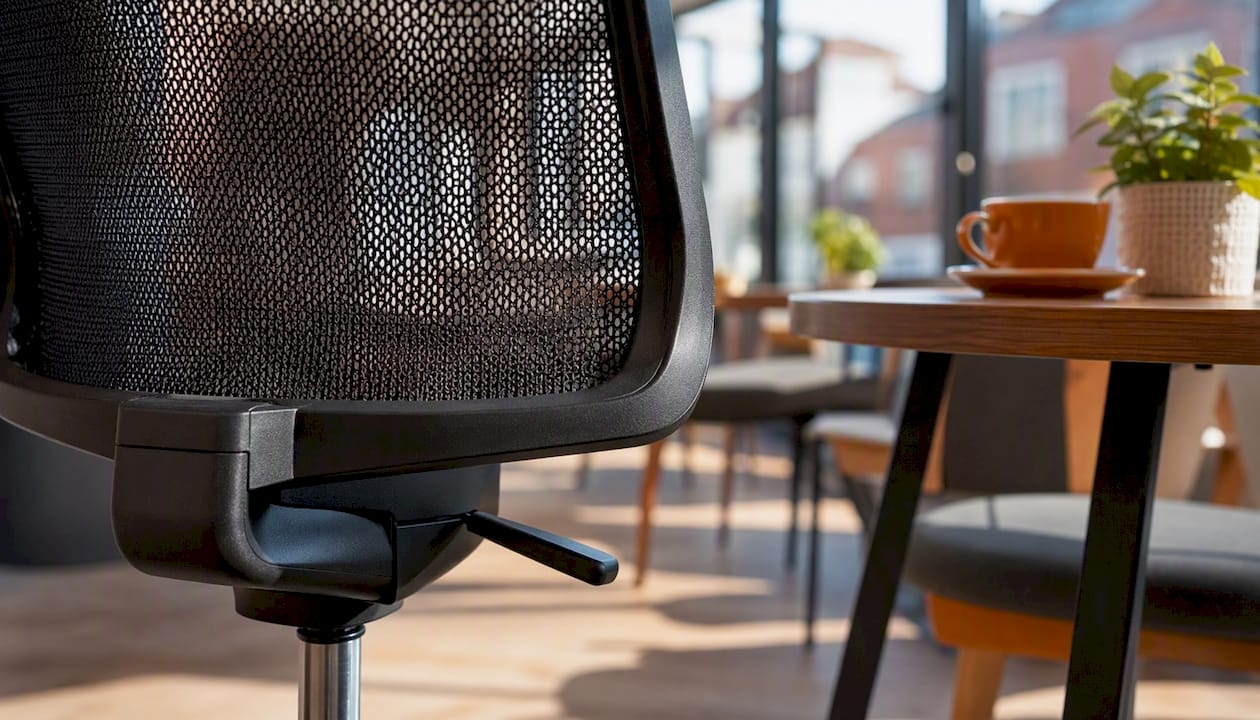
Mid-range chairs, typically £150 to £400, add seat depth adjustment, adjustable lumbar support, and breathable mesh backs rated for continuous eight-hour use. This is where most commercial task and operator chairs sit, including options like the Austin Heavy Duty Task Operator Chair, built for daily use rather than occasional visitors.
At the top, ergonomic and executive chairs run from £400 up past £1,000. Guardian testing found this exact spread, with premium ergonomic models justified by independently tested pressure distribution and multi-point adjustment rather than branding alone. Executive seating, such as the Saturn Executive Chair with folding arms, sits in this bracket and suits leadership offices or client-facing meeting rooms.
| Price band | Typical range | Best for | Warranty/lead time | Material/finish notes |
|---|---|---|---|---|
| Budget | £70–£150 | Hot-desking, occasional use | 1–10 years; usually in stock | Fabric or basic mesh, fixed arms |
| Mid-range | £150–£400 | Daily task and operator use | 3–5 years; 3–7 day lead time | Breathable mesh, adjustable lumbar, PU or fabric |
| Commercial/ergonomic | £400–£1,200+ | All-day use, executive offices | 5–10 years; 5–10 day lead time | Certified load ratings, multi-point adjustment, premium upholstery |
Whichever band you’re buying into, check for a tested load rating (commercial chairs are usually rated to 22 to 24 stone) and confirm the warranty covers the gas lift and mechanism, not just the frame. You’ll find a fuller breakdown of what separates lasting chairs from short-lived ones in Furnitureforbusiness’s guide to durable office furniture.
Fixed desks remain the cheapest way to furnish a workstation, but height-adjustable desks have become the default spec for most UK offices refitting for hybrid working, and the price gap has narrowed considerably.
A basic fixed desk with a laminate top and steel frame costs £90 to £250. Bench desking, where two or more workstations share a frame, brings the per-person cost down further and suits open-plan layouts with tight floorplates. Manager and executive desks with veneer or solid wood tops push into £300 to £600 territory, largely because of the surface material rather than the frame.
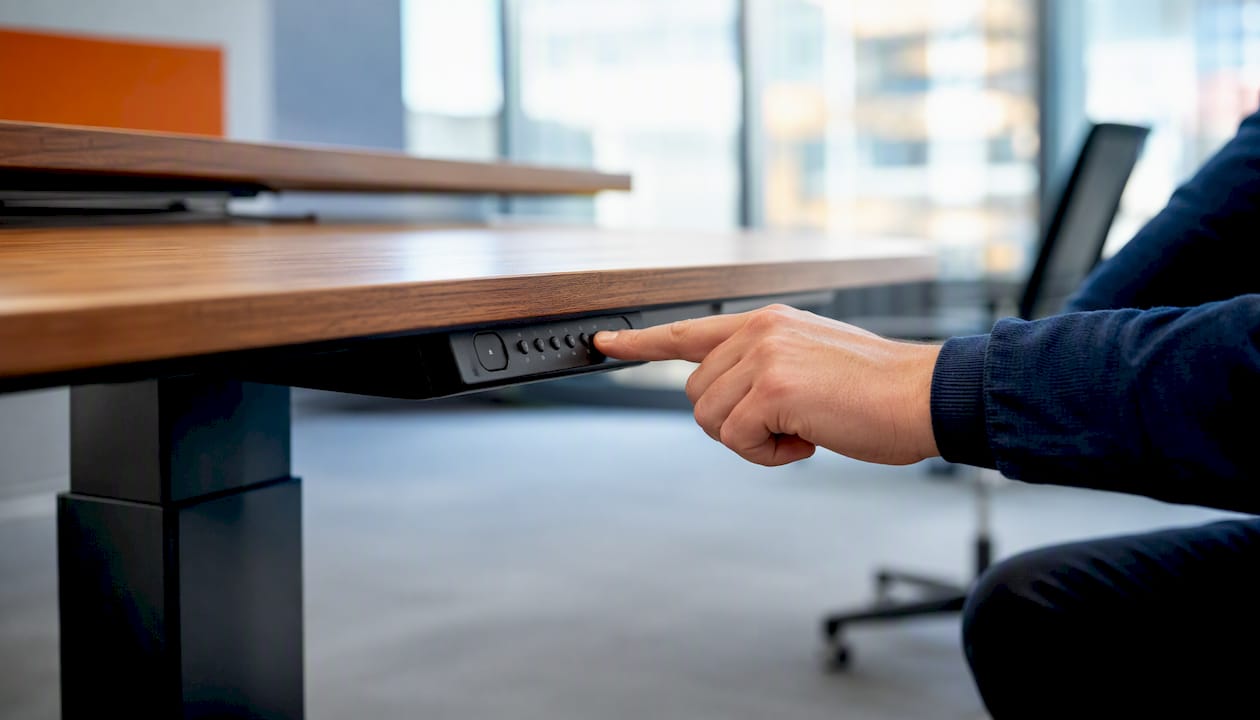
Height-adjustable desks start around £250 for a single-motor electric frame and run to £900 for dual-motor bench configurations with built-in cable management and higher lift capacity. The Air Height Adjustable Slimline Desk with cable ports sits in the mid-range of this bracket, while simpler frames without integrated cable routing, such as the Air Height Adjustable Desk without cable ports, cost slightly less.
Several factors move the price beyond frame type alone:
| Configuration | Typical price | Notes |
|---|---|---|
| Fixed single desk | £90–£250 | Laminate top, steel frame |
| Bench desking (per person) | £150–£350 | Shared frame reduces per-seat cost |
| Height-adjustable single | £250–£400 | Single or dual motor |
| Height-adjustable bench (per person) | £250–£600 | Best value for hybrid teams |
| Executive/manager desk | £300–£900 | Veneer or solid wood options |
Always check the lift range and cycle rating in the spec sheet. A frame rated for fewer than 6,000 lift cycles won’t hold up well in a busy hybrid office where desks move position several times a day. For teams weighing whether a custom configuration is worth the premium, Furnitureforbusiness’s notes on bespoke office desks cover when a made-to-measure build genuinely pays off.
Storage is where procurement teams most often underspend, and it shows up later as broken drawer runners, doors that won’t lock properly, or cabinets that buckle under sustained weight.
Mobile pedestals start around £80 for a basic two-drawer unit and rise to £180 for lockable, ball-bearing runner versions built for daily use. Filing cabinets, particularly the four-drawer commercial-grade type most offices need for compliance documents, run from £150 to £350. Tall lockable cupboards for shared storage or IT equipment sit between £200 and £450, with steel construction commanding a premium over MDF carcasses.
The trade-off is straightforward: cheaper storage uses lighter-gauge steel or MDF, which flexes and wears faster under repeated use. Commercial-grade storage, by contrast, uses thicker steel, ball-bearing drawer slides rated for tens of thousands of cycles, and lock mechanisms tested to a recognised standard.
Before ordering, specify:
Pro Tip: Pay the premium for commercial-grade storage anywhere the unit gets opened more than a handful of times a day. Reception, print rooms, and shared stationery cupboards see far heavier use than a personal pedestal, and cheap runners fail there first.
For a longer look at matching grade to use case, see Furnitureforbusiness’s guide on commercial-grade furniture value, and the category page for office storage if you’re specifying against a floor plan already.
Front-of-house and collaboration spaces are where clients form their first impression, and finish choices move price far more than they do for back-office desks.
A basic meeting table for six seats, laminate top on a steel frame, costs £200 to £400. Move to a veneered or solid-wood boardroom table for ten to twelve seats and you’re looking at £800 to £2,000 or more, depending on timber species and whether cable management or integrated power modules are built in. Bench-style meeting seating for informal breakout areas runs £150 to £400 per bench, while reception sofas span a wide range: fabric two-seaters from £300, through to leather-effect or genuine leather reception seating at £600 to £1,500.
Finish is the real lever here. A laminate table and a solid oak table of the same dimensions can differ by £1,000 or more, and that gap is almost entirely about the material rather than the joinery. This is one of the areas where design, quality and material finish genuinely change both price and how professional a space feels to a visiting client.
Pro Tip: If budget is tight, spend disproportionately on the reception area and the main client-facing meeting room, and keep internal breakout furniture simpler. Visitors judge the business by the first room they sit in, not the fourth-floor kitchen.
Match your meeting-room specification to how the space actually gets used. A boardroom that hosts client pitches twice a month justifies a higher finish than an internal huddle room used for daily stand-ups. Furnitureforbusiness’s meeting room range covers both ends of that spectrum, and the conference room essentials list is worth checking before you finalise a brief.
Take a 20-person office fitting each desk with a monitor arm, a cable tray and a chair mat: that’s roughly £60 to £175 per desk, or £1,200 to £3,500 across the floor. Monitor arms and cable management are close to essential in any hybrid office, since they reduce desk clutter and cut the risk of trip hazards around cable runs. Screen dividers and chair mats are more situational: worth it in open-plan acoustic zones, less necessary in cellular offices or on hard flooring. Browse the full range on Furnitureforbusiness’s office accessories page to see what’s genuinely worth including in a first-round quote.
Unit price drops meaningfully once you’re ordering for a whole floor rather than a handful of desks, and most UK suppliers price bulk orders on a sliding scale tied to seat count.
| Order size | Typical per-seat cost (desk + chair + pedestal) | Notes |
|---|---|---|
| 5 seats | £400–£900 | Limited discount; standard retail-adjacent pricing |
| 25 seats | £200–900 | Trade pricing typically kicks in; consolidated delivery |
| 100 seats | £150–600 | Volume discount, single delivery window, dedicated account handling |
Getting the best rate on a larger order comes down to a handful of practical moves:
A typical Furnitureforbusiness quote for a 25-seat refurbishment breaks down as a desk and chair bundle price, a fixed installation fee based on floor access, and free delivery to UK mainland addresses. Before you request a formal quote, have ready: floor plans or seat count, any access restrictions (lift size, stairs, loading bay availability), your target delivery window, and whether old furniture needs removing.
Lead times vary sharply between stock items and made-to-order pieces, and this is one of the most common points where a project timeline slips.
Delivery cost hinges largely on whether you’re within free delivery terms. Furnitureforbusiness offers free delivery to UK mainland addresses, which removes one of the more unpredictable line items from a quote. Suppliers without that policy commonly charge £30 to £150 per pallet depending on distance and access, with installation typically quoted separately at £15 to £40 per item for assembly on-site.
Before you confirm an order, run through this checklist with your supplier:
Warranty length is one of the clearest signals of how a manufacturer expects a product to perform under sustained commercial use, so it’s worth reading the small print rather than taking the headline number at face value.
Run through this before confirming any order:
Returns policies differ meaningfully between consumer and commercial orders. A domestic buyer returning a single chair under consumer protection rules has different rights to a business that’s ordered 40 units to a commercial specification, so check the supplier’s trade terms specifically rather than assuming standard consumer returns apply.
If you’re furnishing a heavy-use environment, such as a reception desk used by multiple shifts or a training room with high daily turnover, specify commercial-grade items rather than domestic-rated furniture; domestic ratings assume far lighter and less frequent use than a working office generates. On the tax side, capital allowances and VAT treatment for furniture purchases are covered in Gov, which is worth checking before you finalise a budget, particularly if you’re planning to claim the purchase against corporation tax.
Furnitureforbusiness’s estimates below assume a mid-range commercial specification: height-adjustable desks, ergonomic task chairs, standard storage, and a modest allocation for a shared meeting space.
These figures sit comfortably within the wider industry benchmark of £1,400 to £5,000 per person once you factor in higher collaboration-space spend at larger seat counts. A few things move the total meaningfully:
If your brief doesn’t match any of these three scenarios cleanly, request a no-obligation sample quote from Furnitureforbusiness tailored to your actual floor plan and seat count rather than working from an averaged range.
Vetting a supplier properly before you commit a five-figure budget takes less time than fixing a bad order after the fact. Work through this sequence:
When you’re on the phone with a prospective supplier, a short set of direct questions cuts through most sales pitches: What’s your standard lead time for this exact item, not the category average? Is installation included or charged separately? What happens if an item arrives damaged, who covers the redelivery cost? Can you provide a written trade account quote rather than a verbal estimate?
Watch for these red flags:
The single most common mistake in office furniture procurement isn’t overspending, it’s under-specifying storage and accessories, then discovering the “final” quote was never final at all.
Teams price up desks and chairs carefully, get comparative quotes, negotiate hard on the headline number, and then treat pedestals, cable trays and monitor arms as an afterthought bolted on at the last minute. By the time those get added, there’s rarely budget headroom left, and something else gets cut to compensate, usually chair quality, which is the worst place to economise given how many hours a day people spend in that seat.
Trade pricing and bundled packages genuinely do save both time and money, but only when the brief is clear from the outset. A vague brief invites a vague quote, and a vague quote is where scope creep hides. The procurement teams who get the best outcomes are the ones who send a full brief, including accessories and storage, in the first request rather than adding items in round two or three of negotiation.
One habit worth adopting before any full order: request sample chairs or a small pilot batch of desks before committing to a 50 or 100 unit order. Staging approvals this way costs a little time upfront but avoids the far more expensive problem of discovering, after delivery, that the fabric feels wrong under fluorescent lighting or the desk height doesn’t suit half your team.
Furnitureforbusiness is the practical alternative to sourcing furniture piece by piece from multiple retailers: one trade account, one delivery date, and pricing that actually reflects your seat count rather than a generic online listing. Instead of chasing separate quotes for chairs, desks and storage, you get a single bundled quote with free delivery to UK mainland addresses built in from the start.
The range covers everything this guide has walked through: ergonomic and executive office chairs, height-adjustable desks in single and bench configurations, commercial-grade storage, and meeting-room furniture, all available at trade pricing that improves with order size. Warranties run up to 10 years on chair mechanisms and desk frames, and installation can be included in the same quote as delivery, so there’s no separate invoice landing after the fact.
If you’re planning a refit for 5 people or 500, request a per-seat sample quote through Furnitureforbusiness and get real numbers against your actual floor plan rather than working from a general price guide.
For a tailored quote against your own floor plan, visit Furnitureforbusiness’s trade pages and request a sample budget built around your actual seat count and specification.

Phone: 0330 043 4114
VAT no. GB 991 8681 60
Company no. 07250570