TL;DR:
- Physical document security is frequently overlooked in UK workplaces, despite its vital role in compliance and data protection. Lockable storage protects sensitive records and must be managed with proper access controls, logging, and regular reviews to prevent breaches. Cultivating responsible habits ensures that physical security measures are effective and align with regulatory expectations.
Most businesses invest heavily in cybersecurity tools, firewalls, and encrypted email systems, yet leave filing cabinets unlocked, HR folders sitting on open shelves, and contractor agreements tucked into communal desk drawers. Physical document breaches are one of the most commonly overlooked causes of compliance failures in UK workplaces, and they can carry the same serious consequences as a digital attack. This article explains why lockable office storage is a practical cornerstone of data protection, what UK regulations actually expect of you, and how to build a genuinely secure storage culture rather than simply ticking a box.
| Point | Details |
|---|---|
| Supports compliance | Lockable storage is crucial for meeting UK data protection and records management standards. |
| Reduces risk | Physical security for documents and devices helps prevent breaches and unauthorised access. |
| Best practice is layered | Combining secure furniture with routine checks and clear processes delivers maximum benefit. |
| Practical for all offices | All workplaces, not just public sector, gain from robust lockable storage solutions. |
With the stage set, it is important to understand exactly where secure office storage fits within data protection best practice.
Lockable office storage refers to any cabinet, cupboard, pedestal drawer, or safe that restricts access through a key, combination code, or electronic lock. These are not simply organisational tools. They form a physical layer of security that complements digital controls.
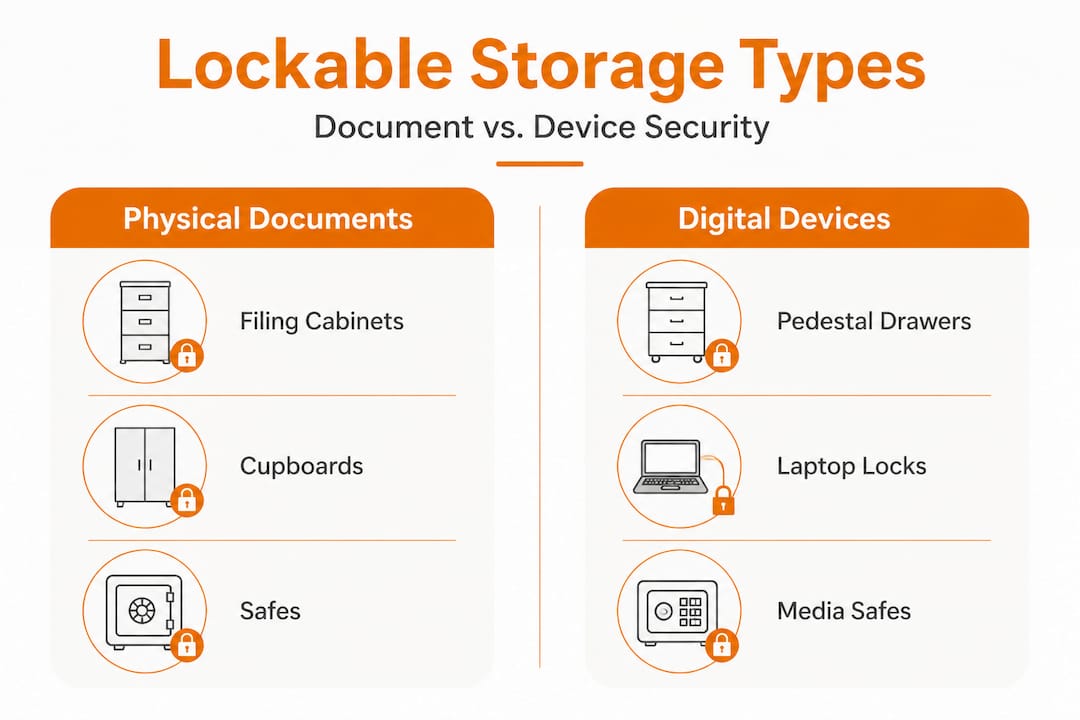
Under UK GDPR, organisations are required to implement appropriate technical and organisational measures to protect personal data. While the legislation does not name specific furniture, the ICO guidance on encryption and data storage makes clear that physical security reduces the risk of loss or theft of personal data, and that lockable storage helps limit unauthorised access to stored materials. Physical controls are not optional extras. They are part of a credible data protection framework.
The data types most frequently stored in physical form include:
For public-sector bodies and those operating under NHS-aligned policies, the standard is even more explicit. NHS England’s records management policy states that paper file storage must be secured from unauthorised access, and that the movement and location of records must be controlled and tracked throughout their lifecycle.
“Physical security is one of the most immediate and cost-effective controls an organisation can apply to reduce the risk of a records-related breach.”
Neglecting physical document security carries real consequences. Under UK GDPR, the Information Commissioner’s Office can issue fines of up to £17.5 million or 4% of global annual turnover for serious breaches. Beyond fines, organisations face reputational damage, loss of client trust, and the practical disruption of managing a data breach investigation. Explore the lockable storage options available to find solutions matched to your organisation’s risk profile, or review our guide to efficient office storage for broader workplace organisation tips.
Pro Tip: When assessing your current storage risk, walk your office and note every location where paper records, devices, or keys are left in open access areas. This single exercise often reveals more vulnerabilities than a formal audit.
Once the foundational importance is clear, many teams struggle with interpretation. What does compliance actually look like in practice?
The answer is more specific than most people realise. Both the ICO and NHS England records management frameworks require that organisations not only restrict access, but also demonstrate control over who accesses records and when. A locked cabinet with no access log does not fully satisfy these expectations.
Here is a step-by-step breakdown of what the guidance means in plain English for a typical office setting:
The table below summarises where different business types face the greatest physical security obligations:
| Organisation type | Key records at risk | Primary guidance |
|---|---|---|
| Healthcare and NHS | Patient files, consent forms, referrals | NHS Records Management Policy |
| Private employers (all sizes) | HR records, payroll, contracts | UK GDPR / ICO |
| Financial services | Client data, statements, audit files | UK GDPR + FCA expectations |
| Education | Student records, staff files | UK GDPR / DfE guidance |
| Legal and professional services | Client files, confidential correspondence | UK GDPR / SRA standards |
A useful way to think about optimising storage for compliance is to treat physical records with the same discipline you apply to network access. You would not give every employee administrator rights to your server. The same logic applies to who can open your personnel files.
This leads to a practical challenge: how do you ensure your investment in lockable storage actually translates to meaningful workplace security?
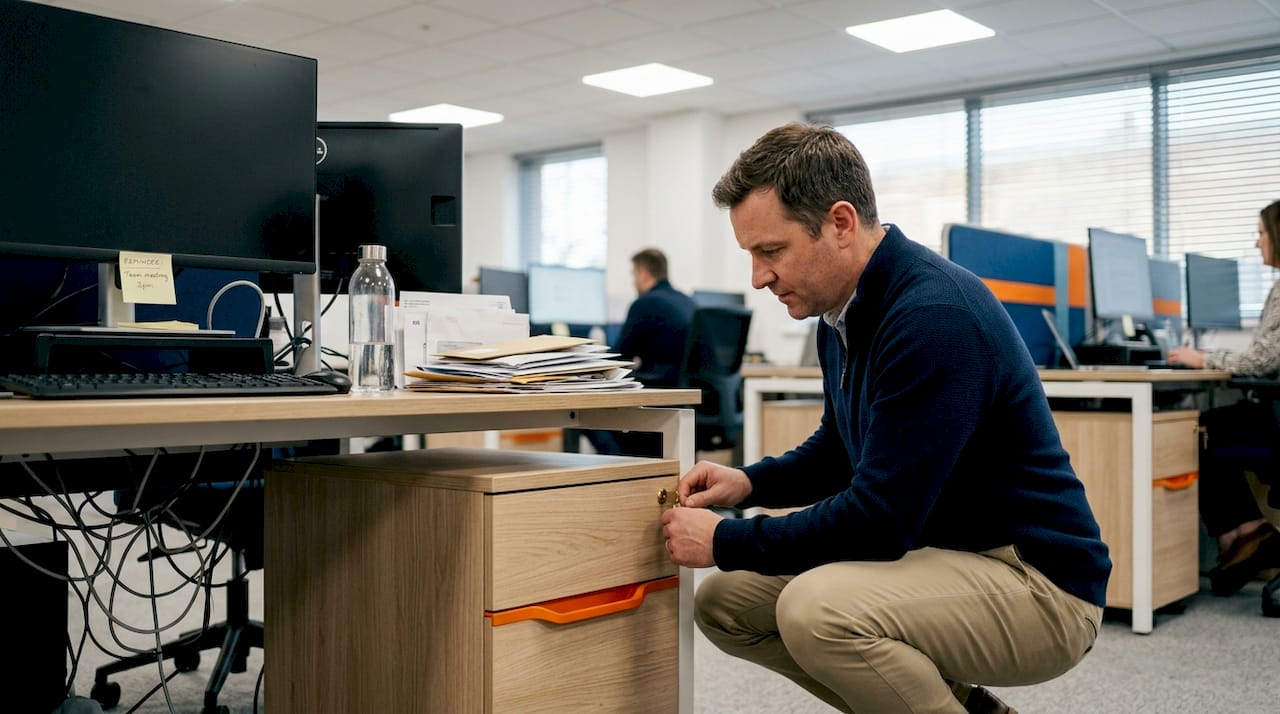
The uncomfortable reality is that many organisations buy lockable cabinets, feel reassured, and then undermine them immediately through poor day-to-day habits. The ICO guidance is clear that if devices or files are left in unlocked storage or easily accessible locations, the physical control is effectively bypassed. The lock is only as effective as the culture surrounding it.
Common real-world mistakes include:
The difference between a tick-box approach and a genuinely secure practice is significant:
| Tick-box approach | Genuinely secure practice |
|---|---|
| Lockable cabinet purchased | Cabinet assigned to named key holders only |
| Key kept in office | Key signed in and out with a log |
| New joiner given access on first day | Access granted based on role-specific need |
| Annual reminder about data protection | Regular training and spot checks |
| Records “somewhere in the cabinet” | Records filed, labelled, and tracked |
| Old files remain indefinitely | Retention schedules applied and followed |
The best efficient furniture ideas also consider workflow. If secure storage is awkward to access or inconveniently placed, staff will route around it. Position lockable cabinets close to the desks of those who use them most, and make the process of locking up frictionless rather than burdensome.
Pro Tip: Run a quarterly “walk and lock” check where a nominated person inspects all lockable storage at the end of the day. This simple, low-cost habit catches habitual non-compliance before it becomes a breach.
Now let us turn to effective selection and rollout. What does best practice really look like when procurement and facilities teams want practical results and compliance peace of mind?
Selecting the right storage is not simply a matter of choosing the most secure lock. Practicality, access patterns, and integration with your existing processes all shape whether your solution will be used correctly.
Key considerations when selecting lockable office storage:
This last point matters enormously for any organisation working with offsite or third-party archived records. The NHS England records management policy requires that movement and location are controlled and tracked, even when records leave your premises. Your storage solution must integrate with audit and tracking processes, not replace them.
Implementation steps for a new secure storage programme:
If you are also reviewing workstation layouts as part of your fit-out, integrated desk storage options can combine usable workspace with built-in secure drawers, making compliance easier to maintain throughout the working day.
Pro Tip: Routine audits do not need to be complex. A simple quarterly checklist covering key holders, access logs, and cabinet contents takes under an hour and provides documentary evidence of your organisation’s diligence in the event of a compliance query.
If there is one lesson our years of supporting UK office fit-outs have taught us, it is this: the lock on a cabinet rarely causes a data breach. The culture around that cabinet almost always does.
We have seen organisations spend thousands on high-specification storage systems, only to find that the day-to-day reality involves keys left in locks, cabinets wedged open during busy periods, and records stored “temporarily” in meeting rooms for months at a time. The furniture was excellent. The habits were not.
The organisations that genuinely achieve strong physical security are not the ones with the most sophisticated locks. They are the ones where responsible behaviour is part of the onboarding process, where team leads know their obligations, and where a missed lock-up is treated as a near-miss rather than a trivial oversight.
This matters more as workplaces evolve. Hybrid working, hot-desking, and shared office environments mean that records are now accessed by a rotating cast of individuals rather than a stable, familiar team. That context makes process discipline more important than ever. A locked cabinet in a hot-desk environment, with no clear ownership and no key log, is not a security control. It is a false sense of one.
Our honest advice: before you add more storage, review the habits around the storage you already have. Invest in a half-day staff session on physical data protection. Create a one-page policy on locking up. Review who holds which keys. These steps cost almost nothing compared with the cost of a breach, and they are the foundation on which any investment in furniture must rest. For those reviewing their broader office set-up, our buying guide for durable furniture offers useful context on building an office environment that supports good long-term practice.
Ready to put these insights into practice?
At Furniture for Business, we supply a wide range of commercial office storage solutions designed specifically for UK workplaces, including lockable pedestals, filing cabinets, cupboards, and credenzas suited to everything from small professional offices to large corporate environments. All orders come with free delivery to the UK mainland.
Whether you are refurbishing an existing office or planning a full fit-out, our storage range is matched to compliance-aware buyers who need solutions that genuinely work in practice, not just on paper. Browse our storage tips and workspace guides for further advice on laying out a secure, efficient office environment, or contact our team for bulk order support and tailored recommendations.
No statute specifically lists lockable storage as a legal requirement, but UK GDPR and NHS records policy expect strong physical security for sensitive or personal data, which lockable storage directly supports. The ICO confirms that physical security is an effective protection against unauthorised processing.
Yes, lockable cabinets and safes help prevent unauthorised access and support your obligations under UK GDPR to implement appropriate security measures. The ICO guidance specifically identifies physical security as a means of reducing risk of data loss or theft.
Paper documents containing personal, HR, medical, financial, or contractual information should be secured from unauthorised access. NHS England’s policy states that the location and movement of such records must also be controlled and tracked throughout their lifecycle.
Yes, physical storage such as safes or lockable cabinets are well-suited to securing laptops, backup drives, and USB media holding personal or sensitive data. The ICO guidance notes that physical security reduces the risk of device loss or theft, and recommends encryption as a complementary control where physical security is difficult to maintain.
Phone: 0330 043 4114
VAT no. GB 991 8681 60
Company no. 07250570