Keeping an office organised has never been more complicated. With hybrid working now the norm for millions of UK employees, the traditional approach of assigning every person a desk and a filing cabinet simply does not hold up. Teams are splitting their time between home and the office, desks are shared, and the volume of physical paperwork is shifting. The result? Storage systems that were designed for a different era are creating clutter, confusion, and even safety hazards. This guide walks you through how to assess your needs, compare your options, and choose office storage that genuinely works for a modern, flexible workplace.
| Point | Details |
|---|---|
| Hybrid offices need flexible storage | Adaptable solutions match changing work patterns and reduce clutter in modern offices. |
| Blend digital and physical systems | A mix keeps both safety and compliance needs in check, especially for regulated sectors. |
| Smart choices improve efficiency | The right storage boosts productivity and supports safer, more collaborative work environments. |
| Safety should be prioritised | Organised storage reduces risks of slips and trips and keeps workspaces compliant. |
Before you spend a penny on new shelving or lockers, it pays to understand exactly what your office is asking of its storage. Hybrid working has fundamentally changed the equation. When staff rotate through the office on different days, you no longer need a dedicated drawer for every person. Instead, you need shared, accessible, and adaptable systems that serve whoever happens to be in that day.
The good news is that this shift often means you can do more with less. Businesses reduce storage needs by up to 50% through digitisation and shared systems during hybrid relocations. That is a significant saving in both space and cost, but only if you plan deliberately.
When assessing your requirements, consider these core criteria:
For guidance on optimising office storage in a hybrid context, it helps to audit your current setup before purchasing anything new.
“Integrating storage with multipurpose spaces boosts both appeal and usage, making the office a destination rather than an obligation.”
Safety is not a secondary concern either. The HSE storage guidelines are clear that workplaces must keep storage areas tidy and accessible, and organised storage cuts slips and trips risks considerably. Poor storage is not just an aesthetic problem. It is a liability.
Pro Tip: Walk your office floor as if you were a new starter. Note every point where clutter blocks a path, obscures a label, or makes retrieval awkward. That audit will tell you more than any floor plan.
You can also browse our full range of office storage tips to get a clearer picture of what is available before committing to a layout.
Once your needs are mapped, the next step is matching them to the right products. The market has evolved considerably, and there are now solutions designed specifically for agile, hybrid environments.
Mobile pedestals and caddies are among the most practical options for hot-desking offices. Staff can wheel their personal storage to whichever desk they are using that day, keeping belongings secure without claiming a permanent spot. They are compact, lockable, and easy to reposition as layouts change.
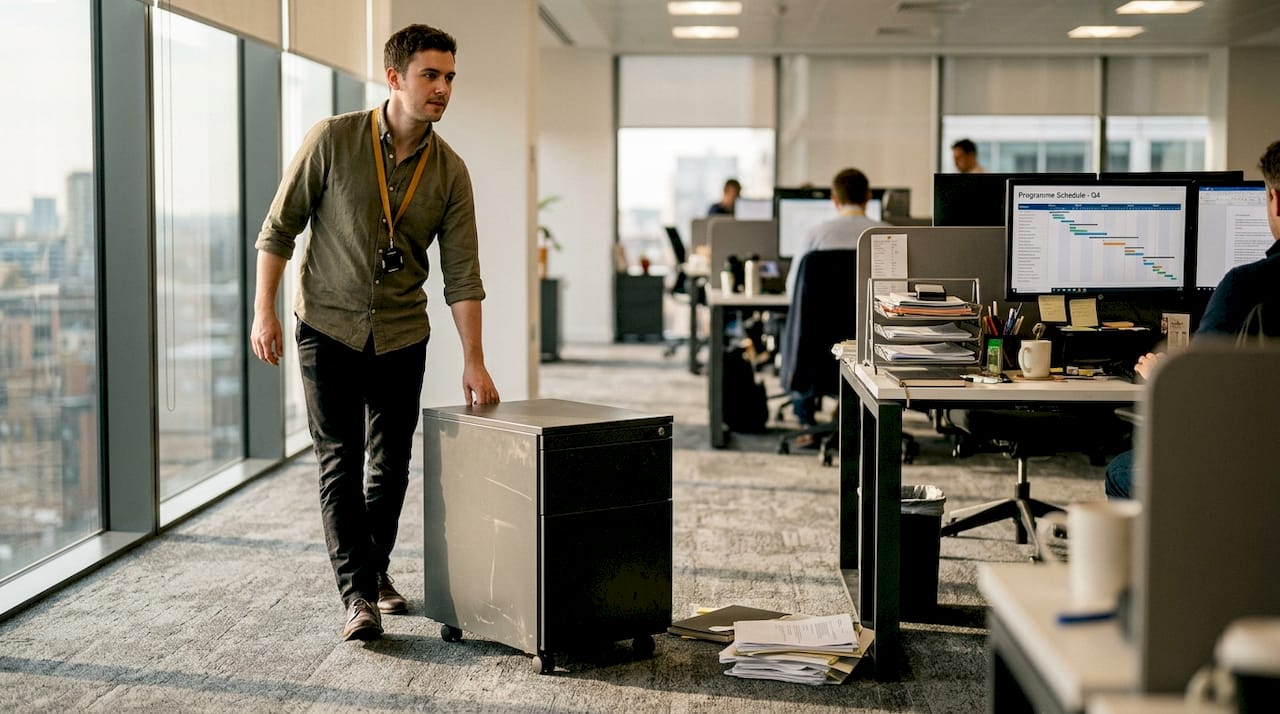
Modular shelving suits open-plan offices where teams need shared access to reference materials, stationery, or equipment. The modular format means you can expand or reconfigure as the team grows. For compliance-heavy sectors such as legal or finance, high-density filing hubs remain essential for managing regulated physical documents.
Integrated lockers with coded access are increasingly popular in hybrid offices. Rather than assigning a locker permanently, staff use a shared code or app to access any available unit. Lockers integrated into multi-use points such as reception, gym areas, or visitor zones with shareable codes boost hybrid office appeal and operational efficiency.
Here is a quick overview of the most common solutions and their best use cases:
For keeping supplies tidy and accessible, explore our range of organising office supplies and accessories. If you are considering furniture that combines workspace and storage, the Fleur smart storage desk is a strong option for individual workstations.
Pro Tip: Do not overlook vertical space. Wall-mounted shelving above desk height can double your storage capacity without eating into floor area, which is particularly valuable in smaller UK offices where every square metre counts.
Keeping up with office design trends also helps you anticipate what your team will expect from a modern workspace, especially as hybrid norms continue to evolve.
Choosing between storage types is easier when you can see them side by side. The table below compares the most common options across the criteria that matter most to office managers and procurement teams.
| Storage type | Capacity | Flexibility | Security | Approx. cost range | Hybrid suitability |
|---|---|---|---|---|---|
| Mobile pedestal | Low to medium | Very high | Lockable | £80 to £200 | Excellent |
| Modular shelving | High | High | Open or lockable | £150 to £500 | Good |
| Coded locker bank | Medium | High | Very high | £300 to £1,200 | Excellent |
| Stationery cupboard | High | Medium | Lockable | £200 to £600 | Good |
| Desk-integrated drawer | Low | Low | Lockable | £50 to £150 | Moderate |
| High-density filing | Very high | Low | Very high | £800 to £3,000+ | Low |
A few things stand out from this comparison. Mobile pedestals and coded lockers score highest for hybrid suitability because they are not tied to a single user or location. High-density filing is the least flexible but remains indispensable for regulated industries.
Cost is not the only factor to weigh. Longevity matters too. A well-built modular shelving unit or locker bank will outlast several rounds of cheaper alternatives, making it a better investment over a five to ten year horizon.
Remember that storage needs reduce by up to 50% with digitisation, so factor in your digital strategy before over-purchasing physical units. Browse our storage products to compare specifications, or consider pairing storage with desks with storage built in for a cleaner, more integrated look. The hybrid locker benefits for staff satisfaction are also worth factoring into your business case.
Not every office has the same storage challenge. A creative agency with ten staff has very different needs from a 200-person financial services firm. Here is how to tailor your approach by sector and size.
| Office type | Primary storage challenge | Recommended solution blend |
|---|---|---|
| Legal or financial services | Regulated document retention | High-density filing plus coded lockers |
| Creative or tech agency | Equipment, samples, and flexible seating | Modular shelving plus mobile pedestals |
| Corporate headquarters | Scale, security, and brand consistency | Locker banks plus stationery cupboards |
| Small or growing business | Budget and adaptability | Mobile pedestals plus modular shelving |
| Healthcare or education | Compliance and shared access | Coded lockers plus lockable cupboards |
For regulated sectors, persistent paper needs demand secure, high-density physical hubs even as digital adoption grows. Do not assume that going paperless is an option if your sector requires original document retention by law.
Here is a practical decision framework for any office type:
Pro Tip: For creative teams, consider open shelving with colour-coded zones for different project types. It speeds up retrieval and doubles as a visual prompt for what is in progress, which suits fast-moving, collaborative environments.
For further inspiration, our office storage accessories guide covers the smaller details that make a big difference to daily workflow. If you are planning a larger refurbishment, the executive storage design guide offers a broader perspective on integrating storage into a cohesive office aesthetic. You can also explore more office storage options if you are comparing suppliers. For broader context on hybrid workspace tips, external resources can help you benchmark your approach against what other UK businesses are doing.
Getting your storage right is one of the most cost-effective improvements you can make to any office. It reduces clutter, improves safety, and makes the space genuinely easier to work in, whether your team is in every day or rotating on a hybrid schedule.
At Furniture for Business, we supply a wide range of commercial-grade office storage solutions, from mobile pedestals and locker banks to modular shelving and stationery cupboards, all with free delivery to the UK mainland. You can also browse our full selection of workspace accessories to complement your storage setup with the practical extras that keep desks tidy and teams productive. Whether you are outfitting a single floor or a multi-site operation, Furniture for Business has the products and expertise to help you get it right.
Flexible storage such as coded lockers and shared shelving enables hotdesking by giving staff adaptable spaces that are not tied to a single person. Lockers at multi-use points with shareable codes are particularly effective at encouraging staff to come into the office.
Not all offices require the same volume of physical storage, but many do. Regulated sectors still require secure, high-density filing solutions even as digital adoption increases, so assess your compliance obligations before reducing physical capacity.
Clearly labelled cupboards and modular shelving that keep walkways unobstructed are the most effective safety measures. Organised storage reduces slips and trips risks, which aligns with HSE guidance on maintaining safe workplace environments.
Digital systems can dramatically reduce the volume of physical storage you need, but they rarely replace it entirely. Storage needs drop by up to 50% with digitisation, but a blended approach remains the most practical solution for most UK offices.
Phone: 0330 043 4114
VAT no. GB 991 8681 60
Company no. 07250570