Most office managers think executive setups are just expensive desks and leather chairs. They’re wrong. A proper executive office setup balances prestige with ergonomics, workflow design, and hybrid work flexibility. This guide covers furniture selection, space planning, procurement frameworks, and practical considerations specifically for UK offices. You’ll learn how to create functional leadership spaces that support productivity whilst meeting modern workplace standards.
| Point | Details |
|---|---|
| Executive office components | A proper executive office setup combines ergonomic desks, chairs, storage and lounge areas to balance prestige with practicality. |
| Ergonomics and hybrid needs | The design prioritises adjustable furniture, cable management, and flexible spaces that support focused work, video calls, and ad hoc meetings. |
| Procurement and budgeting | Adopt a procurement framework with durable furniture, quality materials and long warranties to minimise future replacement costs. |
| Space planning benchmarks | Space should be divided into zones for focused work, meetings and informal collaboration, with data driven utilisation analysis guiding decisions. |
| Sustainability and trends | Durable materials and sustainable design should underpin the office while accommodating evolving hybrid work patterns. |
Executive office setup refers to the configuration of high-end office spaces for senior leaders, featuring ergonomic desks, chairs, storage, and lounge areas that balance prestige, functionality, and modern hybrid work needs. The emphasis sits squarely on combining visual authority with practical performance. Many procurement teams mistakenly focus solely on aesthetics, overlooking how furniture choices impact daily workflow and employee wellbeing.
Core furniture pieces form the foundation of any executive setup:
Hybrid work patterns have fundamentally changed what executives need from their offices. Leaders now spend less time at assigned desks and more time facilitating team collaboration. This shift demands furniture that supports quick transitions between focused work, video calls, and impromptu meetings. Technology integration becomes non-negotiable: cable management systems, wireless charging surfaces, and monitor arms that adjust for standing work.
Quality materials matter beyond appearance. Solid timber frames, steel mechanisms, and commercial-grade upholstery withstand years of daily use without degrading. Cheap alternatives fail within 18 months, creating hidden costs through replacement cycles and productivity losses. Investing in executive office design that prioritises durability pays dividends through reduced maintenance and sustained employee comfort.
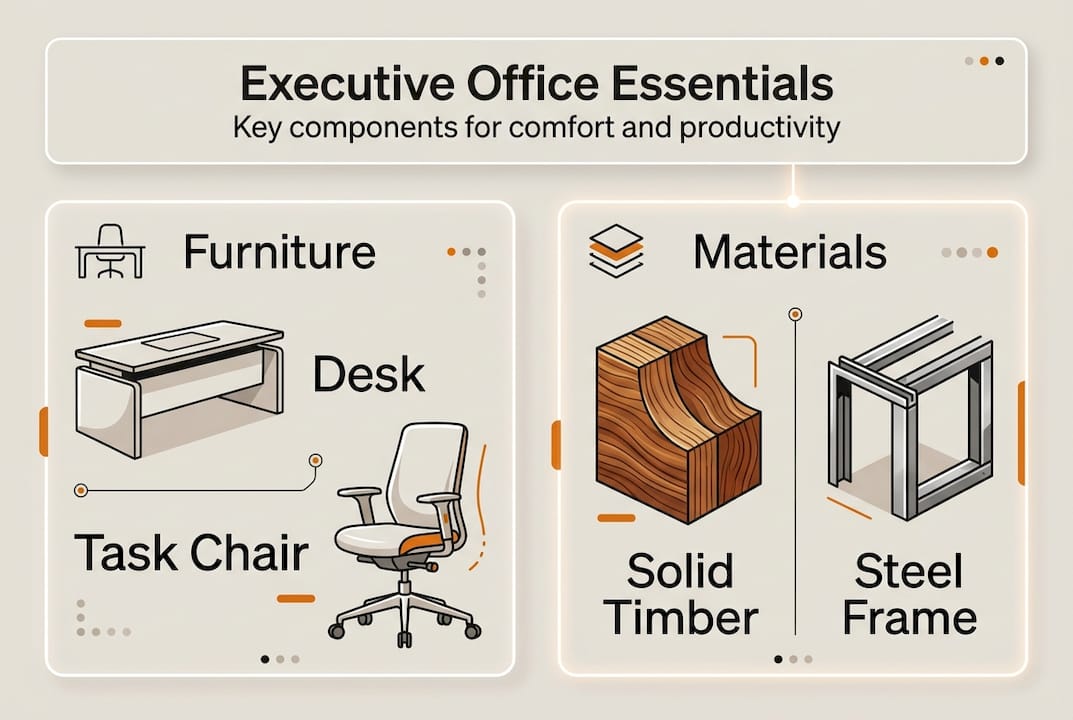
Ergonomics directly influence how well executives perform. Poorly designed furniture causes discomfort that compounds over eight-hour workdays, reducing focus and decision-making quality. Adjustable components allow personalisation for different body types and work styles. When selecting office desks, look for smooth height mechanisms, stable surfaces that don’t wobble during typing, and sufficient depth to position monitors at arm’s length.
Key methodologies include space planning for workflow zones, ergonomic assessments for DSE compliance, and data-driven utilisation analysis for hybrid setups. Effective layouts divide executive offices into distinct zones that support different activities. Work zones accommodate focused tasks with minimal distractions. Meeting areas facilitate quick discussions without booking formal conference rooms. Lounge spaces provide informal collaboration settings that hybrid teams increasingly prefer.
Ergonomic assessments ensure compliance with Display Screen Equipment regulations, protecting both employee health and organisational liability. Proper setup positions forearms horizontally when typing, with wrists floating above the keyboard rather than resting on hard surfaces. Eyes should align with the top edge of monitors, preventing neck strain from looking upward or downward for extended periods. Feet rest flat on floors or footrests, maintaining proper circulation and spinal alignment.
Office utilisation benchmarks have shifted dramatically. Traditional models assumed 80% desk occupancy, but current data shows average utilisation around 66% as hybrid patterns reduce on-site presence. This means fewer assigned executive desks are needed, freeing space for collaborative zones that deliver higher value. Smart planning reallocates square metres from underused private offices to shared amenities that support flexible working.
| Space type | Traditional allocation | Hybrid allocation | Utilisation rate |
|---|---|---|---|
| Assigned desks | 75% | 45% | 66% |
| Meeting rooms | 15% | 25% | 82% |
| Collaboration zones | 10% | 30% | 74% |
Sit-stand desks reduce sedentary time significantly, with studies showing users alternate positions 3 to 5 times daily when proper height-adjustable desk setup becomes habitual. Standing burns additional calories, improves circulation, and maintains alertness during afternoon energy dips. Electric mechanisms enable smooth transitions without disrupting workflow, whilst programmable presets eliminate guesswork about optimal heights.

Pro Tip: Arrange technology and furniture to support seamless transitions between seated and standing work. Mount monitors on adjustable arms rather than fixed stands, position keyboards on the desk surface instead of trays, and keep frequently used items within easy reach at both heights. This removes friction that discourages position changes.
Workflow optimisation requires understanding how executives actually use their spaces. Track which activities consume the most time: email and document work, video conferences, team meetings, or strategic thinking. Design layouts that minimise friction for high-frequency tasks whilst accommodating occasional needs through flexible furniture. Modern office furniture should adapt to changing demands rather than forcing rigid work patterns.
Procurement best practices for UK office managers include frameworks like YPO, evaluating quality and total cost of ownership, and compliance with BS EN 1335 and the Procurement Act 2023. Public sector frameworks streamline compliant purchasing whilst leveraging collective buying power to control costs. YPO provides pre-vetted suppliers who meet quality standards and competitive pricing benchmarks, eliminating lengthy tender processes for individual purchases.
Balancing evaluation criteria ensures you select furniture that delivers long-term value:
Premium executive budgets typically range from £1,800 to £3,500 per employee, varying based on furniture quality, customisation requirements, and quantity discounts. Desks account for £800 to £1,200 of this total, with height-adjustable models commanding premium prices justified by ergonomic benefits and longevity. Executive chairs range from £300 to £800, with higher-end options featuring advanced lumbar support, breathable mesh, and extended warranties that reduce replacement frequency.
| Budget tier | Desk cost | Chair cost | Storage cost | Total per employee | Quality level | Warranty |
|---|---|---|---|---|---|---|
| Standard | £400-£600 | £200-£300 | £150-£250 | £750-£1,150 | Good | 2-3 years |
| Premium | £800-£1,200 | £300-£500 | £300-£500 | £1,400-£2,200 | Excellent | 5-7 years |
| Luxury | £1,500-£2,500 | £600-£1,000 | £500-£800 | £2,600-£4,300 | Outstanding | 10+ years |
Compliance with BS EN 1335 ergonomic standards protects organisations from liability whilst ensuring furniture meets minimum safety and adjustability requirements. This European standard specifies criteria for office chairs including seat height range, backrest adjustability, and stability testing. The Procurement Act 2023 introduces new transparency obligations and procurement principles that UK office managers must follow when spending public funds.
Pro Tip: Prioritise total cost of ownership over upfront cost to ensure durable, ergonomic investments. A £1,200 chair with a 10-year warranty costs £120 annually, whilst a £400 chair replaced every 3 years costs £133 annually plus the hassle of repeated procurement cycles. Quality furniture maintains performance and appearance longer, preserving professional aesthetics and employee satisfaction.
Vendor evaluation should examine manufacturing processes, material sourcing, and customer support infrastructure. Request samples to assess build quality firsthand. Check whether suppliers maintain UK stock for quick delivery or rely on extended lead times from overseas production. Review case studies from similar organisations to verify performance claims. Visiting showrooms allows you to test furniture ergonomics and finish quality before committing to bulk orders.
Framework agreements through YPO simplify repeat purchasing whilst ensuring competitive pricing remains current. These agreements lock in negotiated rates for defined periods, protecting budgets from market fluctuations. They also establish quality standards and delivery expectations that reduce procurement administration. For office furniture buying beyond framework scope, maintain relationships with multiple suppliers to encourage competitive quotes and flexible solutions.
Bulk ordering generates significant savings, but only when you accurately forecast needs. Over-ordering ties up capital in unused inventory whilst under-ordering forces expensive small-batch purchases later. Analyse current furniture condition, anticipated headcount changes, and office layout plans to determine realistic quantities. Consider phased delivery schedules that align with refurbishment timelines, spreading costs across financial periods whilst ensuring furniture arrives when installers need it.
Hybrid shifts reduce desks through activity-based models, sustainability certifications like FSC and PEFC influence material choices, and acoustics for calls become critical with open plans. Activity-based working eliminates the concept of assigned executive desks, instead providing varied workpoints that support different tasks. Leaders select locations based on immediate needs: quiet zones for concentrated work, collaborative tables for team sessions, or phone booths for confidential calls. This flexibility reduces overall desk counts whilst improving space utilisation.
Sustainability considerations increasingly influence procurement decisions:
Acoustic solutions become vital as open plans replace traditional private offices. Executive work involves confidential discussions and focused thinking that suffer in noisy environments. Acoustic panels absorb sound reflections, whilst privacy pods provide enclosed spaces for video calls without disturbing nearby colleagues. Strategic placement of sound-masking systems creates ambient noise that prevents conversations from carrying across open floors. These interventions maintain productivity benefits of collaborative layouts whilst protecting concentration and confidentiality.
Legacy oversized private offices often prove inefficient in modern contexts. They consume valuable square metres for single occupants who spend significant time elsewhere. Open or flexible plans distribute space more equitably, providing executives with touchdown points rather than dedicated rooms. This democratises access to premium amenities whilst encouraging leaders to remain visible and accessible to their teams.
“Office utilisation has reached a critical shift, with average desk occupancy falling to 66% as hybrid patterns reduce on-site presence. This demands new approaches to space planning that prioritise flexibility over fixed allocations, with acoustic design becoming essential for maintaining productivity in collaborative environments.”
The Leverhulme Trust exemplifies this transition, moving from individual executive offices to open-plan collaborative spaces that better support their organisational culture. Leaders now work alongside teams in shared areas, using booking systems to reserve meeting rooms when privacy is needed. This shift initially faced resistance but ultimately strengthened communication and reduced hierarchical barriers. Furniture choices emphasised modularity and acoustic performance to maintain professional standards within the open layout.
Technology integration shapes modern executive furniture specifications. Wireless charging pads embedded in desk surfaces eliminate cable clutter. USB ports positioned at desk edges provide convenient device connectivity. Monitor arms with cable management channels keep wiring invisible and organised. These features seem minor individually but collectively transform daily user experience, reducing friction and maintaining clean aesthetics.
Colour psychology influences executive office design more than many realise. Blues promote calm and focus, suitable for strategic thinking spaces. Greens reduce eye strain and create restful environments for long work sessions. Neutrals provide professional backdrops that don’t overwhelm. When selecting collaborative office furniture, consider how colour choices support intended activities and align with brand identity.
Storage solutions must balance accessibility with security. Executives handle confidential documents requiring lockable office storage, but overly complex systems frustrate daily use. Credenzas with simple key locks provide adequate security for most materials whilst maintaining quick access. For highly sensitive information, dedicated filing cabinets with combination locks or biometric access offer enhanced protection. Mobile pedestals allow executives to relocate storage between workpoints in activity-based environments.
Equipping executive offices requires balancing prestige with ergonomics, a challenge Furniture For Business understands intimately. Their curated selection of office desks, office chairs, and office storage supports DSE compliance whilst delivering the professional aesthetics UK office managers need.
Every piece meets rigorous quality standards, with warranties that protect your investment and bulk pricing that respects procurement budgets. Their height-adjustable desks facilitate the ergonomic flexibility hybrid working demands, whilst executive seating ranges provide lumbar support and adjustability for diverse body types. Free delivery to UK mainland addresses logistical concerns, and their team understands the frameworks and compliance requirements that govern public sector purchasing. Whether you’re refurbishing a single executive suite or outfitting leadership floors for 50 people, their product range and expertise streamline the process from specification through installation.
Ideal executive desks provide at least 1.5 to 2 square metres of workspace, accommodating multiple monitors, documents, and small meeting areas. L-shaped configurations maximise surface area whilst fitting efficiently into corner locations. Height-adjustable models support ergonomic needs and hybrid work patterns, allowing executives to alternate between sitting and standing throughout the day. Depth should reach 800mm minimum to position monitors at proper viewing distances.
Hybrid working reduces average desk utilisation to 66%, eliminating the need for assigned executive desks in many organisations. Furniture must support flexible zoning for focused work, collaboration, and relaxation rather than single-purpose private offices. Sit-stand desks become more valuable as executives use offices intermittently, whilst acoustic solutions address noise concerns in open collaborative layouts. Quiet zones and phone booths provide privacy for confidential calls without dedicating entire rooms to individual leaders.
YPO frameworks streamline compliant purchasing by providing pre-vetted suppliers with competitive pricing and established quality standards. Following the Procurement Act 2023 ensures legal adherence whilst promoting transparency and value for money. Evaluate total cost of ownership rather than purchase price alone, factoring in warranties, maintenance requirements, and replacement cycles. This approach identifies furniture that delivers long-term value despite higher upfront costs.
FSC and PEFC certifications verify timber comes from responsibly managed forests with traceable supply chains, addressing environmental and ethical sourcing concerns. Look for recyclable materials like aluminium and steel that enable end-of-life recovery rather than landfill disposal. Low-VOC finishes reduce indoor air pollution, supporting healthier work environments and employee wellbeing. Local UK manufacturing minimises transportation emissions whilst supporting domestic economies, though global supply chains sometimes offer better quality or pricing for specific components.

Phone: 0330 043 4114
VAT no. GB 991 8681 60
Company no. 07250570