Most office managers treat the reception area as an afterthought, a space to fill once the desks and meeting rooms are sorted. That is a costly mistake. Your reception area is the first physical experience a client, candidate, or partner has of your business, and the furniture you place there sends an immediate signal about your standards. Get it wrong and you risk undermining the professional image your team works hard to build every day. Get it right and you create a space that works hard for your business around the clock.
| Point | Details |
|---|---|
| Clear definition | Reception area furniture includes seating, tables, and supporting elements for office entrances. |
| Business impact | Selecting the right furniture improves first impressions, visitor comfort, and staff efficiency. |
| Durability focus | Choose materials designed for heavy use to save costs and maintain appearance. |
| Accessibility matters | Compliant and inclusive design is not only best practice but a legal requirement in the UK. |
| Maintenance tips | Regular cleaning and maintenance increase product lifespan and return on investment. |
Reception area furniture is not simply a sofa and a coffee table shoved near the front door. It is a carefully considered collection of pieces designed to serve a specific, high-pressure environment. As one guide to reception furniture explains, reception area furniture encompasses seating, tables, and storage specifically designed for high-traffic entrance spaces in offices. That scope is broader than many procurement teams initially expect.
The core categories include:
Each element plays a functional role, not just a decorative one. The reception desk anchors the space and defines workflow. Seating manages visitor comfort during wait times. Storage keeps the area tidy and professional. You can also pair reception furniture with well-considered office storage options to maintain a clean, organised entrance that extends naturally into the wider office. If your reception doubles as a sign-in or admin point, exploring office desk solutions alongside your reception desk choice is well worth the time.
With the core furniture categories clarified, it is useful to explore why your choice of reception area furniture is so crucial in the workplace.
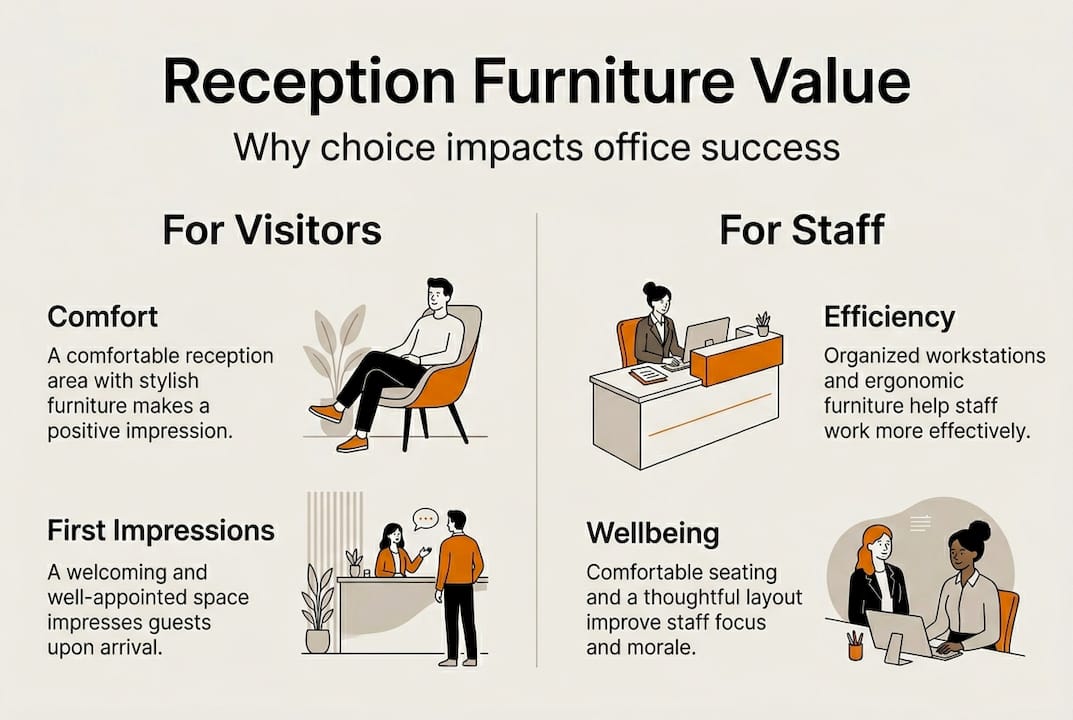
The business case for investing in quality reception furniture is stronger than most people realise. First impressions formed in the reception area can influence customer trust and perceived professionalism. Visitors make those judgements within seconds of walking through the door, and furniture condition, comfort, and style all feed into that snap assessment.
Here is what the right reception furniture actually delivers for your business:
“The reception area is not just a waiting room. It is a live demonstration of your company culture and values.”
The impact on staff is often overlooked. Receptionists and front-of-house teams spend their entire working day in this space. Uncomfortable, poorly designed furniture affects their posture, mood, and productivity. Thinking about improving office workflows from the reception outward is a smart approach for any office refurbishment project.
Pro Tip: When budgeting for reception furniture, calculate cost-per-year rather than upfront cost. A chair that lasts eight years at £400 is far better value than one that costs £150 but needs replacing every two years.
Understanding these impacts, the next consideration is which specific furniture types are recommended for various office settings.
Not every reception area needs the same solution. A law firm in the City of London has different requirements to a creative agency in Manchester or a logistics company in the Midlands. Modular seating, accent tables, and bespoke desks are common in modern UK reception areas, but the right combination depends on your space, visitor volume, and brand positioning.
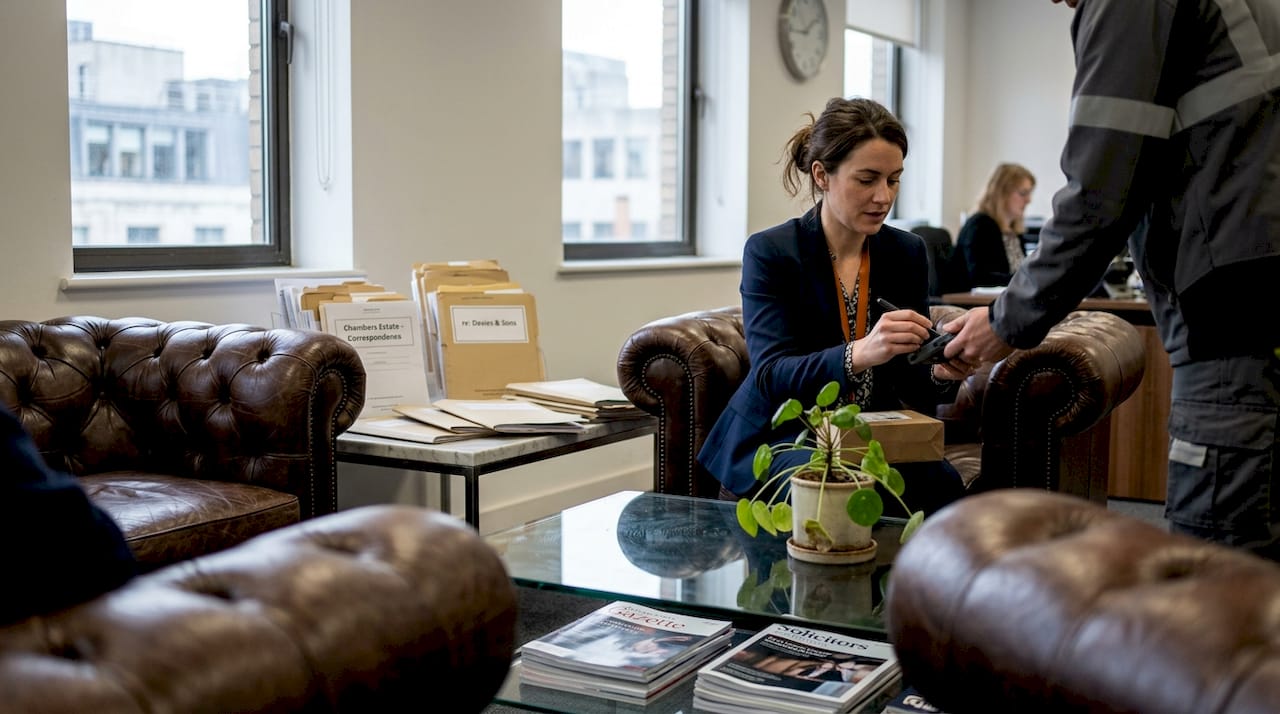
Here is a comparison of the main seating options:
| Seating type | Best for | Space required | Durability rating |
|---|---|---|---|
| Modular sofa units | High-traffic, flexible layouts | Medium to large | High |
| Armchairs | Boutique or executive settings | Small to medium | Medium to high |
| Bench seating | High-volume visitor environments | Compact | Very high |
| Two-seat sofas | Mid-size offices, informal feel | Medium | Medium to high |
When selecting tables and desks, follow this order of priority:
For offices that include private office spaces adjacent to the reception, a consistent design language across both areas creates a more cohesive visitor experience. If your reception desk doubles as an executive workstation, look at executive office desks that combine a professional aesthetic with practical storage.
Having compared the main options, it is essential to consider how durability and material choices influence performance.
Material choice is where many procurement decisions go wrong. A fabric that looks beautiful in a showroom can be a maintenance nightmare in a busy reception. High-performance fabrics and steel frames offer enhanced longevity for reception seating, and that combination is worth prioritising over cheaper alternatives.
Here is a practical breakdown of the most common materials and their suitability:
| Material | Durability | Ease of cleaning | Cost level | Best use |
|---|---|---|---|---|
| Steel frame | Very high | N/A (structural) | Medium | All seating types |
| Stain-resistant fabric | High | Easy | Medium | Sofas, armchairs |
| Faux leather / vinyl | High | Very easy | Medium | High-traffic seating |
| Solid wood | Medium | Moderate | High | Tables, accent pieces |
| Laminate surfaces | Very high | Very easy | Low to medium | Desks, tables |
| Genuine leather | Medium | Requires care | High | Executive settings only |
Fire safety is a non-negotiable consideration in UK commercial settings. All upholstered furniture used in business premises must comply with the Furniture and Furnishings (Fire Safety) Regulations 1988. Always confirm compliance with your supplier before purchasing. Reputable UK suppliers will provide documentation as standard.
Pro Tip: Ask suppliers for the Martindale rub count on any fabric seating. A count of 30,000 or above is suitable for commercial use. Anything below that is likely to show wear within 12 to 18 months in a busy reception.
Lifecycle costs matter as much as upfront price. Cheap laminate tables may cost half the price of solid alternatives but can chip, swell, or delaminate within two to three years in a high-traffic environment. Exploring durable desk and seating options before committing to a budget will help you avoid false economies.
Now that you have chosen durable materials, it is time to integrate these selections with factors like space usage and accessibility.
A well-designed reception area does more than look good. It guides visitors naturally, reduces confusion, and ensures everyone feels welcome. The UK Disability Discrimination Act recommends clear pathways and seating for all abilities in public areas, and this is a legal consideration, not just a best practice.
Key design and accessibility principles to apply:
Lighting interacts directly with your furniture choices. Dark upholstery in a poorly lit reception can make the space feel oppressive. Light, neutral tones with good overhead and accent lighting create a more open, welcoming atmosphere. If you are planning a broader refurbishment, reviewing office design for accessibility alongside your furniture selection will save time and money.
Statistic to note: Research suggests that up to 22% of the UK population lives with a disability. Designing your reception area for accessibility is not just a compliance exercise. It is good business.
With design fundamentals established, you can now focus on the practical steps for choosing and maintaining your reception area furniture.
Selecting the right furniture is only half the job. Keeping it in excellent condition over time is where many offices fall short. A preventative maintenance plan extends reception furniture lifespan by up to 30%, which represents a significant saving over a five to ten year period.
Follow this process when selecting and maintaining your reception furniture:
Pro Tip: Keep a small stock of touch-up products matched to your furniture finishes. Minor scratches on laminate desks or scuffs on chair legs can be addressed quickly, keeping the reception looking sharp between major refurbishments.
If you are reviewing your current supplier arrangements, it is worth exploring office furniture alternatives to ensure you are getting the best combination of quality, price, and service for your business.
Putting all of this guidance into practice is much easier when you have a reliable supplier who understands commercial environments. At Furniture for Business, we supply durable, design-led reception furniture to UK offices of all sizes, from boutique professional services firms to large corporate headquarters.
Our office chair range includes commercial-grade seating suited to reception environments, and our office desk range covers everything from compact reception counters to full executive workstations. Whether you are fitting out a single reception or sourcing furniture for multiple sites, we offer bulk order pricing, free delivery to the UK mainland, and straightforward returns. Browse our complete office furniture catalogue to find pieces that match your space, your brand, and your budget.
Reception area furniture typically covers seating such as sofas and armchairs, tables including coffee and side tables, reception desks, and storage elements like magazine racks. The full scope is broader than most people initially expect.
Prioritise steel or metal frames paired with stain-resistant or high-Martindale-rated fabrics, and always confirm fire safety compliance and supplier warranties before purchasing. Steel frames and high-performance fabrics consistently outperform cheaper alternatives in commercial settings.
Yes. UK regulations including the Disability Discrimination Act require businesses to provide clear pathways and accessible seating in areas used by the public, which includes office reception areas.
Upholstered seating should be professionally cleaned every six to twelve months, with weekly vacuuming in between. A preventative maintenance plan can extend furniture lifespan by up to 30%, making it a worthwhile investment for any busy office.

Phone: 0330 043 4114
VAT no. GB 991 8681 60
Company no. 07250570