TL;DR:
- Physical workspace furniture actively reflects and reinforces an organization’s brand values before spoken words.
- Consistent, branded furniture choices and standards strengthen workplace culture, trust, and visual coherence over time.
Most business leaders spend months refining their logo, colour palette, and tone of voice, yet walk past a reception area furnished with mismatched, worn-out chairs without a second glance. That disconnect is costly. Your physical workspace communicates your brand values every single day to employees, clients, and visitors before a single word is spoken. The furniture your team sits on, meets around, and works alongside is not a neutral backdrop. It is an active, tangible expression of who you are as an organisation, and getting it right deserves the same strategic attention as any other element of your brand.
| Point | Details |
|---|---|
| Furniture expresses your brand | Office furniture is a daily physical expression of your company’s culture and values. |
| Consistency is essential | Systematic guidelines for furniture procurement and use maintain a coherent workplace identity. |
| Avoid mismatched messaging | Ensure product use and branding narrative are aligned to prevent confusion and lost value. |
| Briefs bridge the gap | Translating brand values into detailed specifications secures intent from planning to delivery. |
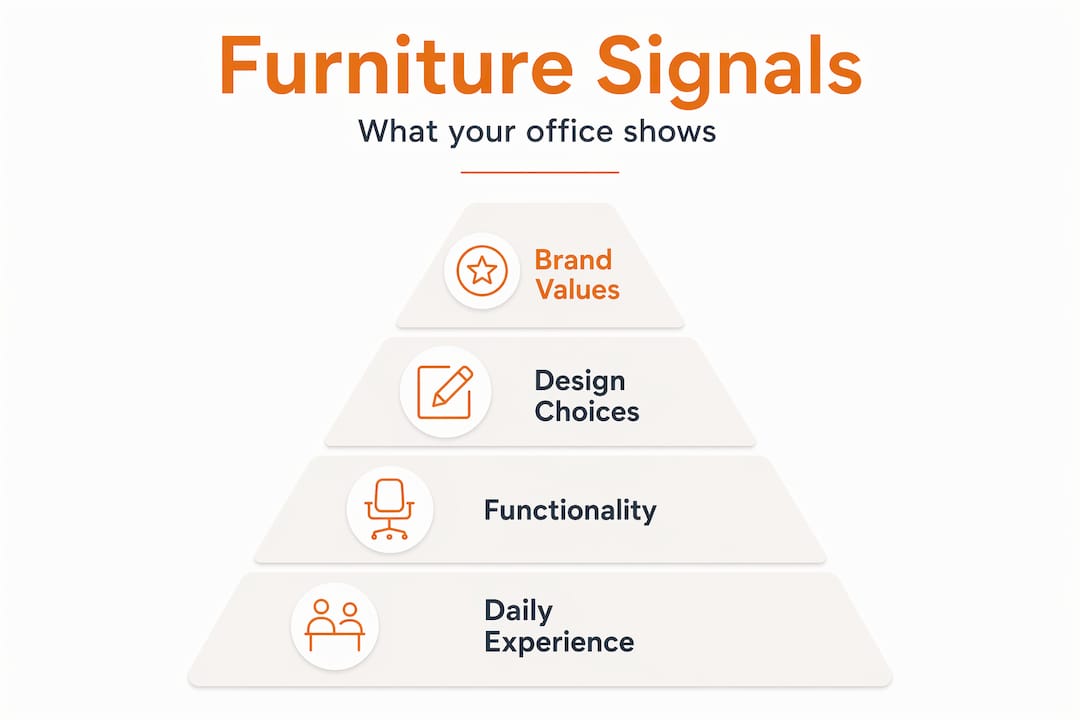
Walk into any well-run office and you will notice something immediately. It is not the logo on the wall. It is the quality of the light, the feel of the reception seating, and the cohesion of the space. Furniture is the first physical thing your guests and employees encounter, and it communicates brand values long before anyone opens a brochure or visits your website.
The look, feel, and function of every piece in your office signals something about your priorities. A generously proportioned conference table surrounded by high-quality executive chairs says you value serious decision-making. A breakout area stocked with flexible, lightweight seating says you encourage collaboration and adaptability. By contrast, cheap, mismatched, or visibly tired furniture tells visitors and staff that the business either does not prioritise comfort or does not pay attention to detail. Both messages are damaging.
Design-led office furniture is not simply an aesthetic choice. It reflects the relationship between office design and furniture choices, where form and function must reinforce one another to create a coherent workplace identity.
The most practically robust way to keep brand intent alive through every stage of a project is to treat furniture as FF&E, which stands for Furniture, Fixtures, and Equipment. FF&E procurement treats furniture as part of an end-to-end lifecycle covering specification, sourcing, quoting, approving, purchasing, tracking, delivering, and installing, so that the brand intent built into those early specification decisions is never lost by the time the chairs arrive on site.
Key warning signs that furniture is weakening your brand:
“Your office is a three-dimensional version of your brand guidelines. Every surface, seat, and spatial arrangement either reinforces your story or contradicts it.”
Treating furniture procurement as a genuine brand discipline, rather than a facilities management afterthought, is what separates organisations that build strong workplace cultures from those that simply occupy space.
Understanding the stakes, let us look at the practical tools and workflow that make brand-aligned furniture procurement achievable.
The starting point is what we call a furniture brand brief. This is a simple but powerful document that translates your brand values into specific, measurable requirements that can guide every furniture decision from initial specification to final installation. Think of it as the bridge between your marketing strategy and your procurement spreadsheet.
Here is how to build one:
The table below shows how this works in practice:
| Brand value | Furniture specification | Example product type |
|---|---|---|
| Sustainability | Recycled frame material, FSC timber, low-VOC finish | Eco-certified task chairs, reclaimed wood desks |
| Innovation | Height-adjustable mechanisms, modular configurations | Sit-stand desks, reconfigurable meeting tables |
| Wellbeing | Ergonomic lumbar support, adjustable armrests | Ergonomic task chairs, monitor arms |
| Professionalism | Premium upholstery, consistent finish palette | Executive chairs, matched veneer meeting tables |
| Collaboration | Lightweight, mobile, flexible typologies | Stackable chairs, wheeled breakout tables |
Good corporate furniture planning also considers the long-term commercial value in office furniture, since commercial-grade products last significantly longer than domestic alternatives and protect your brand standards over time.
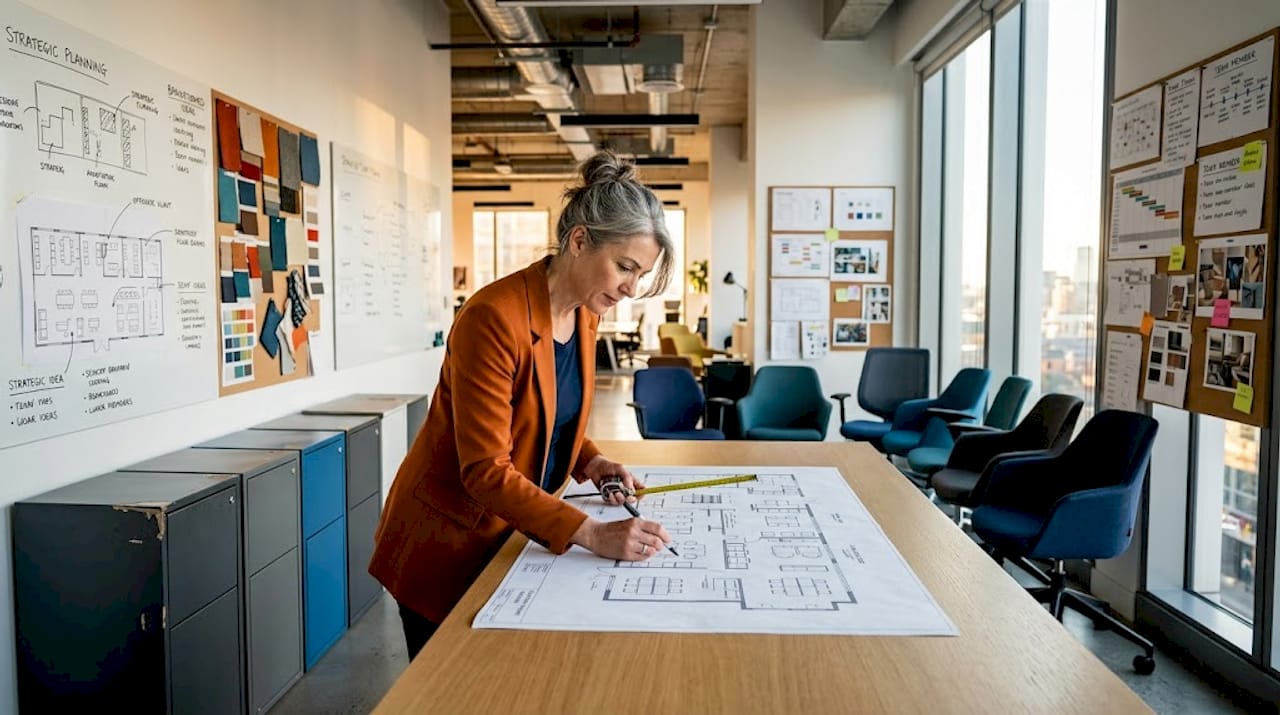
Pro Tip: Schedule a brand brief review at every key project milestone, not just at specification stage. A common failure point is when procurement teams make substitutions under budget pressure without cross-referencing the brief. A quick check at delivery acceptance can save significant remediation costs.
A clear workflow is only effective if you avoid the common traps. Let us examine what happens when branding and product reality drift apart.
Branding failures in office furniture almost always share the same root cause. The story being told about the product, or the space, no longer matches what people actually experience when they use it. This gap between narrative and reality erodes trust faster than almost any other workplace issue, because people experience it physically every day.
One well-documented case illustrates this precisely. Furniture-culture branding can fail when acoustic pods, designed primarily to provide calm, quiet, focused working environments, are marketed and positioned as technology products. When users sit in them expecting a tech-forward experience and instead find a simple, quiet booth, the disappointment is real and the brand story collapses. The product was sound. The branding approach was not.
The comparison below shows aligned versus misaligned branding across common office furniture scenarios:
| Scenario | Aligned approach | Misaligned approach | Outcome |
|---|---|---|---|
| Acoustic pods | Marketed as calm, focused retreats | Marketed as tech hubs | User disappointment, poor utilisation |
| Breakout seating | Presented as collaborative, welcoming | Formal, rigid chairs used instead | Culture disconnect, space avoidance |
| Reception furniture | Premium materials reflecting brand tier | Budget seating mismatched to brand | Negative first impressions for visitors |
| Ergonomic chairs | Presented as wellbeing investment | Chosen purely on lowest unit cost | Staff discomfort, higher staff turnover |
Flexible modular seating and space-saving solutions both offer strong opportunities to tell a progressive, adaptable brand story, but only if the specification, the communication, and the actual user experience are all pulling in the same direction.
Warning signs that your furniture branding has drifted:
Pro Tip: When briefing suppliers, always ask them to describe the product in terms of the experience it creates for the user. If their language does not align with your brand values, neither will the furniture.
Appreciating how things can go wrong, let us focus on what high-performing brands get right: vigilant consistency and modular, systematised approaches.
The brands with the strongest workplace identities share one characteristic. They treat furniture the same way they treat typography. There are rules. There are permitted options. There are clear guidelines for what is in and what is out. Decisions are not made by whichever manager happens to be ordering that quarter. They are governed by a documented standard that is enforced across every site and every refurbishment cycle.
“Herman Miller’s approach demonstrates that workplace brand identity can be systematised through modular, consistent guidelines across every touchpoint, reinforcing a coherent, recognisable furniture identity that scales from a single office to a global estate.” Herman Miller brand identity case study
Herman Miller is a useful reference point because their approach to systematising brand identity is unusually thorough and publicly documented. They define not only which products represent their values but how those products should be positioned, combined, and maintained. That level of discipline is what separates a furniture collection from a furniture brand.
Here is how to develop in-house furniture branding standards for your own workspace:
An office furniture checklist can be a practical starting point for building these standards, particularly for organisations fitting out multiple spaces or managing hospitality-adjacent environments.
The return on this discipline is significant. Organisations with consistent furniture standards report stronger employee satisfaction scores, more positive client feedback during site visits, and lower long-term procurement costs because ad hoc, off-brief purchasing is eliminated.
Most guidance on office branding treats it as a visual or surface-level challenge. Choose the right colours. Buy furniture that matches your logo. Put your brand identity on the reception wall. Job done. That thinking is fundamentally incomplete, and it is why so many office refurbishments feel underwhelming within eighteen months of completion.
The real discipline in furniture branding is not about what you choose. It is about what you maintain. Physical objects degrade. Upholstery fades. Chair mechanisms loosen. Tables accumulate scratches. Every time a piece of furniture slips below the standard you set at specification stage and nobody notices or acts, your brand credibility erodes a little further in the eyes of the people who use that space every day.
We see this pattern repeatedly. A business invests in a genuinely impressive office fit-out. Two years later, half a dozen chairs have been replaced with whatever was cheapest at the time, one meeting room has been reconfigured with folding tables from a different supplier, and the reception area cushions have faded. The brand story has not changed on paper. But the lived experience of that office tells a different story entirely.
The organisations that do this well treat furniture procurement as a cyclical, ongoing strategy rather than a one-off project. They budget for refresh cycles. They empower facilities managers to enforce standards rather than simply order replacements. They use multi-purpose office furniture that adapts to changing needs without breaking the visual logic of the space.
The most honest thing we can say to office managers and procurement leads is this: brand-aligned furniture is not a destination. It is a discipline. The businesses that understand this build workplaces that feel as intentional on day five hundred as they did on day one.
The principles covered above are only as powerful as the products and partners you deploy them with. Translating a furniture brand brief into a real, functioning workspace requires access to commercial-grade ranges that offer genuine breadth across finishes, mechanisms, and typologies.
At Furniture For Business, we supply commercial office furniture to businesses across the UK with free delivery to the UK mainland, working with organisations ranging from five-person studios to five-hundred-seat corporate estates. Whether you are specifying ergonomic office chairs that reflect a genuine investment in staff wellbeing, or sourcing office desks that align with a collaborative, height-adjustable workplace strategy, our range is built for procurement teams who need both quality and consistency. Explore the full collection and speak to our team about bulk order pricing, brand-matched specifications, and phased delivery programmes for office refurbishments.
FF&E procurement stands for Furniture, Fixtures, and Equipment, and treating it as a lifecycle process ensures that the brand intent defined at specification stage is still intact when the furniture is installed and in use.
Start by listing your core brand values, then translate each into a specifiable requirement, such as materials, finishes, and mechanisms, and use that brief consistently at every stage of the procurement process.
A clear example involves acoustic pods that were positioned as tech products rather than calm work retreats, creating a mismatch between the brand story and the actual user experience that undermined both trust and product utilisation.
Brands like Herman Miller systematise their approach through detailed, modular guidelines that govern product selection, installation standards, and ongoing management across every workplace touchpoint.

Phone: 0330 043 4114
VAT no. GB 991 8681 60
Company no. 07250570