TL;DR:
- Selecting durable, appropriate furniture is crucial for customer comfort and long-term profitability.
- Tables and chairs are the most important investments, affecting capacity, style, and customer experience.
- Investing in high-quality furniture reduces replacement costs and enhances your café’s reputation.
Fitting out a café is one of the most consequential decisions you will make as an owner or manager. Get it wrong and you face costly replacements, frustrated customers, and a space that simply does not work. Get it right and your venue becomes somewhere people want to return to, stay longer, and spend more. Yet most café owners receive little structured guidance on where to begin, which pieces matter most, and how to balance durability with style on a realistic budget. This guide cuts through the noise with practical, expert-backed advice on the essential furniture every UK café needs to thrive.
| Point | Details |
|---|---|
| Prioritise durability | Investing in robust materials means your café furniture lasts longer and needs less frequent replacement. |
| Maximise flexibility | Choose movable and multipurpose furniture to easily adapt your layout as your café evolves. |
| Plan for cleanliness | Select easy-to-clean and hygienic furnishings to meet UK hospitality standards and enhance customer satisfaction. |
| Don’t skimp on storage | Smart storage solutions keep your café organised and can improve both workflow and customer impression. |
Before you browse a single product page, it pays to understand what you are actually buying for. Café furniture is not residential furniture placed in a commercial setting. It is a different category entirely, built to withstand hundreds of uses per day, frequent cleaning, and the occasional knock or scrape. Starting with clear criteria will save you money and prevent regret.
Here are the key factors to evaluate before you commit:
As furniture choices directly affect both customer comfort and your business reputation, it is worth treating this as a strategic investment rather than a one-off purchase.
Pro Tip: Visit your café at its busiest time and observe how staff and customers move through the space. Pinch points and awkward corners will tell you exactly what furniture shapes and sizes will work best.
Tables and chairs are the single most important furniture investment in any café. They set the tone, determine capacity, and directly shape how comfortable customers feel during their visit. Choosing poorly here affects everything downstream.
Chair types worth considering:
Table formats to consider:
| Table type | Best use | Key advantage |
|---|---|---|
| Small round tables | Couples and solo customers | Encourages intimate seating, easy to rearrange |
| Rectangular tables | Groups and communal dining | Maximises covers in a linear space |
| High-top tables | Counter or window areas | Creates visual variety and suits quick visits |
| Communal tables | Busy urban cafés | Maximises capacity without extra floor space |
Stability matters more than most café owners realise. A wobbly table is one of the most common complaints in customer reviews and is entirely avoidable with quality commercial-grade pieces. Look for adjustable feet on all table bases to cope with uneven floors, which are common in older UK premises.
As seating arrangements directly influence customer satisfaction and footfall, it is worth investing in ergonomic seating options that keep guests comfortable long enough to order a second drink.
Pro Tip: For smaller cafés, round tables are your best friend. They take up less visual space, seat an extra person at a pinch, and allow for more flexible arrangement than rectangular alternatives.
Efficient storage is the unsung hero of a well-run café. Without it, surfaces become cluttered, staff waste time hunting for items, and the overall impression suffers. Good storage design is invisible to customers but felt in every interaction.
The main storage categories for café environments include:
Hygienic materials are non-negotiable. Any storage that comes into contact with food or drink items should feature food-safe, non-porous surfaces that can be sanitised quickly. Stainless steel and powder-coated metal are strong choices.
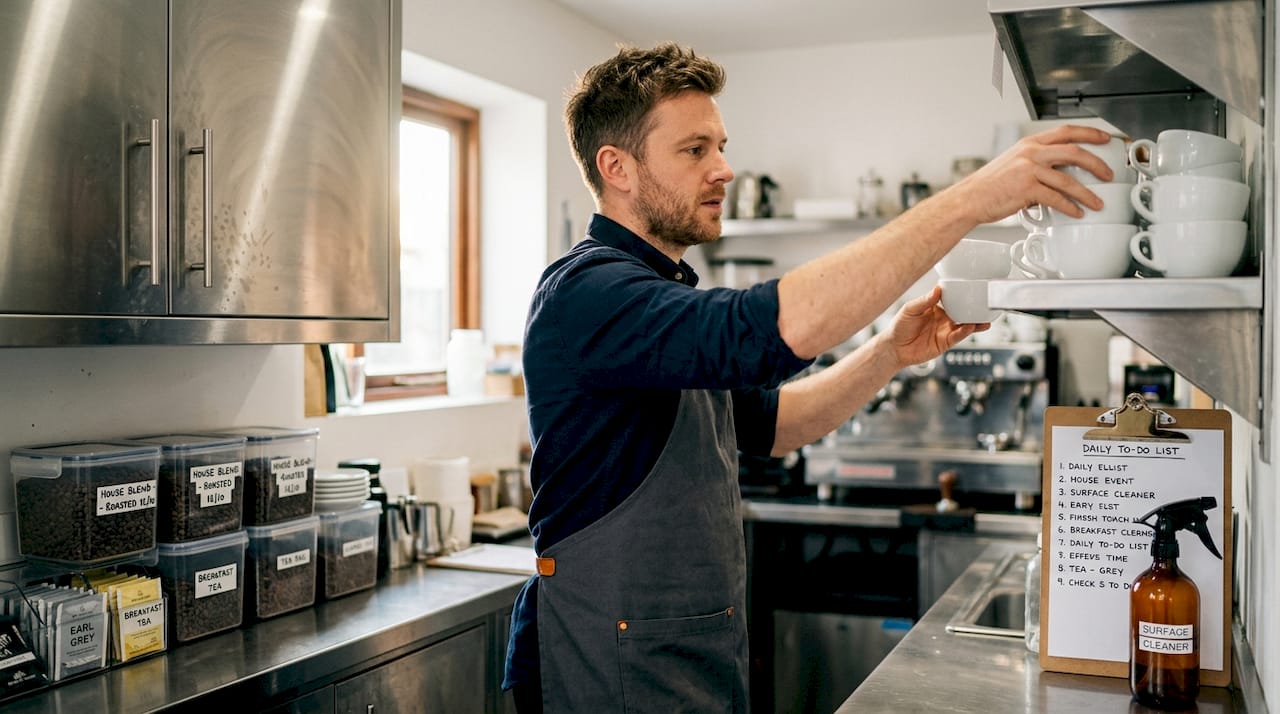
As well-designed storage supports both efficiency and aesthetics in hospitality settings, it is worth planning your storage layout before finalising your floor plan. You can explore a wide range of office storage options that translate well into café environments, particularly for back-of-house and staff areas.
Pro Tip: Think vertically. Wall-mounted shelving and tall cabinets free up floor space without reducing your storage capacity, which is invaluable in compact UK café settings.
Once your core seating and storage are sorted, the additional pieces can make a significant difference to both revenue and customer experience. These are the elements that add flexibility, visual interest, and the ability to serve more customers across different areas of your venue.
Counter and bar seating considerations:
Outdoor seating essentials:
| Feature | Why it matters |
|---|---|
| Weatherproof materials | Prevents warping, rusting, and fading in UK weather |
| Stackability | Easy to store outside opening hours or in bad weather |
| Weight and mobility | Lightweight pieces are easier to rearrange seasonally |
| UV resistance | Prevents colour fading during summer months |
Outdoor seating is a genuine revenue opportunity for UK cafés, particularly from spring through to early autumn. However, it requires a different specification to indoor furniture. Powder-coated aluminium, resin wicker, and treated hardwood are the most practical choices for British weather conditions.
As flexible seating areas can increase dwell time and sales, adapting your layout seasonally with moveable pieces gives you a real commercial advantage without a major investment.
With all the primary pieces covered, this table offers a practical overview to support your decision-making process. Use it as a quick reference when shortlisting options.
| Furniture type | Best material | Maintenance level | Best suited for |
|---|---|---|---|
| Café chairs (stacking) | Metal or polypropylene | Low | High-turnover, flexible venues |
| Café chairs (upholstered) | Commercial fabric or faux leather | Medium | Premium or relaxed café settings |
| Tables (round) | Laminate top, metal base | Low | Small cafés, couples, solo diners |
| Tables (communal) | Solid wood or laminate | Medium | Urban cafés, co-working café spaces |
| High stools | Metal with padded seat | Low to medium | Counter and bar areas |
| Storage (closed cabinets) | Powder-coated metal | Low | Back-of-house and service areas |
| Outdoor seating | Aluminium or resin | Low | Pavement and garden areas |
As side-by-side comparisons help decision-makers prioritise according to their unique café operations, use this table alongside your floor plan and budget to identify where to invest most heavily. The durable furniture guide offers further detail on material performance across commercial settings.
Here is something the industry rarely says plainly: the cheapest café furniture is almost always the most expensive in the long run. We have seen it repeatedly. A café owner saves a few hundred pounds on chairs, only to replace them within 18 months because the frames buckle under daily commercial use. The cost of replacement, plus the disruption to trading, far exceeds what quality pieces would have cost upfront.
Total cost of ownership is the metric that matters, not the price tag on day one. A chair that costs £80 and lasts eight years is a far better investment than one that costs £35 and fails in two. The same logic applies to tables, stools, and storage units.
There is also a reputational dimension that is easy to overlook. Worn, unstable, or visually tired furniture signals to customers that standards are slipping. In an era where a single photograph of a wobbly table or a scuffed chair can appear on a review site within minutes, the condition of your furniture is part of your brand. Investing in long-term durable choices is not just a financial decision. It is a statement about the experience you intend to provide.
You now have a clear framework for selecting the right furniture for your café, from the foundational tables and chairs through to outdoor seating and smart storage. The next step is sourcing pieces that genuinely meet commercial standards.
At Furniture for Business, we supply durable, design-led furniture to hospitality venues across the UK, with free delivery to the mainland. Whether you need to shop office storage for your back-of-house, browse office chairs that translate beautifully into café settings, or see durable choices built to last in high-traffic environments, our team is ready to help you get it right first time. Bulk pricing and expert support are available for full fit-outs.
Metal, hardwood, and commercial-grade laminate are the most durable materials for café chairs and tables in high-traffic environments, offering the best resistance to daily wear and frequent cleaning.
Opt for compact stacking chairs and round tables, spacing furniture to allow comfortable customer flow while keeping your cover count as high as practically possible.
Yes. Prioritise high-wear items first and invest in multi-purpose pieces that offer both style and performance, as these deliver the strongest return over time.
Choose weather-resistant furniture that can be stacked or stored securely outside opening hours, with powder-coated or treated finishes that withstand British weather conditions year-round.

Phone: 0330 043 4114
VAT no. GB 991 8681 60
Company no. 07250570