TL;DR:
- Workspace aesthetics significantly influence employee performance through visual and sensory factors like color, lighting, and biophilic elements. Evidence shows that integrated design interventions, prioritized by their measurable impact, lead to sustained productivity gains and improved wellbeing. Regular evaluation and holistic planning are essential for optimizing office environments and maximizing return on investment.
Your office’s wall colour, lighting setup, and choice of plants are not decorative afterthoughts. Wall colour schemes can measurably shift employee performance and emotional state, and the evidence now goes well beyond surveys. For procurement teams and office managers making fit-out decisions, this matters enormously. Spending on furniture, finishes, and layout is not just about first impressions. It is a direct investment in measurable output. This article maps the science, ranks the most impactful design choices, and gives you a practical procurement framework grounded in evidence rather than trend.
| Point | Details |
|---|---|
| Colour and lighting matter | Evidence shows workspace colour and lighting choices directly influence productivity and mood. |
| Biophilic design works | Adding plants and nature-inspired features measurably boosts office attention, creativity, and satisfaction. |
| Integration beats visuals | Treating aesthetics as a system with ergonomics, light, and air yields the best productivity ROI. |
| Procurement must measure | Use both objective and subjective metrics to evaluate the impact of design changes. |
| Sustained results require planning | Ongoing adaptation and evidence-based reviews maximise the impact of workspace upgrades. |
It is tempting to treat office aesthetics as a secondary concern, something to revisit once the ergonomics and IT infrastructure are sorted. That assumption costs businesses real productivity. Research now confirms that visual and sensory elements in the workspace affect attention, emotional state, cognitive function, and physiological stress, through mechanisms that operate whether staff notice them or not.
The primary pathways are straightforward. Colour triggers emotional associations that shift mood and attention. Lighting quality affects circadian rhythms, alertness, and cortisol levels. Natural elements such as plants and daylight reduce mental fatigue through a process known as attention restoration. Each of these acts on cognitive performance before any conscious decision is made.
Immersive VR lab research now allows scientists to isolate individual aesthetic variables with a level of precision previously impossible in real offices. Studies using this approach confirm that wall colours change proofreading task performance and emotional ratings, while lighting interventions produce measurable shifts in cognitive outcomes and stress markers. Similarly, office lighting studies show that adjusting colour temperature and illuminance levels alters both stress physiology and cognitive restoration in office settings.
“The mechanisms by which environmental features influence human performance are rarely visible to the people experiencing them. That invisibility is precisely why evidence-based specification matters more than intuition.”
One important nuance: not every aesthetic intervention produces measurable physiological effects. Some changes show up most clearly in self-reported satisfaction or task accuracy, rather than in biometric data. Understanding the difference between these outcome types is critical for procurement teams designing evidence-based evaluation frameworks. The link between colour and staff wellbeing is genuine, but the specific mechanism and measurable outcome depends on what you change and how you measure it.
| Environmental factor | Primary mechanism | Outcome type most affected |
|---|---|---|
| Wall colour | Emotional and attentional priming | Task accuracy, reported mood |
| Lighting temperature | Circadian and cortisol regulation | Cognitive performance, fatigue |
| Indoor plants | Attention restoration | Perceived productivity, stress |
| Spatial layout | Movement and cognitive load | Collaboration, focus time |
Understanding how office design impacts productivity at this mechanistic level helps procurement teams avoid spending on changes that feel significant but deliver little measurable return.
Now that the scientific mechanisms are clear, it is vital to distinguish which elements matter most and why. The evidence does not support a single universal solution. Different interventions affect different outcomes, and the best approach depends on your team’s primary work type and the gaps in your current environment.
The most detailed and controlled evidence comes from VR colour research, which tested multiple wall colours against identical tasks. Blue and yellow walls produced the strongest combination of task performance and positive emotional state. Green walls were associated with reduced productivity, which runs counter to many design recommendations. Red walls increased negative emotions significantly, making them a poor choice for sustained concentration tasks. These findings challenge some long-standing interior design conventions and deserve serious attention during refurbishment briefings.
Lighting offers some of the most actionable findings. Research on colour temperature confirms that warm, dim lighting lowers stress, while cooler and brighter lighting improves cognitive performance and sharpens focus. This suggests a practical zoning strategy: warmer tones for breakout and informal collaboration areas, cooler tones for desks and focused work settings.
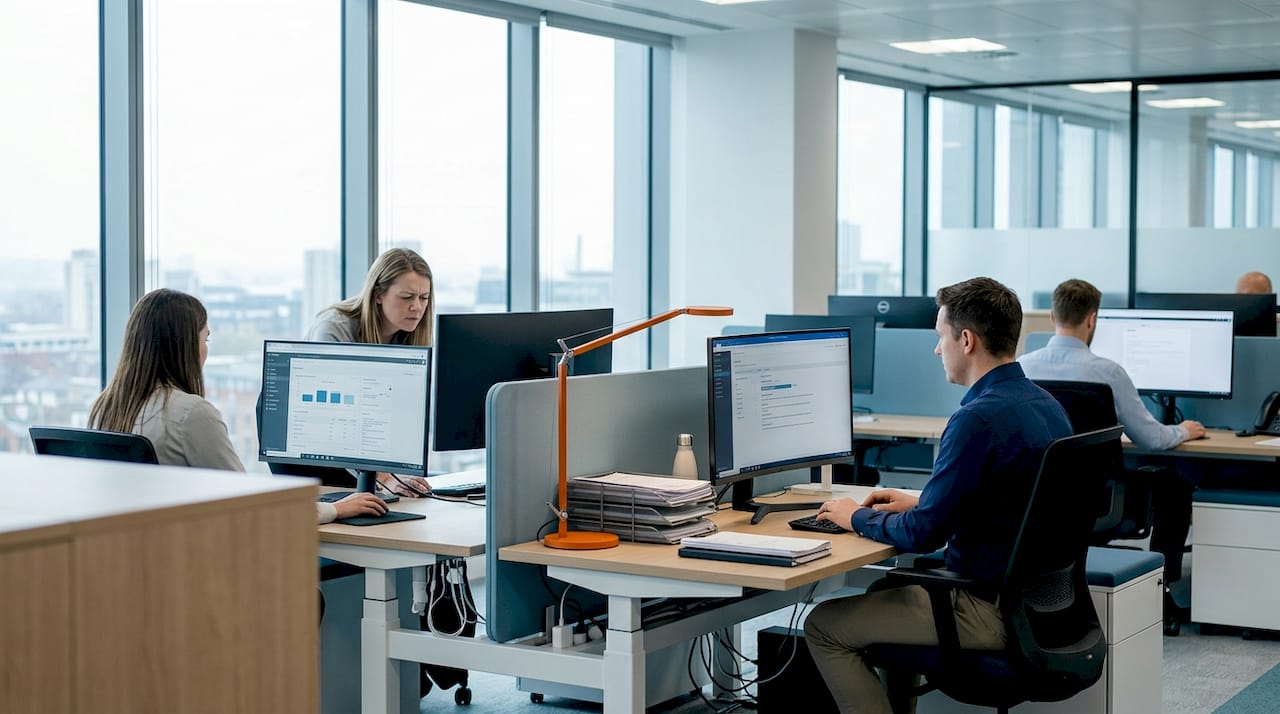
Biophilic elements, meaning plants and other nature-inspired features, reliably boost perceived productivityclean%20version%20FINAL%20with%20tables%20and%20figures%20included.pdf) and attention in office environments. This effect is consistent across studies and appears quickly after introduction. Equally notable, the benefits diminish measurably when plants are removed, suggesting that maintenance and ongoing commitment matter as much as initial installation.
Design interventions by priority:
| Design element | Evidence strength | Fastest visible result | Procurement complexity |
|---|---|---|---|
| Lighting temperature | High | Days | Medium |
| Wall colour | High (VR evidence) | Immediate | Low |
| Indoor plants | High (longitudinal) | Weeks | Low to medium |
| Layout redesign | Medium | Weeks to months | High |
| Ergonomic seating | High (ergonomics) | Days | Medium |
Pro Tip: Do not upgrade one element in isolation. A workspace with excellent lighting but no colour strategy or poor ergonomics will still underperform. Use workspace planning essentials to approach your environment as an integrated system, not a checklist.
With those priorities established, let’s look in depth at biophilic strategies and the long-term results you can deliver. Biophilic design is often reduced to a few potted plants near reception. The evidence supports a far more serious approach.
True biophilic design incorporates nature-inspired spatial arrangements, natural materials, daylight access, indoor planting, living walls, and improved indoor environmental quality including air quality and acoustic control. The goal is to create environments where the brain’s natural preference for nature-connected settings works in your favour rather than against your staff.
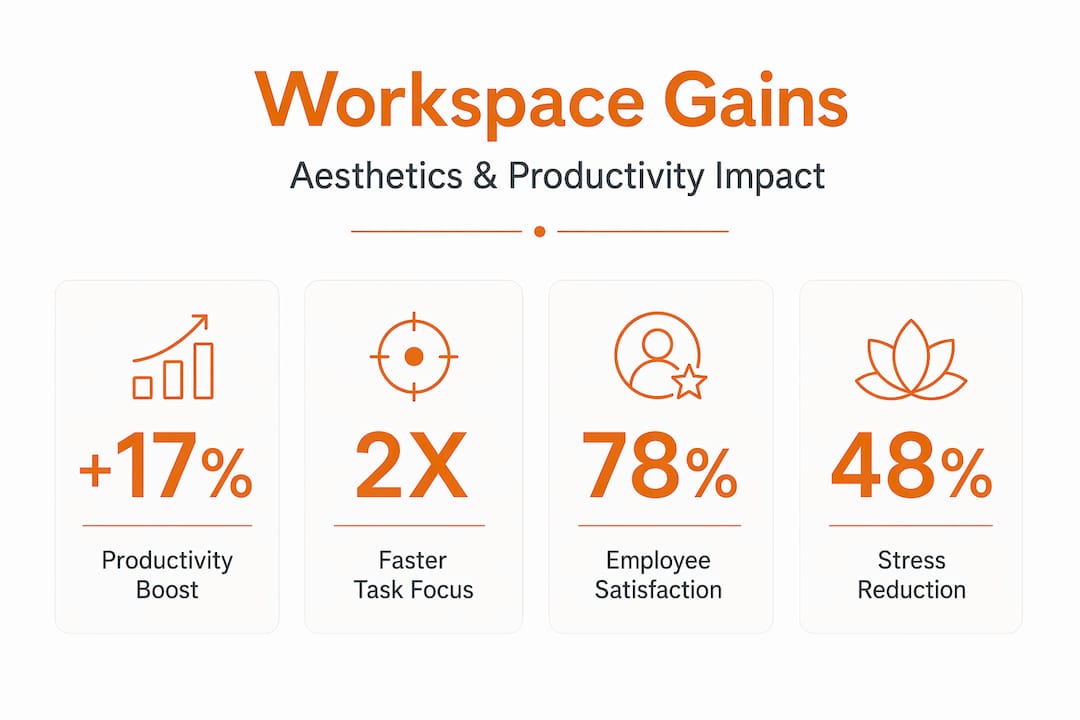
The productivity case for this approach is now supported by longitudinal UK data. Sustained interventions in biophilic office buildings delivered a 12.98% productivity improvement at 12 months and 9.17% at 24 months, even accounting for natural performance decay over time. These are not trivial numbers. For a team of 50 people, even a 9% sustained gain in output quality represents a significant return on what is often a modest capital investment.
The plant-specific data is equally striking. Removing plantsclean%20version%20FINAL%20with%20tables%20and%20figures%20included.pdf) produces measurable drops in perceived efficiency, creativity, stress management, and overall productivity. Staff notice the difference, and the decline shows up in their reported output. This matters for procurement teams specifying maintenance contracts: the plants are not optional extras once they are in place.
Practical steps for adding and maintaining biophilic elements:
“Biophilic design is not a single product decision. It is an ongoing environmental commitment that requires specification, maintenance, and evaluation to deliver its documented benefits.”
One procurement-specific warning: suppliers occasionally use “biophilic” as a marketing term for any product featuring a leaf motif or natural finish. When specifying, ask for evidence of the intervention’s effect on indoor air quality and occupant wellbeing. Genuine biophilic design integrates plants, natural materials, and light access into the spatial and furniture plan from the outset.
Having seen what works, procurement teams need practical frameworks to translate evidence into action and measurable results. The most common mistake is treating aesthetic upgrades as isolated purchase decisions rather than system-level changes.
A refurbishment that installs new chairs without considering the desk height, lighting, and spatial arrangement around them will achieve a fraction of its potential impact. The same applies to a colour repaint that ignores the existing lighting temperature or the glare profile of existing workstations. Expert commentary on holistic workspace planning consistently highlights that isolated visual upgrades offer weaker returns than integrated interventions combining aesthetics, ergonomics, and environmental quality. Isolated changes feel significant at handover but fade quickly in measured output.
Recommended procurement process for aesthetic upgrades:
Pairing the right aesthetic choices with right office furniture that supports both physical comfort and visual coherence is consistently more effective than either investment alone. An effective workspace layout that incorporates all these variables gives your team the environmental baseline they need to perform consistently.
Pro Tip: Before committing to a full fit-out, run a four-week pilot in a single zone with clearly defined before-and-after metrics. The data from a small-scale pilot is almost always more persuasive to senior stakeholders than any vendor case study, and it significantly reduces the risk of a costly large-scale misstep.
Most articles on workspace aesthetics end with a confident list of design tips: paint the walls blue, add some plants, install better lights. The problem is that this advice treats office design as a one-time purchase event rather than an ongoing environmental management discipline. That gap is where productivity gains are lost.
The honest reality of procurement in this space is that the initial fit-out decision is less important than the system you put in place to evaluate and adapt it over time. Post-occupancy evaluation, which means formally measuring how staff actually experience and perform in the new environment, is routinely skipped because it is perceived as expensive or unnecessary. In practice, it is the only way to know whether your investment is working.
There is also a persistent misconception that aesthetics and ergonomics are separate categories. They are not. The physical comfort of a chair shapes how long a person can sustain focused attention. The height of a desk affects posture, which affects breathing, which affects cognition. Aesthetics operate on top of this physical foundation, not independently of it. A workspace that looks impressive but fails ergonomically will see the aesthetic benefits undermined by the physical discomfort. This is why a modern furniture workflow that integrates both dimensions from the start produces more durable results than treating them as separate line items.
The final overlooked factor is staff feedback loops. Procurement teams often gather input before a refurbishment and ignore it afterwards. Regular, structured feedback after changes are made tells you whether the environment is serving its intended purpose or simply satisfying an aesthetic brief. The best-designed offices evolve with their occupants, and the procurement process should build in that adaptability from the outset.
Evidence-based workspace design is not a theoretical exercise. It produces real, measurable returns when applied with the right furniture and fit-out decisions working together.
At Furniture for Business, we supply commercial-grade furniture to UK organisations undergoing refurbishment or new fit-outs, from compact offices to multi-floor corporate spaces. Our office chairs and office desks are selected for ergonomic performance and design quality, giving you the physical foundation on which effective aesthetics can build. If you are moving towards height-adjustable working, our height adjustable desk setup guide walks you through specification decisions that support both posture and spatial design. We offer bulk order pricing, free UK mainland delivery, and easy returns, so you can invest with confidence.
Blue and yellow walls supported the highest productivity and most positive emotional states in controlled VR experiments, while green performed worst and red significantly increased negative mood in test participants.
Yes, adding plantsclean%20version%20FINAL%20with%20tables%20and%20figures%20included.pdf) to offices produces clear improvements in perceived attention, creativity, and productivity, with declines measured rapidly after plant removal.
Cooler, brighter lighting is proven to improve cognitive performance and reduce fatigue, while warm, dim lighting is more effective at reducing stress in office environments.
Combined interventions involving aesthetics, ergonomics, lighting, and air quality consistently outperform isolated upgrades in any single category, making integration the smarter procurement strategy.
Use a combination of objective output metrics such as task accuracy and absenteeism alongside self-report indicators like satisfaction and stress ratings, and always pilot changes in a defined zone before a wider rollout.

Phone: 0330 043 4114
VAT no. GB 991 8681 60
Company no. 07250570