Many office managers assume that noise problems stem purely from poor building design or too many people in one space. The truth is, traditional office furniture does little to absorb or block sound, leaving teams exposed to constant distractions and reduced privacy. Acoustic office furniture offers a targeted solution by integrating sound-absorbing materials directly into desks, screens, chairs, and storage units. This article explains what acoustic office furniture is, how it fits into effective noise management strategies, and practical advice for selecting the right pieces to improve workplace comfort and productivity across UK offices.
| Point | Details |
|---|---|
| Definition and purpose | Acoustic office furniture uses sound absorbing materials integrated into desks, screens, chairs and storage to control noise, reduce reverberation and improve speech privacy in open plan spaces. |
| Key materials used | Materials such as PET felt panels, polyester fibre batting and dense foam cores absorb a range of frequencies and deter sound transmission while keeping furniture lightweight and visually appealing. |
| ABC framework role | Acoustic furniture primarily blocks transmission and provides local absorption within the ABC framework of Absorb, Block and Cover, complementing ceiling tiles and carpets. |
| Practical selection tips | Expect furniture to contribute around 10 per cent to 20 per cent of total sound absorption and select pieces that block sound paths while coordinating with ceilings and partitions for best results. |
Acoustic office furniture refers to furnishings specifically designed or integrated with sound-absorbing materials to control noise, reduce reverberation, and improve speech privacy in open-plan workspaces. Unlike standard office furniture that reflects sound waves, acoustic pieces incorporate materials such as PET-felt, polyester fibre, and dense foam panels that absorb sound energy. These materials trap sound waves within their porous structure, preventing noise from bouncing around the room and creating the familiar echo effect that plagues many modern offices.
Common examples include desk dividers with fabric-wrapped acoustic panels, high-backed office chairs with sound-absorbing upholstery, freestanding screens that create visual and acoustic barriers, and office storage units lined with acoustic materials. Each piece serves a dual purpose: providing functional workspace solutions whilst simultaneously managing sound levels. The integration is often subtle, with acoustic materials hidden beneath attractive fabric finishes or incorporated into the structural design itself.
Noise control matters enormously in open-plan offices where speech intelligibility becomes a critical issue. When colleagues can overhear every phone conversation and keyboard click travels across the room, concentration suffers and productivity drops. Research consistently shows that excessive noise ranks among the top complaints in modern workplaces, affecting everything from task completion times to employee wellbeing. Acoustic furniture addresses this by creating localised sound barriers and absorption zones that reduce the distance sound travels and lower overall noise levels.
The materials used in acoustic furniture work through different mechanisms:
For UK office managers planning refurbishments or new fit-outs, understanding these fundamentals helps you specify furniture that genuinely improves acoustic comfort rather than simply looking the part. The investment in acoustic furniture pays dividends through reduced distraction, improved speech privacy, and better overall workplace satisfaction.
Expert acoustic consultants recommend the ABC methodology for open-plan offices: Absorb sound at ceilings and walls, Block transmission with screens and furniture, and Cover residual noise with sound masking systems. Acoustic furniture plays a supporting role within this framework, primarily contributing to the blocking function whilst adding supplementary absorption. Understanding this hierarchy prevents unrealistic expectations and ensures you combine furniture with other treatments for optimal results.
Furniture typically contributes 10-20% of total sound absorption in a properly designed office acoustic strategy. The remaining 80-90% comes from ceiling tiles, wall panels, carpeting, and other architectural elements with larger surface areas. This doesn’t diminish furniture’s importance, rather it clarifies where furniture excels: creating localised barriers between workstations, reducing direct sound transmission between colleagues, and adding absorption exactly where people sit and work. Ceiling treatments handle reverberation across the entire room, whilst furniture manages the immediate acoustic environment around each person.
Pro Tip: Combine high acoustic screens between desks with ceiling-mounted baffles above collaboration zones. This layered approach addresses both direct sound transmission and reflected sound, creating noticeably quieter conditions than either solution alone.
The practical application follows a systematic approach:
This methodology ensures furniture complements rather than replaces essential architectural treatments. Many UK offices make the mistake of purchasing acoustic screens or booths expecting them to solve all noise problems, only to find limited improvement because fundamental ceiling and wall absorption remains inadequate. The modern office furniture workflow guide emphasises this integrated approach, helping procurement teams coordinate furniture selections with broader workplace design strategies.
When furniture forms part of a complete acoustic strategy, the cumulative effect significantly outperforms any single intervention. Screens reduce direct sound transmission by 5-8 decibels, ceiling tiles absorb reverberation, and sound masking raises the ambient noise floor just enough to improve speech privacy without creating distraction. Together, these elements create comfortable acoustic conditions that support both focused work and collaborative activities.
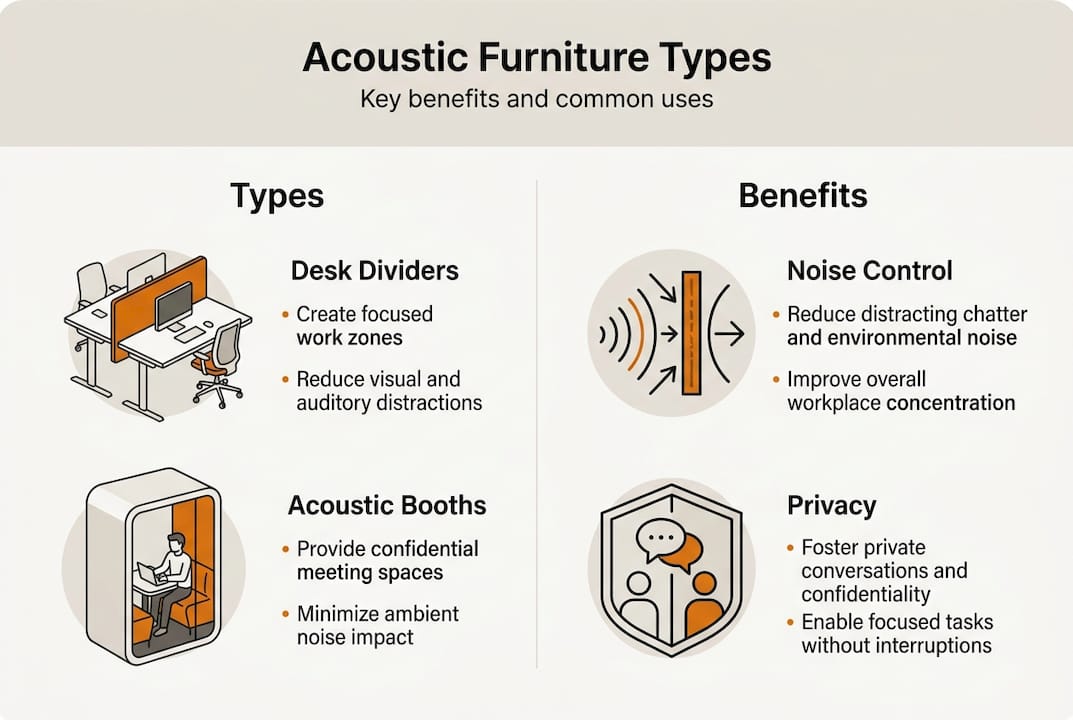
Acoustic desk dividers and screens represent the most common furniture type, available as desktop-mounted panels, freestanding floor screens, or suspended ceiling-hung dividers. Desktop dividers typically stand 400-600mm high, providing visual privacy and blocking direct sound transmission between adjacent workstations. Freestanding screens reach 1500-1800mm, creating more substantial barriers suitable for defining team zones or separating collaborative areas from quiet work zones. Most incorporate PET-felt or fabric-wrapped acoustic panels that absorb sound whilst maintaining clean, professional aesthetics.
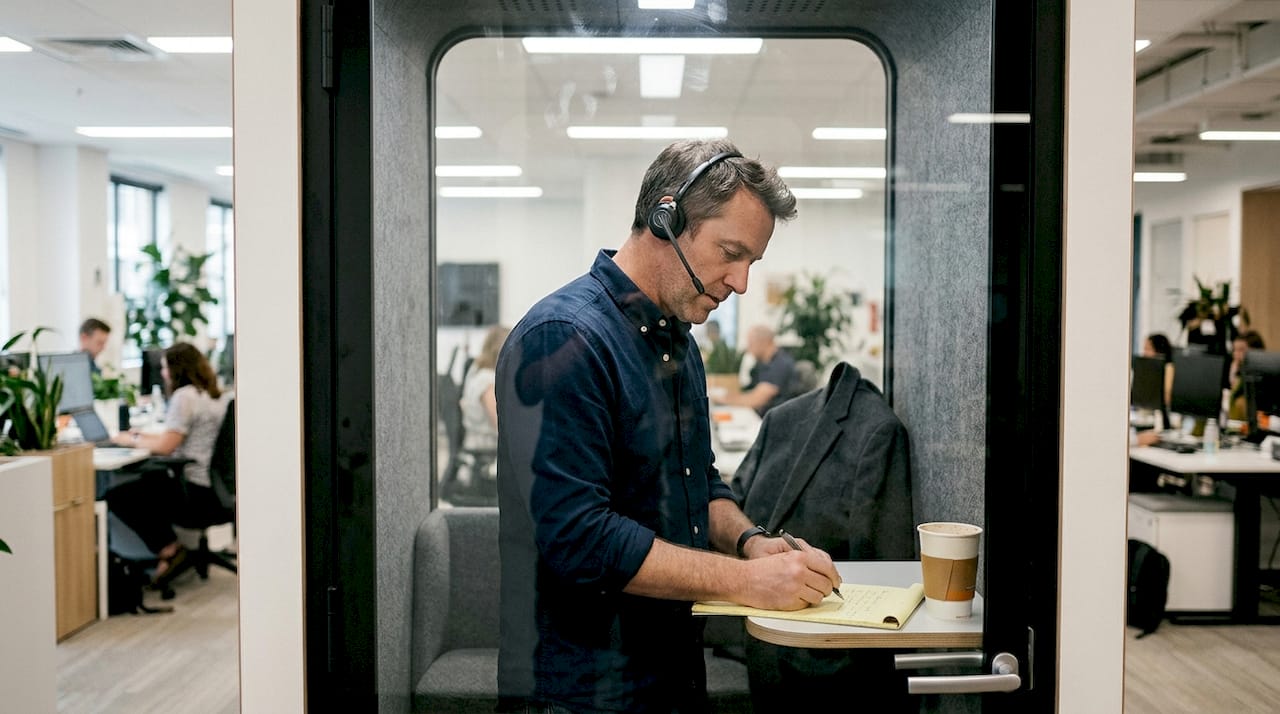
Acoustic booths offer enclosed spaces for private calls, video conferences, or concentrated work requiring complete isolation from office noise. These prefabricated units range from single-person phone booths to four-person meeting pods, featuring sound-absorbing wall panels, acoustic doors, and ventilation systems. Installation requires minimal disruption since booths arrive fully assembled or in modular sections, making them ideal for offices that cannot undertake major construction work. Booths typically achieve 25-30 decibel sound reduction, sufficient for confidential conversations and focused tasks.
Upholstered office chairs with high backs and acoustic panels provide personal sound barriers whilst supporting ergonomic comfort. The chair back acts as a shield, blocking sound from behind and reducing the acoustic footprint of each workstation. Some executive and task chair designs incorporate acoustic fabric panels specifically chosen for sound absorption properties, combining comfort with acoustic function. These chairs work particularly well in open-plan layouts where permanent screens would obstruct sightlines or create a closed-off atmosphere.
Office storage units designed with acoustic properties serve dual purposes, providing essential storage whilst contributing to noise control. Tall storage units positioned strategically can define spaces and block sound transmission between departments or work zones. Some manufacturers line cabinet interiors with acoustic materials or use perforated fronts backed by absorptive layers, turning functional storage into effective sound management tools. This approach maximises space efficiency by combining two functions in one piece of furniture.
| Furniture type | Primary function | Installation complexity | Typical cost range | Best suited for |
|---|---|---|---|---|
| Desk dividers | Block direct sound | Low (desktop mount) | £50-200 per panel | Individual workstations |
| Freestanding screens | Define zones, absorb sound | Low (movable) | £200-600 per screen | Flexible layouts |
| Acoustic booths | Provide isolation | Medium (assembly required) | £3,000-12,000 per unit | Private calls, focus work |
| Upholstered chairs | Personal sound barrier | Low (standard placement) | £300-800 per chair | Open-plan seating |
| Acoustic storage | Dual function storage and blocking | Medium (fixed placement) | £400-1,500 per unit | Space definition |
Pro Tip: Combine multiple furniture types for layered acoustic protection. Position freestanding screens to define team zones, add desktop dividers between individual workstations, and place acoustic storage units along main circulation routes to absorb sound from foot traffic.
The most effective offices integrate several furniture types, creating varied acoustic environments that support different work modes. Quiet zones benefit from desk dividers and acoustic chairs, collaboration areas use screens to contain sound without full enclosure, and phone booths handle confidential calls. This variety gives employees choice over their acoustic environment, improving satisfaction and productivity across diverse work styles.
Assessing your office layout and identifying specific noise sources forms the essential first step before purchasing acoustic furniture. Walk through your space during typical work hours, noting where conversations carry too far, which areas suffer from excessive reverberation, and where employees struggle with concentration. Map these problem zones and consider how furniture placement could create barriers or add absorption exactly where needed. This targeted approach delivers better results than randomly distributing acoustic pieces throughout the office.
Compatibility with existing furniture and interior design ensures acoustic additions enhance rather than clash with your workplace aesthetic. Most acoustic furniture manufacturers offer extensive colour and finish options, allowing you to match existing schemes or create intentional design statements. Consider how new pieces integrate with current desk systems, storage solutions, and seating arrangements. Modular acoustic furniture often provides the most flexibility, allowing you to reconfigure layouts as team sizes and work patterns evolve.
Prioritising functionality and comfort alongside acoustic properties prevents the mistake of choosing furniture solely for sound control. An acoustic chair must still provide proper lumbar support and adjustability. Desk dividers should allow adequate natural light whilst blocking sound. Booths need proper ventilation and lighting to remain comfortable for extended use. The office furniture buying guide 2026 emphasises this balanced approach, helping procurement teams evaluate furniture across multiple criteria rather than focusing narrowly on acoustic performance.
Budget considerations require balancing immediate costs against long-term benefits:
Remember that furniture contributes 10-20% of total sound absorption, so budget accordingly for complementary ceiling and wall treatments. Spending your entire acoustic budget on furniture whilst neglecting architectural elements produces disappointing results. A balanced investment across all ABC methodology components delivers superior outcomes.
Maintenance and durability factors significantly impact long-term satisfaction with acoustic furniture. Fabric-wrapped panels require regular vacuuming to prevent dust accumulation, whilst PET-felt materials resist staining and maintain acoustic properties over time. Check manufacturer specifications for cleaning requirements and expected lifespan. Commercial-grade acoustic furniture designed for high-traffic offices typically outlasts residential-quality pieces, justifying higher initial costs through extended service life.
Coordinating with acoustic specialists ensures your furniture selections complement overall workplace design strategies. Professional consultants can model predicted acoustic performance, recommend optimal furniture placement, and verify that your proposed combination of furniture and architectural treatments will achieve target noise reduction levels. This professional input proves particularly valuable for large refurbishments or new office fit-outs where acoustic performance critically affects employee satisfaction and retention.
After understanding how acoustic furniture improves workplace comfort, the practical next step involves exploring specific product options that combine sound management with ergonomic design. UK offices benefit from suppliers who understand the unique requirements of commercial spaces, offering furniture that balances acoustic performance with durability and professional aesthetics. Whether you need individual desk dividers for focused work zones or complete acoustic booth solutions for private calls, selecting furniture from experienced commercial suppliers ensures you receive products designed for demanding office environments.

The office chairs collection includes ergonomic seating with high backs and acoustic fabric options that provide personal sound barriers whilst supporting proper posture throughout the workday. Combining these with height-adjustable office desks creates workstations that address both physical comfort and acoustic privacy. For offices requiring additional sound control, the office storage solutions range includes tall units that define spaces and block sound transmission between departments. Each product category offers options suitable for teams of 5 to 500 people, with bulk order pricing and free mainland UK delivery supporting efficient procurement processes.
Acoustic office furniture incorporates sound-absorbing materials like PET-felt or polyester fibre into desks, chairs, screens, and storage units. These materials trap sound waves, reducing noise levels and improving speech privacy in open-plan offices. Unlike standard furniture that reflects sound, acoustic pieces actively manage the acoustic environment around each workstation.
It reduces reverberation by absorbing sound energy before it bounces around the room, creating that characteristic office echo. Acoustic furniture also blocks direct sound transmission between workstations, preventing conversations from carrying across the entire floor. The combined effect lowers overall noise levels and improves concentration for focused work.
Desk dividers, acoustic booths, freestanding screens, high-backed upholstered chairs, and storage units with sound-absorbing panels represent the most common and effective options. Each type serves different purposes: dividers block direct sound between desks, booths provide isolation for private calls, screens define team zones, chairs create personal barriers, and storage units combine function with sound blocking. The most effective offices use multiple types together.
Furniture typically contributes only 10-20% of total sound absorption and works best alongside ceiling tiles, wall panels, and sound masking systems. Relying solely on furniture produces limited results because architectural elements with larger surface areas handle the majority of sound absorption. The most successful approach combines furniture with comprehensive ceiling and wall treatments following the ABC methodology: Absorb, Block, and Cover sound through layered interventions.

Phone: 0330 043 4114
VAT no. GB 991 8681 60
Company no. 07250570