Many UK offices still treat workspace layout as an afterthought, focusing on aesthetics rather than strategic design. Yet research shows that effective space planning raises productivity and employee satisfaction significantly. With hybrid working now the norm, the way you organise your office directly influences staff wellbeing, collaboration, and adaptability. This guide offers practical solutions to unlock your office’s full potential through intelligent space planning.
| Point | Details |
|---|---|
| Aligned layouts boost results | Carefully planned office space directly supports productivity and staff wellbeing. |
| Hybrid adaptation is essential | New layouts must support hybrid working patterns and flexible collaboration. |
| Small changes make a big impact | Simple tweaks like ergonomic chairs and effective storage create noticeable benefits. |
| Avoid common mistakes | Ignoring staff needs or future flexibility can waste time, resources, and morale. |
Office space planning is the strategic arrangement and use of physical workspace to support your business goals. It goes far beyond choosing desks and chairs. Effective planning considers how people move, collaborate, focus, and recharge throughout their working day. You’re designing an environment that either enables or hinders every task your team performs.
Why does this matter so much? Because workspace layout directly impacts productivity, costs, and your ability to attract and retain talent. When you plan thoughtfully, you create zones for different activities: quiet focus areas, collaborative spaces, informal meeting spots, and relaxation zones. Each serves a distinct purpose in supporting diverse work styles and tasks.
“Effective space planning raises productivity and employee satisfaction by creating environments that support natural work patterns and reduce friction in daily tasks.”
The outcomes are tangible and measurable. Well-planned offices reduce wasted time searching for resources, minimise distractions during focused work, and foster spontaneous collaboration when needed. You’ll see improvements in:
Poor planning, conversely, creates bottlenecks, frustration, and hidden costs. Staff struggle to find appropriate spaces for their tasks. Noise bleeds between areas. Equipment sits unused whilst essential resources remain scarce. These friction points accumulate, eroding productivity and satisfaction daily.
Building a successful office space plan requires attention to several interconnected elements. Each component plays a specific role in creating a functional, adaptable workspace. Zoning, furniture choice, and flexible layouts form the core elements of effective planning.
Work zones and activity-based areas: Designate distinct zones for focused work, collaboration, meetings, and informal interaction. Activity-based working allows staff to choose the environment that best suits their current task.
Flexible and ergonomic furniture: Invest in adjustable desks, supportive seating, and modular furniture that adapts to changing needs. Ergonomic design prevents discomfort and supports long-term health.
Storage solutions and clutter management: Implement smart storage systems that keep resources accessible whilst maintaining visual order. Clutter-free spaces reduce cognitive load and improve focus.
Technology integration: Plan for adequate power outlets, charging stations, and connectivity throughout the space. Modern offices require seamless technology access at every workpoint.
Wayfinding, lighting, and acoustics: Use clear signage, natural and task lighting, and acoustic treatments to create comfortable, navigable environments. These elements profoundly affect how people experience and use the space.
Circulation and flow: Design pathways that allow easy movement without disrupting focused work areas. Consider how people naturally move through the space during different times of day.
Pro Tip: Map your team’s typical daily activities before finalising your layout. Understanding actual work patterns reveals which zones need the most space and the best locations.
The most successful plans balance structure with flexibility. You need enough definition to create purposeful zones, yet sufficient adaptability to accommodate evolving work styles and business needs. This balance becomes particularly crucial as organisations navigate hybrid working models.
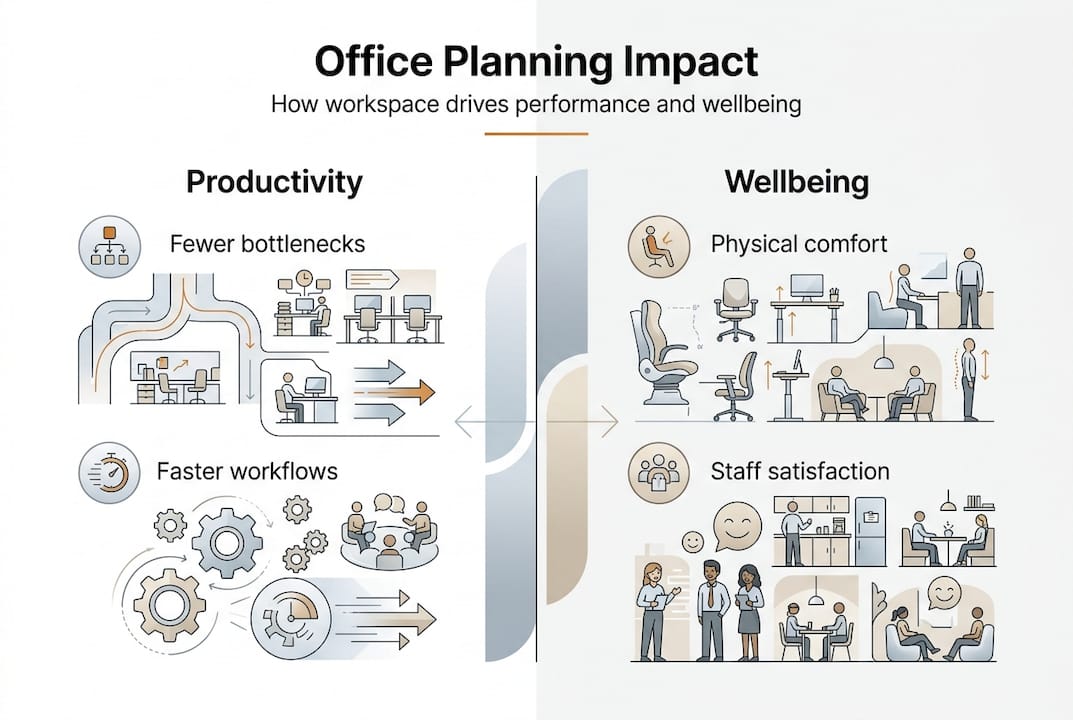
The connection between workspace design and performance is not merely intuitive—it’s backed by substantial evidence. Thoughtful space planning delivers measurable improvements in both productivity metrics and employee wellbeing indicators.
Physical comfort directly influences work output. Ergonomic and well-designed offices cut reported discomfort by as much as 30%. When staff aren’t distracted by back pain, eye strain, or awkward postures, they maintain focus and energy throughout the day. This translates to fewer sick days, higher engagement, and better quality work.
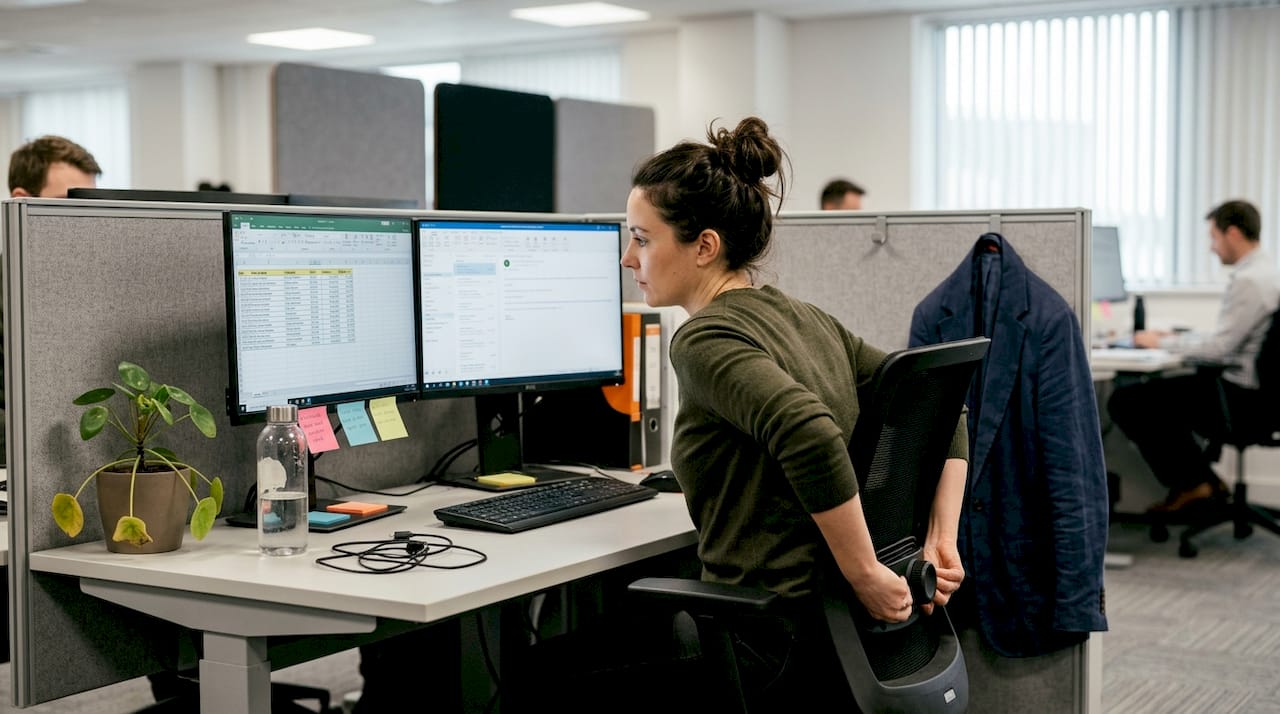
Organisational efficiency improves dramatically with proper planning. Organised storage systems save time and create workflow efficiencies by ensuring resources are accessible when needed. Staff spend less time searching for documents, supplies, or equipment, redirecting that energy toward productive tasks.
| Workspace element | Productivity impact | Wellbeing benefit |
|---|---|---|
| Ergonomic seating | 15-20% fewer posture complaints | Reduced musculoskeletal disorders |
| Natural lighting | 10-15% improved task performance | Better mood and sleep quality |
| Acoustic control | 25% reduction in distraction | Lower stress and fatigue |
| Activity-based zones | 18% faster task completion | Greater autonomy and satisfaction |
| Organised storage | 30% less time searching | Reduced cognitive load |
Psychological benefits matter equally. When you provide choice and control over work settings, staff feel trusted and valued. Activity-based working acknowledges that different tasks require different environments. This autonomy boosts morale and engagement significantly.
The financial case is compelling. Investing in thoughtful space planning yields returns through reduced absenteeism, lower turnover, and higher output per employee. These gains far outweigh the initial planning and implementation costs. Moreover, well-planned spaces adapt more easily to future needs, protecting your investment over time.
Consider the ripple effects. Productive, satisfied employees deliver better customer service, generate more innovative ideas, and contribute to positive workplace culture. These intangible benefits compound over time, creating competitive advantages that extend well beyond the physical workspace.
Hybrid working has fundamentally changed how we think about office space. The traditional model of assigned desks for every employee no longer makes sense when staff split time between home and office. Your planning must reflect this new reality whilst maximising the value of in-office days.
Hybrid working demands adaptable spaces and multi-purpose furniture that serves different functions throughout the week. The office becomes a destination for collaboration, connection, and tasks that benefit from in-person interaction, rather than simply a place to sit and work independently.
Key strategies for hybrid-ready spaces include:
| Traditional office | Hybrid office |
|---|---|
| Fixed desk assignments | Flexible touchdown spaces |
| Individual focus priority | Collaboration emphasis |
| Static layouts | Modular, reconfigurable zones |
| Basic technology | Advanced hybrid meeting tech |
| Minimal social space | Expanded informal areas |
Pro Tip: Survey your team regularly about their hybrid working patterns and preferences. Use this data to adjust your space allocation and booking policies, ensuring the office meets actual needs rather than assumptions.
The transition requires cultural change alongside physical redesign. Staff need clear guidance on how to use new systems and spaces effectively. Communicate the rationale behind changes, emphasising how the new layout supports their work rather than simply reducing costs.
Monitor utilisation patterns using occupancy sensors or booking data. This reveals which spaces are oversubscribed and which sit empty, allowing you to refine your layout iteratively. Hybrid planning is not a one-time project but an ongoing process of observation and adjustment.
Even well-intentioned planning efforts can falter if you overlook critical factors. Understanding common mistakes helps you avoid costly missteps and create spaces that truly serve your organisation’s needs.
Ignoring flexibility and future growth: Many organisations plan for current headcount and work patterns without considering how these might evolve. This creates spaces that quickly become obsolete. Inadequate planning can undermine productivity, collaboration, and employee retention. Build in capacity for growth and choose furniture systems that reconfigure easily.
Overlooking environmental comfort: Temperature, air quality, lighting, and acoustics profoundly affect how people feel and perform. Yet these elements often receive insufficient attention during planning. Poor environmental conditions cause discomfort, distraction, and health issues that erode productivity silently.
Neglecting staff input: Planning teams sometimes design spaces based on assumptions rather than actual user needs. This disconnect results in layouts that look impressive but fail functionally. Involve staff in the planning process through surveys, workshops, and pilot programmes.
Underestimating storage requirements: Digital transformation hasn’t eliminated physical storage needs. Inadequate storage creates clutter, reduces usable workspace, and frustrates daily operations. Plan generous storage that’s accessible yet unobtrusive.
Copying trends without context: Open-plan offices, hot-desking, and other trends work brilliantly in some contexts but fail in others. Adopt approaches that suit your specific culture, work types, and staff preferences rather than following fashion.
Pro Tip: Create a planning checklist that addresses each potential pitfall explicitly. Review this checklist at every stage, from initial concept through implementation, to ensure nothing critical slips through.
Solutions for common pitfalls:
Remember that perfect planning is impossible. What matters is creating a framework that allows continuous improvement based on real-world experience. Build learning and adaptation into your process from the start.
You now understand the principles and practices that make office space planning effective. The next step is translating this knowledge into action within your own workspace. Whether you’re refurbishing an existing office or designing a new one, the right furniture and layout choices make all the difference.
Explore our curated collections of ergonomic office chairs designed for all-day comfort and productivity. Pair these with height-adjustable office desks that support varied working postures and preferences. Our furniture is specifically selected for UK businesses seeking durable, design-led solutions that balance quality with value.
For comprehensive workspace transformation, browse our full range of professional office solutions including meeting room furniture, storage systems, and office accessories. We offer bulk order pricing, free mainland UK delivery, and expert guidance to help you create spaces that truly work for your team. Our specialists understand the unique challenges of hybrid working and can help you design layouts that maximise flexibility whilst maintaining functionality.
Prioritise flexible, multipurpose furniture and use strategic zoning to maximise affordable impact. Focus investment on high-use areas first, then expand gradually.
Failing to adapt the layout for changing work patterns, especially hybrid schedules. Many offices overlook flexibility and adaptability, leading to wasted space and poor morale.
Yes, ergonomic furniture cuts back pain cases by up to 30%. They reduce discomfort and support better long-term health and productivity, delivering strong returns.
Review your office space plan annually or when you notice changes in staff needs or company growth. Regular assessment ensures your layout continues serving evolving requirements.
Technology enables flexible layouts by facilitating remote access, digital booking systems, and collaboration tools. It’s essential infrastructure for hybrid working success.

Phone: 0330 043 4114
VAT no. GB 991 8681 60
Company no. 07250570