Selecting effective strategies to enhance office comfort presents a significant challenge for UK office managers and HR professionals in 2026. With 80% of office workers experiencing musculoskeletal disorders and mental ill health now the leading cause of long-term absence, the stakes have never been higher. Poor workplace comfort directly impacts employee wellbeing, drives up absenteeism costs, and undermines business performance. This article examines evidence-based strategies backed by recent UK data and case studies, providing practical criteria to evaluate interventions, comparing flexible working models, ergonomic improvements, and mental health support to help you make informed decisions that genuinely improve workplace comfort and organisational outcomes.
| Point | Details |
|---|---|
| Flexible hybrid working | Improves wellbeing and work-life balance whilst delivering financial savings through reduced office space requirements. |
| Ergonomic office setups | Reduce musculoskeletal disorders affecting 80% of workers and cut absenteeism costs significantly. |
| Mental health support | Essential for addressing the leading cause of long-term absence and improving employee engagement. |
| Wellbeing investment | Boosts performance, engagement, and health outcomes when implemented strategically. |
| Regular assessments | Legally required workstation evaluations are critical for maintaining comfort and preventing injury. |
Before implementing any comfort intervention, you need clear evaluation criteria to ensure your investments deliver measurable results. The most effective approaches address three interconnected dimensions: physical ergonomics, mental health support, and flexible work arrangements. Comprehensive interventions targeting ergonomic improvements, postural correction, and stress management are necessary to mitigate workplace health risks effectively.
Your criteria should prioritise measurable outcomes. Focus on interventions that demonstrably reduce musculoskeletal disorders, support mental wellbeing, and improve work-life balance. Equally important are business metrics such as reduced absenteeism rates, enhanced employee engagement scores, and improved retention figures. Without clear measurement frameworks, you cannot assess whether your comfort investments are working.
Employee inclusion matters significantly. Effective interventions consider diverse needs across your workforce, from different physical requirements to varying work preferences and mental health challenges. This inclusive approach not only improves workplace culture but also ensures your comfort strategies benefit everyone, not just a subset of employees.
Legal compliance provides a baseline. UK regulations mandate regular workstation assessments and adjustments for display screen equipment users. Meeting these requirements protects your organisation from liability whilst demonstrating genuine commitment to employee welfare. However, truly effective comfort strategies exceed minimum compliance, creating environments where people thrive rather than merely survive.
When evaluating potential interventions, consider these essential factors:
Explore ergonomic furniture options that meet these criteria whilst supporting your specific workspace needs. Understanding how modern office furniture affects workflow helps you select solutions that enhance both comfort and productivity simultaneously.
Flexible hybrid working has emerged as one of the most powerful tools for improving office comfort in 2026. The RSPCA’s implementation of flexible hybrid working improved employee wellbeing and work-life balance, earning them the 2024 CIPD People Management Award for health and wellbeing initiatives. This recognition validates what many progressive organisations already know: giving employees control over where and when they work dramatically enhances their quality of life.
The financial benefits extend beyond wellbeing improvements. Following their hybrid working adoption, the RSPCA sold its headquarters, demonstrating how reduced office space requirements translate into substantial cost savings. These savings can be reinvested into better quality workspace for remaining office days, creating a virtuous cycle of improvement.
Hybrid models support broader organisational objectives around equality, diversity, and inclusion. Parents, carers, disabled employees, and those with long commutes all benefit from flexibility that accommodates their circumstances. This inclusive approach widens your talent pool significantly, attracting candidates who might otherwise exclude your organisation from consideration.
Implementing effective hybrid working requires more than simply allowing occasional remote days. You need clear policies defining core collaboration hours, booking systems for hot-desking arrangements, and technology infrastructure supporting seamless communication. Regular reviews ensure the model evolves with changing employee needs and business requirements.
Key implementation steps include:
Pro Tip: Survey employees quarterly about their hybrid working experience. This feedback reveals emerging issues before they become problems and demonstrates your commitment to continuous improvement. Consider how colour choices in office furniture affect staff wellbeing when designing spaces for hybrid workers who value quality over quantity in their office environment. Organisations like Phoenix Group demonstrate how flexible cultures drive engagement and performance simultaneously.
Work-related musculoskeletal disorders represent a crisis in UK offices. Research shows 80.81% of office workers experience work-related musculoskeletal disorders, with neck and back problems dominating the statistics. These conditions cause significant suffering for employees whilst costing businesses through reduced productivity and increased absence.
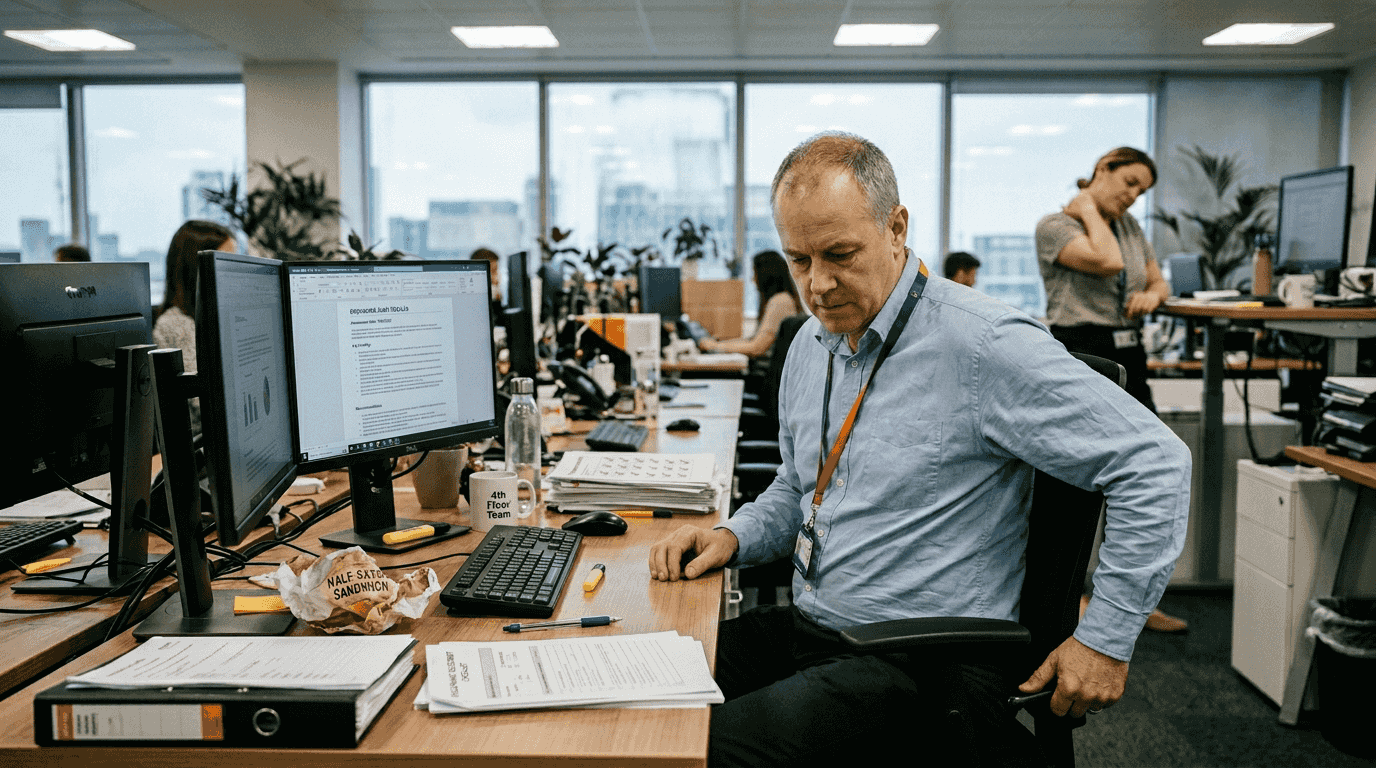
The economic impact is staggering. Poor office ergonomics costs the UK economy £15 billion annually in lost working days. For individual businesses, this translates to direct costs from sick pay, temporary cover, and reduced output from employees working through discomfort. Prevention through proper ergonomic setup delivers immediate return on investment.
Chair height and workstation configuration play critical roles in disorder development. Incorrect positioning forces awkward postures that strain muscles, tendons, and joints over time. What feels merely uncomfortable initially progresses to chronic pain requiring medical intervention. The good news? Most musculoskeletal problems are preventable through proper setup.
UK employers must conduct workstation assessments for all staff who regularly use display screen equipment. These assessments must consider individual needs, job tasks, and the complete workstation setup including screens, keyboards, chairs, and desks. Regular reassessments catch problems before they escalate, particularly when employees change roles or locations.
Implementing sit-stand desks and ergonomic chairs forms the foundation of effective prevention. Height-adjustable furniture accommodates different body sizes and allows position changes throughout the day, reducing static loading on muscles and joints. Combined with proper training on adjustment and positioning, these interventions dramatically reduce disorder risk.
| Ergonomic intervention | Primary benefit | Implementation cost | Payback period |
|---|---|---|---|
| Height-adjustable desks | Reduces static postures | Medium | 12-18 months |
| Ergonomic task chairs | Supports proper spinal alignment | Low to medium | 6-12 months |
| Monitor arms | Optimises screen position | Low | 3-6 months |
| Keyboard trays | Reduces wrist strain | Low | 3-6 months |
| Footrests | Improves leg circulation | Very low | 1-3 months |
Pro Tip: Schedule assessments during actual work activities, not in empty offices. Observing how employees really use their workstations reveals issues that static measurements miss. Learn about office chair ergonomics and workplace health to understand key adjustment features. Discover how choosing the right office chairs cuts absenteeism through evidence-based selection criteria.
Mental health has become the dominant workplace health challenge. Mental ill health is the leading cause of long-term absence and ranks second for short-term absence across UK organisations. This shift reflects broader societal trends whilst highlighting the urgent need for workplace interventions that genuinely support psychological wellbeing.
Despite widespread recognition of mental health importance, 89% of organisations focus on mental health in wellbeing activities, most efforts remain reactive rather than preventative. Organisations typically offer employee assistance programmes and counselling after problems emerge, missing opportunities for early intervention that prevents escalation. This reactive approach costs more and helps less than proactive cultures that normalise mental health conversations.
Stress reduction presents particular challenges. Whilst 64% of organisations take steps to reduce stress, only half believe their efforts are effective. This effectiveness gap suggests many interventions miss the mark, either targeting symptoms rather than causes or failing to reach employees who need support most. Closing this gap requires honest assessment of workplace stressors and genuine commitment to addressing root causes.
Manager training forms the cornerstone of effective mental health support. Line managers are typically first to notice changes in employee behaviour, performance, or attendance that signal emerging problems. Training them to recognise warning signs, initiate supportive conversations, and signpost appropriate resources enables early intervention when it is most effective.
Creating psychologically safe cultures where employees feel comfortable discussing mental health challenges requires sustained leadership commitment. This means:
“Investing strategically in wellbeing improves engagement, performance, and health outcomes. Organisations that treat wellbeing as a business priority rather than an HR initiative see the greatest returns.”
Pro Tip: Measure mental health support effectiveness through both quantitative metrics like absence rates and qualitative feedback from employee surveys. Numbers alone miss important nuances about how supported people actually feel. Consider how to furnish your office to cut back pain, recognising that physical comfort significantly affects mental wellbeing through reduced daily discomfort and stress.
Choosing between different comfort strategies requires understanding their relative strengths, implementation challenges, and business impacts. Each approach addresses different aspects of workplace wellbeing, and the most effective programmes combine multiple interventions tailored to organisational needs and employee preferences.
| Strategy | Primary wellbeing impact | Absenteeism reduction | Cost profile | Implementation complexity | Cultural shift required |
|---|---|---|---|---|---|
| Flexible hybrid working | High (work-life balance) | Moderate | Low (potential savings) | Moderate | High |
| Ergonomic furniture | High (physical health) | High | Medium | Low | Low |
| Mental health support | Very high (psychological) | Very high | Low to medium | Moderate | Very high |
| Workstation assessments | Moderate (prevention) | Moderate | Low | Low | Low |
| Wellness programmes | Moderate (holistic) | Low to moderate | Medium | Moderate | Moderate |
Flexible working delivers the broadest benefits across wellbeing dimensions but requires significant cultural adaptation and manager capability development. Organisations with traditional presenteeism cultures face steeper implementation challenges than those already embracing flexible practices. However, the financial savings from reduced office space can offset implementation costs substantially.
Ergonomic interventions offer the clearest return on investment through reduced musculoskeletal disorders and associated absence costs. Implementation is relatively straightforward, requiring capital investment in furniture and training but minimal cultural change. This makes ergonomics an excellent starting point for organisations beginning their comfort improvement journey.
Mental health support delivers the highest impact on long-term absence, the costliest form of employee absence for most organisations. However, effectiveness depends heavily on creating genuinely supportive cultures where employees feel safe accessing support. Surface-level initiatives without cultural backing often fail to reach those most in need.
Pro Tip: Start with ergonomic improvements for quick wins whilst building cultural foundations for mental health and flexible working initiatives. This staged approach delivers immediate benefits whilst preparing your organisation for deeper transformations. Explore height-adjustable desk setup guidance to maximise ergonomic furniture investments through proper configuration and employee training.
Transforming workplace comfort strategies into reality requires the right furniture and equipment. Furniture For Business provides comprehensive solutions specifically designed for UK businesses seeking to enhance employee wellbeing through evidence-based ergonomic design.
Our extensive range of ergonomic office chairs includes adjustable task seating that supports proper spinal alignment and reduces musculoskeletal disorder risk. Combined with our selection of height-adjustable office desks, you can create workstations that accommodate diverse employee needs whilst encouraging movement throughout the workday. We also offer office accessories including monitor arms, keyboard trays, and footrests that complete ergonomic setups. Our team provides expert guidance on selecting furniture that aligns with your comfort improvement goals, ensuring your investments deliver measurable wellbeing and performance benefits for your UK workforce.
Conduct comprehensive workstation assessments covering all equipment, furniture, and environmental factors affecting employee comfort. UK employers must conduct workstation assessments regularly for all display screen equipment users, considering individual needs and job tasks. Supplement formal assessments with employee surveys gathering feedback on comfort issues, preferred improvements, and barriers to optimal working conditions.
Flexible working enhances comfort by allowing employees to choose environments best suited to their tasks and personal circumstances. The RSPCA’s flexible hybrid working improved wellbeing and work-life balance significantly, demonstrating how control over working location and hours reduces stress. It also enables cost savings through reduced office space requirements, allowing investment in higher-quality furniture and facilities for remaining office days.
Prioritise proactive prevention over reactive intervention by training managers to recognise early warning signs and initiate supportive conversations. Despite most organisations focusing on reactive mental health support, preventative approaches deliver better outcomes. Create psychologically safe cultures where employees feel comfortable discussing challenges, provide flexible working for therapy appointments, and ensure senior leaders model healthy mental health practices.
Ergonomic improvements typically show measurable absenteeism reductions within six to twelve months of implementation. The timeline depends on intervention type, existing disorder prevalence, and implementation quality. Monitor metrics including musculoskeletal disorder reports, short-term absence rates, and employee comfort survey scores to track progress and identify areas needing additional attention or adjustment.
Allocate 2-5% of annual facilities budget specifically for comfort and wellbeing improvements, scaling based on current workplace conditions and employee needs. Prioritise high-impact, low-cost interventions like workstation assessments and basic ergonomic accessories initially, then invest in furniture upgrades and cultural programmes as budget allows. Remember that prevention costs substantially less than managing absence and health conditions resulting from poor workplace comfort.
Phone: 0330 043 4114
VAT no. GB 991 8681 60
Company no. 07250570