Selecting the right office chair is critical for productivity and wellbeing in UK business environments. Hybrid working creates specific ergonomic and durability needs that require careful consideration. This article reviews various types of office chairs suited for UK business settings, examining task chairs, executive seating, mesh-backed options, and specialised designs. You’ll discover key evaluation criteria, detailed feature comparisons, and actionable recommendations to help your procurement team make informed decisions that support employee comfort and organisational performance.
| Point | Details |
|---|---|
| Ergonomic adjustability | Prioritise chairs with adjustable lumbar support, seat height, armrests and tilt to keep users comfortable and able to move throughout the day. |
| Breathable mesh | Mesh backed chairs improve ventilation for hybrid workers who alternate between home and office. |
| Durability and value | Frames, upholstery and warranties influence long term costs and maintenance, with higher quality materials delivering better total cost of ownership. |
| Cost per year | Compare chairs by cost per year rather than upfront price to reflect wear, replacement needs and warranty terms. |
| Trial before purchase | Request sample chairs for week long employee trials before bulk purchases to reveal comfort issues not shown by specifications. |
Before exploring specific chair types, establish clear evaluation criteria that align with your organisation’s needs. Ergonomics significantly reduce workplace discomfort when properly implemented. Start by assessing lumbar support, which maintains the natural curve of the lower spine during extended sitting. Adjustable height mechanisms allow users to position feet flat on the floor with thighs parallel to the ground. Armrests should adjust vertically and horizontally to prevent shoulder tension, whilst tilt functions enable dynamic movement throughout the workday.
Durability considerations directly impact total cost of ownership. Examine frame materials such as steel or reinforced plastic, which determine structural integrity under daily use. Quality upholstery resists wear and staining, particularly important in high-traffic environments. Manufacturer warranties ranging from three to ten years signal confidence in construction quality and provide protection against premature failure.
Functionality requirements vary by workspace type. Swivel bases enable easy access to different desk areas without awkward twisting. Caster wheels should suit your flooring type, with hard wheels for carpet and soft wheels for hard surfaces. Mobility becomes crucial in flexible office layouts where employees move between workstations.
Hybrid working introduces unique demands. Breathable materials prevent discomfort during video calls and focused work sessions. Lightweight yet supportive designs accommodate employees who alternate between home and office, requiring chairs that maintain comfort across different environments. Consider how office chairs enhance productivity through features tailored to varied work patterns.
Balance budget constraints against quality requirements by calculating cost per year of use rather than initial purchase price. A £300 chair lasting eight years costs £37.50 annually, whilst a £150 chair requiring replacement after three years costs £50 annually.
Pro Tip: Request sample chairs for week-long employee trials before bulk purchases. Real-world feedback reveals comfort issues that specifications alone cannot predict, reducing the risk of costly mistakes.
Key evaluation checklist:
Task chairs represent the most common office seating solution, designed for short to moderate duration use. These compact chairs typically feature basic ergonomic adjustments including seat height and simple tilt mechanisms. Their streamlined design suits hot-desking environments where multiple employees share workstations throughout the day. Task chairs generally lack advanced lumbar support and armrest adjustability found in premium options, making them ideal for meeting spaces, reception areas, and collaborative zones where sitting periods rarely exceed two hours.
Executive chairs deliver enhanced comfort for employees working extended periods at dedicated desks. Executive chairs provide enhanced comfort through plush padding, high backrests, and comprehensive adjustment mechanisms. These chairs often incorporate headrests, waterfall seat edges that reduce leg pressure, and multi-dimensional armrests. The Saturn executive chair exemplifies this category with folding arms and premium upholstery suited for management offices and private workspaces.
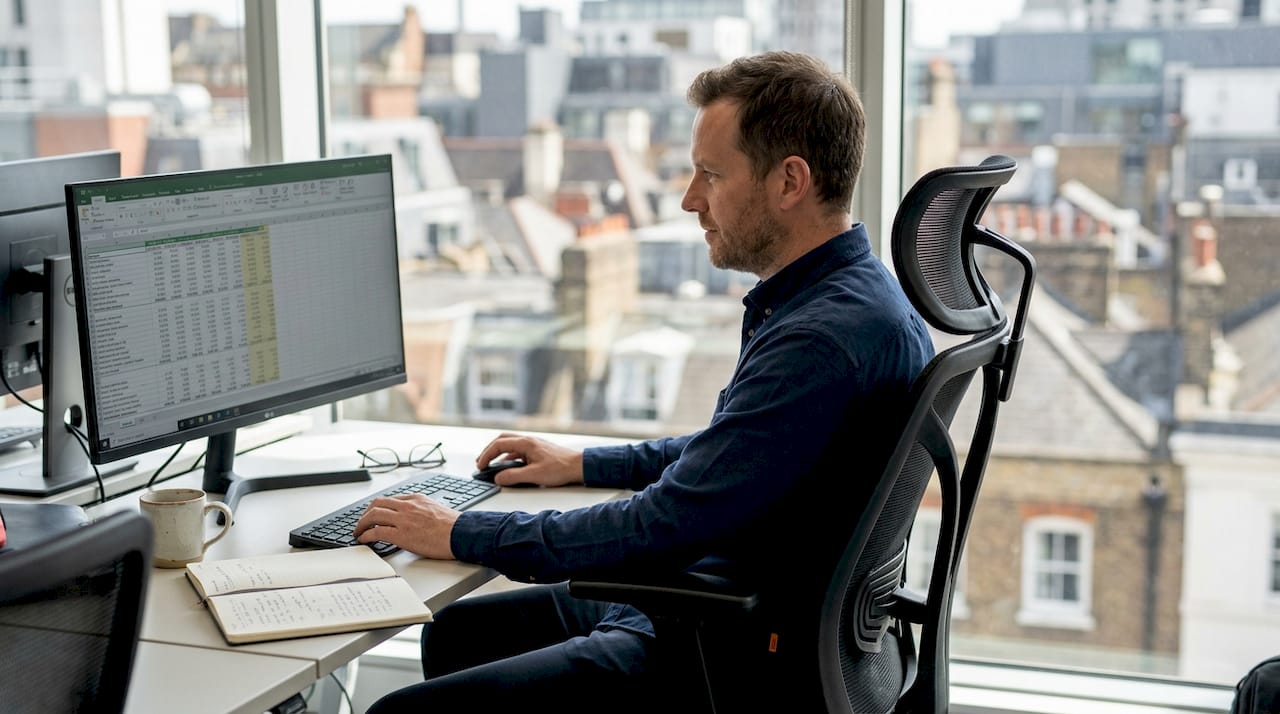
Mesh chairs address breathability concerns in modern offices. Mesh-backed chairs offer improved airflow through suspended mesh that conforms to the user’s back whilst allowing heat dissipation. This design prevents the sweating and discomfort associated with foam-backed chairs during warm months or in poorly ventilated spaces. The Vegalite mesh back chair combines breathability with executive-level adjustability, making it particularly suitable for hybrid offices where temperature control varies.
Stool chairs support active sitting and alternative postures. These height-adjustable stools encourage micro-movements that engage core muscles and improve circulation. Drafting stools with footrings suit standing desk users who alternate between sitting and standing throughout the day. Active sitting stools with wobble bases promote dynamic posture changes that reduce static loading on the spine.
Guest chairs prioritise aesthetics and basic comfort for short-term usage. These chairs typically feature fixed heights and minimal adjustability, focusing instead on visual appeal and space efficiency. Stackable guest chairs maximise storage flexibility in multi-purpose rooms, whilst sled-base designs eliminate casters for a cleaner appearance in reception areas.
Choosing among varieties of office chairs requires matching features to specific usage patterns:
Side-by-side feature comparison streamlines decision-making by highlighting functional differences across chair categories. This comparison focuses on features most relevant to UK business environments and hybrid working models.
| Chair type | Ergonomic features | Durability | Best for | Typical price range |
|---|---|---|---|---|
| Task chair | Basic height adjustment, simple tilt | Moderate, 3-5 year lifespan | Hot-desking, meeting rooms, short-term use | £80-£150 |
| Executive chair | Full adjustability, lumbar support, headrest | High, 7-10 year lifespan | Private offices, management, full-day use | £250-£600 |
| Mesh chair | Breathable back, adjustable lumbar, tilt tension | High, 6-9 year lifespan | Hybrid offices, warm environments, open-plan spaces | £180-£400 |
| Stool chair | Height adjustment, footring, active sitting | Moderate, 4-6 year lifespan | Standing desks, collaborative spaces, active work | £120-£280 |
| Guest chair | Fixed height, padded seat, aesthetic focus | Moderate, 5-7 year lifespan | Reception, waiting areas, visitor spaces | £60-£180 |
Material considerations significantly impact both comfort and maintenance requirements. Leather upholstery projects professionalism and cleans easily but lacks breathability and commands premium pricing. Fabric options offer colour variety and breathability whilst requiring more frequent cleaning to prevent staining. Mesh combines durability with superior airflow, though some users find it less comfortable during winter months.
Weight capacity ratings matter for inclusive workplace design. Standard office chairs typically support 110-120kg, whilst heavy-duty models accommodate up to 160kg. Verify capacity ratings match your workforce demographics to prevent premature failure and ensure all employees have suitable seating.
Warranty coverage varies substantially across manufacturers. Basic warranties cover manufacturing defects for one to three years, whilst premium warranties extend to ten years and include gas lift replacements and upholstery repairs. Longer warranties often correlate with superior construction quality and lower lifetime costs.
Pro Tip: Create a weighted scoring matrix that assigns points to features based on your organisation’s priorities. Score each chair type against criteria like adjustability, durability, and cost to identify the optimal balance for different employee groups and workspace zones.
Consult the office chair selection guide for detailed specifications and bulk pricing options that align with your evaluation matrix.
Workspace configuration directly influences optimal chair selection. Open-plan offices benefit from mesh-backed chairs that maintain comfort across varying temperatures and accommodate employees moving between workstations. The breathability prevents overheating during collaborative periods, whilst adjustability ensures each user achieves proper ergonomic positioning regardless of desk height variations.
Private offices and dedicated workstations justify investment in executive chairs with comprehensive adjustment mechanisms. Employees spending six to eight hours daily at the same desk require enhanced lumbar support, headrests, and armrest customisation that prevent cumulative strain injuries. These environments also allow for larger chair footprints that might obstruct traffic flow in open layouts.
Hybrid zones serving both remote and office-based workers demand versatile seating. Height-adjustable chairs with intuitive controls enable quick personalisation as different employees rotate through shared desks. Consider chairs with memory foam that conforms to individual users whilst recovering shape between occupants, maintaining consistent comfort across multiple daily users.
Match chair features to typical daily use duration. Employees working primarily at computers need chairs supporting forward-leaning postures with adjustable seat depth and tilt tension. Those conducting frequent phone calls or video conferences benefit from chairs encouraging upright postures with firm lumbar support. Creative roles involving sketching or reviewing physical documents may prefer chairs with wider tilt ranges accommodating varied working positions.
Include user feedback throughout the selection process. Tailoring chair choices to workspace type produces measurable improvements in employee satisfaction and reduces musculoskeletal complaints. Establish trial periods where employees test shortlisted chairs in actual work conditions, documenting comfort levels at hourly intervals throughout the day.
Consider pairing chairs with complementary furniture. Ergonomic chairs deliver maximum benefit when matched with appropriate office desk options that support proper monitor height and keyboard positioning. Height-adjustable desks particularly benefit from chairs with extended height ranges that maintain ergonomic alignment across sitting and standing positions.
“The best office chair is one that employees actually use correctly. Invest time training staff on adjustment features to ensure your ergonomic investment delivers intended health and productivity benefits.”
Implement these selection strategies:
Review office chair productivity tips for additional guidance on maximising your seating investment through proper setup and maintenance protocols.
Your workspace deserves seating that balances employee comfort with operational efficiency. Furniture For Business offers a wide selection of office chairs designed specifically for UK commercial environments, from task seating for flexible workspaces to executive chairs for private offices. Every chair meets rigorous durability standards whilst incorporating ergonomic features that reduce fatigue and support productivity throughout the workday.
Complement your seating with coordinated office desk solutions that create cohesive, functional workspaces. Our procurement specialists understand the unique challenges facing UK office managers, from bulk ordering logistics to future-proofing investments for evolving work patterns. Free mainland UK delivery and straightforward returns eliminate purchasing risk, whilst our product experts provide personalised recommendations matching your specific requirements and budget parameters. Explore the complete range at Furniture For Business to transform your workspace with furniture that works as hard as your team.
Mesh-backed chairs excel in hybrid working environments by balancing breathability with robust ergonomic support. The suspended mesh back adapts to different users whilst maintaining consistent comfort across varying office temperatures. Adjustability features become crucial for hybrid settings where multiple employees share workstations, enabling quick personalisation that accommodates diverse body types and working preferences.
Well-designed chairs reduce fatigue and discomfort, enabling longer focus periods without physical distraction. Proper posture support prevents cumulative strain injuries and associated health issues that cause absenteeism. Employees experiencing less physical discomfort demonstrate improved concentration, faster task completion, and higher overall work quality throughout the day.
Regular cleaning of fabrics and mesh prevents premature wear from accumulated dirt and oils. Vacuum upholstery monthly and spot-clean spills immediately using manufacturer-recommended products. Periodic inspection and tightening of nuts, bolts, and adjustable components prevents loosening that compromises stability. Lubricate moving parts annually and replace worn casters promptly to maintain smooth mobility.
Height adjustability allows customised comfort for different users, significantly enhancing usability in hot-desking environments. Quick adjustment mechanisms enable employees to achieve proper ergonomic positioning within seconds of sitting down. This feature facilitates flexible desk setups and hot-desking models whilst promoting better hygiene through personalised positioning that reduces contact with previous users’ settings.

Phone: 0330 043 4114
VAT no. GB 991 8681 60
Company no. 07250570