Budget office furniture per employee in the UK commonly ranges from about £500 to £3,500, with many small and medium offices usually falling within the mid-range category around £900 to £1,200 per person. That figure covers a decent desk, an ergonomic chair, a share of storage, and a slice of meeting room capacity. Read on for the itemised breakdown, worked examples for teams of 5, 20, and 50, and the calculation method procurement teams actually use.
TL;DR:
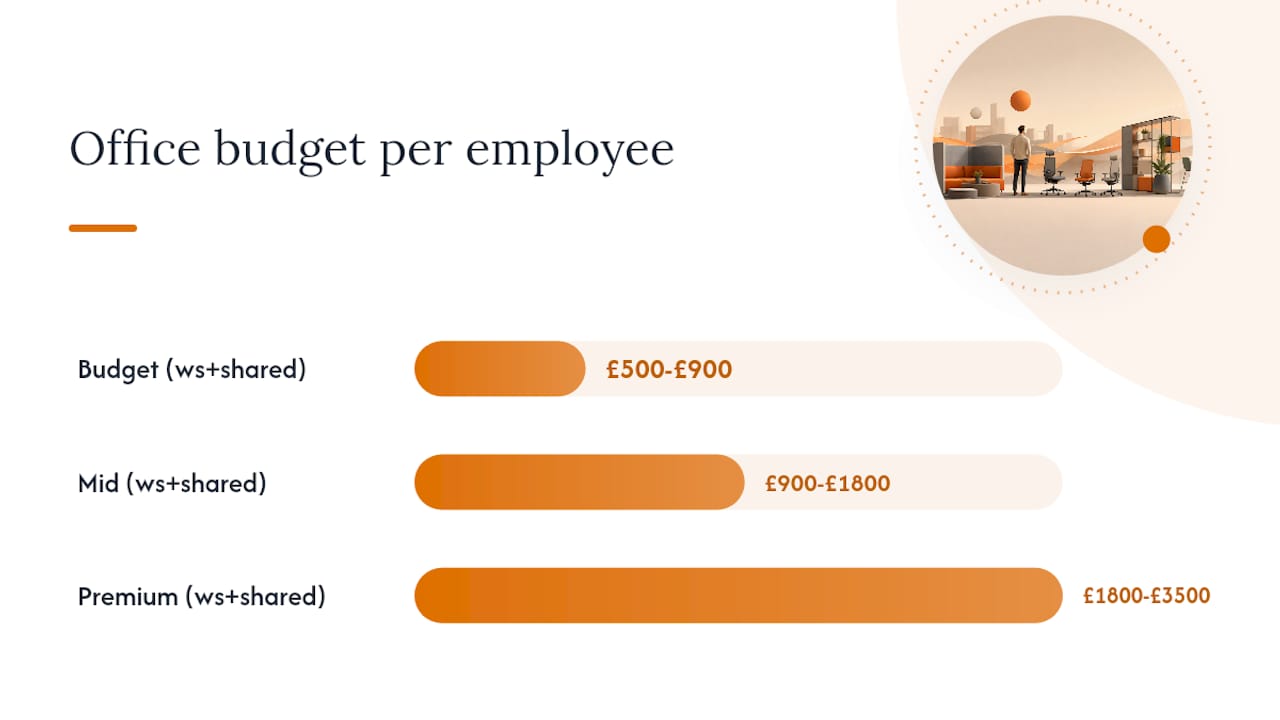
- Budget furniture per employee ranges from £500 to £900, while mid-range options typically cost between £900 and £1,800.
- Hybrid working reduces per-head furniture costs to between £400 and £1,500, depending on how much space sharing is employed.
- Chairs with proper ergonomic features cost £200 to £500, making them a critical investment for daily comfort and longevity.
- Office space size influences furniture costs indirectly, with smaller footprints often requiring more space-efficient, and sometimes more expensive, solutions.
- Ordering in Q1, setting a baseline of £1,000 to £1,200 per head, and choosing new chairs consistently provide the best value for long-term budgets.
The three-tier structure most UK suppliers use runs from bare-bones to boardroom-grade, and the gap between them is wider than most first-time buyers expect. Zentura’s 2026 pricing guide puts budget bundles at roughly £500 to £900 per employee, mid-range at £900 to £1,800, and premium at £1,800 to £3,500. Each of those figures covers a workstation (desk and chair) plus a proportional share of communal furniture such as storage units, breakout seating, and meeting room capacity.
Pure Office’s fit-out cost analysis offers a useful cross-check: a basic fit out typically works out at £500 to £600 per person, while a mid-spec fit out runs closer to £800 to £900 per head. The overlap between these two sources tells you something important. The lower end of “mid-range” and the upper end of “budget” blur together in practice, so treat the bands as a spectrum rather than fixed tiers.
Here’s what each band typically buys:
Scaling this to real teams shows why the per-head figure matters more than the total looks at first glance. A team of five at mid-range spend (roughly £1,200 per head) comes to around £6,000, which typically covers five workstations plus a small shared storage unit and a couple of visitor chairs. A 20-person office at the same rate sits near £24,000, usually split as roughly £16,000 on desks and chairs, £4,000 on storage, and the rest on a modest meeting table and breakout seating. Push that to 50 people and the total lands around £60,000, at which point meeting room furniture and collaboration zones start eating a noticeably bigger share, because larger teams need proportionally more shared space, not just more desks.
Breaking the per-head figure into line items is where a budget actually becomes usable for tendering, rather than just a planning number.
Office Furniture Direct’s cost breakdown confirms similar workstation-specific ranges: £150 to £350 for budget setups, £350 to £800 mid-range, and £800 upwards for premium specification. Whichever category you’re pricing, factor in delivery and installation separately. Most suppliers quote these per order rather than per item, but expect anywhere from £30 to £150 per desk for assembly on larger orders, less if delivery is bundled free as part of a bulk deal.
Two methods dominate UK procurement practice, and picking the wrong one for your situation wastes time later.
A worked example makes this concrete. A 30-person office choosing mid-range spec via the per-head method: 30 × £1,200 = £36,000. The same office running hybrid working, with a desk-share ratio of 0.7 desks per person, needs only 21 workstations rather than 30. That drops direct desking spend but shifts money towards collaboration furniture, since hybrid teams need more meeting rooms and breakout seating relative to fixed desks, not less. Zentura’s analysis suggests hybrid setups can bring total per-head costs down to £400 to £1,500 depending on how aggressively you reduce fixed desking.
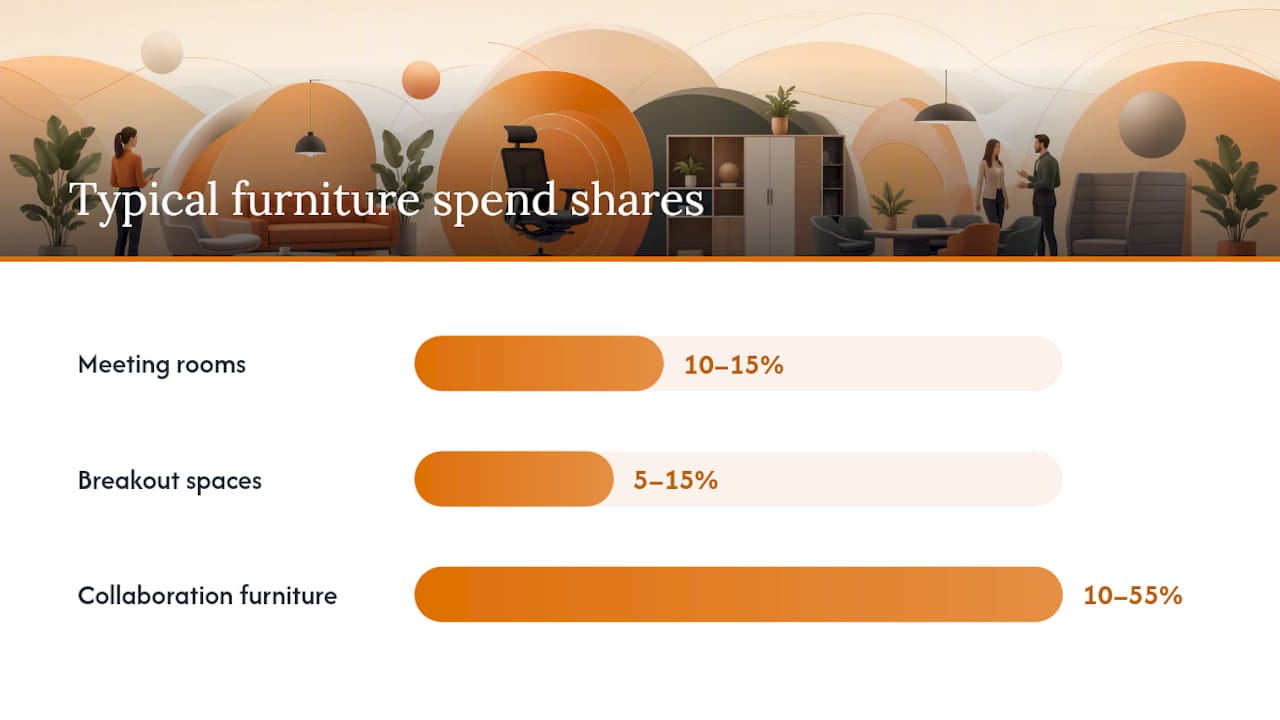
When apportioning the total budget, meeting rooms typically take 10 to 15% and breakout spaces another 5 to 15%, though collaboration furniture overall can claim as much as 10 to 55% of spend in offices built around team-based work rather than individual desking.
Before running any calculation, collect these inputs from facilities and HR: confirmed headcount and growth projections, hybrid working ratio, floor plan with usable square footage, and any accessibility or ergonomic requirements flagged by existing staff.
Pro Tip: Run both methods side by side on the same office and see where they disagree. A big gap usually means your floor plan has more shared space than your headcount alone would suggest, which is a sign you need to weight the budget towards meeting rooms and storage rather than desks.
Not every line item deserves the same scrutiny. Chairs are the one category where cutting corners costs more in the long run, given how much daily use they absorb; storage and meeting tables tolerate remanufactured or refurbished options far better.
Pro Tip: Ask any shortlisted supplier what happens to your old furniture. A supplier who arranges responsible disposal or donation as part of the deal often saves you a separate skip-hire and labour cost that rarely appears in the original quote.
Lead times catch out more procurement teams than pricing does. Standard desks and chairs typically arrive within 2 to 4 weeks of order confirmation; bespoke desking or specialist ergonomic seating can run 6 to 10 weeks, particularly for fabric or colour options outside standard ranges.
Budgeting on paper is one thing; sourcing at the numbers you’ve calculated is another. A UK office furniture supplier offers bulk order pricing and bundle deals to help bring per-employee costs down from the higher end of the mid-range band towards the lower end, without dropping specification.
Free delivery to the UK mainland and a 14-day returns window can help reduce variable costs and provide flexibility if a sample chair or desk doesn’t suit the space once it arrives. For readers who want to sanity-check the figures in this guide against a fuller pricing breakdown, the 2026 pricing guide for procurement teams sets out installation expenses and worked examples in more depth, and the essentials procurement guide covers tactics for controlling spend during a refurbishment specifically.
Businesses running a hospitality space alongside office operations, such as a staff café or client-facing bistro, may also find the restaurant equipment checklist useful for budgeting that adjacent area separately from core office furniture.
Where you’re buying from matters less than where you’re delivering to, in terms of pricing, but it still moves the numbers. Suppliers quoting nationally tend to hold consistent unit pricing across the UK, since furniture is manufactured centrally and shipped out rather than priced by local labour markets the way, say, a fit-out contractor’s day rate would be.
The bigger regional variable is installation and logistics. Rural or remote locations, particularly parts of Scotland, Wales, and the South West, can face longer delivery lead times and occasionally a delivery surcharge if a supplier’s standard free-delivery zone doesn’t extend that far, so it’s worth confirming this at quote stage rather than assuming UK mainland delivery is universally free.
Office rents also vary sharply by region, which indirectly affects furniture budgets: a business squeezed into a smaller footprint by high city-centre rents often needs more space-efficient furniture (foldable tables, wall-mounted storage, benching systems) to fit the same headcount, which can push per-head furniture spend up even as the raw square footage goes down. Businesses in lower-rent regions with more generous floor plans sometimes spend less per head because they can use simpler, less compact furniture formats.
Set your baseline at £1,000 to £1,200 per head, order in Q1, and buy chairs new every time. Everything else is negotiable; those three decisions aren’t. Over the next 30 to 90 days, confirm headcount and hybrid ratio, get three supplier quotes on identical specs, and check warranty terms before you check price. Start with office chairs and desks; everything else follows from those two categories.
— Furniture
There’s a real difference between reading price ranges and getting a quote against your actual headcount, and that’s where most budgets either hold up or fall apart. A UK office furniture supplier provides commercial-grade desks, ergonomic chairs, storage, and meeting room furniture direct to businesses, with bulk pricing on larger orders and free delivery to the UK mainland, so the numbers in this guide translate straight into a real order rather than a rough estimate that needs renegotiating later.
If you’re furnishing a small team, browse office chairs and office desks to see current specification and stock. Larger teams planning a full fit-out should look at office storage and meeting room ranges alongside desking, since those categories move the per-head total more than most people expect. For bulk pricing on 20 or more workstations, request a quote directly through Furnitureforbusiness and get a specification tailored to your headcount and hybrid ratio before you commit a final budget.
Most UK businesses spend between £500 and £3,500 per employee depending on specification, with mid-range setups typically landing at £900 to £1,800 per head, according to Zentura’s 2026 UK pricing guide. A £1,000 to £1,200 starting figure suits most small and medium offices planning a standard fit-out.
There’s no single legal minimum tied to a specific square footage for general office work, though the Workplace (Health, Safety and Welfare) Regulations require enough space for people to work safely without feeling cramped. Many UK workplace planners use 8 to 10 square metres per employee as a practical planning benchmark, adjusting up for hybrid offices that need more shared collaboration space.
Office supplies (stationery, consumables, small accessories) sit separately from furniture budgets and typically run far lower, often a few hundred pounds per employee annually rather than a one-off furniture spend. Furniture is the larger, upfront capital cost; supplies are the smaller, recurring operational one.
Office rent varies enormously by region and city, with London commanding significantly higher rates per square foot than most other UK regions. Furniture budgets are typically calculated separately from rent, though furniture usually represents 15 to 25% of a total office fit-out cost once rent, fit-out, and furnishing are all combined.

Phone: 0330 043 4114
VAT no. GB 991 8681 60
Company no. 07250570