A Martindale rating is a rub count: the number of oscillation cycles a fabric survives before it visibly wears through or a yarn breaks. Higher generally means tougher, but the number only matters against the job the fabric is doing. Testing houses like James Heal build the machines that produce this figure under standards such as ASTM D4966 and BS EN ISO 12947, and the practical rule is simple: match the band to the use, don’t chase the highest score on the shelf.
TL;DR:
- Fabrics intended for heavy-traffic or commercial use typically require a Martindale rub count of at least 30,000 cycles, with 40,000+ considered highly durable for public spaces.
- The Martindale test’s final score depends on visual judgment of yarn breakage, surface change, or pilling, which can vary slightly between different testing labs.
- Fibre content, weave density, and finishes influence a fabric’s rub resistance, but a high rub count alone does not predict pilling, fading, or seam integrity.
- The test does not evaluate other performance factors such as stain resistance, seam slippage, or UV fading, which are crucial for comprehensive durability assessment.
- When selecting fabric, match the rub count to actual intended use rather than always choosing the highest rated options, as over-specification can lead to unnecessary stiffness and cost.
The Martindale machine rubs a sample fabric against a standard abradant cloth in a figure of eight motion under a fixed weight, until something visible gives way. That “something” is the end point, and it’s less binary than it sounds.
According to James Heal’s own explanation of the method, the test typically applies a pressure of around 12 kilopascals while the sample moves through thousands of rubbing cycles against a wool abradant. Technicians stop the machine at set intervals and inspect the fabric, usually against photographic reference standards, checking for:
That last point matters more than most buyers realise. Because grading relies partly on a trained technician comparing a swatch to reference photographs, James Heal notes that judgement plays a real role in the final number. Two labs testing the same batch of cloth can report slightly different rub counts, not because either is wrong, but because “visible change” involves a degree of interpretation. This is one reason a fabric quoted at 28,000 cycles and one quoted at 32,000 might perform almost identically on a sofa.
The test method itself is standardised through ASTM D4966, which sets out the procedure for knitted, woven and non-woven fabrics alike, so a rub count from a reputable supplier should at least have been produced under comparable conditions to its competitors.
Rub counts only mean something once you map them to intended use, and the furnishing trade has settled on rough bands that most fabric suppliers now quote against.
Retail-facing guidance commonly splits the scale like this, based on figures widely used across fabric retailers:
Industry guidance from the Association for Contract Textiles pushes the contract threshold to a high-performance level as a starting point, with very high traffic public seating, think airport lounges or hospital waiting areas, needing even greater durability.
Statistic to keep in mind: ACT’s own research found that repeat abrasion tests on the same woven structure can vary significantly between runs, which is why a single rub count should be read as guidance rather than a guarantee of how long a fabric will actually last in service.
For office seating specifically, this is where contract-grade upholstery earns its name: it’s simply fabric tested and specified to sit comfortably above that 30,000-cycle line.
Fibre content and weave structure push rub counts in predictable directions, though finishes and weight can shift a fabric up or down a band within its type.
Weave density and yarn twist matter as much as fibre type. A tightly woven, heavier fabric will usually outlast a loosely woven one made from the identical fibre, and finishes such as stain guards or backing coatings can add real durability without changing the base material. Before ordering in bulk, ask any supplier for the specific test report behind their quoted figure, not just a marketing claim, and request a physical swatch so you can judge hand-feel and colour alongside the number on the spec sheet.
A high rub count says a fabric resists abrasion. It says nothing about whether it will pill, fade, stain, or hold a seam together under stress, and treating one number as a full performance picture is the most common specification mistake in furniture buying.
There’s also the question of Martindale versus Wyzenbeek, the two dominant abrasion tests used on opposite sides of the Atlantic. They use different abradants and motions, so a Wyzenbeek double-rub figure and a Martindale cycle count are not directly interchangeable, and converting one to the other with a simple formula is unreliable. ACT’s own guidance is blunt on this: abrasion results vary by test method, and matching in-service lifespan to a lab number is never guaranteed.
Pro Tip: Always ask for the pilling grade alongside the rub count. A fabric rated 40,000 Martindale with a poor pilling grade of 2 will often look tired faster than a 25,000-rated fabric graded 4 or 5 for pilling, especially on arms and seat edges that see constant contact.
Specification gets easier once you work through it in order rather than starting with “what’s the highest number available.”
Comfort and looks still count; choosing from blickdichte Stoffe can help you balance performance vs aesthetics in your fabric selection. A fabric engineered purely for longevity can feel stiff or plasticky under sustained use, so for executive or reception seating, balance the numbers against how the chair actually feels to sit in.
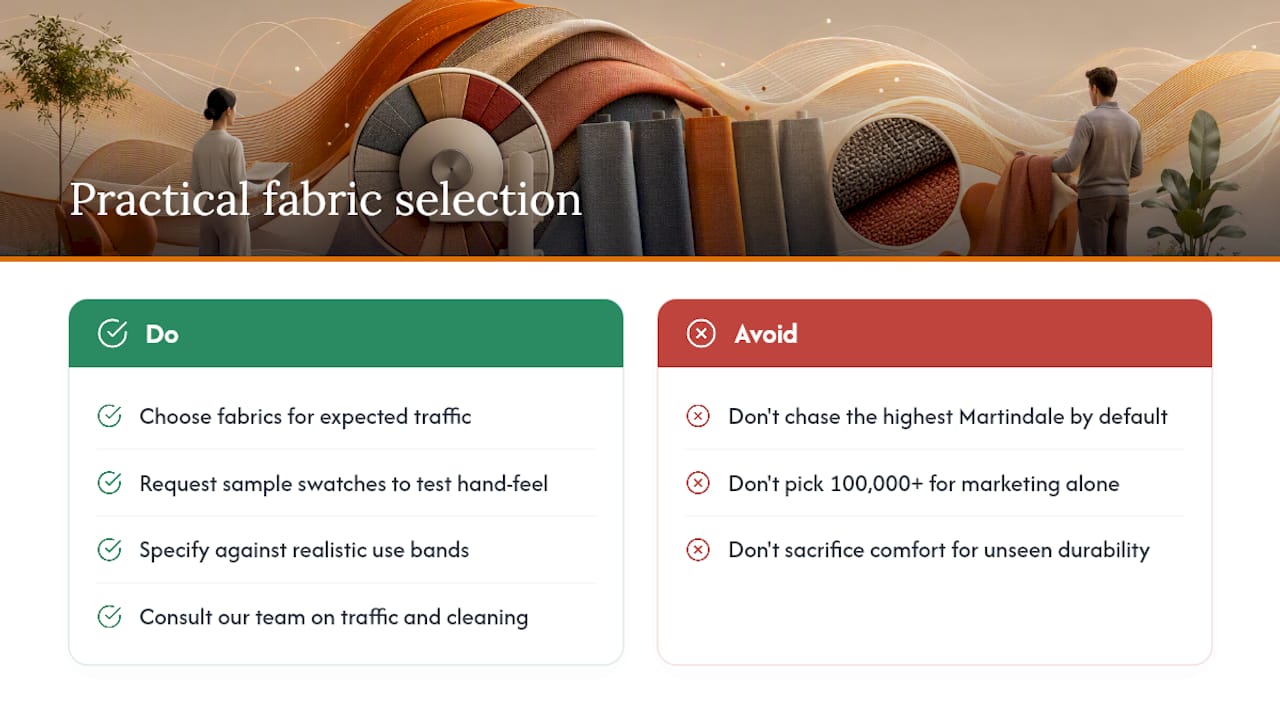
Buyers ask us for “the highest Martindale rating available” more often than you’d expect, and it’s usually the wrong question. A fabric built to survive 100,000 cycles isn’t automatically the right choice for a quiet meeting room used twice a day; it’s often stiffer, less breathable, and costs more than the job requires. Extremely high rub-count fabrics can sacrifice comfort for durability that never gets tested in practice.
We stock upholstery specified against realistic use bands, not marketing headlines, and offer sample swatches so you can judge hand-feel before committing to a bulk order. If you’re specifying for a refurbishment or new fit-out, our team can talk through fabric options against your actual traffic and cleaning regime rather than pushing the top of the range by default.
— Furniture
Furniture for Business exists so procurement teams don’t have to interpret rub counts alone: every upholstered chair we sell is specified against realistic use bands, backed by sample swatches you can order before committing to volume.
Start with our office chairs range if you’re replacing seating across a team, or browse meeting room furniture if the priority is shared spaces that see constant turnover of occupants. Bulk pricing applies across both ranges, and delivery is available to the UK mainland. If you’re unsure which fabric band suits your traffic and cleaning regime, get in touch through Furniture for Business for specification support, or order a swatch sample before you place a bulk order so the fabric is judged on how it feels, not just on a number.
Yes. A rub count of 40,000 sits well above the contract threshold and suits heavy-traffic commercial or public seating, though it’s often more durability than a typical domestic sofa ever needs.
For general household furniture, 15,000 to 25,000 cycles covers most sofas and armchairs comfortably; homes with children, pets, or frequent guests should look toward 25,000 to 35,000.
There’s no single best grade, it depends on household traffic, but most family sofas perform well between 25,000 and 35,000 cycles, paired with a pilling grade of 4 or above for lasting appearance.
Performance polyesters, wool blends, and treated vinyls tend to post the highest rub counts, often 40,000 cycles and above, making them common choices for contract and hospitality seating in commercial fit-outs.
No. They use different abradants and rubbing actions, so figures from each test are not directly comparable, and converting one number into the other reliably isn’t possible.

Phone: 0330 043 4114
VAT no. GB 991 8681 60
Company no. 07250570