TL;DR:
- Lounge seating enhances collaboration, wellbeing, and brand image in modern workplaces.
- Reconfigurable modular systems and integrated technology support flexible, hybrid working.
- Choosing durable, adaptable furniture aligned with office goals prevents costly mistakes.
Lounge seating is widely misunderstood in commercial environments. Many office managers treat it as an afterthought, something to fill a corner of the reception or break room with minimal thought. Yet the reality is quite different. Well-chosen lounge seating actively shapes how people collaborate, how visitors perceive your brand, and how effectively your space supports hybrid working patterns. This guide cuts through the confusion, giving you clear definitions, practical comparisons, and actionable buying advice so you can make confident procurement decisions for your UK office.
| Point | Details |
|---|---|
| What lounge seating means | Lounge seating in offices combines comfort, durability, and flexibility for informal work and collaboration spaces. |
| Benefits for hybrid work | Well-chosen lounge furniture boosts productivity, attracts talent, and supports activity-based working. |
| Selection best practices | Always prioritise material quality, adaptability, and user feedback when selecting lounge seating for your business. |
| Latest trends | Modular, tech-enabled, and sustainably made lounge seating is shaping tomorrow’s office environments. |
Lounge seating refers to upholstered, informal furniture designed primarily for comfort and relaxed interaction. Unlike task chairs or conference seating, it is not built around a fixed desk position. Instead, it encourages informal conversation, brief focus work, and social connection. You will typically find it in receptions, breakout areas, collaborative zones, and client waiting spaces.
The category covers a broad range of products. Sofas and two-seater settees anchor larger social areas. Armchairs work well in quieter corners or reading nooks. Modular benches and sectional units can be reconfigured to suit changing group sizes. Pods and booth-style pieces offer semi-private enclosures for focused conversations. Ottomans serve dual purposes as seating and occasional tables.
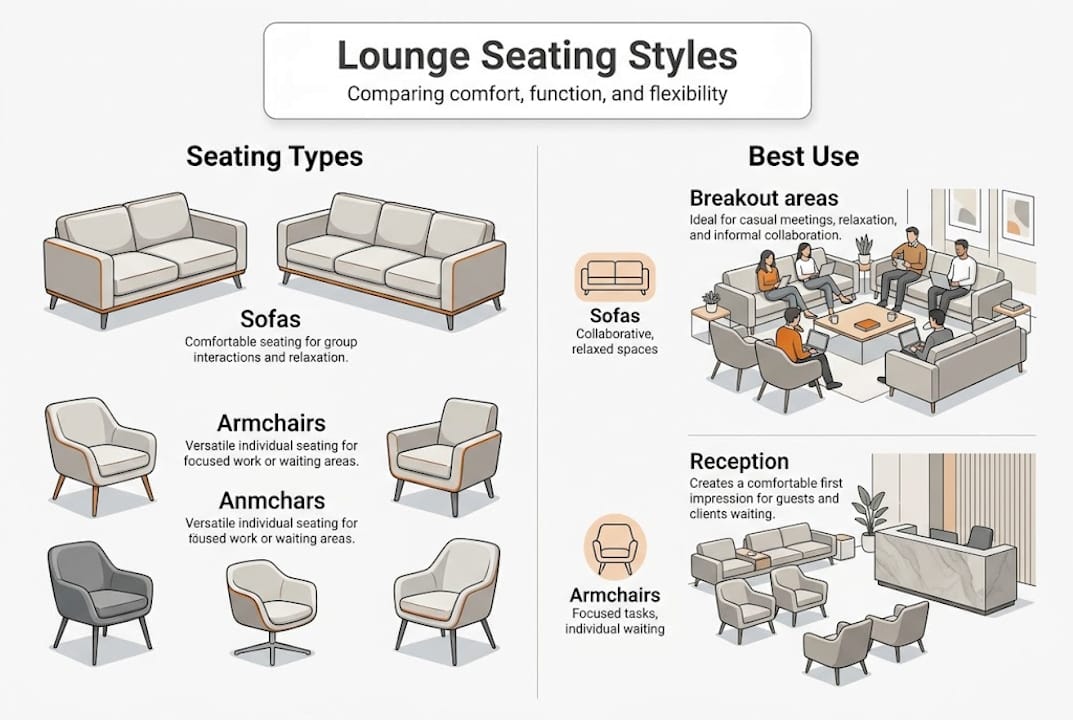
What separates lounge seating from other office furniture is its intent. Task chairs prioritise posture and sustained ergonomic support for screen-based work. Conference chairs focus on formality and practicality around a meeting table. Lounge seating, by contrast, enhances comfort and functionality in collaborative and reception spaces, creating an environment that feels welcoming rather than purely functional.
Commercial lounge seating is also purpose-built for durability. Domestic sofas might look similar, but they are not designed for the wear and tear of a busy office. Commercial-grade pieces use higher-density foam, reinforced frames, and contract-rated fabrics that meet UK fire safety standards under the Furniture and Furnishings (Fire Safety) Regulations.
| Seating type | Typical application |
|---|---|
| Sofa (2 or 3 seater) | Reception areas, social lounges |
| Armchair | Quiet zones, reading corners |
| Modular bench | Breakout areas, open-plan collaboration |
| Pod or booth | Semi-private meetings, focus work |
| Ottoman | Flexible seating, footrest, occasional table |
Key characteristics that define commercial lounge seating include:
Once you understand what lounge seating is, the question becomes why it belongs in your office. The answer goes well beyond aesthetics.

First, it actively boosts collaboration. Informal seating areas give teams a neutral space to gather outside of formal meeting rooms. Quick catch-ups, spontaneous brainstorming sessions, and cross-department conversations happen more naturally when people are comfortable. Flexible seating increases collaboration and improves employee wellbeing, which is particularly relevant as hybrid working continues to reshape how UK teams use their offices.
Second, lounge seating supports employee wellbeing in a tangible way. Spending an entire day at a desk is mentally and physically draining. Having access to a comfortable alternative space gives staff the option to change their posture, shift their environment, and reset their focus. This matters more than ever in hybrid offices where employees commute in specifically to benefit from the workplace experience.
Third, it builds your brand image. A well-furnished reception or breakout area communicates professionalism and care to visitors, clients, and prospective employees alike. The first impression your office makes is often formed before anyone sits down at a desk.
Fourth, lounge seating supports flexible work patterns. Activity-based working, where staff move between different zones depending on the task, depends on having a variety of seating environments. Good office space planning integrates lounge areas as a deliberate part of the workspace ecosystem rather than an add-on.
Well-placed lounge areas reduce the pressure on formal meeting rooms, improve informal knowledge sharing, and give employees a sense of autonomy over how and where they work. These are not soft benefits. They translate directly into engagement and retention.
Pro Tip: When specifying lounge seating for high-traffic zones such as receptions or open breakout areas, always choose high-density foam (minimum 35kg per cubic metre) and contract-rated fabrics with a Martindale rub count above 30,000. This ensures your investment holds up under daily commercial use.
The benefits in brief:
Knowing the benefits is only half the job. Making the right procurement decision requires a structured approach.
| Material | Best suited for | Maintenance level |
|---|---|---|
| Woven fabric | Breakout areas, staff lounges | Medium: vacuum and spot clean |
| Faux leather / PU | Receptions, client areas | Low: wipe clean |
| Genuine leather | Executive lounges, boardrooms | Medium: condition regularly |
| Mesh panels | Ventilated pod seating | Low: wipe clean |
| Recycled textiles | Sustainability-focused offices | Medium: vacuum and spot clean |
Pro Tip: Before committing to a bulk order, involve a cross-section of staff in trialling shortlisted pieces. People use lounge seating differently, and a quick trial session reveals comfort issues, size concerns, and practical preferences that you cannot assess from a specification sheet alone.
Think carefully about how you plan on arranging lounge seating within your floor plan. Placement affects both usability and how the space flows throughout the working day.
With selection criteria covered, it is worth understanding which trends are currently shaping the commercial lounge seating market in the UK.
The biggest shift is towards modularity. Fixed, monolithic sofas are giving way to reconfigurable sectional systems that can be rearranged to suit different group sizes and activities. This is a direct response to hybrid working, where office occupancy varies significantly day to day. Modern lounge seating options support agile, reconfigurable office designs that adapt rather than constrain.
Technology integration is another growing feature. Power modules, USB charging points, and data ports built into lounge furniture allow people to work comfortably from informal areas without hunting for a wall socket. This is particularly valuable in open-plan offices where power access is limited.
Sustainability is moving from a nice-to-have to a procurement requirement. Many UK businesses now specify furniture made from recycled or responsibly sourced materials as part of their ESG commitments. Suppliers offering recycled foam cores, FSC-certified timber frames, and low-VOC upholstery are increasingly preferred. Explore the latest soft seating ranges to see how design-led trends are incorporating these priorities.
| Feature | Fixed lounge seating | Modular lounge seating |
|---|---|---|
| Reconfigurability | None | High |
| Initial cost | Lower | Higher |
| Long-term flexibility | Limited | Excellent |
| Visual impact | Strong focal point | Adaptable aesthetic |
| Suitability for hybrid offices | Moderate | Ideal |
Must-have features for 2026 office lounges:
Here is something we see regularly: procurement teams spend considerable time selecting task chairs and desks, then rush the lounge seating decision at the end of a fit-out budget. The result is furniture that looks acceptable on day one but fails within two years, or worse, sits unused because it does not actually serve the way people work.
The most common mistake is prioritising price or visual appeal over performance and adaptability. A striking sofa that cannot withstand daily use, or a fixed modular system bought without considering future growth, becomes a costly error when your headcount or working patterns shift.
The smarter approach is to treat lounge seating as a strategic asset. Ask how it supports your organisation’s goals around collaboration, wellbeing, and flexibility. Consider whether it will still work if you grow by 30% or shift to a more activity-based model. Think about how it contributes to impressing visitors and reinforcing your culture.
Engaging end-users early is also consistently undervalued. The people who will actually use the space daily have practical insights that no specification sheet captures. Ignoring them is how you end up with beautiful furniture that nobody sits in.
Choosing the right lounge seating is one of the most impactful decisions you can make for your office environment, affecting collaboration, wellbeing, and the impression you leave on every visitor who walks through the door.
At Furniture for Business, we supply commercial-grade lounge seating alongside a full range of meeting room furniture and office chairs to UK businesses of all sizes, with free delivery to the mainland. Whether you are refurbishing a single reception area or fitting out an entire floor, our team can help you find the right pieces for your space, budget, and working style. Visit Furniture for Business to explore the full range or speak with a specialist for tailored recommendations.
Lounge seating is more informal and design-led, suited to relaxed or collaborative areas, while task seating is engineered for extended desk work with ergonomic lumbar and postural support.
Select commercial-grade fabrics and follow a regular cleaning schedule. As material choices impact cleaning and durability, specifying wipe-clean or stain-treated upholstery from the outset makes ongoing maintenance significantly easier.
Yes. Modular lounge seating is ideal for collaborative and flexible spaces, as it can be quickly reconfigured to support different group sizes, focus work, or informal team meetings as your office occupancy changes.
Prioritise flexibility, durable and easy-care materials, and integrated power options. Design-led lounge seating increasingly includes tech features and robust materials that balance style with long-term commercial performance.
Phone: 0330 043 4114
VAT no. GB 991 8681 60
Company no. 07250570