TL;DR:
- Thoughtful seating layouts improve customer experience, increase turnover, and boost revenue.
- Assess space, flow, and customer needs before selecting suitable furniture and arrangements.
- Regular evaluation and customer feedback help refine seating strategies effectively.
Every square metre of your café is either working for you or against you. In a UK hospitality market where customer expectations are rising and margins remain tight, the difference between a thriving venue and a struggling one often comes down to how thoughtfully you have arranged your seating. Poor layouts frustrate guests, slow down staff, and quietly cost you repeat business. Get it right, however, and your seating plan becomes a silent salesperson, encouraging longer visits, higher spend, and glowing word-of-mouth. This guide walks you through every stage, from assessing your space to refining your layout over time.
| Point | Details |
|---|---|
| Analyse your space | Understanding your café’s size and flow is essential before choosing seating. |
| Match style to audience | Select seating that fits your brand and serves both groups and solo customers. |
| Optimise for flexibility | Modular and stackable furniture makes it easy to adapt your seating for busier times. |
| Iterate with feedback | Regular customer input and minor layout tweaks keep your seating ahead of trends. |
Having recognised the importance of thoughtful design, let’s break down how to assess your unique space and set clear priorities.
Before you move a single chair, you need a clear picture of how your café actually functions. Start by observing where customers naturally gravitate during peak hours. Some spots fill up first because of natural light, proximity to the counter, or a sense of privacy. Others sit empty because they feel exposed or awkward. These patterns tell you more than any floor plan ever will.
Foot traffic patterns directly affect table and chair arrangement in busy UK cafés. Once you understand the flow, you can begin aligning your layout with your business model. A high-turnover breakfast spot needs a very different arrangement than a relaxed afternoon café targeting remote workers.
Here are the critical considerations to work through before making any changes:
| Layout approach | Typical capacity | Flexibility | Best suited for |
|---|---|---|---|
| Conventional fixed tables | Moderate | Low | Formal dining, predictable footfall |
| Flexible modular seating | High | High | Mixed-use cafés, event hosting |
| Bench and communal tables | Very high | Medium | Casual, fast-turnover venues |
| Lounge and soft seating | Low to moderate | Medium | Dwell-focused, premium positioning |
Exploring modular seating options is particularly worthwhile if your café serves different crowds at different times of day.
Pro Tip: Always maintain clear walkways of at least 750mm for staff carrying trays, and ensure accessible routes are never blocked by furniture, even during your busiest service.
Once you understand your physical space, the next step is matching seating styles with your café’s ethos and customer types.
Your furniture communicates your brand before a customer even glances at the menu. Sleek metal bistro chairs suggest a quick, continental vibe. Deep upholstered sofas invite people to linger. Neither is wrong, but each sends a clear signal, and inconsistency between your seating and your brand identity creates a subtle sense of unease that guests feel without being able to name.
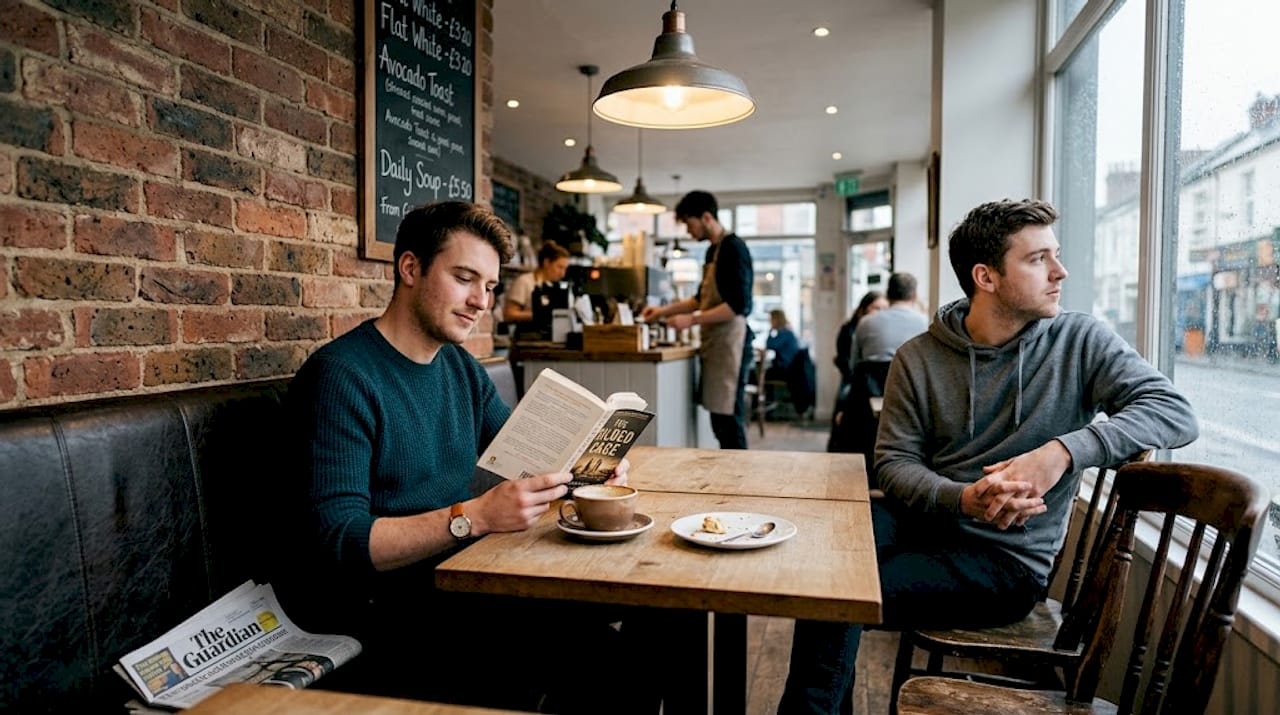
Seat comfort and aesthetics both play a decisive role in the UK café market. When designing for customer dwell, the goal is to match the physical experience of sitting to the emotional promise of your brand.
Here is how the main seating categories compare:
| Seating type | Comfort level | Capacity | Versatility | Best for |
|---|---|---|---|---|
| Individual chairs and tables | Medium | Medium | High | Solo visitors, couples |
| Bench and communal seating | Medium | High | Medium | Groups, casual dining |
| Lounge and soft seating | High | Low | Low | Remote workers, long stays |
| High stools and bar tables | Low to medium | High | High | Quick turnover, standing areas |
To cater for diverse customers effectively, consider zoning your café rather than applying one seating type throughout. A solo remote worker needs a power socket nearby and a degree of privacy. A group of friends wants a large table and a relaxed atmosphere. Families with young children need space and easy-clean surfaces.
When it comes to branding through material and colour choices, keep these points in mind:
Pro Tip: Buy a small number of flexible pieces first and live with them for a fortnight. Real-world use will reveal comfort and practicality issues that showroom visits simply cannot replicate.
After selecting the best furniture, you’ll need to arrange it smartly for peak efficiency and atmosphere.
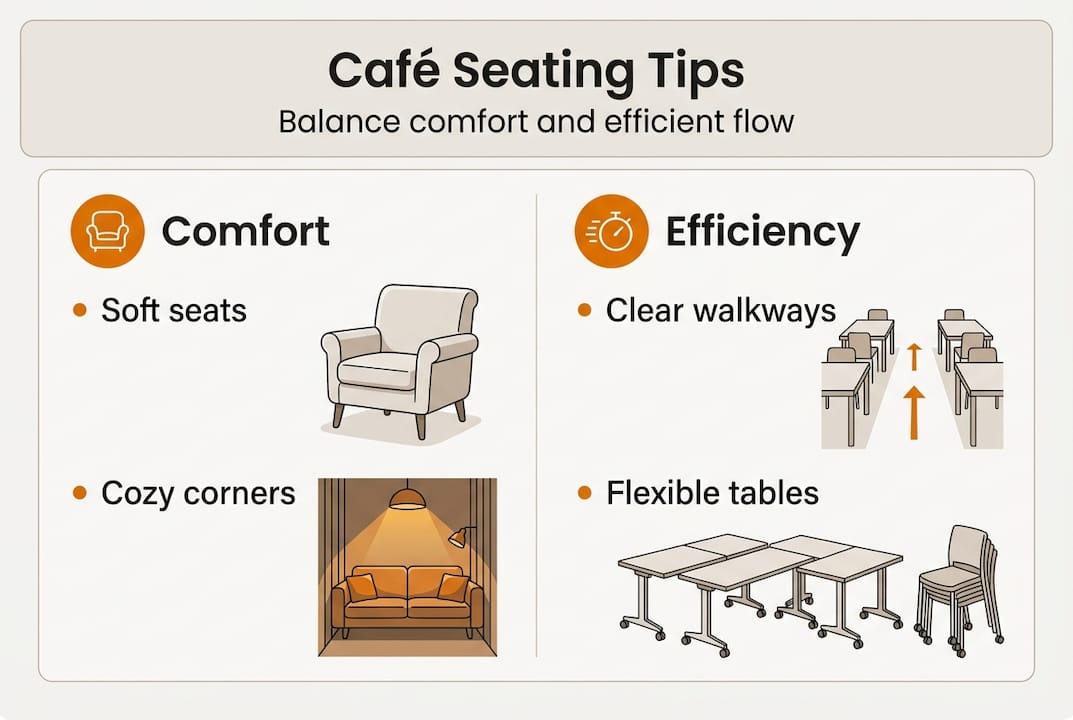
Modular and stackable seating helps maximise both daytime capacity and evening flexibility. Whether you are working with 30 square metres or 300, the principles of smart spatial planning remain the same: reduce dead space, improve flow, and give every seat a reason to be there.
Follow these steps to evaluate and improve your current floor plan:
“A café in Bristol reconfigured its layout by replacing four fixed four-seater tables with a combination of high bar stools along the window and two movable bench units in the centre. The result was a 20 per cent increase in seated capacity and noticeably faster table turnover during the morning rush.”
For stackable seating solutions, look for chairs that nest cleanly and store without taking up valuable back-of-house space. A good stack of twelve chairs should occupy no more floor space than a single dining chair.
Pro Tip: Combine high tables near the window or counter for quick-turnover customers with a comfortable lounge corner at the back for those who want to stay longer. This dual-zone approach serves both audiences without compromise.
Finally, even the best-laid plans will need adjustment. Here’s how to keep refining for the perfect café experience.
No layout is perfect from day one. The most successful café owners treat their floor plan as a living document, something to be tested, questioned, and improved as the business evolves. Customer behaviour shifts with the seasons, with local events, and with changes in your menu or opening hours.
These are the most frequent seating mistakes UK café owners make:
Customer flow data analysis is vital for iterative seating improvements. Use your point-of-sale data to identify which tables turn over fastest, which sit empty longest, and whether certain times of day reveal specific bottlenecks. Pair this with short, informal conversations with regular customers to gather qualitative insight.
A simple statistic worth noting: venues that actively seek and act on customer feedback see measurably higher satisfaction scores compared to those that rely solely on instinct.
Pro Tip: Make one small change per week rather than overhauling everything at once. This lets you isolate the impact of each adjustment and build a clear picture of what genuinely works for your specific clientele.
Most café owners design their seating from a managerial perspective: how many covers can I fit in, how easy is it to clean, how does it look in photographs? These are valid questions, but they miss something fundamental.
Spend a full hour sitting in your own café as a customer would. Order a coffee. Open a laptop. Sit with a friend. You will notice things you have walked past a hundred times: the wobble on table four, the draught from the door that makes the corner seat unpleasant in winter, the fact that the stools at the window have no footrest and become uncomfortable after fifteen minutes.
We have seen café owners make counterintuitive changes driven entirely by this exercise. One removed two tables from a busy zone, reducing covers by six, but the remaining seats felt so much more comfortable that average spend per visit increased noticeably. The maths worked out in their favour.
Guests do not experience your café as a floor plan. They experience it as a feeling. Reviewing reception and seating options with fresh eyes, as though you are a first-time visitor, is one of the most underused tools in hospitality design. The owners who do this regularly tend to make smarter, more confident decisions than those who rely on gut instinct alone.
A well-considered seating strategy is only as strong as the furniture you choose to bring it to life. At Furniture for Business, we supply commercial-grade seating built for the demands of busy UK hospitality venues, combining durability, style, and practical flexibility.
Whether you are fitting out a new café from scratch or refreshing an existing space, our range of commercial seating options covers everything from stackable bistro chairs to lounge soft seating. We also stock a wide selection of hospitality furniture accessories to complete your look. Free delivery to the UK mainland is included, and our team is on hand to help you choose the right pieces for your specific layout and customer base.
Flexible, stackable seating and high tables help maximise space and increase turnover without sacrificing comfort. Zoning your layout into quick-turnover and dwell areas makes even compact spaces work harder.
Mix seating types such as booths, communal tables, and cosy corners to appeal to both groups and individuals. Lounge seating varieties work particularly well for solo visitors who want comfort and a degree of privacy.
Optimising customer flow ensures easy access and comfort, improving both satisfaction and safety. Foot traffic patterns directly shape how tables and chairs should be positioned to keep service smooth and guests at ease.
Assess your seating every season or after any significant shift in customer demand. Customer flow analysis helps you identify what is working and where small adjustments can make a meaningful difference.

Phone: 0330 043 4114
VAT no. GB 991 8681 60
Company no. 07250570