TL;DR:
- Blending soft and hard seating in workplaces supports different activities and promotes postural variety. Hard seating provides long-term support for desk work, while soft seating encourages relaxation and informal collaboration. Effective design relies on contrast, proper zoning, and specifying durable, high-quality materials for comfort and aesthetics.
Blending soft and hard seating is defined as the deliberate combination of upholstered lounge pieces and structured task chairs within a single workspace to serve different functional and ergonomic needs. The practice sits at the heart of modern office design because no single seating type covers every work mode. Hard seating maintains its shape for 7–15+ years, while low-density foam soft seating may sag within 2–3 years under heavy use. Understanding both materials, their limits, and how they complement each other is the starting point for any effective seating strategy.
The core reason to blend seating types is that employees do not perform one type of task all day. Focused desk work demands lumbar support and postural control. Informal catch-ups, creative sessions, and breaks call for something more relaxed and inviting. A workspace that offers only task chairs forces every activity into the same physical posture, which is neither comfortable nor productive.
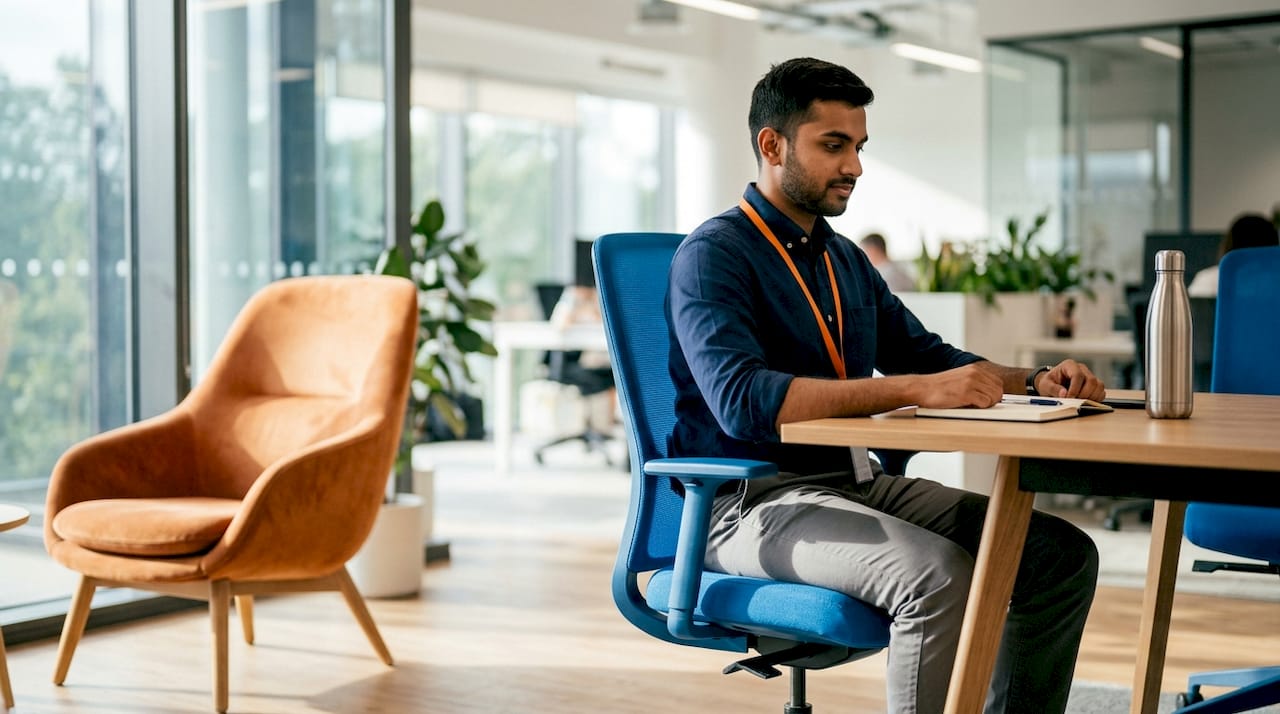
Mixed seating optimises floor space and signals different behavioural cues to the people using it. Soft seating communicates “linger, relax, and talk,” while hard seating communicates “focus and work.” That distinction is not decorative. It shapes how employees move through a space and how they feel while doing it.
The benefits of mixed seating extend to aesthetics as well. A room furnished entirely with mesh task chairs reads as functional but cold. Introducing a pair of upholstered tub chairs or a fabric sofa into a breakout corner immediately changes the visual weight of the space. The contrast creates depth, and depth makes a room feel considered rather than assembled.
Pro Tip: Place soft seating within eyeline of hard seating zones rather than behind a partition. Visibility encourages employees to actually use breakout areas, rather than defaulting to their desks for every task.
Soft seating and hard seating are not simply a matter of cushioning. They differ in construction, intended duration of use, and the physical support they provide.
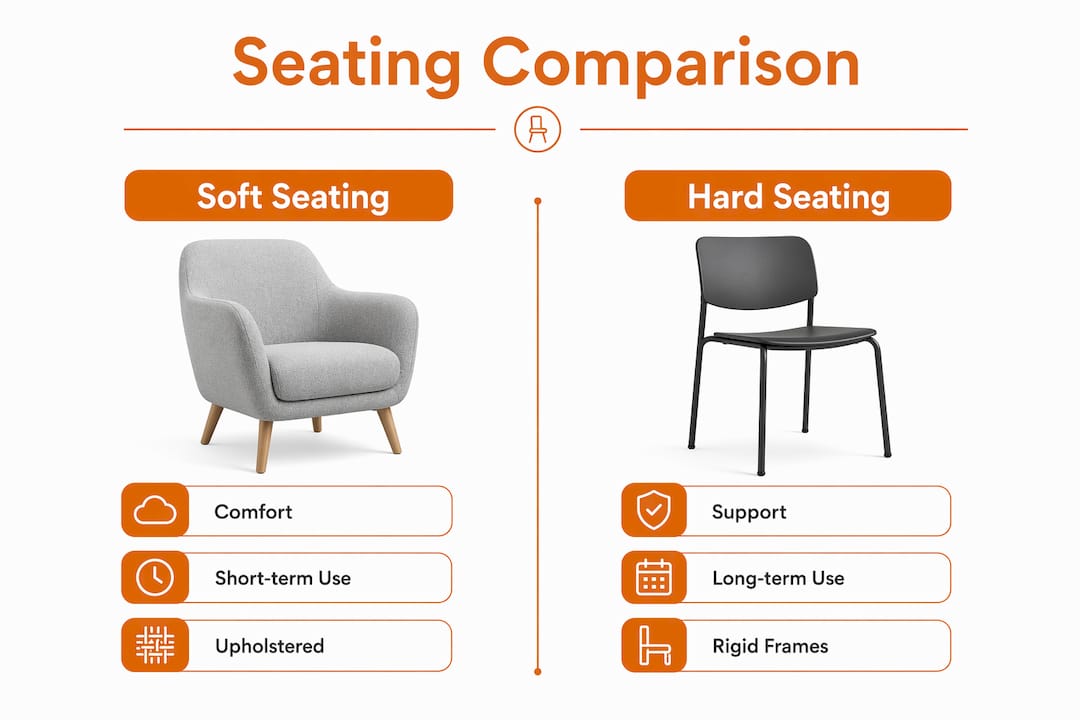
Soft seating typically uses foam cores wrapped in fabric, leather, or faux leather. The quality of that foam determines everything. High-resiliency foam cores are critical for balancing comfort with structural support. Proper foam density prevents sinking and supports lumbar curves even in stylish, low-profile pieces. A sofa that looks the part but uses cheap foam will compress within months under office use, offering neither comfort nor support.
Hard seating, by contrast, uses rigid frames in steel, wood, or moulded plastic, often with minimal or no padding. Firm cushions are recommended for sitting over 4 hours to prevent musculoskeletal fatigue. That recommendation reflects a structural reality: a firm, well-shaped seat distributes body weight more evenly than a soft one, reducing pressure on the lumbar spine over long periods.
| Feature | Soft seating | Hard seating |
|---|---|---|
| Typical lifespan | 2–3 years (low-density foam); longer with high-resiliency foam | 7–15+ years with standard maintenance |
| Primary use case | Short breaks, informal meetings, collaborative zones | Sustained desk work, task-focused environments |
| Ergonomic support | Immediate comfort; limited long-term lumbar control | Strong postural support; adjustable in task chair formats |
| Health impact | Reduces psychological stress; risk of poor posture if used too long | Supports spinal alignment; can feel rigid for short-duration use |
| Maintenance | Fabric cleaning; foam replacement over time | Frame checks; upholstery or seat pad replacement |
Pro Tip: When specifying soft seating for a commercial office, always ask the supplier for the foam density rating. A density of 1.8 lb per cubic foot or above is the minimum for contract-grade durability. Anything below that is domestic spec and will not survive office use.
The most common mistake in mixed seating schemes is treating the two types as separate decisions. Effective blending requires a single, unified design logic that uses contrast deliberately.
The contrast rule is the most reliable principle. Combining hard lines with soft textiles and solid colours with patterned accessories creates balanced, inviting spaces. A steel-framed task chair paired with a fabric lounge chair in a complementary tone reads as intentional. The same task chair next to a heavily patterned sofa in a clashing colour reads as accidental.
Zoning is the structural tool that makes contrast work at scale. Each zone should have a clear purpose: a focus zone anchored by ergonomic task chairs, a collaboration zone with modular soft seating, and a transition zone with café-height stools or side chairs. The boundaries between zones do not need walls. A change in flooring, a rug, or a shift in lighting does the same job.
Translating design principles into a working floor plan requires a structured approach. The following sequence works for offices of any size.
Audit your activity types. List every work mode your team uses: solo focus work, video calls, team stand-ups, informal one-to-ones, and full breaks. Each mode has a seating requirement. Mapping them first prevents gaps in the final layout.
Assign zones before selecting products. Decide where each activity type will happen before choosing furniture. A lounge seating zone placed near a window and away from desk clusters will be used. The same zone tucked behind a bank of storage will not.
Set a seating ratio. For a standard office team, a working ratio of roughly three task chairs to one soft seating position is a practical starting point. Adjust based on how much collaborative and informal work your team actually does. Hybrid teams with hot-desking arrangements typically need a higher proportion of soft and flexible seating.
Integrate ergonomic task chairs as the foundation. Ergonomic office chairs form the backbone of any seating scheme. They support the longest-duration, highest-intensity work. Soft seating supplements them; it does not replace them. Soft seating serves as an essential alternative, not a substitute, for task seating.
Plan for maintenance cycles. Hard seating and soft seating age at different rates. Build replacement cycles into your procurement plan from the start. Soft seating in high-traffic areas may need refreshing every three to five years. Task chairs with quality mechanisms can last a decade or more with basic maintenance.
Test before committing at scale. For larger fit-outs, order sample units of both seating types and place them in the intended zones for two to four weeks. Employee feedback at this stage is far cheaper than post-installation changes.
The right seating blend also boosts office productivity by reducing the friction between different work modes. When employees can move naturally between a focused desk and a comfortable lounge chair, they spend less mental energy managing their environment and more on the work itself.
Blending soft and hard seating is the most effective way to support posture variety, employee wellbeing, and functional zoning in a modern office.
| Point | Details |
|---|---|
| Durability gap is significant | Hard seating lasts 7–15+ years; low-density soft seating may sag within 2–3 years under heavy use. |
| Foam quality determines soft seating value | Specify high-resiliency, contract-grade foam density to avoid premature compression in commercial settings. |
| Contrast rule drives good design | Pair hard-lined frames with soft textiles and solid colours with patterns for a balanced, professional aesthetic. |
| Zoning before product selection | Assign activity zones first, then choose seating types to match each zone’s primary function. |
| Soft seating supplements, not replaces | Ergonomic task chairs remain the foundation; soft seating provides essential postural variety and psychological relief. |
After working with offices across a range of sectors, the pattern I see most often is this: the task seating gets a proper specification process and the soft seating gets chosen last, on budget, from whatever is left. The result is a breakout area that nobody uses because the sofas are either too low, too soft, or visually disconnected from the rest of the space.
The offices that get it right treat soft seating as a first-class design decision. They specify the lounge pieces at the same time as the task chairs, with the same attention to foam density, frame quality, and finish. They think about where the soft seating sits in relation to natural light, acoustic conditions, and circulation routes. And they resist the temptation to fill every corner with cushioned pieces just because the brief says “collaborative.”
The uncomfortable truth is that most employees will not use soft seating unless it is genuinely comfortable, well-positioned, and visually inviting. A token armchair in a corridor does not create a collaboration culture. A properly specified, well-placed lounge zone does. The difference is almost always in the quality of the internal structure, not the surface fabric. Successful seating blends prioritise quality internal structures over surface appearances. That principle should sit at the top of every seating brief.
— Furniture
Furnitureforbusiness supplies a full range of ergonomic task chairs and soft seating options designed for commercial offices across the UK, with free delivery to the UK mainland.
Whether you are specifying a full fit-out or refreshing a single breakout area, the range covers everything from heavy-duty operator office chairs built for sustained desk work to contemporary lounge pieces suited to collaborative zones. The design soft seating collection includes contract-grade options with the foam density and frame quality that commercial environments demand. Bulk order pricing and easy returns make it straightforward to trial seating combinations before committing at scale.
No single seating type supports every work mode. Hard seating provides the ergonomic structure needed for sustained desk work, while soft seating supports short-duration rest and informal collaboration.
Soft seating with low-density foam may sag within 2–3 years under heavy use. Contract-grade pieces with high-resiliency foam cores last significantly longer and are the correct specification for office environments.
A starting ratio of three task chairs to one soft seating position works for most standard office teams. Hybrid and hot-desking environments typically require a higher proportion of flexible and soft seating.
Soft seating reduces workspace rigidity and correlates with more open conversations and relaxed behaviour. Placing it in informal meeting areas actively encourages the kind of candid communication that structured meeting rooms often suppress.
The contrast rule means pairing hard-lined furniture frames with soft textiles and solid colours with patterned accessories. This approach prevents visual monotony and creates a balanced, professional aesthetic without requiring expensive finishes.
Phone: 0330 043 4114
VAT no. GB 991 8681 60
Company no. 07250570