TL;DR:
- Furniture grouping involves arranging office furniture into functional clusters to improve space use and flow. Proper spacing, such as 30 to 36 inches for walkways, is essential for safety and efficiency. Effective layouts support productivity, social interaction, and flexibility without structural changes.
Furniture grouping is defined as the strategic arrangement of furniture into functional clusters that shape how a space is used, how people move through it, and how teams interact within it. For business owners and office managers, understanding what is furniture grouping means understanding the difference between a workspace that works and one that simply fills a floor plan. Industry standards recommend 30–36 inch clearance for primary walkways, and the two-thirds rule governs visual proportion within each zone. Get these principles right and you create an office that supports both productivity and wellbeing without a single structural change.
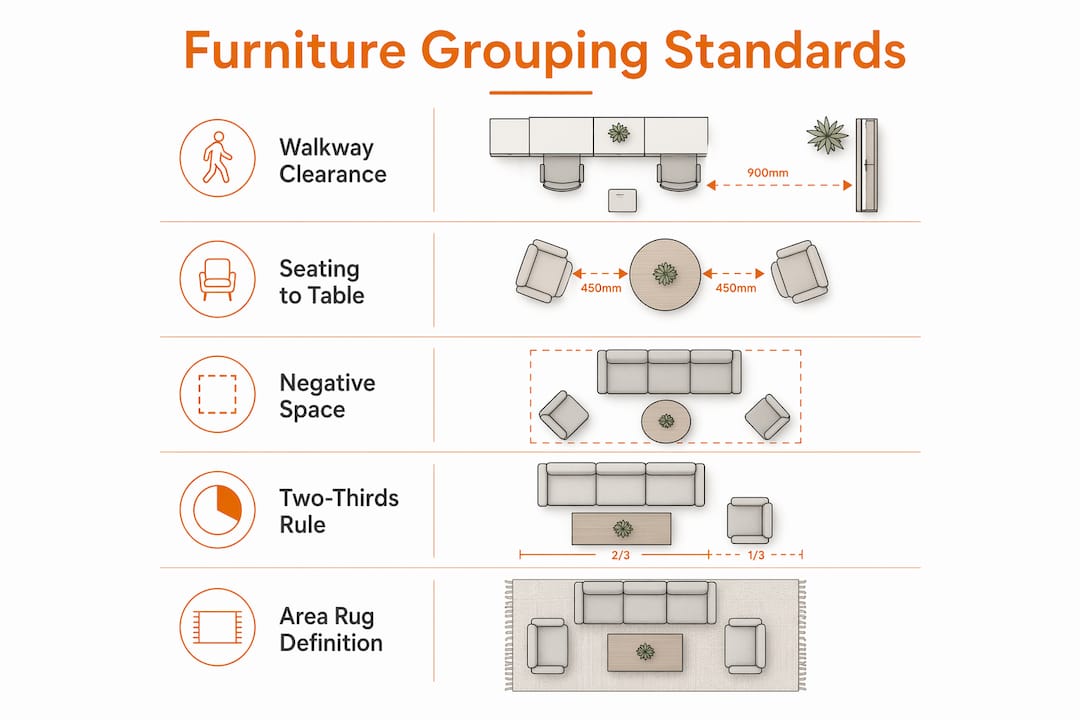
Clearance is the foundation of every effective furniture grouping. Primary walkways require 30–36 inches of unobstructed width to maintain operational efficiency and comply with workplace safety expectations. That measurement is not a suggestion. It is the minimum needed for two people to pass each other comfortably without disrupting a colleague at a nearby workstation.
Beyond walkways, the spacing between individual pieces matters just as much. Sofas and coffee tables placed 14–18 inches apart support natural conversation without requiring raised voices. In a commercial context, this principle applies directly to breakout seating, reception areas, and informal meeting zones where social interaction is the primary function.
Negative space is the deliberate gap between furniture clusters. It prevents visual clutter and gives each grouping a clear identity within the wider room. An office without negative space feels congested regardless of how well individual pieces are chosen.
The two-thirds rule is the most reliable guide for proportion. Furniture groupings should cover roughly two-thirds of their anchor space, whether that anchor is an area rug, a wall section, or a defined floor zone. This ratio creates visual harmony and prevents the twin problems of overcrowding and emptiness.
Pro Tip: Use an area rug to define each furniture cluster physically. The rug acts as a visual boundary that tells occupants where one zone ends and another begins, which is particularly useful in open-plan offices where walls cannot do that job.
| Spacing standard | Recommended measurement |
|---|---|
| Primary walkway clearance | 30–36 inches |
| Seating to coffee table gap | 14–18 inches |
| Furniture grouping to anchor space ratio | Two-thirds of anchor area |
| Secondary circulation paths | Minimum 24 inches |
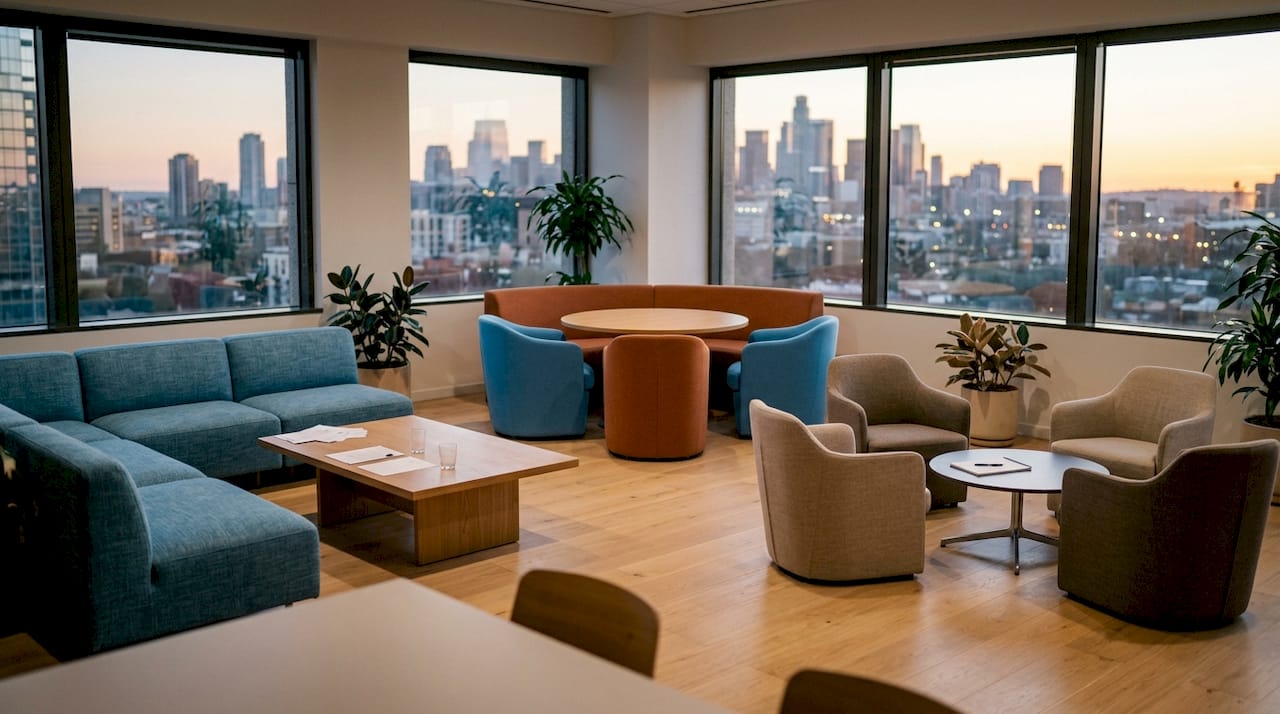
The shape of a furniture grouping determines the type of activity it supports. Choosing the right configuration before purchasing a single piece saves significant time and cost during a fit-out.
The most common configurations used in commercial office layouts are:
Odd-number groupings add a further layer of visual interest. Arranging items in groups of 3, 5, or 7 breaks rigid symmetry and creates natural focal clusters. In practice, this means pairing a three-seat sofa with two armchairs rather than one, or grouping five task chairs around a meeting table rather than four. The result feels considered rather than accidental.
| Grouping type | Best commercial application |
|---|---|
| L-shaped | Reception areas, informal collaboration zones |
| U-shaped | Breakout rooms, client meeting areas |
| Symmetrical parallel | Boardrooms, interview rooms |
| Floating cluster | Open-plan team areas, creative studios |
For guidance on arranging office desks within these configurations, the principles above translate directly to workstation planning.
Furniture grouping defines activity zones without permanent walls. That single capability makes it the most cost-effective tool available for managing a multifunctional office. You can create a focused work zone, a collaborative area, and a client-facing reception space within the same open-plan floor simply by arranging furniture with intent.
The benefits extend well beyond aesthetics:
Pro Tip: Before committing to a layout, walk the proposed traffic routes yourself. If you have to turn sideways or step around a chair to reach a key area, the grouping needs adjustment regardless of how well it looks on a floor plan.
For a broader view of how workspace layout affects productivity, the relationship between furniture placement and output is well established in commercial interior practice.
Applying furniture grouping principles does not require a professional interior designer. It requires a clear process and the willingness to test before committing.
Identify the primary focal point. Every successful grouping centres on a single focal point, such as a window, a feature wall, or a large screen. Place the most important piece of furniture facing or adjacent to that point first. Everything else follows from that anchor.
Map your traffic routes. Draw or tape out the paths people will use to reach desks, meeting rooms, kitchens, and exits. These routes must remain clear before any furniture is placed. Treat them as fixed constraints, not afterthoughts.
Use painter’s tape to test layouts. Outlining furniture footprints with painter’s tape for 24–48 hours before ordering or moving anything is the single most effective low-cost method available. It reveals whether a proposed grouping creates awkward pinch points or wastes usable space.
Float furniture away from walls. Resist the instinct to push everything to the perimeter. Furniture pulled slightly inward creates breathing room around the edges and makes the room feel larger and more purposeful.
Apply the two-thirds rule to each zone. Once you have defined an anchor space for each grouping, check that the furniture covers roughly two-thirds of it. Adjust piece sizes or quantities until the proportion feels balanced.
Test conversation distances. Sit in each seating position and check whether you can speak at a normal volume to the person opposite. If the distance feels too great or too close, adjust before finalising the layout.
Review space-saving furniture options if the floor area is limited. Compact desks, stackable chairs, and wall-mounted storage can all reduce the footprint of individual pieces without compromising the grouping structure.
Effective furniture grouping is the single most impactful change an office manager can make to a workspace without structural alterations, provided clearance standards, proportional rules, and focal points are applied consistently.
| Point | Details |
|---|---|
| Clearance is non-negotiable | Maintain 30–36 inch walkway clearance to prevent bottlenecks and meet safety expectations. |
| Proportion governs each zone | Apply the two-thirds rule so groupings fill their anchor space without overcrowding it. |
| Grouping shape defines function | Choose L-shaped, U-shaped, or floating configurations based on the activity each zone must support. |
| Test before you commit | Use painter’s tape to outline layouts for 24–48 hours and walk the routes before ordering furniture. |
| Focal points anchor every grouping | Identify one focal point per zone and position the primary piece of furniture in relation to it first. |
The most common mistake I see in commercial fit-outs is treating furniture grouping as a finishing touch rather than a planning discipline. Businesses spend considerable budgets on individual pieces and then push them all against the walls, which is the single fastest way to make a large office feel both cramped and empty at the same time.
Clearance always wins over aesthetics. A beautifully specified chair cluster that blocks a fire exit or forces people to squeeze past a desk every twenty minutes will generate complaints within a week. I have seen offices where the furniture was excellent and the layout was the problem. The two are not the same thing.
Floating furniture is the technique most office managers resist and then wish they had adopted sooner. Pulling a desk cluster or a sofa grouping 60 centimetres away from the wall changes the entire character of a room. It creates a sense of intention. It signals that the space has been planned rather than filled.
The other lesson I keep returning to is iteration. No layout is correct on the first attempt. The painter’s tape method feels low-tech, but it has saved clients from costly mistakes more times than I can count. Spend two days living with the tape outlines before a single piece of furniture is moved or ordered. The time cost is negligible. The insight is not.
Finally, balance individual work needs against social zones. An office that is entirely open and collaborative exhausts people. One that is entirely cellular isolates them. The best layouts I have worked on contain both, defined clearly through grouping rather than through walls.
— Furniture
Furniture grouping principles only deliver results when the furniture itself is sized, shaped, and specified for commercial use.
Furnitureforbusiness supplies ergonomic office chairs and commercial office desks designed for the spatial demands of grouped layouts, from compact task chairs that fit neatly within a defined zone to height-adjustable desks that adapt as team configurations change. The range also includes office storage and office accessories that integrate cleanly into grouped arrangements without creating visual clutter. Free delivery to the UK mainland is included on all orders, and bulk pricing is available for teams fitting out multiple zones at once.
Furniture grouping is the arrangement of office furniture into defined functional clusters, such as workstations, collaboration zones, or reception areas, to improve how a space is used and how people move through it.
Primary walkways require 30–36 inches of clear space to allow comfortable movement and meet workplace safety standards. Secondary circulation paths should have a minimum of 24 inches.
The two-thirds rule states that a furniture grouping should cover approximately two-thirds of its anchor space, such as an area rug or defined floor zone, to achieve visual balance without overcrowding.
Use painter’s tape to outline the footprint of each piece on the floor and leave it in place for 24–48 hours. Walk the traffic routes and sit in each position to check conversation distances before committing to the layout.
Furniture grouping is particularly effective in smaller offices because it defines zones without physical partitions. Floating furniture away from walls and applying the two-thirds rule to each cluster makes compact spaces feel more considered and functional.

Phone: 0330 043 4114
VAT no. GB 991 8681 60
Company no. 07250570