TL;DR:
- C-level seating combines authoritative design with ergonomic support for long hours, emphasizing safety and durability.
- Properly specified executive chairs promote health, compliance, and strong leadership presence in meetings and offices.
C-level seating is defined as executive office chairs engineered to balance authoritative visual presence with the ergonomic support required for long daily seated durations. The term “C-level” refers to the senior leadership tier, and the chairs associated with it sit apart from standard task seating in both design intent and functional specification. Where a typical operator chair prioritises mobility and neutral posture for varied tasks, a C-level chair prioritises sustained comfort, postural control, and the kind of physical presence that reflects leadership. Brands such as Steelcase and the testing standards set by ANSI/BIFMA have shaped what quality executive seating looks like in practice. Understanding why choose C-level seating means understanding that these chairs are not a luxury upgrade. They are a measured workplace decision.
Executive chairs are defined by higher, enveloping backs and substantial visual structure that signals authority in a private office or boardroom. That visual weight is not incidental. It communicates status and composure to anyone entering the room, which matters in leadership environments where perception shapes interaction before a word is spoken.

The design philosophy behind C-level seating options differs from that of ergonomic task chairs. Task chairs are built for movement, quick adjustments, and varied postures across a working day. Executive chairs are built for sustained sessions, often in a single office, with a focus on comfort across hours of reading, calls, and decision-making. The best seating for executives achieves both: the visual authority of a traditional executive chair combined with the adjustability of a modern ergonomic model.
The comparison below shows where each chair type excels:
| Feature | Executive chair | Ergonomic task chair |
|---|---|---|
| Backrest height | High, enveloping | Mid to high, contoured |
| Visual presence | Strong, structured | Functional, minimal |
| Adjustability | Moderate to high | High |
| Suited to | Long sessions, private offices | Varied tasks, shared spaces |
| Material options | Leather, premium fabric | Mesh, fabric |
| Typical user | Senior executive | General office worker |
Key design features that distinguish C-level office furniture from standard seating include:
Pro Tip: When specifying executive chairs, request a trial period before committing to a bulk order. A chair that looks authoritative in a catalogue may not suit the posture profile of the person using it daily.
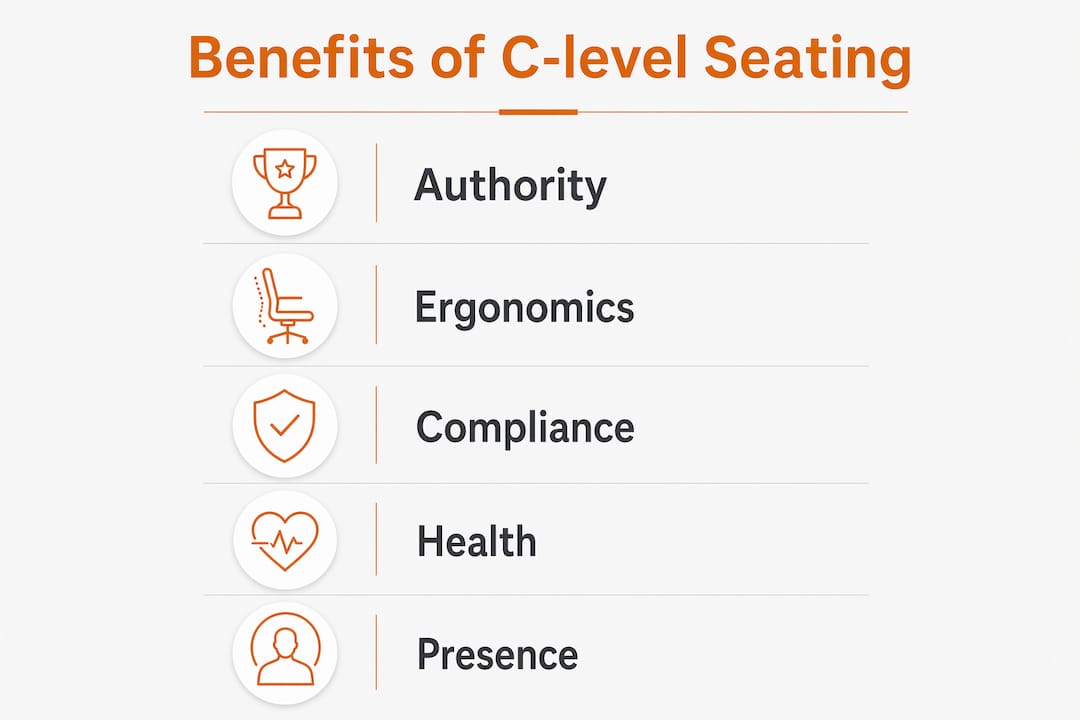
The right executive chair is not just a comfort item. It is a measured element of risk management tied directly to UK Display Screen Equipment regulations. Under DSE rules, employers must assess workstation risks and provide seating that supports correct posture, with feet flat on the floor, knees at approximately 90 degrees, and adequate lumbar support. Failing to meet these requirements exposes organisations to liability and, more practically, to avoidable staff health problems.
A 2025 meta-analysis reported an odds ratio of 0.53 for pain reduction through ergonomic interventions. That figure means ergonomic seating roughly halves the likelihood of musculoskeletal pain compared to unmanaged seating conditions. The same research noted that dynamic support, which allows real posture changes throughout the day, outperforms static lumbar support for most office users. This is a critical distinction for executives who spend six or more hours seated.
DSE risk assessments that link chair features to measurable posture outcomes produce defensible procurement decisions. That means specifying chairs based on individual executive posture profiles rather than selecting a model purely on appearance. The advantages of executive seating are only realised when the chair fits the person using it.
Practical compliance considerations for C-level seating procurement include:
Pro Tip: Commission individual DSE assessments for each C-suite occupant before finalising chair specifications. A single chair model rarely fits every executive’s posture profile, and a documented assessment protects the organisation if a health complaint arises later.
Seating position affects openness, participation, and decision flow in meeting environments. The chair an executive occupies communicates as much as their words. A well-proportioned, visually authoritative chair at the head of a boardroom table reinforces the structure of the meeting before it begins. This is not a soft consideration. It is a spatial and psychological reality that experienced office designers account for when specifying boardroom seating.
Seating discomfort distorts attention. When a chair fails to support the body properly across a two-hour board meeting, the occupant shifts focus from the agenda to their physical discomfort. Boardroom system fit includes movement clearance around the table, visual harmony between chair and table proportions, and comfort across the full meeting duration. Getting this wrong undermines the quality of decisions made in that room.
Four practical factors that shape executive seating choices in meeting environments:
Integrating seating with the wider executive office design creates a coherent environment that supports both productivity and the authority the space is meant to convey.
A 2026 Scientific Reports study found that safety is the top criterion in chair evaluation frameworks, followed by functional and engineering features, with aesthetics rated lower. This finding directly challenges the common approach of selecting executive chairs based on appearance first. Procurement teams that reverse this priority, starting with safety and function before considering materials and finish, produce specifications that hold up over time.
ANSI/BIFMA standards verify long-term safety and durability through cycle testing that simulates over 10 years of daily use with more than 100,000 mechanical cycles for key components. Specifying BIFMA-compliant chairs is the clearest way to demonstrate due diligence in executive seating procurement. It also protects the organisation from early failure and replacement costs.
The table below outlines the key evaluation criteria and what to look for in each:
| Evaluation criterion | What to assess |
|---|---|
| Safety certification | ANSI/BIFMA compliance, weight rating |
| Adjustability range | Seat height, lumbar, armrests, tilt tension |
| Material durability | Foam density, fabric or leather grade |
| Postural support | Dynamic movement, not just static lumbar |
| Aesthetic fit | Proportion and finish relative to office design |
Additional procurement considerations for C-level seating options:
Pro Tip: Ask suppliers for BIFMA test reports, not just compliance claims. A genuine BIFMA-certified chair will have documented test results available on request. This single step filters out chairs that use the term loosely.
C-level seating delivers measurable value when selected on safety, adjustability, and ergonomic fit rather than appearance alone.
| Point | Details |
|---|---|
| Safety before aesthetics | A 2026 study confirms safety and function rank above aesthetics in defensible chair procurement. |
| DSE compliance is mandatory | UK DSE regulations require adjustable seating that supports correct posture for all display screen users. |
| Dynamic support outperforms static | Research shows movement-enabling chairs reduce musculoskeletal pain more effectively than fixed lumbar designs. |
| Boardroom fit affects decisions | Chair height, armrest clearance, and visual proportion directly influence meeting quality and executive presence. |
| BIFMA certification matters | ANSI/BIFMA-certified chairs are tested to simulate over 10 years of daily use, confirming long-term durability. |
After working with procurement teams and office managers across the UK, the pattern I see most often is this: organisations spend considerable time specifying the boardroom table, the AV system, and the lighting, then select the chairs in the final week based on what looks right in a product photo. The result is usually a chair that photographs well and performs poorly after three months of daily use.
The C-level seating advantages that actually matter, sustained comfort, postural control, and meeting-room presence, only materialise when the selection process starts with function. I have seen executives request chair replacements within six months because the original choice prioritised leather finish over seat depth adjustment. That is an avoidable cost and an avoidable health risk.
The most important shift I would encourage is treating the chair as part of the organisation’s risk management framework, not its interior design budget. When you link chair specification to DSE assessments and BIFMA certification, the decision becomes defensible, durable, and genuinely useful to the person sitting in it. The best ergonomic seating for executives is not the most expensive option. It is the one that fits the person, the room, and the working pattern it is meant to support.
— Furniture
Furnitureforbusiness supplies executive and ergonomic office chairs to UK businesses, with free delivery to the UK mainland and bulk order pricing for larger fit-outs.
The executive and office chair range at Furnitureforbusiness includes options suited to private C-suite offices and boardroom environments, with chairs that meet the adjustability and durability standards discussed throughout this article. For organisations fitting out meeting rooms alongside executive offices, the meeting room furniture collection covers tables and seating designed to work as a coherent system. Furnitureforbusiness also offers direct support for procurement teams specifying chairs across multiple offices or leadership spaces.
C-level seating refers to executive office chairs designed for senior leadership roles, combining high-backed support, premium materials, and adjustable ergonomic features suited to long daily seated durations.
UK DSE regulations require employers to provide adjustable seating that supports correct posture for display screen users. C-level chairs that meet these adjustability requirements satisfy that obligation for executive workstation setups.
Executive chairs prioritise visual authority and sustained comfort with higher backrests and premium materials. Ergonomic task chairs prioritise movement and adjustability for varied tasks across shared workspaces.
ANSI/BIFMA certification is the clearest quality indicator. It confirms the chair has been tested to simulate over 10 years of daily use, covering structural integrity and component durability.
Seating position and comfort directly influence participation, attention, and decision flow in meetings. Chairs that cause discomfort during long sessions reduce the quality of engagement regardless of the agenda.

Phone: 0330 043 4114
VAT no. GB 991 8681 60
Company no. 07250570