TL;DR:
- A boardroom table is a formal centerpiece designed to influence meeting dynamics, brand perception, and technology integration. It must be selected based on room size, meeting style, and branding needs, with proper dimensions and features to ensure functionality. Early planning of the table’s specifications prevents costly adjustments and improves overall room performance.
A boardroom table is the large, central meeting table used in a boardroom, the room where the people who control or manage a company gather to make critical decisions. Unlike general office desks or informal meeting surfaces, a boardroom table is a formal leadership centrepiece, purpose-built for structured discussions, presentations, and high-stakes negotiations. It defines the tone of the room before a single word is spoken. The right table signals authority, facilitates communication, and accommodates the technology that modern hybrid meetings demand.
A boardroom table is defined by both its function and its context. The Cambridge Dictionary describes a boardroom as the room where a company’s directors meet, which means the table within it carries a specific weight: it is a formal leadership centrepiece rather than a general meeting surface. This distinction matters when you are specifying furniture, because boardroom tables are engineered to different standards than standard conference tables in terms of size, finish, cable management, and structural integrity.
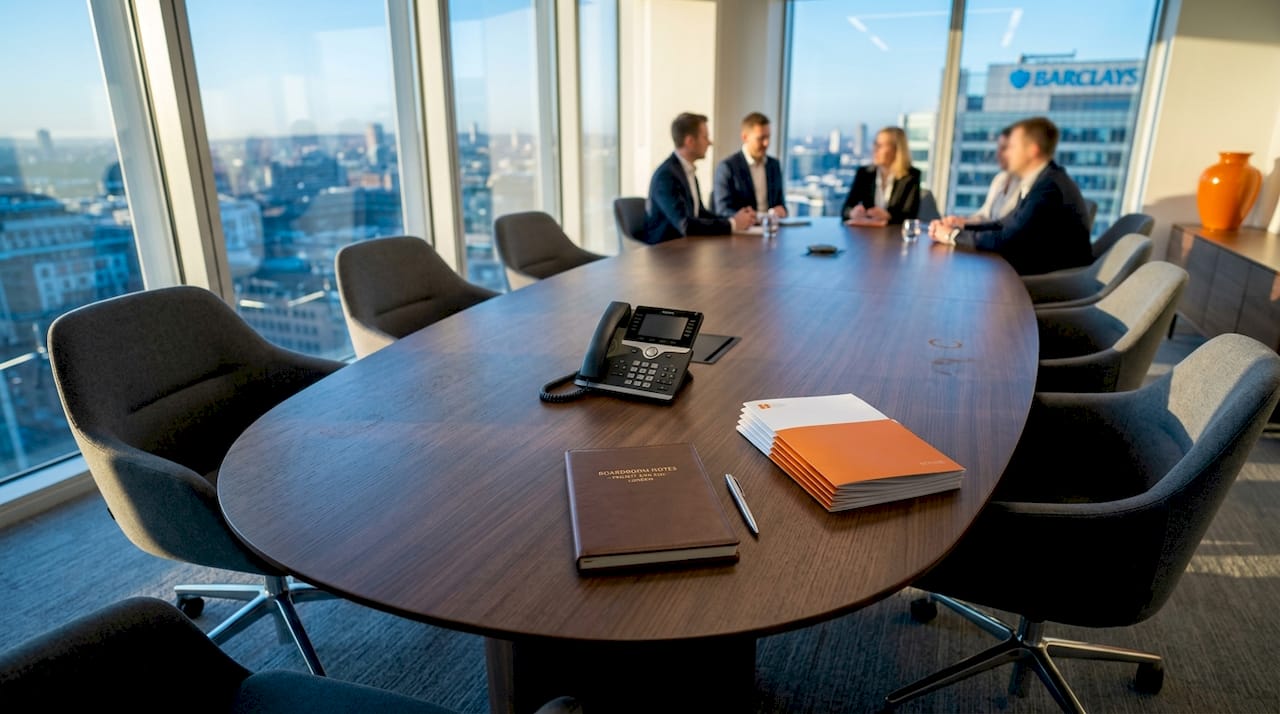
The symbolic and functional role of a boardroom table extends beyond seating. Material, finish, and design all contribute to brand perception and meeting atmosphere. A polished walnut veneer table in a law firm communicates gravitas. A white gloss surface in a creative agency communicates openness. Neither choice is accidental, and both affect how participants behave in the room.
For office managers and business owners in the UK, the boardroom table is often the single most visible investment in a meeting space. Getting it right means understanding shape, dimension, material, and technology integration as a connected set of decisions rather than separate ones.
Shape is the first decision, and it has a direct impact on meeting dynamics, seating capacity, and room flow.
Rectangular tables are the most popular shape for traditional boardrooms because they maximise seating along the length and reinforce hierarchical seating arrangements. The chair at the head of the table carries authority by default. Rectangular tables suit formal settings where a clear agenda and structured discussion are the norm.
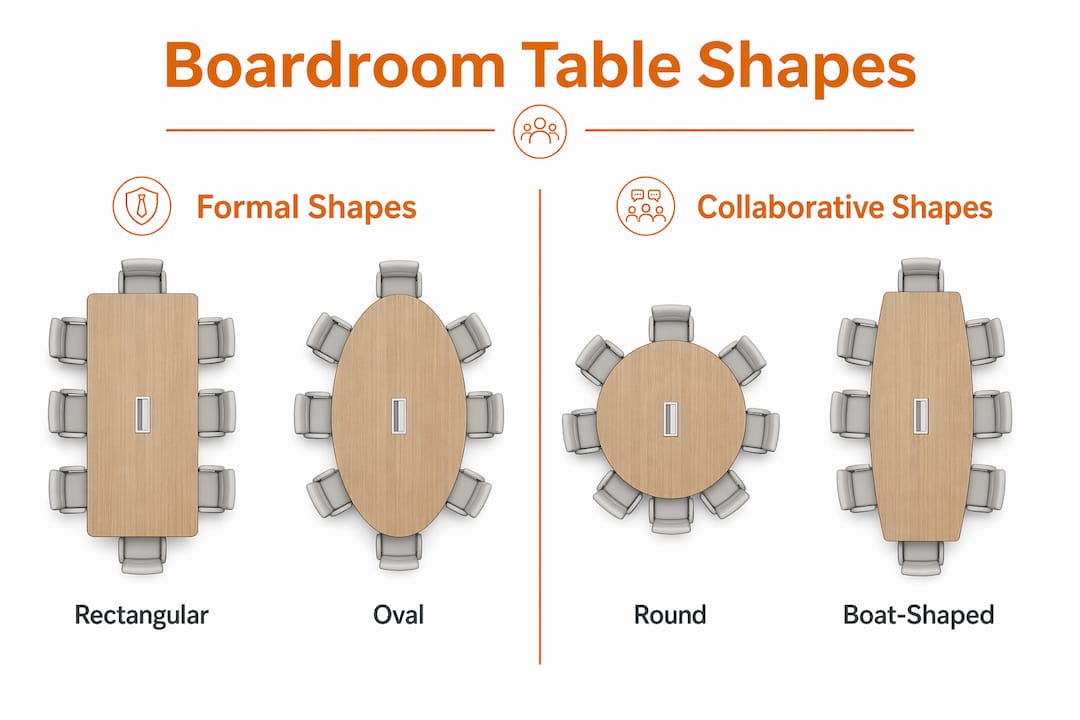
Oval and boat-shaped tables soften the formality of a rectangular layout while retaining a clear orientation. The curved edges improve sightlines across the table, which is particularly useful in rooms where video conferencing screens are mounted at one end. Many UK corporate offices favour boat-shaped tables precisely because they balance authority with collaboration.
Round tables remove the hierarchy entirely. There is no head position, which makes them well suited to working groups, creative sessions, or leadership teams that operate on consensus. The trade-off is that round tables are less efficient in long, narrow rooms and typically seat fewer people per square metre of floor space.
The material of the table surface affects both aesthetics and acoustics. Solid wood and wood veneer absorb sound, which reduces echo during meetings. Glass surfaces, while visually striking, reflect sound and cause echo that must be mitigated through acoustic panels or specialist microphone placement. Laminate sits between the two: durable, cost-effective, and acoustically neutral.
| Shape | Best suited for | Seating style |
|---|---|---|
| Rectangular | Formal boardrooms, hierarchical meetings | Linear, head-of-table authority |
| Oval / boat-shaped | Hybrid meetings, mid-size teams | Curved sightlines, collaborative |
| Round | Consensus-driven groups, creative sessions | Equal, no head position |
| U-shaped | Presentations, training sessions | Presenter-focused layout |
Pro Tip: Measure your room before selecting a shape. A rectangular table in a square room often leaves awkward corners with no practical use. An oval or round table frequently makes better use of square footage and improves traffic flow around the perimeter.
Standard boardroom table height sits between 74 and 76 cm, which aligns with ergonomic seating standards and works with the majority of task and executive chairs. Width and length vary considerably depending on the number of participants and the room size.
The standard allowance is 61 to 76 cm per person along the table edge. This means a table seating 10 people comfortably requires at least 3 metres of usable edge length on each long side, which typically translates to a table between 3.6 and 4.5 metres in total length. Undersizing is one of the most common mistakes in boardroom specification. A table that seats eight on paper often seats six comfortably once laptops, notepads, and water glasses are factored in.
Width matters as much as length. A table narrower than 1.2 metres makes eye contact across the table uncomfortable and limits the space available for shared documents or screens. Most boardroom tables range from 1.2 to 1.5 metres in width, with executive tables sometimes reaching 1.8 metres.
Key planning points for boardroom dimensions:
For a broader view of how table dimensions interact with the rest of your meeting space, the conference room essentials guide from Furnitureforbusiness covers the full picture of room specification.
Technology integration is now a baseline expectation rather than a premium feature in boardroom furniture. Modern boardroom tables feature integrated ports for power, USB charging, HDMI, and Ethernet at each seat position, with internal cable routing that keeps the surface clear and the setup professional.
The relationship between table design and AV performance is tighter than most buyers realise. Boardroom AV systems require all components, including displays, microphones, cameras, DSP units, and control systems, to function as a cohesive whole. The table is the physical infrastructure that either supports or undermines that cohesion. A table without concealed cable conduits forces visible cable runs across the surface, which creates clutter and introduces trip hazards during room changeovers.
Microphone placement is particularly sensitive to table layout. Table microphones should be positioned within 4 to 6 feet of every participant to capture clear audio. In a long rectangular table, this typically requires multiple microphone units spaced along the centre line. A round or oval table with a smaller footprint often achieves the same coverage with fewer units.
Key technology features to specify when buying a boardroom table:
Pro Tip: Specify your AV system before you finalise the table design. The number of microphone units, the position of the main display, and the location of the control panel all affect where cable conduits need to run. Retrofitting cable management into a table that was not designed for it is expensive and rarely looks professional.
The material of the table surface also affects audio quality directly. Polished glass and high-gloss lacquer reflect sound, which creates echo that degrades call quality in hybrid meetings. If your boardroom table will be used regularly for video conferencing, a matte wood veneer or fabric-inset surface is a more practical choice than a high-gloss finish.
Choosing the right table starts with four concrete assessments: room size, meeting style, technology requirements, and budget.
Room size sets the outer boundary. Measure the room and subtract the minimum circulation allowance of 90 cm on all sides before calculating the maximum table footprint. Many office managers make the mistake of measuring the room and then selecting the largest table that fits, which leaves no room for comfortable movement.
Meeting style determines shape. If your boardroom is used primarily for formal board meetings with a fixed agenda, a rectangular table reinforces that structure. If the same room doubles as a workshop space or strategy session venue, an oval or modular table gives you more flexibility. Furnitureforbusiness offers guidance on selecting conference tables for UK offices that covers this decision in detail.
Material and finish connect directly to brand image. A boardroom table carries symbolic weight in representing a company’s culture and professionalism. A financial services firm projecting stability will make a different choice than a technology company projecting agility. Neither is wrong, but the choice should be deliberate.
Technology requirements should be specified before the table is ordered, not after. Identify the number of seats, the AV system components, and the cable routing requirements. Then confirm that the table manufacturer can accommodate those specifications, either as a standard product or as a customisation.
Budget considerations in the UK market range from approximately £800 for a basic laminate rectangular table to upwards of £8,000 for a fully specified executive table with integrated tech ports and premium veneer. The right boardroom table size and specification prevents costly replacements within a few years, making it worth investing in a table that genuinely fits the room and the way your team works.
A boardroom table is a formal leadership centrepiece that shapes meeting dynamics, brand perception, and technology performance in equal measure.
| Point | Details |
|---|---|
| Shape drives meeting dynamics | Rectangular tables reinforce hierarchy; oval and round tables promote collaboration and equal participation. |
| Dimensions require precise planning | Allow 61 to 76 cm per person along the table edge and 90 cm clearance from the wall for comfortable circulation. |
| Material affects audio quality | Matte wood veneer absorbs sound; polished glass reflects it, creating echo that degrades hybrid call quality. |
| Tech integration must be specified early | Cable conduits, per-seat port modules, and microphone placement all depend on table design decisions made before manufacture. |
| Table choice reflects brand identity | Finish, material, and shape communicate company culture to every visitor and participant in the room. |
After working with hundreds of UK businesses on meeting room fit-outs, the pattern I see most often is this: the boardroom table is chosen last, after the room has been painted, the AV system has been quoted, and the chairs have been ordered. By that point, the table has to fit around every other decision rather than anchor them.
The table should be the first specification, not the last. Every other element in the room, from the display size to the microphone count to the chair height, flows from the table’s dimensions and layout. When businesses reverse that order, they end up with tables that are too long for the AV coverage, too narrow for comfortable laptop use, or finished in a material that creates echo on every video call.
The other mistake I see regularly is treating material as a purely aesthetic choice. A high-gloss black table looks exceptional in a product photograph. In a real boardroom with six people on a video call, it creates reflections that distract participants and degrades audio. The finish is a functional decision as much as a visual one.
My honest recommendation: visit a showroom or request samples before committing. The difference between a laminate and a real wood veneer is not visible in a product image but is immediately apparent in person. Your clients and board members will notice, even if they cannot articulate why.
— Furniture
If you are specifying a boardroom or meeting room for a UK office, Furnitureforbusiness offers a curated range of meeting room furniture that covers every shape, size, and finish discussed in this article. From compact oval tables for six-person rooms to fully specified executive rectangular tables with integrated tech ports, the range is built for commercial environments that need durability alongside design.
Free delivery to the UK mainland is included on all orders, with bulk pricing available for larger fit-outs. Pair your boardroom table with ergonomic office chairs selected for meeting room use, or browse office desks for complementary furniture across the wider workspace. The team at Furnitureforbusiness can advise on room layouts and specification if you are working to a brief.
Standard boardroom table height is between 74 and 76 cm, which aligns with ergonomic seating standards for most task and executive chairs.
Allow 61 to 76 cm of table edge per person for ergonomic comfort. This is the standard seating allowance used when calculating the correct table length for a given number of participants.
Wood veneer and solid wood are the most practical choices for boardrooms that host video conferencing, as they absorb sound and reduce echo. Glass and high-gloss surfaces look striking but reflect sound, which degrades audio quality on calls.
A well-specified boardroom table should include per-seat power sockets, USB-A and USB-C ports, HDMI inputs, and concealed cable conduits. Wireless charging pads and flush-mounted pop-up units are increasingly standard in executive boardroom configurations.
Measure your room, subtract 90 cm on all sides for circulation, and then calculate the maximum table footprint. Allow 61 to 76 cm of edge length per seat to confirm the table can accommodate your required number of participants comfortably.

Phone: 0330 043 4114
VAT no. GB 991 8681 60
Company no. 07250570