Buy a chair rated above the heaviest person who will use it. That is the single most important rule when procuring heavy duty office chairs for a team. Weight capacity, sometimes called the safe working load (SWL), is the manufacturer’s tested maximum load for all components combined — frame, base, gas lift, mechanism, and castors. Exceed it regularly and you accelerate wear, risk component failure, and often void the warranty.
Before contacting a supplier, do three things:
The most important rule in procuring heavy-duty office seating is to choose a chair rated above the heaviest user, not matched to them exactly, and to verify the construction behind that rating before signing off on a bulk order.
| Point | Details |
|---|---|
| Buy with a capacity margin | Choose a chair rated at least 10–15% above the heaviest user’s weight to reduce wear and protect warranty. |
| Check construction, not just the rating | Steel base, heavy-duty gas lift, and high-density foam are the components that determine real-world durability. |
| Seat dimensions matter equally | Seat width, depth, and height range must fit the user’s body; a high rating with a narrow seat solves nothing. |
| Verify warranty terms in writing | Confirm length, parts covered, and exclusions for overloading or commercial use before committing to a fleet order. |
| Furnitureforbusiness for bulk orders | Free UK mainland delivery, bulk pricing on request, and spec sheets available for all heavy-duty models. |
Weight capacity is not a comfort recommendation. It is a tested engineering threshold derived from two types of assessment: static load tests (applying a fixed force to confirm structural integrity) and cycle tests (simulating repeated sit-stand movements over thousands of repetitions to check for fatigue failure). A chair rated to 150 kg has been verified to withstand that load under those test conditions, not necessarily under every pattern of real-world use.
Industry guidance shows most standard office chairs are designed around roughly 113–120 kg (approximately 250 lbs). Chairs rated to 120 kg, 150 kg, or 180 kg are the common commercial bands, and higher-rated models above 200 kg use heavier-duty materials with explicit durability testing disclosed by the manufacturer.
What the rating does not cover:
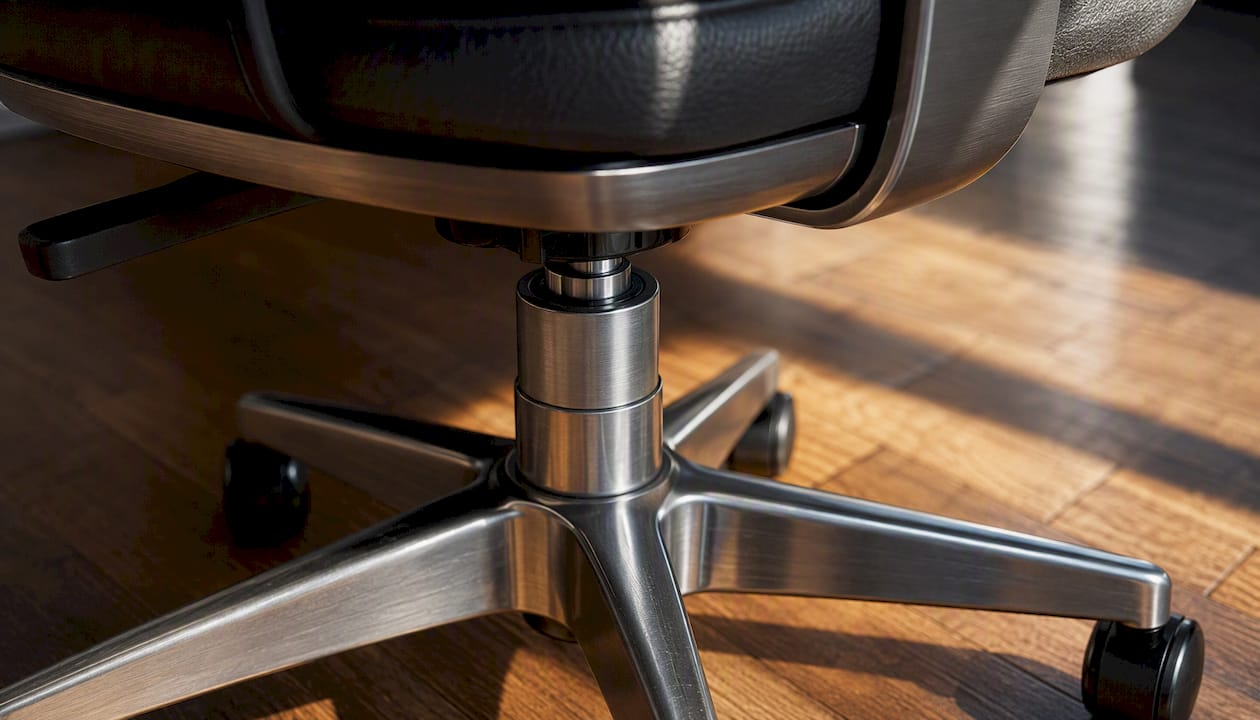
Consistently loading a chair near its rated limit accelerates wear on mechanisms and can void warranty clauses that exclude misuse or overloading. The gas lift and the 5-star base are the most common failure points under sustained high loads.
A 120 kg user is better served by a 150 kg-rated chair than one rated to exactly 120 kg.*
Standard, heavy-duty, and bariatric are overlapping categories rather than rigid definitions, but the following ranges reflect common commercial practice:
Seat dimensions matter as much as the weight rating itself. A wider seat pan keeps the hips within the seat without pressure on the outer thighs; a deeper seat supports the full thigh without cutting off circulation at the knee. For taller users, a higher backrest and extended gas lift range are equally important for maintaining spinal alignment.
Key dimension rules of thumb:
Hot-desking complicates this. When multiple users share a chair and body sizes vary significantly, choose the higher capacity band and the wider seat. A chair that fits the largest user will accommodate smaller colleagues; the reverse is not true.
The published weight rating is only as reliable as the weakest component in the assembly. Buyer guides consistently highlight reinforced steel bases and high-density foam as the construction choices that distinguish genuine heavy-duty chairs from those that merely carry a higher sticker rating.
The components to check on any spec sheet:
Forbes’ big-and-tall chair round-up reinforces that size-specific design features, such as wider seat pans and taller backrests, are as important as the raw capacity figure when selecting for larger users. A chair with a 180 kg rating but a 46 cm seat pan will be uncomfortable and ergonomically inadequate for a broad-framed user regardless of what the spec sheet says.
Certifications and durability testing are useful selection signals. Where manufacturers cite standards such as BIFMA X5.1 (the US commercial seating standard widely referenced in global procurement) or ANSI equivalents, those figures reflect structured cycle and load testing rather than self-declared ratings. Ask suppliers to confirm which standard the chair was tested to and whether test reports are available.
Step-by-step selection process:
Questions to ask your supplier:
Red flags to avoid:
For bespoke finishes or non-standard configurations, allow additional lead time. A pilot purchase of two or three chairs before a full fleet order is standard procurement practice for high-capacity seating.
The models below are available from Furnitureforbusiness with free delivery to the UK mainland and bulk-order pricing on request.
Buying notes for procurement teams:
The Houston High Mesh Back Heavy Duty Chair and the OE Austin are the strongest picks for users above 120 kg, combining a reinforced frame with a wider seat pan and a 150 kg rating. The OE Saturn suits executive or meeting-room settings where a 120 kg rating is sufficient and a folding-arm design adds flexibility.
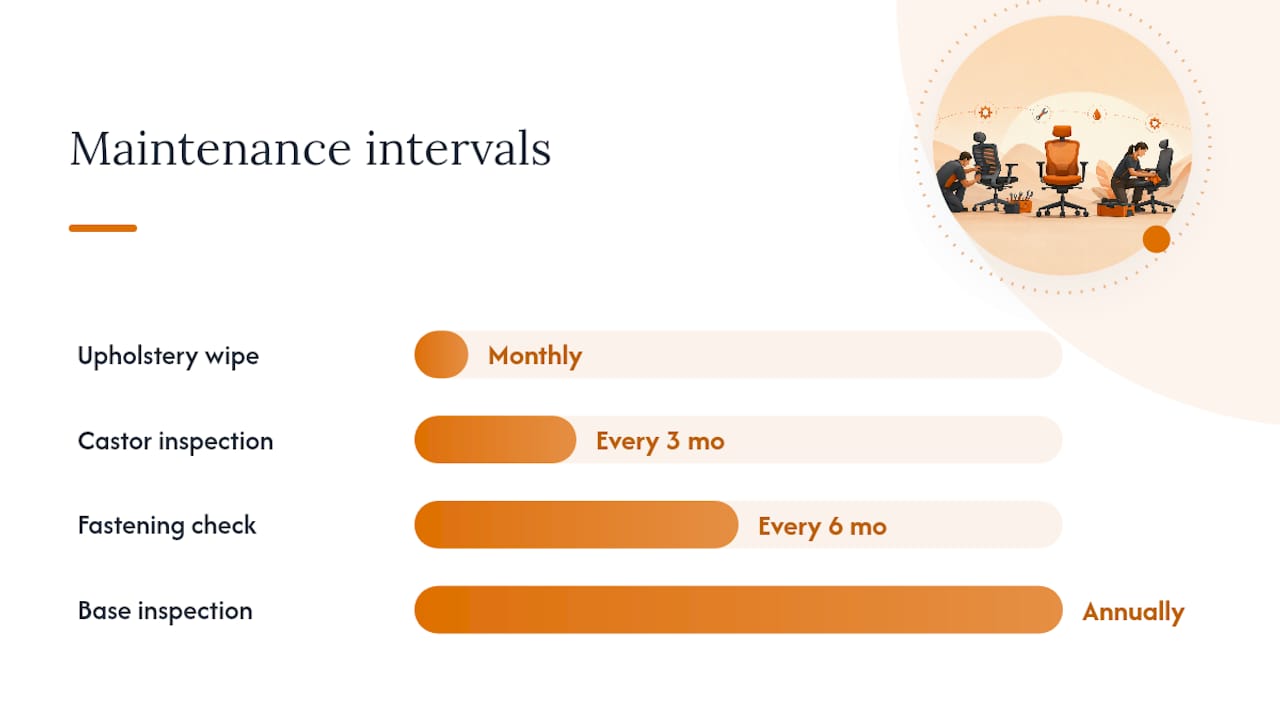
A heavy-duty chair in commercial use typically lasts five to eight years under normal conditions. Push it near its rated limit daily and that timeline shortens. The gas lift and base are the first components to show wear, and both are also the most commonly excluded from warranty claims where overloading is evident.
Routine maintenance checklist:
Warranty checklist — confirm before purchase:
For fleet management, keep a simple usage log noting when each chair was purchased, its rated capacity, and any maintenance carried out. This record supports warranty claims and helps you plan replacement budgets. Rotating chairs across workstations in hot-desk environments also distributes wear more evenly. When placing a bulk order, request a small quantity of spare gas lifts and castors to hold in stock.
Most procurement decisions focus on price and aesthetics. Capacity tends to get checked last, if at all, and that is where the real cost accumulates. A chair that fails within eighteen months because it was consistently loaded near its limit costs more in replacement, downtime, and potential injury risk than the premium paid for a correctly specified heavy-duty model from the outset.
There is also a dignity dimension that procurement guides rarely acknowledge. A chair that is visibly too narrow, too low, or too unstable for a user is not just an ergonomic problem. It is a workplace inclusion issue. Specifying seating that genuinely fits the full range of your workforce is part of creating a professional environment where everyone can work comfortably and safely.
The gap between a 120 kg-rated chair and a 150 kg-rated one is not always obvious from the outside. It shows up in the base material, the gas lift specification, and the foam density. Those are the details worth scrutinising, not the fabric colour.
Furnitureforbusiness supplies commercial-grade heavy-duty seating direct to UK businesses, with free delivery to the UK mainland and no minimum order. Where most office furniture suppliers treat high-capacity chairs as a niche add-on, Furnitureforbusiness stocks them as a core part of the range, with spec sheets and bulk pricing available on request.
Whether you are fitting out a single workstation or replacing a fleet of fifty chairs, the process is straightforward: browse the office chairs range, request a spec sheet for any model, and contact the team for a bulk-order quote. Sample chairs can be arranged before a full commitment. The OE Austin Heavy Duty Task Chair is a strong starting point for procurement teams specifying seating above 120 kg, combining a 150 kg rating with a reinforced frame and a two-year commercial warranty.

Phone: 0330 043 4114
VAT no. GB 991 8681 60
Company no. 07250570