The safest, quickest way to clean a mesh office chair is to vacuum it first with a soft brush attachment, then wipe the mesh with a barely damp microfibre cloth and a little mild dish soap. Work in small sections, never soak the fabric. Rinse with a clean damp cloth to lift soap residue, then leave the chair to air-dry fully before anyone sits on it again.
TL;DR:
- Vacuum the mesh thoroughly with a soft brush attachment before wiping with a damp microfibre cloth and mild dish soap, working in small sections.
- Use a spot-test for colorfastness and avoid soaking the mesh to prevent damage and uneven drying, which can cause sagging.
- Address stains by blotting from the outside inward and applying short cycles of soap paste or baking soda for odors, not by aggressive scrubbing.
- Clean surrounding frame, armrests, and casters regularly with a damp cloth and a soft brush, checking fastenings and avoiding excess liquid near metal parts.
- Implement weekly vacuuming and wiping, plus monthly comprehensive cleaning, to prevent soil buildup and extend the chair’s lifespan.
Get everything together before you start. Mesh chair cleaning goes faster, and does less damage, when you’re not hunting for a cloth halfway through with soapy mesh drying unevenly.
This practical guide for facilities managers makes the same point for any shared workspace: cleaning is only quick when the kit is already sitting in the cupboard, not scattered across three drawers. If you’re stocking a shared kit for the first time, Furnitureforbusiness’s office accessories range covers the basics without needing a separate supplier.
Cleaning mesh well is less about scrubbing hard and more about not rushing the drying stage. Rush that part and you’ll be doing the whole job again in a fortnight.
Pro Tip: Prop the backrest open slightly with a rolled towel while it dries. Mesh that dries flat against itself can trap a faint damp smell that a fully-open weave won’t.
Skip step 3 and you’re grinding dust into the fabric with every wipe, which is the fastest way to turn a five-minute clean into a stained mess. Skip step 8 and you risk sagging mesh that never quite tensions back the way it should.
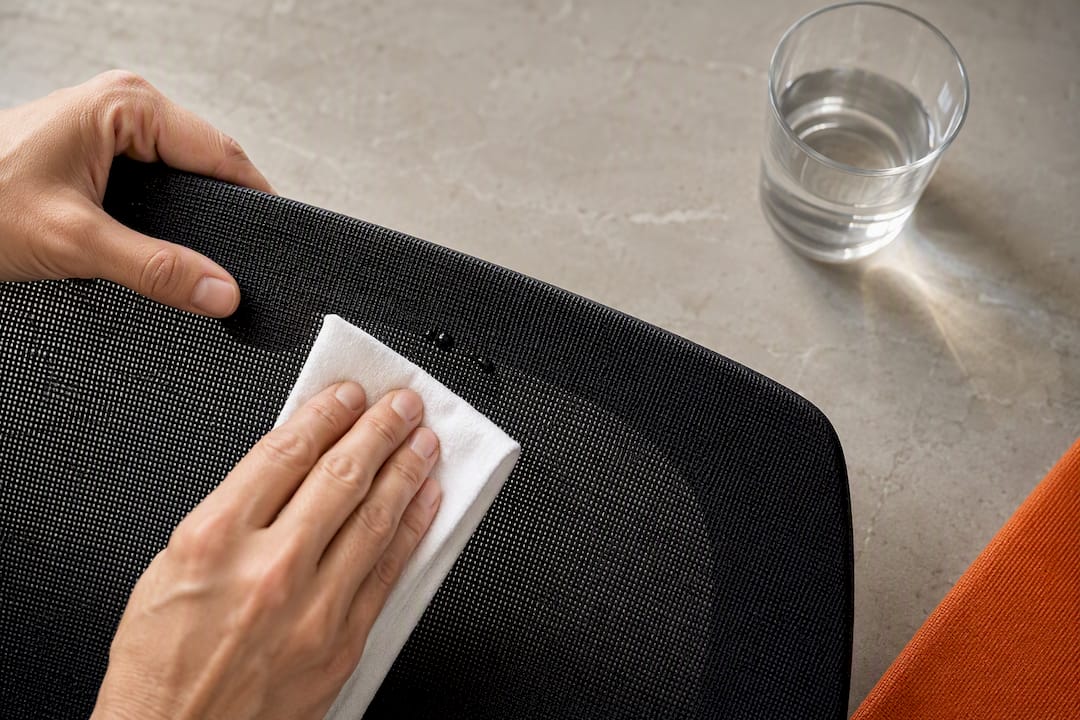
Spills need speed, not force. Blot the moment it happens rather than letting it sit, and always work from the outside of the stain inward. Cleaning from the edge to the centre stops the mark spreading further across the panel, which is exactly what happens if you scrub straight into the middle of it.
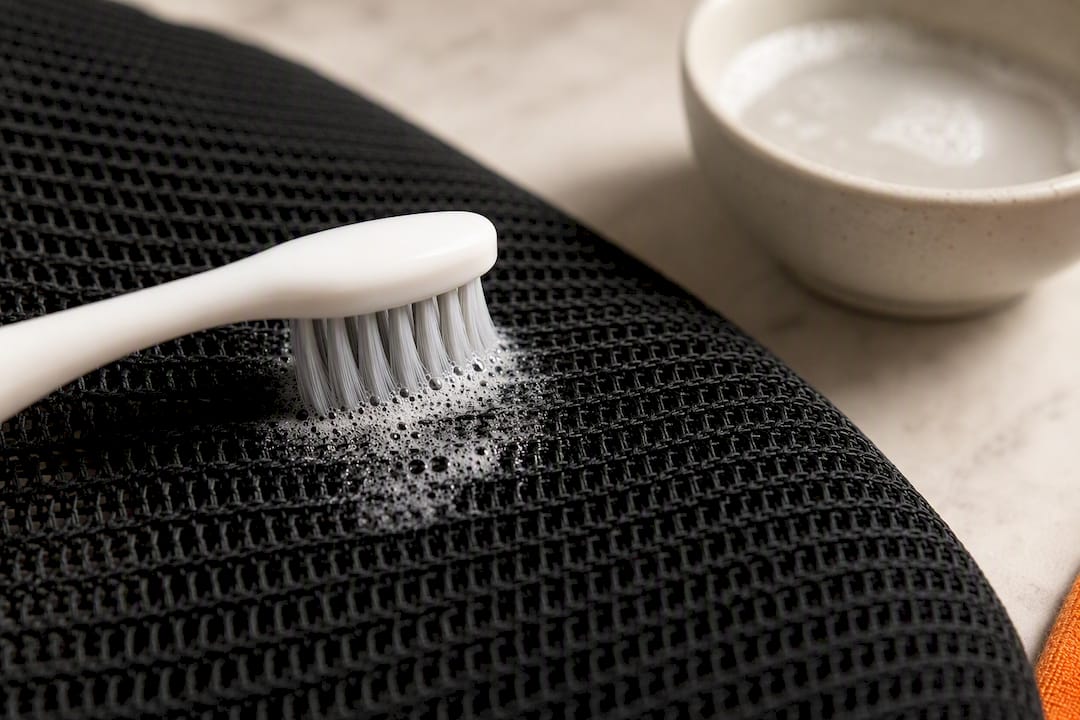
For grease or ground-in dirt, a small paste of mild dish soap and water applied with the toothbrush usually shifts it. Test on a hidden patch first, then apply in short cycles: dab, blot, rinse, repeat, rather than one long scrub. Short repeated treatments outperform aggressive scrubbing, which tends to fray the individual fibres instead of lifting the stain.
For odours, sprinkle baking soda over dry mesh, leave it for twenty minutes or so, then vacuum it off. A diluted vinegar rinse works for stronger smells, but always follow it with a plain-water wipe so you’re not left with a vinegar tang instead of the original smell.
Never reach for bleach, strong solvents, or an abrasive scourer. These weaken mesh fibres and can fade colour or corrode metal fixings nearby, turning a stain problem into a structural one.
Mesh gets the attention, but a clean panel surrounded by a grimy frame doesn’t stay clean for long. Dust and hand grease on the armrests transfer straight back onto the mesh the next time someone leans on it.
A cleaning schedule only works if it’s short enough that nobody skips it. That’s the whole logic behind a weekly-plus-monthly split rather than one big quarterly deep clean.
Adopting this kind of light weekly and monthly routine prevents soil building up in the first place, which is really the whole point. A chair that’s dusted weekly rarely needs the full wash-and-rinse treatment more than a few times a year.
Care labels exist for a reason, and they’re worth reading properly before reaching for a spray bottle. Cleaning codes such as W, S, or WS tell you whether water-based cleaners, solvent-based ones, or either are safe for that specific fabric, and mesh chairs from different manufacturers don’t all carry the same code.
Mesh doesn’t fail overnight. It sags gradually, and by the time you notice the dip in the middle of the seat, the tension has usually been going for months. Catching that early with a monthly check saves you from replacing the whole chair sooner than you needed to.
Pro Tip: If mesh looks slightly baggy after a wash, don’t panic straight away. A slow, full air-dry sometimes lets it re-tension on its own. Persistent sagging or a visibly torn weave, though, is a sign to replace rather than keep repairing.
Furnitureforbusiness supplies mesh and ergonomic seating built for daily office use, including the Sigma Executive Mesh Chair, with free delivery to the UK mainland for businesses replacing tired stock. If you’re weighing up whether a chair’s mesh construction suits your office in the first place, it’s worth reading about why mesh chairs suit modern offices before you commit to a bulk order.
Assign one person as the kit owner. Not a rota, not a group chat reminder, one name responsible for keeping cloths and soap stocked and doing the weekly pass. Buy a small centralised kit rather than letting everyone bring their own products from home, because that’s how bleach ends up on mesh that only ever needed water and a cloth. On replacement: if a chair still holds its shape after a proper clean, keep it. If the mesh sags visibly at rest or the smell comes back within days, stop spending time on it.
— Furniture
Furnitureforbusiness stocks a full range of mesh and ergonomic office chairs for businesses replacing worn seating, with bulk pricing available for larger fit-outs and free delivery across the UK mainland.

Phone: 0330 043 4114
VAT no. GB 991 8681 60
Company no. 07250570