Many office managers assume that all office chairs deliver similar levels of comfort and support, yet the reality is strikingly different. The materials, design, and ergonomic features of your seating directly influence employee wellbeing, focus, and productivity throughout the working day. Mesh office chairs have emerged as a preferred solution for UK businesses seeking to balance comfort, durability, and style in corporate environments. This guide explores why mesh chairs stand out, how they compare to traditional options, and what procurement teams should consider when selecting seating that genuinely supports your workforce.
| Point | Details |
|---|---|
| Breathable back design | Mesh chairs improve air flow, reducing heat build up and keeping users cooler during long periods of sitting. |
| Ergonomic back support | The mesh adapts to body contours and sustains the natural curve of the spine to reduce strain. |
| Durability and style | Mesh seating combines longevity with contemporary aesthetics, and requires low maintenance over years of use. |
| Boost focus and productivity | By minimising discomfort and enabling micro movements, mesh chairs help maintain concentration throughout the day. |
Mesh office chairs feature a breathable fabric stretched across the backrest and sometimes the seat, replacing traditional foam padding or solid materials. This design creates a flexible surface that responds to body movements whilst allowing continuous air circulation. The mesh material typically consists of synthetic fibres engineered for durability and elasticity, maintaining tension over years of daily use.
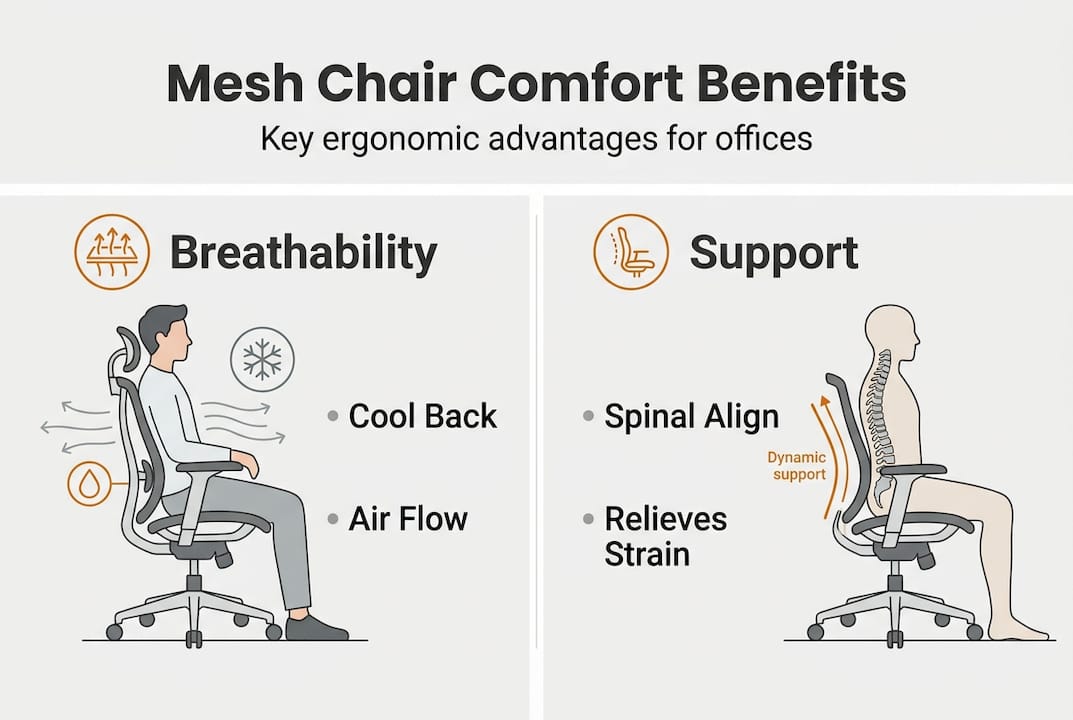
The breathability advantage cannot be overstated. Conventional padded chairs trap heat against the body, leading to discomfort and perspiration during extended sitting periods. Mesh eliminates this issue by allowing air to flow freely through the backrest, keeping employees cooler and more comfortable regardless of ambient office temperature. This seemingly simple feature significantly impacts how people feel after hours at their desks.
Mesh flexibility directly supports proper spinal alignment. Unlike rigid backrests that force users into predetermined positions, mesh conforms to individual body contours whilst providing consistent support. This adaptive quality helps maintain the natural S-curve of the spine, reducing pressure on vertebral discs and surrounding muscles. Mesh office chairs provide superior breathability and conform to body shapes for better support, addressing common ergonomic concerns in modern workplaces.
The ergonomic benefits extend beyond basic comfort. Musculoskeletal strain from poor seating contributes to absenteeism and reduced productivity across UK businesses. Mesh chairs reduce this strain by distributing body weight evenly and encouraging micro-movements that prevent static loading on joints and soft tissues. Employees experience fewer back complaints, less neck tension, and improved focus when their chairs actively support healthy posture.
These features work together to create a seating experience that sustains comfort throughout the working day. Rather than starting comfortably then deteriorating as hours pass, mesh chairs maintain consistent support that helps employees stay engaged with their tasks.
Pro Tip: When evaluating mesh chairs, test the mesh tension by pressing firmly against the backrest. Quality mesh should provide resistance whilst conforming to pressure, then return to its original shape immediately when released.
Office seating options span several material categories, each with distinct characteristics. Traditional fabric chairs use woven textiles over foam padding, offering softness and varied aesthetic options. Leather chairs project executive presence whilst providing smooth, easy-to-clean surfaces. Padded chairs rely on thick foam cushioning for immediate comfort. Understanding how mesh compares helps clarify its unique position in the market.
| Feature | Mesh chairs | Leather chairs | Fabric chairs | Padded chairs |
|---|---|---|---|---|
| Breathability | Excellent | Poor | Moderate | Poor |
| Temperature regulation | Cool year-round | Hot in summer | Moderate | Warm |
| Durability | High | High | Moderate | Low to moderate |
| Maintenance | Simple vacuuming | Regular conditioning | Stain-prone | Compression over time |
| Initial comfort | Moderate | Firm | Soft | Very soft |
| Long-term support | Excellent | Good | Fair | Degrades |
| Cost-effectiveness | High | Moderate | Moderate | Low |
Mesh chairs outperform leather and fabric chairs in breathability and maintenance ease, making them particularly suitable for high-use office environments. Leather chairs, whilst prestigious, trap heat and require conditioning to prevent cracking. They work well in executive offices with climate control but prove less practical for open-plan spaces where temperature varies.

Fabric chairs offer aesthetic variety but absorb spills and odours, requiring more intensive cleaning. The padding beneath fabric compresses unevenly over time, creating uncomfortable pressure points. Mesh avoids these issues entirely through its open structure and resilient materials.
Padded chairs feel luxurious initially but this comfort proves deceptive. The foam compresses with regular use, losing its supportive properties within months or years depending on quality. Users sink deeper into degraded padding, compromising posture and increasing strain. Mesh maintains consistent tension and support regardless of usage duration.
Maintenance requirements differ substantially. Mesh chairs need only periodic vacuuming to remove dust from the weave, whilst leather demands conditioning treatments and fabric requires professional cleaning for stubborn stains. This simplicity reduces long-term ownership costs and keeps chairs looking professional with minimal effort.
Cost-effectiveness emerges when considering the full ownership lifecycle. Whilst premium mesh chairs carry moderate upfront costs, their durability and low maintenance deliver better value than cheaper alternatives requiring frequent replacement. For procurement teams managing budgets across multiple years, this longevity matters significantly.
The temperature regulation advantage alone justifies mesh selection in many environments. Employees working through warm months or in buildings with inconsistent climate control appreciate chairs that don’t amplify discomfort through heat retention.
Selecting appropriate mesh chairs requires attention to adjustability features that accommodate diverse employee needs. Height adjustment represents the minimum requirement, allowing users to position their feet flat whilst maintaining proper knee angles. Tilt mechanisms enable reclining for varied working postures, reducing static loading during long tasks. Lumbar support adjustment proves particularly valuable, letting individuals customise lower back support to their specific spinal curves.
These adjustment capabilities directly impact whether chairs genuinely serve your workforce or simply occupy space. A chair lacking sufficient adjustability forces employees into compromised positions, negating the ergonomic benefits mesh materials provide. Adjustability and style play critical roles in mesh chair suitability for corporate environments, influencing both comfort outcomes and aesthetic integration.
Style considerations extend beyond mere appearance. Mesh chairs should complement your office décor whilst projecting professionalism to clients and visitors. Modern mesh designs range from minimalist frames with subtle mesh panels to more substantial executive styles with integrated headrests. Colour options typically include black, grey, and occasionally accent colours that coordinate with brand palettes.
Compliance with ergonomic workplace standards matters for UK businesses committed to employee welfare. Whilst specific regulations vary by industry, providing adjustable seating that supports healthy posture demonstrates duty of care. Mesh chairs with comprehensive adjustment features help organisations meet these obligations whilst creating genuinely supportive work environments.
Employee diversity demands consideration during selection. Your workforce includes varied heights, weights, and body proportions, each requiring different support configurations. Chairs with broad adjustment ranges accommodate this diversity more effectively than limited models. Weight capacity ratings should exceed typical requirements to ensure longevity and safety across all users.
Bulk purchasing decisions balance cost against benefit. Volume discounts make quality mesh chairs more accessible, but procurement teams must evaluate total value rather than simply choosing the lowest price. Durable chairs that remain comfortable for five years deliver better return on investment than cheaper alternatives requiring replacement within two years.
Pro Tip: Request sample chairs for employee testing before committing to large orders. Real-world feedback from diverse team members reveals comfort and adjustment issues that specifications alone cannot capture.
Ergonomic seating directly correlates with reduced employee absenteeism and improved workplace satisfaction. Musculoskeletal discomfort ranks among the leading causes of sick days across UK businesses, with back pain alone accounting for substantial lost productivity. Addressing these issues through proper seating creates measurable benefits that extend beyond individual comfort to organisational performance.
Using ergonomic chairs like mesh models can reduce discomfort cases by up to 90%, demonstrating the substantial impact of appropriate furniture selection. This reduction translates into fewer complaints, lower healthcare costs, and sustained employee engagement throughout working hours. The investment in quality seating pays dividends through improved attendance and morale.
Mesh chair features specifically support sustained comfort during long work hours. The breathability prevents the gradual discomfort build-up that occurs with heat-retaining materials. Flexible support accommodates position changes without compromising spinal alignment, encouraging the natural movements that prevent stiffness. These qualities help employees maintain focus on their work rather than their physical discomfort.
Integrating mesh chairs with height-adjustable desks creates comprehensive ergonomic workstations. Sit-stand desks complement adjustable seating by enabling posture variation throughout the day, further reducing static loading on joints and muscles. This combination addresses ergonomic needs more completely than either solution alone.
Office layout influences how effectively chairs support productivity. Positioning workstations to minimise screen glare, providing adequate legroom, and ensuring easy access to frequently used items all complement ergonomic seating. Mesh chairs function optimally within thoughtfully designed workspaces that consider the full range of factors affecting employee comfort.
Employee feedback proves invaluable for chair selection and adjustment. Individual preferences vary, and what works perfectly for one person may require modification for another. Establishing channels for comfort feedback and providing adjustment guidance ensures chairs deliver their full potential. Regular check-ins during the first weeks after installation help identify issues before they become chronic problems.
| Productivity metric | Impact of ergonomic seating |
|---|---|
| Reported discomfort | Reduced by up to 90% with proper ergonomic chairs |
| Task focus duration | Increased through sustained physical comfort |
| Absenteeism | Decreased as musculoskeletal complaints decline |
| Employee satisfaction | Improved when physical needs are addressed |
| Work quality | Enhanced when discomfort doesn’t distract from tasks |
The productivity benefits driven by better seating compound over time. Initial improvements in comfort lead to better focus, which produces higher quality work and greater job satisfaction. This positive cycle reinforces itself, creating workplace cultures where physical wellbeing supports professional performance. Mesh office chairs serve as foundational elements in this transformation, providing the daily support that enables employees to perform at their best.
Furniture For Business offers an extensive selection of mesh office chairs designed specifically for UK corporate environments. Our range includes ergonomic task chairs, executive models with integrated headrests, and contemporary designs that complement modern office aesthetics. Each chair undergoes rigorous quality assessment to ensure it meets the durability and comfort standards UK businesses require.
Our procurement support services help office managers navigate bulk ordering, coordinate delivery schedules, and arrange assembly when needed. We understand the complexities of furnishing corporate spaces and provide guidance throughout the selection process. Pairing mesh chairs with our height-adjustable desks creates comprehensive ergonomic workstations that address the full spectrum of employee comfort needs. Visit Furniture For Business to explore our complete office furniture collections and discover solutions tailored to your workspace requirements.
Yes, mesh office chairs excel during extended sitting periods due to their superior breathability and adaptive support. The mesh material prevents heat build-up that causes discomfort in traditional chairs, whilst the flexible backrest maintains proper spinal alignment throughout the day. These features work together to sustain comfort even during eight-hour workdays, reducing the fatigue and strain associated with prolonged sitting.
Mesh chairs need minimal maintenance compared to other seating types. Regular vacuuming removes dust and debris from the mesh weave, typically required monthly in standard office environments. Occasionally wiping the mesh with a damp cloth addresses any surface marks, whilst checking mechanical components like height adjustment and tilt mechanisms ensures continued smooth operation. This simple routine keeps mesh chairs looking professional and functioning properly for years.
Most quality mesh office chairs feature comprehensive adjustment mechanisms that suit varied body types and sizes. Height adjustment, tilt tension control, and lumbar support positioning allow customisation for individual needs, from petite users to larger individuals. When selecting chairs for diverse workforces, verify weight capacity ratings and adjustment ranges to ensure every employee can configure their chair for optimal comfort and support.
Quality mesh office chairs typically last five to ten years with regular use, significantly outlasting padded alternatives that compress and degrade. The mesh material resists sagging and maintains its tension over time, whilst durable frames and mechanisms withstand daily adjustments. Manufacturer warranties often reflect this longevity, with premium models offering extended coverage that demonstrates confidence in their construction quality.
Mesh chairs provide excellent lumbar support through their flexible, conforming design and often include dedicated lumbar adjustment mechanisms. The mesh naturally supports the lower back’s curve whilst allowing micro-adjustments as users shift position throughout the day. Many models feature built-in lumbar pads or adjustable support zones that let individuals customise the level and position of lower back support to match their specific spinal contours.

Phone: 0330 043 4114
VAT no. GB 991 8681 60
Company no. 07250570