TL;DR:
- Many UK offices are outdated, with layouts that hinder collaboration and waste space. Designing flexible, purpose-built small zones with ergonomic furniture enhances teamwork and complies with standards. Continuous monitoring ensures these adaptable spaces deliver ongoing productivity and user satisfaction.
Many UK offices were designed for an era of individual, heads-down work. Strip lighting, rows of desks, and a single large meeting room made sense when nine-to-five attendance was guaranteed and teamwork meant gathering around a whiteboard. Today, that model actively works against you. Poorly arranged spaces suppress spontaneous conversation, force small groups into oversized rooms, and leave expensive square footage sitting empty most of the week. This guide walks you through a practical four-stage process for designing collaborative office spaces that genuinely support teamwork, comply with UK ergonomic standards, and flex to meet your team’s evolving needs.
| Point | Details |
|---|---|
| Space efficiency matters | Small rooms suited for 2-4 people make collaboration easier and more productive. |
| Flexible furniture wins | Modular seating and mobile storage help adapt office layouts to changing team needs. |
| Ergonomic compliance is essential | DSE and BS standards protect staff health and ensure HR compliance for UK offices. |
| Continuous improvement pays | Tracking utilisation and feedback ensures offices remain collaborative and efficient. |
Before choosing a single chair or booking a furniture delivery, you need a clear picture of how your team actually works. Not how you assume they work, but how they genuinely use the space on a Tuesday afternoon.
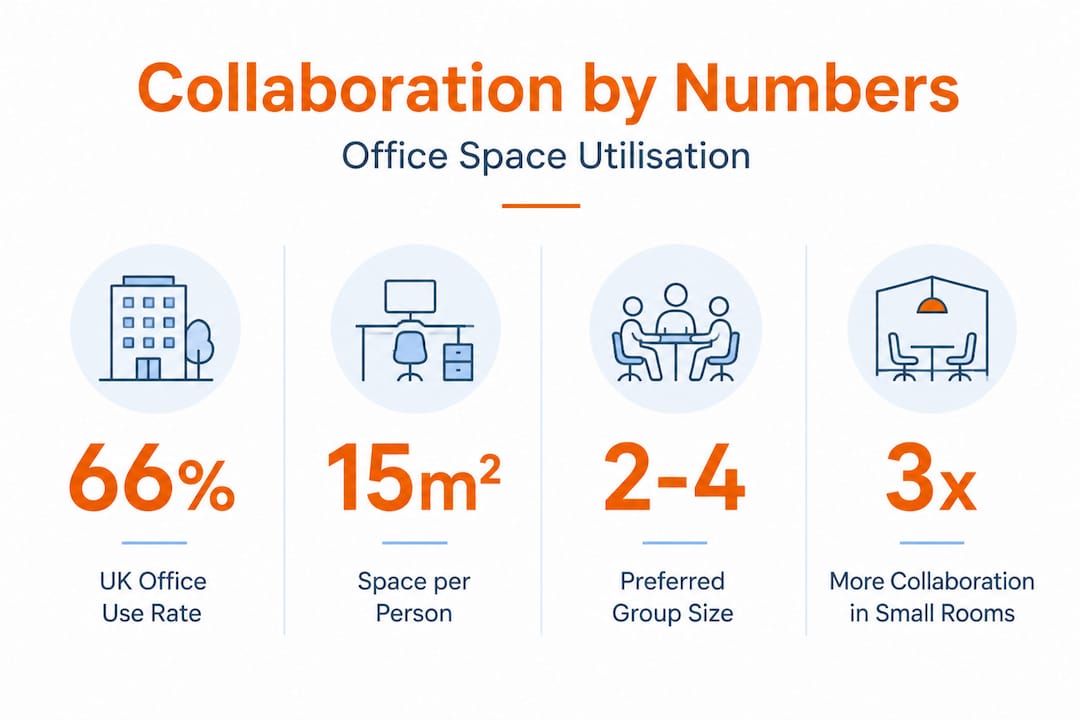
A useful starting point is utilisation benchmarking. UK office utilisation has stabilised at around 66%, with an allocation of approximately 15m² per person, peaking mid-week. Critically, most collaboration happens in small groups of two to four people, which means the instinct to invest in large open zones can actually backfire. Smaller, bookable rooms tend to get more meaningful use than sprawling open-plan areas.
Understanding collaborative office furniture starts with matching furniture types to group sizes. A team of five brainstorming needs something entirely different from a pair of colleagues reviewing a document together. Map out your typical collaboration scenarios before you spend anything.
Here is a quick reference for common group sizes and their furniture implications:
| Group size | Ideal space type | Key furniture needs |
|---|---|---|
| 2 to 4 people | Small breakout room | Modular table, 4 ergonomic chairs, mobile storage |
| 5 to 8 people | Medium meeting room | Extendable conference table, perch stools, writable surface |
| 10 or more | Workshop or training space | Folding tables, stacking chairs, AV support furniture |
| Informal pairs | Lounge or café zone | Soft seating, side tables, perch stools |
Ergonomic compliance is non-negotiable in UK workplaces. If your teams spend sustained time in collaborative settings, Display Screen Equipment (DSE) regulations and UK ergonomic standards apply beyond individual desks. Chairs in meeting rooms and breakout areas must support healthy posture. Poorly specified seating in collaborative zones is a genuine HR liability, not just a comfort issue.
Key requirements to establish before planning:
Pro Tip: Start with your smallest, most frequently used rooms and outfit them with multipurpose furniture first. A well-specced four-person breakout room delivers more productivity per pound spent than a vast open-plan zone that nobody quite knows how to use.
Improving office comfort in collaborative spaces is as important as it is at individual workstations. Do not treat breakout areas as an afterthought.
With your requirements documented, the next step is translating them into a practical zone plan. The goal is not to create one type of space and repeat it everywhere. It is to build a palette of zones that supports different collaboration styles throughout the working day.
Start by mapping your floor plan into four zone types:
The comparison between fixed and flexible layouts is stark once you examine real utilisation data:
| Layout type | Adaptability | Utilisation rate | Furniture cost over 5 years |
|---|---|---|---|
| Fixed open-plan | Low | Variable, often poor | High due to redundancy |
| Fixed meeting rooms | Medium | Moderate | Medium |
| Flexible modular zones | High | Consistently higher | Lower through reuse |
| Hybrid zoned approach | Very high | Best outcomes | Optimal with bulk ordering |
Agile working furniture is the practical answer to shifting team requirements. Height-adjustable tables let a standing brainstorm session convert instantly into a seated review meeting. Modular seating reconfigures to suit two people or ten without any physical effort from facilities teams.
Here is a step-by-step approach to zone planning:
Most collaboration occurs between two and four people, reinforcing why smaller, purpose-built zones outperform large open areas. There is also a compliance angle here. DSE and BS standards extend into lounge and café-style areas. Perch stools in informal zones must still support spinal alignment. Mobile storage units should be easy to reposition without manual handling risks.
Pro Tip: Combine lounge seating with a small team table in the same zone. It gives pairs the comfort of informal seating and groups the structure of a proper table, without needing two separate rooms.
Planning is valuable only if execution is equally thorough. A well-drawn floor plan delivered with the wrong furniture, or the right furniture placed poorly, produces mediocre results. Here is how to convert your zone plan into a functioning collaborative office.
Corporate offices record desk utilisation 13% higher than public sector equivalents, suggesting that private sector investment in flexible, well-specified furniture genuinely moves the needle on space performance.
Common mistakes to avoid during execution:
Ergonomic compliance in lounge and café zones is frequently overlooked. Perch stools and soft seating should still meet BS standards for commercial use and musculoskeletal support. If your HR team ever faces a workplace injury claim traced to inadequate seating in a collaborative area, the fact that it was a “breakout zone” will not shield you from liability.
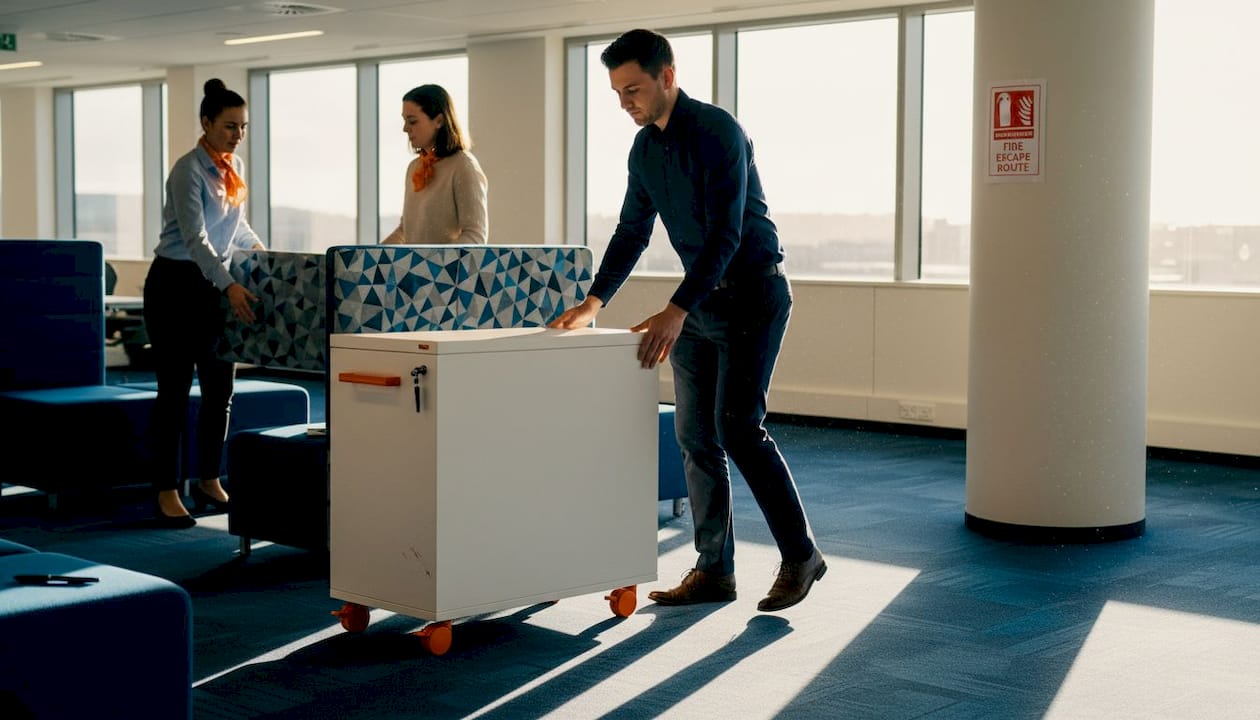
Pro Tip: Integrate mobile storage units with locking castors into every collaborative zone. Staff can reconfigure the layout in seconds, and the units double as impromptu dividers between sub-groups working in the same room.
Once your new design is live, the work is not finished. Spaces that are not monitored quietly slide back into inefficiency. Measuring what you have built is the only way to know whether it is delivering value.
Measuring space utilisation:
Gathering staff feedback:
Iterating on the design:
Exploring current hybrid workplace design trends will give you a strong sense of where leading UK offices are heading. If you are still building your monitoring process from scratch, a structured guide to optimising for hybrid teams will help you establish the right metrics and feedback loops.
A useful verification checklist:
Most articles about collaborative office design start and end in the same place: tear down the walls, open everything up, and collaboration will follow. This assumption has been repeated for years, and it is largely wrong.
The evidence points clearly in the opposite direction. Small rooms are preferred by teams because most real collaboration involves two to four people, not twenty. Large open zones create noise, distraction, and a lack of psychological safety. People do not have honest, creative conversations when they feel observed by the entire office.
What we see in practice is that the businesses achieving the best collaboration outcomes invest less in square footage and more in furniture quality and adaptability. A well-specified small room with height-adjustable tables, ergonomic seating, and mobile storage outperforms a vast open-plan floor every time. It is not about size. It is about suitability.
There is also a pattern worth naming around ergonomic compliance. Many guides mention DSE regulations in passing and then show images of beautifully styled breakout areas with stools and soft seating that would never pass a proper assessment. Ergonomic investment in collaborative zones is not optional, and it is not just about individual workstations. If your teams spend time in those spaces, the furniture must support them properly.
Understanding how office design shapes furniture choices helps you avoid the common trap of letting aesthetics drive decisions that should be driven by function and compliance. Buy furniture that moves, adjusts, and lasts. Not furniture that photographs well but stays in the same position for three years.
The uncomfortable truth is that many UK offices have over-invested in large communal spaces that nobody uses well and under-invested in the small, functional, compliant zones where real collaboration happens every day.
Understanding the principles is one thing. Sourcing the right furniture efficiently and at the right price for your team is another challenge entirely.
At Furniture for Business, we supply ergonomic seating, height-adjustable desks, modular solutions, and commercial storage to UK businesses of all sizes, with free delivery to the UK mainland. Whether you are outfitting a single breakout room or redesigning a floor for 200 people, our bulk order pricing and specialist product ranges make it straightforward to build collaborative zones that comply with DSE standards and flex with your team’s needs. Browse our full catalogue at furnitureforbusiness.co.uk and speak to our team about bespoke project support, easy returns, and phased delivery scheduling.
UK benchmarks suggest approximately 15m² per person, though collaborative zones for small groups are more efficient when designed specifically for two to four people rather than scaled to the whole team.
Follow DSE regulations and BS standards, specify adjustable furniture across all zones including lounges and informal areas, and extend ergonomic standards to perch stools and soft seating used for sustained collaborative work.
Smaller, purpose-built rooms consistently outperform large open zones because most collaboration involves just two to four people and small spaces offer better acoustic control and psychological comfort.
Track zone occupancy through booking data and footfall counts, then benchmark against the national 66% utilisation figure and collect regular staff feedback to identify and resolve underperforming areas quickly.

Phone: 0330 043 4114
VAT no. GB 991 8681 60
Company no. 07250570