TL;DR:
- Choosing the right bistro table involves considering size, materials, and base design to ensure comfort and practicality. Proper clearance around tables is essential for both customer flow and accessibility, especially in commercial settings. Pedestal bases often outperform four-legged options for stability, legroom, and ease of maintenance in tight or busy spaces.
Whether you’re furnishing a café terrace, a compact home kitchen, or a busy restaurant floor, choosing the right bistro table is harder than it looks. The tips for choosing bistro tables that genuinely serve your space go well beyond picking something that looks attractive in a catalogue. You need to weigh up dimensions, materials, base design, layout compliance, and long-term maintenance before a single table arrives. Get any one of those wrong and you’ll feel it every day, in cramped aisles, wobbly surfaces, or furniture that weathers badly after one British winter.
| Point | Details |
|---|---|
| Start with size and clearance | Match table dimensions to seating capacity and allow 30–36 inches of circulation space around each table. |
| Match materials to environment | Choose powder-coated metal or HDPE for outdoors; solid wood or laminate for indoor settings. |
| Base design affects usability | Pedestal bases free up legroom and suit tight spaces better than four-legged alternatives. |
| Plan for compliance | Commercial spaces must meet accessibility standards, including wheelchair clearances and aisle widths. |
| Aesthetics should follow function | Colour, finish, and lighting all influence atmosphere, but only work if the table performs practically first. |
Before anything else, nail down your dimensions. Commercial bistro tables are typically categorised as small (24–30 inches), medium (30–36 inches), or large (36–42 inches) in diameter or width, with each size dictating how many people can sit comfortably. A small 24-inch table works for a solo diner or a tight pavement spot, while a 36-inch table suits a party of four in a relaxed café setting.
The most useful reference point for bistro table size recommendations at the intimate end of the range is this: a 28-inch round table seats two people with enough elbow room for drinks, a plate, and a phone. That single data point should anchor all your sizing decisions for paired seating.
Think about shape too. Round tables remove the awkward corners that can trap diners in tight rooms, making them ideal for small cafés or domestic breakfast nooks. Square tables make better use of floor space when pushed against a wall, and rectangular or oval formats suit longer, more formal settings where guests sit in rows.
Pro Tip: When calculating how many tables fit a room, always work backwards from clearances first. If you start with the table, you’ll squeeze too many in and compromise movement.
Knowing your table size is only half the equation. The space around the table matters just as much. Residential small-space guidance recommends 30–36 inches of clearance between table edges and surrounding walls or furniture. That gives diners room to pull out a chair without bumping into something.
For outdoor settings, the numbers shift slightly. Outdoor clearance standards suggest 24 inches of table width per person and 24–30 inches behind chairs so guests can push back without colliding. Main walkways should be 36–48 inches wide to prevent bottlenecks, particularly where staff or customers pass frequently.
Commercial spaces carry additional responsibility. Recommended clearances in commercial settings sit at 18–24 inches between table edges, with main walkways at 36–42 inches. These aren’t arbitrary numbers. They exist to protect staff, guests, and the operational flow of the space.
The base of a bistro table does more work than most buyers realise. It determines stability, legroom, cleaning ease, and how well the table sits on uneven surfaces. There are four main types worth understanding: pedestal, tripod, four-leg, and cast iron.
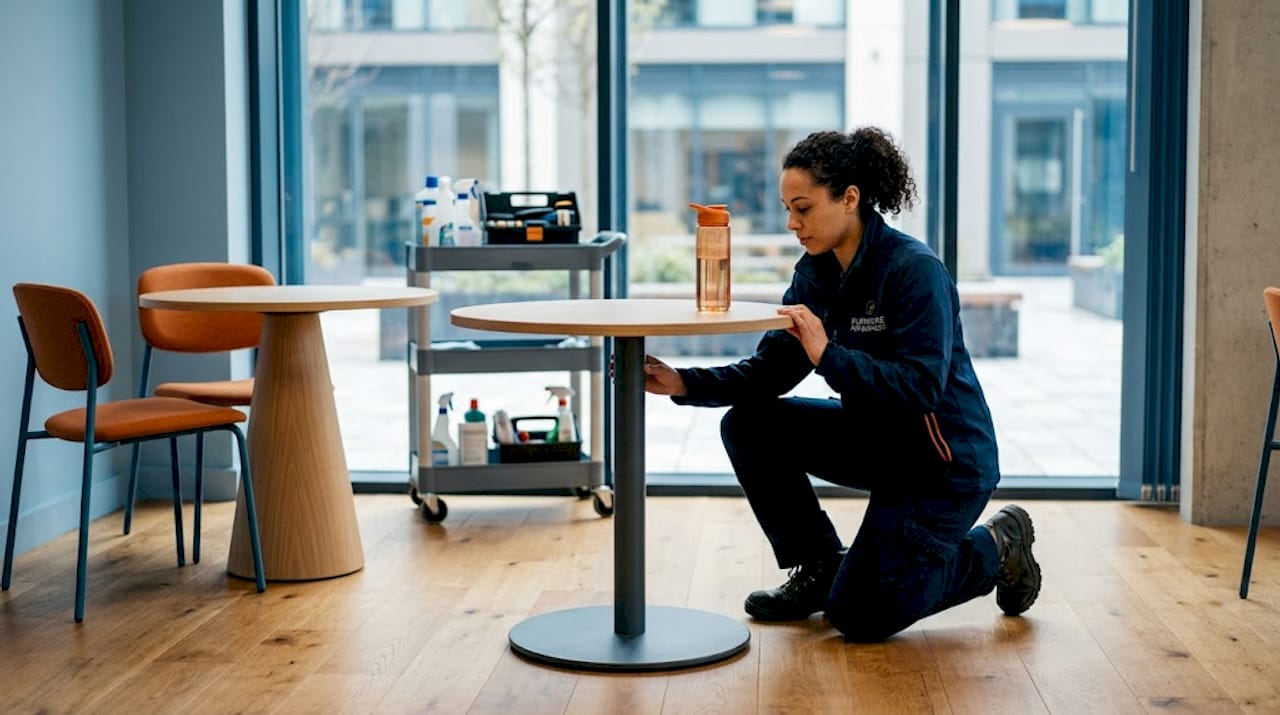
Pedestal bases are the most practical choice for tight spaces. A central column with a weighted bottom keeps the table steady without eating into leg space at the sides. Pedestal bases paired with tops that don’t extend beyond the base footprint deliver the best stability and prevent wobbling. This is the base style you’ll see in most café furniture precisely because it works.
Four-legged bases offer a more traditional aesthetic and tend to feel more visually grounded, but the corner legs intrude on foot space, particularly when two tables are placed close together. Tripod bases split the difference, though they can feel unstable on uneven patio surfaces unless the feet are individually adjustable. Cast iron bases are heavy, durable, and classically styled, making them a favourite for outdoor bistro settings where permanence matters more than mobility.
This is where a lot of buyers go wrong. The best bistro table materials depend almost entirely on where the table will live. The wrong material in the wrong setting means constant upkeep, early deterioration, or surfaces that look tired within a year.
For outdoor use, the shortlist is narrow for good reason:
For indoor use, the range opens up considerably. Solid wood brings warmth and longevity but needs protection from spills in busy hospitality settings. High-pressure laminate is the commercial workhorse: tough, hygienic, and easy to clean. Glass and stone surfaces look striking in upmarket settings but show every fingerprint.
Speaking of which: glossy or reflective tabletop surfaces show fingerprints and dust faster than matte finishes. In a busy café that turns covers quickly, matte laminates simply require less attention during service.
Pro Tip: Before committing to a material, ask yourself honestly how much time you or your team can realistically spend on maintenance each month. Match your material choice to that answer, not to your aspirations.
A bistro table that is the wrong height for its chairs creates genuine discomfort. Standard bistro tables sit at around 71–76 cm, which pairs correctly with chairs or stools with a seat height of 43–46 cm. This gives diners a comfortable elbow-to-tabletop angle without hunching or reaching.
If you are pairing bistro tables with bar stools, the calculation changes entirely. Bar-height tables typically stand at 91–107 cm and require stools with seat heights of 63–76 cm. Mixing standard and bar-height furniture in the same space without clear visual separation creates confusion and poor posture for guests.
For businesses furnishing café or breakout spaces, it is worth considering how bistro seating fits alongside your broader ergonomic seating choices. The same ergonomic principles that govern desk seating, elbow angle, back support, and leg clearance, apply equally to any seated environment where people spend more than a few minutes.
Accessibility is not optional, and it is particularly important for any commercial space open to the public. ADA standards require minimum 36-inch clear route widths and at least 5% of tables to be accessible to wheelchair users. While ADA is a US standard, UK venues follow the Equality Act 2010, which carries equivalent obligations. The practical planning requirements are closely comparable.
This affects more than just one or two tables. It shapes your entire layout. Accessible tables should have knee clearance of at least 69 cm underneath, sufficient for a wheelchair user to pull up comfortably. Aisles leading to accessible tables must remain clear and unobstructed. Planning for this from the outset, rather than retrofitting later, is significantly easier and cheaper.
For businesses arranging café-style seating within office breakout spaces, the same principles apply. A well-considered layout guide on designing café seating can help you map clearances and access routes before you commit to a floor plan.
Once the practical criteria are met, aesthetics become the differentiator between a space that feels considered and one that simply has furniture in it. Colour is more powerful here than most buyers expect. Warm tones in charcoal, terracotta, or natural wood encourage lingering and social interaction. Cooler palettes with grey and white signal efficiency, which suits co-working or quick-service environments.
Base style carries visual weight too. Slim black metal pedestals feel contemporary and light. Ornate cast iron bases with scrollwork lean into a Parisian café aesthetic. Neither is wrong, but they should be chosen deliberately to match the story the space is telling.
Lighting amplifies the effect of every material and finish you select. Lighting levels around 200–300 lux with warm white colour temperatures (2700–3000K) improve dining ambience significantly. Dimmable pendant lighting positioned above bistro table clusters creates intimacy without the harsh overhead glare that makes guests feel they are being processed rather than welcomed.
For bespoke environments where standard dimensions or finishes won’t do, made-to-order furniture gives you complete control over material, colour, size, and base style without compromising on any of those decisions.
This table summarises the key variables to consider when selecting bistro tables for commercial use. Use it as a starting checklist alongside your site measurements.
| Factor | Small (24–30 in) | Medium (30–36 in) | Large (36–42 in) |
|---|---|---|---|
| Seating capacity | 1–2 people | 2–3 people | 3–4 people |
| Best use case | Café counters, balconies | Pavement terraces, breakout zones | Restaurant dining, patios |
| Base recommendation | Pedestal | Pedestal or four-leg | Four-leg or cast iron |
| Material (outdoor) | Powder-coated steel, HDPE | HDPE, teak | Cast iron, sealed stone |
| Material (indoor) | Laminate, solid wood | Laminate, glass | Solid wood, stone |
| Maintenance level | Low to medium | Medium | Medium to high |
For commercial buyers procuring multiple tables, also factor in your full café furniture requirements beyond the tables themselves. Chairs, storage, and accessories form part of the overall experience, and planning them together prevents mismatched finishes and sizing.
I’ve seen more bistro table purchases go wrong at the materials stage than at any other point. Business owners fall in love with a marble or glass top, buy a dozen, and then discover that material choice greatly affects cleaning routines and maintenance costs in ways they hadn’t anticipated. By the third month of wiping down fingerprints between every cover or resealing stone before winter, the aesthetic appeal fades fast.
My strongest piece of advice is to prioritise the pedestal base far more than most guides suggest. In tight hospitality layouts, four-legged bases consistently cause problems: staff trip over feet, chairs don’t pull out cleanly, and tables pushed together leave diners fighting for knee space. A well-weighted pedestal base in the correct size solves all of this without sacrificing visual appeal.
For small business owners balancing style, compliance, and budget, I would always say: buy fewer, better tables rather than filling the room. Space planning that meets accessible route requirements from day one is worth more than an extra table. The room that flows well and seats people comfortably will always outperform the room that squeezes in two extra covers at the cost of everyone’s comfort.
— Furniture
If you’re equipping a commercial space and need furniture that performs as well as it looks, Furnitureforbusiness supplies durable, design-led seating and table solutions to businesses across the UK mainland, with free delivery included.
Whether you are outfitting a café breakout zone, a reception area, or a multi-use hospitality space, the team at Furnitureforbusiness can help you match table dimensions, materials, and base styles to your specific layout. Browse the full seating catalogue for complementary chair options, or consult the 2026 buying guide for broader guidance on durability, materials, and value across commercial furniture categories. Bulk order pricing and easy returns make large-format procurement straightforward.
A 28-inch diameter round table comfortably seats two people with sufficient elbow room. Pedestal bases are recommended for this size to maximise legroom in compact settings.
Powder-coated metal and HDPE are the most practical choices for outdoor use due to their weather resistance and low maintenance. Natural stone and teak are attractive alternatives but require sealing or seasonal care.
Residential settings call for 30–36 inches of clearance around table edges. Commercial spaces should allow 18–24 inches between table edges and 36–42 inches for main walkways to meet safety and flow requirements.
Yes. Under the UK Equality Act 2010, commercial venues must accommodate wheelchair users. In practice this means clear route widths of at least 36 inches, adequate knee clearance under accessible tables, and at least 5% of tables positioned accessibly.
Pedestal bases generally outperform four-legged designs in tight or busy spaces. They maximise legroom, allow chairs to pull out without obstruction, and provide stable support when the top does not exceed the base footprint.

Phone: 0330 043 4114
VAT no. GB 991 8681 60
Company no. 07250570