TL;DR:
- Inefficient office design leads to high idle space and reduced staff productivity in UK businesses.
- A data-driven, flexible layout with activity zones and staff feedback enhances hybrid working effectiveness.
- Regular post-implementation reviews and adaptable furniture drive continuous office performance improvements.
Poor office design is quietly draining productivity across UK businesses. Office utilisation stabilised at 66%, meaning a third of your workspace may be sitting idle while staff struggle to find the right environment for the task at hand. For office managers and procurement teams, that gap between space potential and actual performance represents both a cost and a missed opportunity. A methodical, evidence-based approach to office design can close that gap, improve staff satisfaction, and make hybrid working genuinely effective rather than an afterthought.
| Point | Details |
|---|---|
| Analyse workplace needs | Gather utilisation data and set clear goals before starting your design. |
| Zone for hybrid work | Plan flexible layouts that support both collaboration and focused work. |
| Choose adaptable furniture | Select modular desks, ergonomic seating, and smart tech for versatility. |
| Review and adjust | Continuously collect feedback and refine your office for ongoing productivity. |
Every successful office redesign begins with honest answers to two questions: what does your business need from this space, and what do your people actually experience day to day? These are not the same question, and conflating them leads to layouts that look good on paper but frustrate everyone who uses them.
Start by identifying your primary business goals. Are you prioritising focused individual work, cross-team collaboration, or maximum flexibility for a rotating hybrid workforce? Each goal points to different spatial priorities. Once you have a clear direction, gather staff feedback through structured surveys or informal workshops. You will often uncover pain points that management has normalised, such as a lack of quiet zones, poor acoustics near collaborative areas, or insufficient storage near workstations.
Next, analyse your utilisation data. The BCO’s 2025 guidance recommends flexible spaces, human-centric design, smart technology, and a circular economy approach to achieve net zero targets. These are not aspirational extras; they are practical frameworks for modern fit-outs. A thorough space planning guide can help you translate raw data into actionable decisions.
| Metric | Current figure | Target figure |
|---|---|---|
| Total capacity (desks) | 120 | 100 (hot-desking) |
| Peak occupancy (Tue–Thu) | 40% | 70% |
| Average utilisation rate | 66% | 80% |
| Staff satisfaction score | 58% | 80% |
Key pain points typically discovered at this stage include:
Understanding how productivity impacts relate to physical environment will sharpen your objectives considerably.
Pro Tip: Run a short staff survey every quarter rather than waiting for a major refurbishment cycle. Small, ongoing insights prevent large, expensive problems.
With objectives and needs clearly outlined, the next stage is to lay out the space to enable new ways of working. Activity-based working is not simply a trend; it is a practical response to the reality that different tasks require radically different environments.
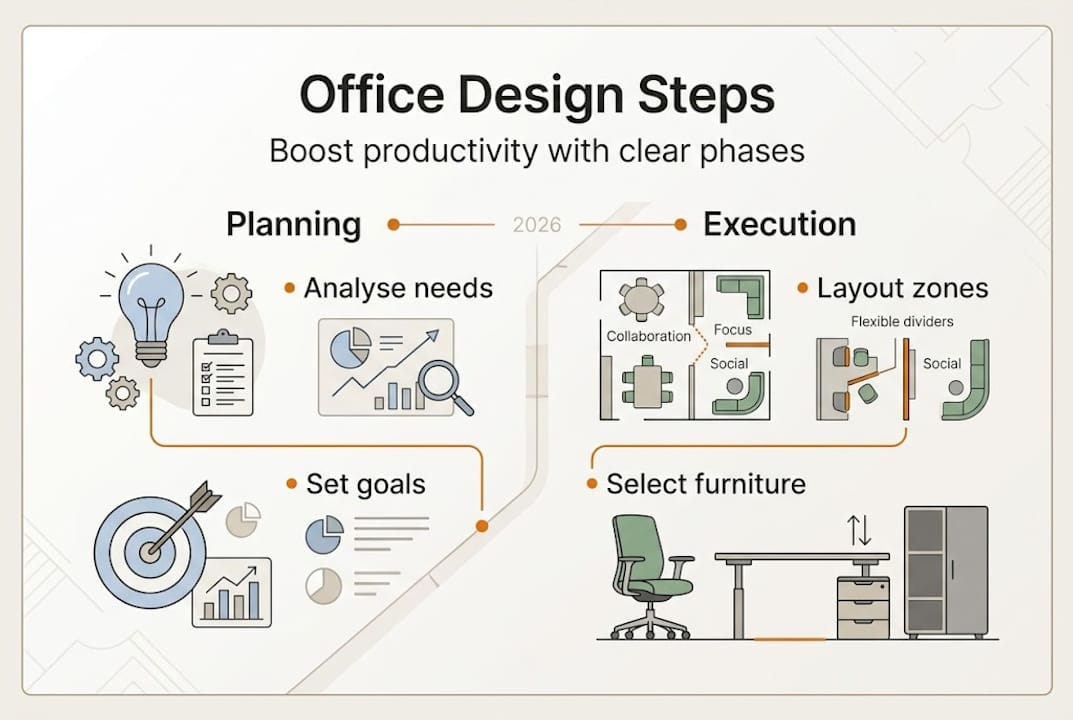
Research shows that hybrid working two to three days per week boosts productivity by 5%, improves job satisfaction, and supports better work-life balance, while the office remains the superior environment for collaboration. Your layout must reflect this dual purpose.
Essential activity zones to plan for include:
| Feature | Traditional layout | Hybrid layout |
|---|---|---|
| Desk allocation | Fixed, 1:1 ratio | Hot-desking, 0.7:1 ratio |
| Space efficiency | Low (66% avg use) | High (target 80%+) |
| Flexibility | Minimal | High, modular |
| Cost per sq metre | Higher long-term | Lower with smart zoning |
To plan your layout effectively:
The BCO’s guidance on hybrid facilitation specifically recommends flexible spaces and human-centric design as the foundation of any new fit-out.
Pro Tip: Modular furniture systems let you reconfigure zones in hours rather than days, making it far easier to respond to shifting team sizes or seasonal demand.
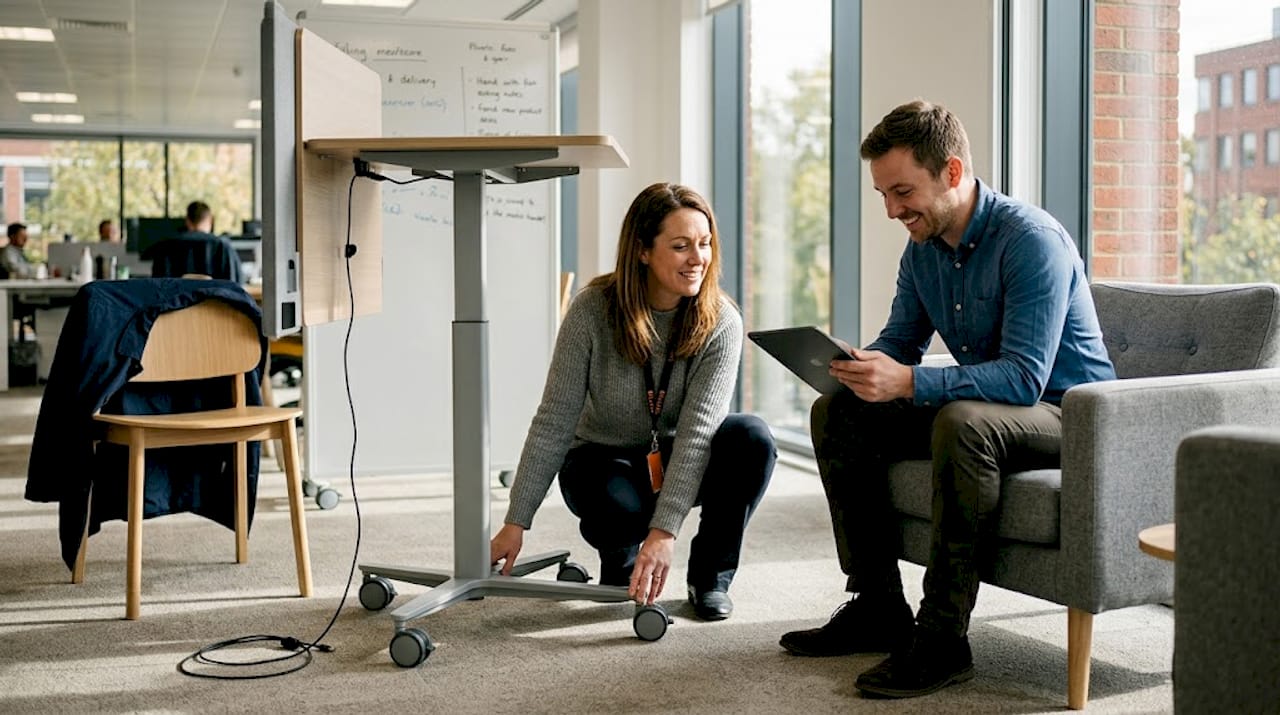
Zoning provides a clear map, but the next step is selecting furniture and technology that bring those plans to life. The wrong furniture can undermine even the most thoughtfully designed layout, while the right choices actively support the behaviours you want to encourage.
For hybrid offices, the core furniture types to prioritise are:
On the technology side, wireless AV systems, smart desk booking platforms, and integrated power and data points are no longer optional extras. The BCO recommends smart technology and human-centric design as central to modern office fit-outs, and the data backs this up. With only 66% of office space in active use, flexible and reconfigurable furnishings are the most effective way to extract value from your existing footprint.
When evaluating any piece of furniture or technology, apply these four criteria:
Exploring smart office furniture options early in the process will save significant rework later. A well-structured furniture workflow guide can also help sequence your procurement decisions logically.
Pro Tip: Specify contract-grade, sustainably sourced pieces from the outset. They cost more upfront but last significantly longer, reducing total cost of ownership and supporting your environmental reporting.
With everything specified, it is time to put your plan into action and make ongoing improvements. Implementation is where many projects stall, not because of poor planning, but because the rollout lacks structure and the review phase is treated as optional.
Follow these steps for a smooth launch:
“A 5% productivity gain is achievable with the right environment, but only if the environment is actively managed after launch.”
The evidence supports ongoing review. Hybrid work boosts productivity by 5%, and structured feedback cycles amplify those gains further. Collect staff feedback formally through quarterly surveys and informally through team leads. Monitor key metrics including utilisation rates, satisfaction scores, and meeting room attendance patterns.
Then act on what you find. If a focus zone is consistently overcrowded, expand it. If a collaboration hub sits empty, investigate whether the furniture or the location is the barrier. The ability to track design impact over time is what separates a one-off refurbishment from a genuinely high-performing workspace.
Most office design guides treat installation as the finish line. In our experience, it is closer to the starting pistol. The real productivity gains come not from the initial layout but from what happens in the weeks and months after your team moves in.
Here is the uncomfortable truth: most businesses allocate budget for furniture and fit-out, then nothing for the adjustments that inevitably follow. A zone that looked perfect on a floor plan may feel wrong in practice. A collaboration hub placed near a busy walkway becomes a distraction rather than an asset. Without a structured review process, these issues become permanent features of your working environment.
The businesses that see sustained improvement are those that treat office design as a living system rather than a completed project. They set quarterly feedback cycles, they budget for minor reconfigurations, and they empower their office managers to act on what the data shows. Investing in durable office choices from the outset makes this easier, because high-quality modular pieces can be repositioned without replacement.
The mindset shift is simple but powerful: your office design is never finished, it is only ever improving.
Having seen the value of a post-implementation approach, here is how to put your office redesign into practice with professional solutions. At Furniture for Business, we supply contract-grade furniture to UK businesses of all sizes, with free delivery to the UK mainland and bulk order pricing to suit procurement budgets.
Whether you are fitting out a single floor or a multi-site estate, our ranges cover every phase of the design process. Browse our office storage options for flexible, space-saving solutions, explore our full range of office desks including height-adjustable models, or find the right ergonomic office chairs to support your team’s wellbeing. Our specialist team is on hand to help you match products to your specific zones and budget.
The average UK office allocates approximately 15 square metres per occupant as of 2026, down from the previous standard of around 20 square metres as hybrid working reduces peak headcount.
Hybrid working requires flexible zones and smart technology to maximise space use on peak days and support both collaborative and focused work throughout the week.
Modular desks, ergonomic chairs, acoustic pods, and wireless AV technology are the core requirements. Human-centric design and smart furniture ensure the environment supports the varied needs of a rotating workforce.
Track utilisation rates, staff satisfaction scores, and collaboration frequency after implementation. Hybrid working boosts productivity by 5% when the environment is well-designed, making these metrics a reliable indicator of whether your layout is delivering results.

Phone: 0330 043 4114
VAT no. GB 991 8681 60
Company no. 07250570