TL;DR:
- Visitor seating choices reflect your business’s professionalism and compliance with UK safety standards.
- Properly selected chairs should be durable, hygienic, and suited for short-term use in high-traffic areas.
- Strategic, compliant, and well-designed guest seating enhances impressions and supports brand reputation.
Visitor chairs are often treated as an afterthought, ordered in bulk to fill a reception area or squeezed into a meeting room without much thought. That approach is a mistake. The seating you offer guests, clients, and interviewees sends a clear message about your business before a single word is spoken. It also carries real legal weight under UK standards, and getting it wrong can expose your organisation to liability. This guide covers everything you need to know: what visitor seating actually is, the standards that govern it, the styles and materials worth considering, and how to make the right choice for your specific environment.
| Point | Details |
|---|---|
| Compliance is key | Meeting British Standards (BS EN 16139/15373) protects against injury, liability, and reputational risk. |
| Style meets function | Choose designs and materials that fit your brand and operational needs, focusing on both appearance and usability. |
| Durability matters | Select chairs rated for contract use with strong frames, warranties, and easy-clean upholstery for high-traffic areas. |
| Visitor experience counts | Thoughtful seating choices send a message of care and professionalism to guests and partners. |
Visitor seating refers to chairs designed for guests, clients, interviewees, or any person who is not a regular member of staff using a workstation. These chairs are typically placed in reception areas, waiting rooms, meeting rooms, conference suites, and breakout spaces. They are not intended for all-day use by a single occupant, which is what separates them from operator or task chairs.
The distinction matters more than most people realise. An office chair comparison will show you that task chairs are built around prolonged daily use, with adjustable lumbar support, seat depth, and armrest height to accommodate individual body types over an eight-hour working day. Visitor chairs, by contrast, are optimised for shorter periods of use, consistent aesthetic appeal, and durability across many different users.
Here is what visitor seating must balance:
As detailed in operator seating explained, operator chairs are built for the individual. Visitor chairs are built for the many. That shift in design philosophy affects everything from frame construction to upholstery choice.
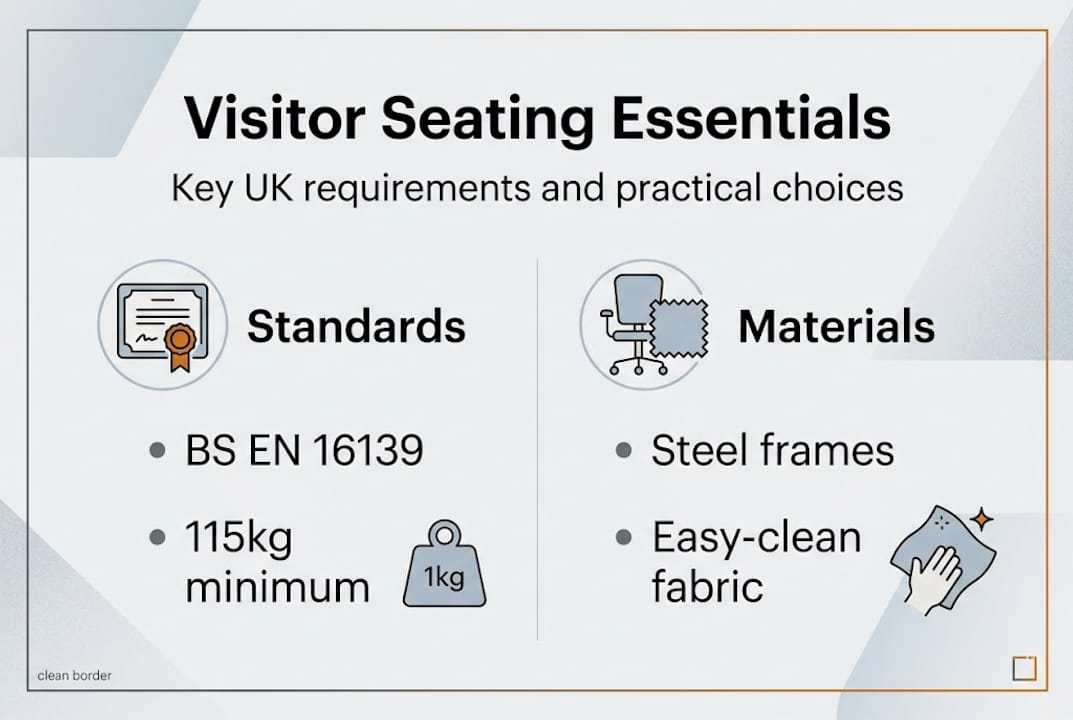
It is also worth noting that visitor seating carries formal regulatory requirements in the UK. BS EN 16139:2013 sets out safety, strength, and durability requirements for non-domestic seating, covering tests for stability, shear points, and seat loading up to 110kg user weight. This is not optional guidance. It is the benchmark your procurement team should reference before any purchase.
Pro Tip: Always ask suppliers to confirm which BS EN standard their visitor chairs are certified to before placing a bulk order. A chair that looks the part but fails the standard creates legal exposure and reputational risk.
With the basics in place, it is essential to understand what UK law and best practice require for visitor seating. Two standards sit at the centre of this: BS EN 16139:2013 and BS EN 15373:2016. Both apply to non-domestic seating used in contract environments, which includes offices, hotels, healthcare facilities, and hospitality venues.
BS EN 16139:2013 covers safety, strength, and durability for non-domestic seating, with specific tests for stability, shear points, and seat loading. BS EN 15373 focuses on contract use levels, with Level 2 certification confirming suitability for 8-hour daily use in contract environments.
| Standard | Focus area | Use case |
|---|---|---|
| BS EN 16139:2013 | Safety, strength, durability | All non-domestic seating |
| BS EN 15373 Level 2 | Contract durability | High-traffic office/hospitality |
| BS EN 15373 Level 3 | Intensive contract use | Public buildings, transport hubs |
For most UK offices and corporate hospitality settings, Level 2 certification is the minimum you should accept. High-traffic reception areas or venues with significant daily footfall may warrant Level 3.
Material choice also affects compliance. Upholstery that cannot be adequately cleaned creates hygiene risks, particularly in healthcare-adjacent or food-service environments. Wipe-clean vinyl and PU leather are popular precisely because they satisfy both durability and hygiene requirements. Fabric can work well in lower-traffic meeting rooms but requires more rigorous maintenance protocols.
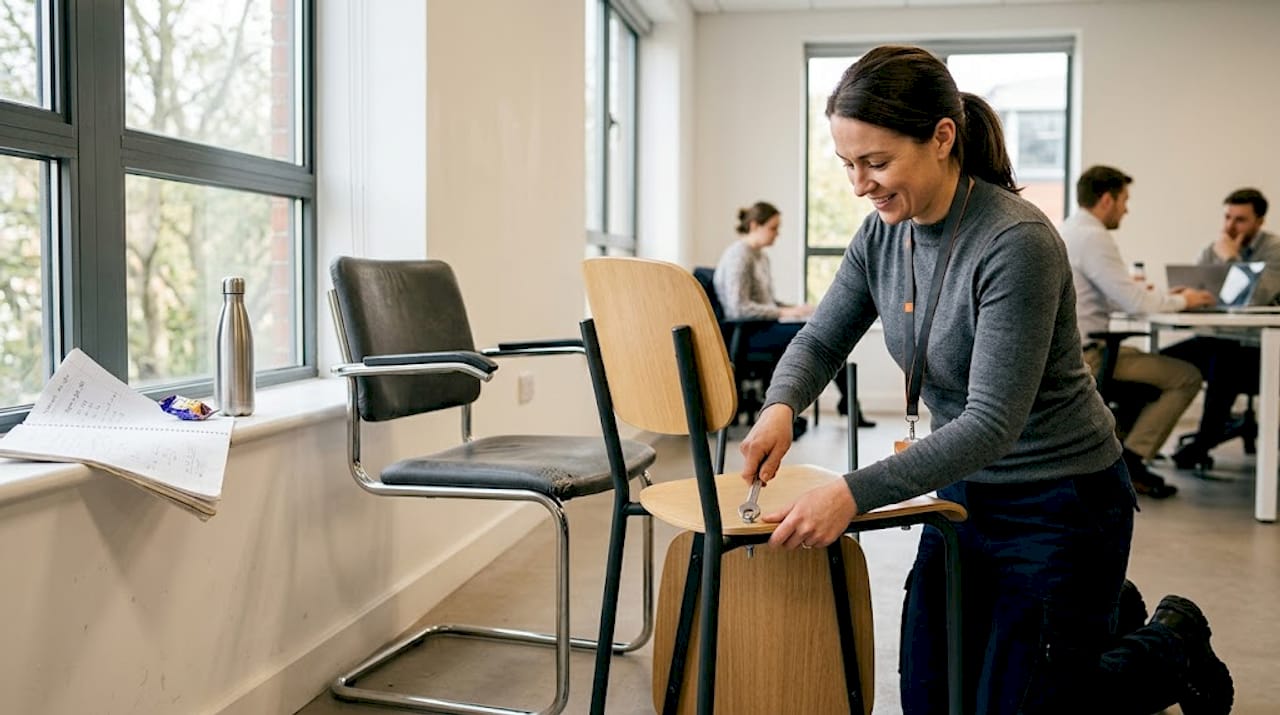
Frame construction matters too. Steel and cantilever frames are the most common in contract-grade visitor seating because they offer consistent load distribution and long service life. Many manufacturers back these with five-year warranties, which is a useful indicator of confidence in the product’s durability.
A minimum weight capacity of 115kg is the HSE-recommended benchmark for contract visitor seating. Chairs that fall short of this create liability exposure, particularly in public-facing environments.
Pro Tip: When reviewing UK meeting room standards for a refurbishment project, cross-reference your visitor seating spec against the same compliance checklist you use for conference tables. Consistency across your environment reduces procurement errors and strengthens your audit trail. Also review lounge seating compliance if your reception includes soft seating zones.
Compliance is crucial, but function and design can set your space apart. The visitor seating market offers a wide range of styles, and understanding the trade-offs helps you make a decision that serves both your brand and your practical needs.
The four main chair types used in UK visitor settings are:
Material selection is where many procurement decisions go wrong. Here is a quick comparison:
| Material | Durability | Hygiene | Aesthetic | Best for |
|---|---|---|---|---|
| PU leather | High | Excellent | Professional | Client-facing, reception |
| Vinyl | High | Excellent | Functional | Healthcare, hospitality |
| Fabric | Medium | Moderate | Warm, collaborative | Meeting rooms, breakout |
| Mesh | Medium | Good | Modern | Informal waiting areas |
As the BS EN 16139 standard makes clear, compliance should lead the decision, not aesthetics. A fabric chair that looks inviting but cannot be adequately sanitised is a liability in a high-footfall environment.
“The best visitor chair is the one your guests never think about. It supports them, suits the space, and disappears into the background. That invisibility is the point.”
For a closer look at sled base reception chairs or to explore design-led soft seating for lounge zones, the options available cover a broad range of contract-grade styles suited to UK offices and hospitality venues.
With an understanding of the available styles and functions, it is time to put knowledge into action. Selecting visitor seating is not a single decision. It is a process that starts with understanding your environment and ends with a specification that will serve your business for years.
Follow these steps to get it right:
Pro Tip: Before placing a bulk order, request samples and seat-test them with a range of colleagues. What feels comfortable in a showroom photograph may not work for your actual visitors. Physical testing takes twenty minutes and can prevent a costly mistake.
For spaces that also require ergonomic staff seating, reviewing best ergonomic seating options alongside your visitor chair selection ensures a coherent, well-specified environment.
Most procurement guides stop at compliance and aesthetics. We think that misses the bigger picture.
Visitor seating is one of the few physical touchpoints in your business that almost every external stakeholder experiences. A candidate sitting in your reception before an interview, a client waiting before a pitch, a supplier attending a meeting: all of them form an impression based partly on where they sit. Poor seating is noticed and remembered. Good seating becomes invisible comfort, which is exactly what you want.
We have seen offices invest heavily in executive furniture and standing desks while leaving reception chairs that wobble and creak. The result is a jarring inconsistency that undermines the brand story the rest of the space is trying to tell.
Strategic visitor seating also affects staff. When employees see that the business invests in the experience of guests, it signals care and professionalism. That matters for morale and for how staff represent the company to visitors.
The right office seating strategy treats every chair as a brand asset, not just a functional object. That shift in thinking changes what you buy, how much you spend, and what you get in return.
If you are ready to make your next seating decision count, here is where to start.
At Furniture for Business, we supply contract-grade office chair solutions designed for UK offices, reception areas, and hospitality environments. Our range includes sled base, cantilever, and stackable visitor chairs certified to BS EN standards, with upholstery options to suit every environment. We also offer a full selection of meeting room furniture to complement your visitor seating, from conference tables to breakout sofas. Explore the full office furniture range with free delivery to the UK mainland, bulk order pricing, and expert guidance from our team.
Visitor seating is for guests or temporary use, while operator seating is designed for everyday staff and prioritises adjustability and ergonomic support for prolonged daily use.
Visitor seating must comply with BS EN 16139:2013 or BS EN 15373:2016, which cover strength, durability, and safety requirements for non-domestic contract environments.
A minimum weight capacity of 115kg is the HSE-recommended benchmark for contract visitor seating used in UK offices and public-facing environments.
PU leather and vinyl are the most practical choices for wipe-clean, hygienic surfaces in high-traffic corporate and hospitality settings.

Phone: 0330 043 4114
VAT no. GB 991 8681 60
Company no. 07250570