Many UK office managers struggle with cramped spaces and budget overruns when furnishing offices. Choosing the right furniture impacts productivity and employee wellbeing significantly. Poor planning leads to costly mistakes, yet structured guidance can transform your workspace into a functional, comfortable, and stylish environment that boosts team performance and satisfaction.
| Point | Details |
|——-|———||
| Ergonomic furniture reduces health risks | Proper chairs and desks lower back pain complaints and improve comfort. |
| Phased procurement cuts downtime | Implementing phased furniture procurement reduces downtime by up to 40%. |
| Quality budgeting ensures durability | Investing in long-lasting furniture saves money over 7-10 year lifespans. |
| Avoiding layout pitfalls boosts productivity | Smart planning enhances workspace efficiency by up to 20%. |
| Success measured through metrics | Track employee wellbeing, project timelines, and workspace usability. |
Measure your office space accurately before purchasing any furniture. Walk through each area and note employee work styles, traffic flow, and collaboration zones. Understanding these elements prevents cramped layouts and wasted investments.
Define clear budget ranges based on your refurbishment scale. Furniture typically accounts for 6-12% of total refurbishment costs. Allocate funds for essentials first, then add optional items as budget allows.
Consult UK ergonomic and health safety guidelines from the Health and Safety Executive (HSE). These standards protect employees from musculoskeletal disorders and ensure compliance with workplace regulations. Familiarize yourself with recommended desk heights, chair adjustments, and screen positioning.
Essential planning checklist:
Set realistic timelines and procurement policies to guide project flow. Consider lead times for custom orders, delivery schedules, and installation requirements. Establish goals aligned with business needs and employee wellbeing to maintain focus throughout the project.
Timeline milestones to consider:
Start with ergonomic chairs featuring adjustable lumbar support, armrests, and seat height. These foundational pieces directly impact employee comfort and reduce health complaints. Pair chairs with height-adjustable desks that accommodate sitting and standing positions throughout the day.
Integrate flexible furniture to support collaboration zones. Modular seating, mobile whiteboards, and reconfigurable tables adapt to changing team needs. This flexibility promotes creativity and improves meeting efficiency.
Incorporate efficient office storage solutions to maximize space. Filing cabinets, shelving units, and desk organizers reduce clutter and improve workspace organization. Storage should be easily accessible without creating obstacles in walkways.
Use phased procurement strategies to limit operational downtime. Purchase and install furniture in stages rather than all at once. This approach keeps parts of your office functional while upgrades occur elsewhere.
Phased procurement timeline:
Pro Tip: Schedule furniture installation during off-peak hours or weekends to minimize disruption to daily operations and maintain productivity levels.
Plan layout to match work needs and promote employee comfort. Position desks to reduce screen glare from windows. Create clear pathways between workstations. Allow adequate personal space to prevent feelings of overcrowding.
| Furniture Type | Placement Priority | Space Allocation |
|---|---|---|
| Ergonomic chairs | Individual workstations | 1.5-2m² per seat |
| Height-adjustable desks | Primary work areas | 2-3m² per desk |
| Storage units | Perimeter walls | 0.5-1m² per unit |
| Collaboration tables | Central zones | 3-5m² per table |
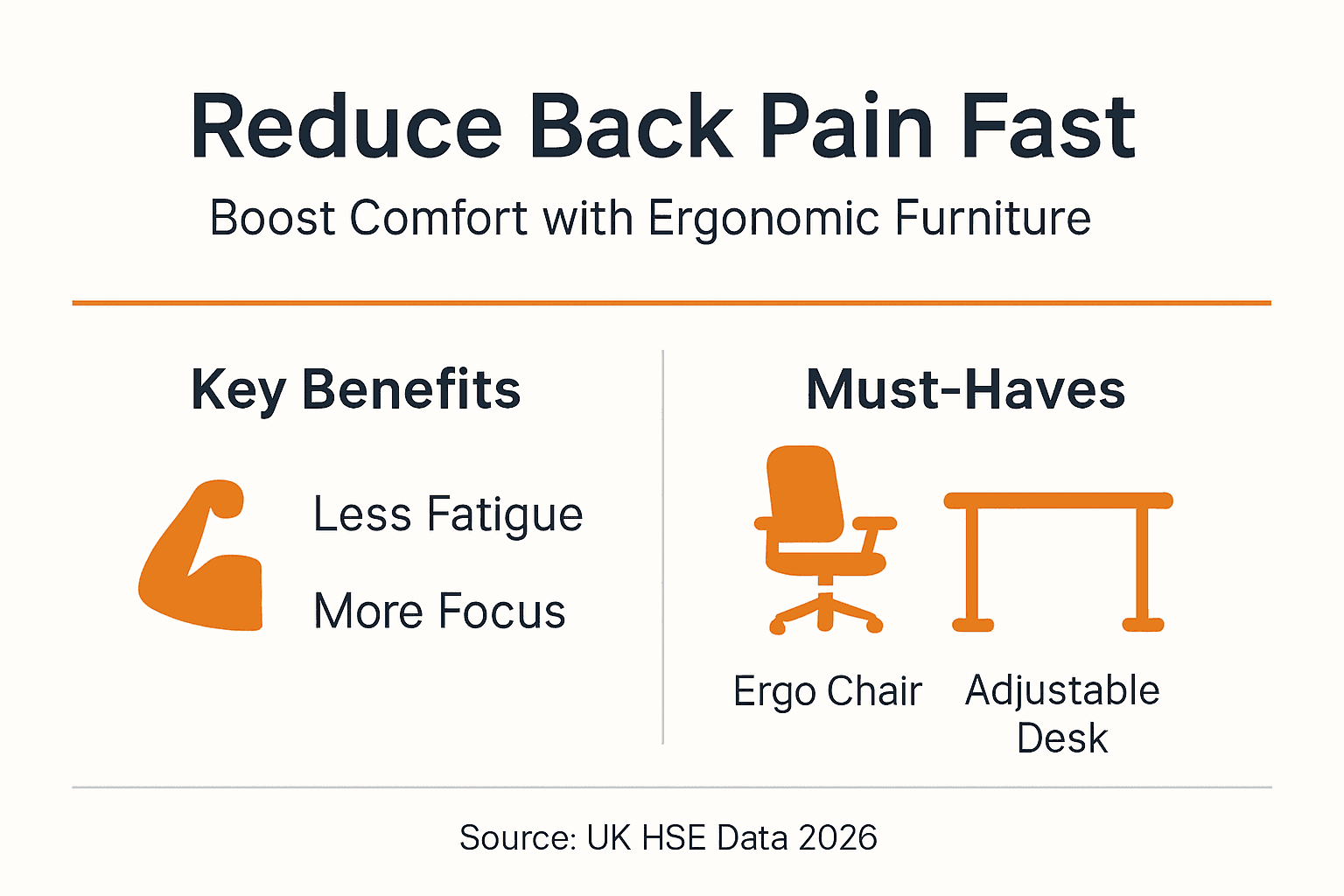
Choosing office chairs with adjustable lumbar support reduces back pain complaints by 30% among employees. Look for chairs with multiple adjustment points including seat depth, backrest angle, and armrest height. Quality mechanisms ensure smooth adjustments that employees actually use.

Height-adjustable desks boost alertness and reduce sedentary time by enabling movement throughout the workday. Employees can alternate between sitting and standing positions, improving circulation and reducing fatigue. Electric or manual mechanisms should operate quietly and smoothly.
Compliance with UK HSE guidelines reduces musculoskeletal disorder risk by 25%. Poor office furniture increases injury rates and absenteeism significantly. Investing in ergonomic office chairs and height-adjustable desks protects your workforce and reduces healthcare costs.
Pro Tip: Provide employees with brief training on adjusting their chairs and desks properly to maximize ergonomic benefits and prevent misuse.
Choosing furniture with health benefits improves employee comfort and productivity. Breathable mesh backrests prevent overheating. Waterfall seat edges reduce pressure on thighs. Contoured armrests support forearms without restricting movement.
| Feature | Traditional Furniture | Ergonomic Furniture |
|---|---|---|
| Lumbar support | Fixed or absent | Adjustable height and depth |
| Desk height | Static 72-75cm | Adjustable 60-125cm |
| Back pain reduction | Baseline | 30% improvement |
| Employee satisfaction | Standard | 20% higher |
| Compliance cost | Lower initial | Lower long-term |
Employees spend over 1,800 hours annually at their desks. Ergonomic furniture transforms this time into a health investment rather than a risk factor.
You can explore detailed guidance on choosing office chairs to further reduce absenteeism and improve workplace wellness across your organization.
Furniture typically accounts for 6-12% of total refurbishment budget in UK office projects. Calculate your available funds based on overall renovation scope. Prioritize ergonomic essentials over decorative pieces to maximize value.
Consider durability and lifespan when comparing options. Quality office furniture lasts 7-10 years with proper maintenance. Cheap alternatives may need replacement within 3-5 years, ultimately costing more through repeated purchases and disposal fees.
Leverage free shipping and easy returns to reduce risks. Many suppliers offer mainland UK delivery at no charge. Return policies protect you from purchasing errors or defective items. Confirm these terms before placing large orders.
Budget allocation guidelines:
Plan phased procurement to minimize downtime and cost impact. Spreading purchases across quarters smooths cash flow and allows budget adjustments. You can test furniture performance before committing to large quantities.
Average office furnishing project timelines range from 3 to 8 weeks depending on office size and complexity. Factor delivery lead times, installation schedules, and employee orientation when setting deadlines. Buffer time prevents rushed decisions that exceed budgets.
Explore office furniture cost alternatives to find competitive pricing and maximize your investment without sacrificing quality or employee comfort.
Underestimating space leads to cramped offices in 35% of furnishing projects. Measure carefully and account for circulation areas, door swings, and emergency exits. Fix overcrowding by removing excess furniture or switching to compact designs.
Ignoring ergonomic features risks musculoskeletal disorders among employees. Adopt compliant furniture that meets HSE guidelines. Retrofitting ergonomic solutions costs more than planning them from the start.
Common mistakes to avoid:
Single-batch purchases increase downtime during installation. Phased procurement reduces operational disruption and maintains business continuity. Spread orders across multiple deliveries to keep some areas functional throughout the project.
Mismatched style and function causes inefficiency and employee dissatisfaction. Balance aesthetics with practical needs. Beautiful furniture that fails ergonomic standards wastes money and harms productivity.
Pro Tip: Create mockup layouts using cardboard or tape on floors before ordering to visualize traffic flow and identify spacing issues early.
Plan installation and delivery timing carefully to avoid project delays. Coordinate with building management for loading dock access. Schedule deliveries when staff levels are lowest to minimize disruption.
Learn from smart office furniture pitfalls that have derailed projects and apply these lessons to your planning process.
Ergonomic layouts can boost productivity by up to 20% through improved comfort and reduced fatigue. Employees work more efficiently when furniture supports proper posture and movement. You’ll notice faster task completion and fewer breaks for discomfort.
Proper ergonomic chairs reduce back pain complaints by 30% within the first three months of implementation. Track employee feedback and health metrics to confirm improvements. Reduced absenteeism and healthcare claims demonstrate return on investment.
Typical projects complete within 3 to 8 weeks from initial planning to final setup. Efficient project management keeps timelines on track and budgets controlled. Document milestones and adjust plans as needed.
Flexible layouts increase employee collaboration and engagement by over 20%. Adaptable furniture supports various work styles and team configurations. Monitor meeting effectiveness and creative output as indicators of success.
| Success Metric | Baseline | Target Improvement | Measurement Method |
|---|---|---|---|
| Employee back pain complaints | 100% | Reduce by 30% | Monthly health surveys |
| Project completion time | 12 weeks | 3-8 weeks | Timeline tracking |
| Workspace satisfaction | 65% | Increase to 85% | Employee feedback forms |
| Productivity output | Baseline | Increase by 20% | Performance metrics |
| Budget adherence | Variable | Within 5% variance | Financial reporting |
Success measured via employee wellbeing surveys, punctual project completion, and workspace usability assessments. Collect feedback regularly and make adjustments. Continuous improvement ensures long-term satisfaction with your office furnishing investment.
Transforming your office starts with the right furniture partner. Furniture For Business offers ergonomic chairs, adjustable desks, and smart storage tailored specifically for UK offices and professional environments.
Our products comply with HSE standards to enhance employee comfort and productivity. You’ll find stylish, durable furniture designed for 7-10 year lifespans that protect your investment. Every piece balances aesthetics with practical functionality.
Explore phased purchasing options to align with your project timeline and budget. Free UK mainland shipping and easy returns reduce risk and simplify procurement. Our team understands the challenges office managers face and provides solutions that work.
Visit our website to shop ergonomic office chairs, browse height-adjustable desks, and discover office storage solutions that suit your office setup needs perfectly.
Most office furnishing projects complete within 3 to 8 weeks depending on office size and complexity. Plan for measurement and assessment in week one, vendor selection by week two, furniture production through week five, and installation by weeks six through eight.
Ergonomic chairs feature adjustable lumbar support, seat depth, armrest height, and backrest angle that standard chairs lack. These adjustments reduce back pain complaints by 30% and support proper posture throughout the workday.
Allocate 6-12% of total refurbishment budget to furniture and prioritize ergonomic essentials first. Use phased procurement to spread costs across quarters and leverage free shipping offers to reduce expenses.
Replace furniture showing visible wear like torn upholstery, broken adjustment mechanisms, or wobbly frames. Increased employee complaints about discomfort or rising absenteeism due to musculoskeletal issues also signal replacement needs.
Implement phased procurement to keep portions of your office operational throughout the project. Schedule deliveries and installations during off-peak hours or weekends to minimize impact on daily business activities.

Phone: 0330 043 4114
VAT no. GB 991 8681 60
Company no. 07250570