TL;DR:
- Furnishing a bistro involves careful planning of layout and choosing commercial-grade furniture for durability and efficiency. Proper space measurement, circulation planning, and mockup testing ensure smooth service flow and optimal seating capacity. Using high-quality, adaptable furniture and accounting for extra pieces help prevent costly mistakes and support flexible operation.
Furnishing a bistro is the process of selecting and arranging commercial-grade furniture to create a space that supports efficient service, maximises covers, and keeps guests comfortable enough to return. The step by step furnishing bistro process is not simply about aesthetics. A well-planned layout directly affects staff workflow, table turnover, and revenue. A realistic budget for restaurant furniture ranges from £150 to £400 per cover depending on venue tier and materials. That figure underlines why every decision, from floor plan to chair type, must be deliberate before a single order is placed.
Layout planning is the foundation of every successful bistro fit-out. Get this wrong and no amount of attractive furniture will fix the operational problems that follow.
Draw your space to scale, marking every fixed element: doors, windows, columns, service stations, and kitchen pass-throughs. These elements dictate where furniture can and cannot go. Skipping this step is the single most common mistake first-time operators make.
A circulation spine is the main walkway running through the venue that guests and staff use constantly. Minimum 36-inch aisle widths improve staff workflow and reduce fatigue. That measurement is not a suggestion. It is the baseline below which service breaks down during a busy lunch service.
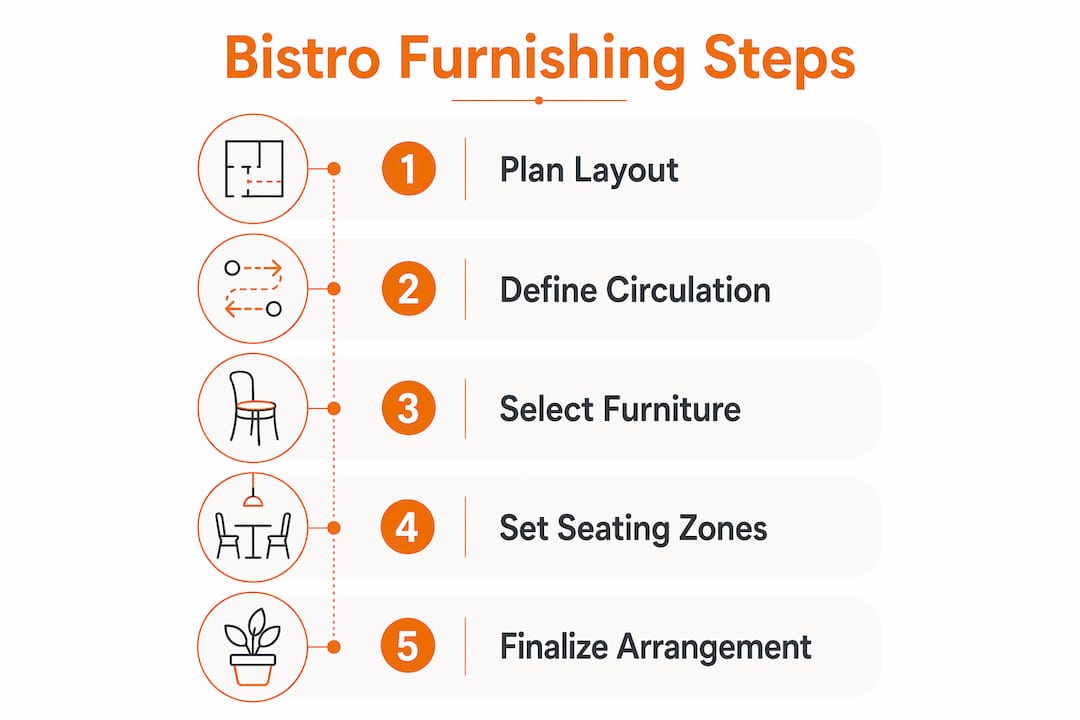
Divide the floor plan into zones: window seats, central tables, bar counter, and any outdoor terrace. Each zone serves a different guest type and service rhythm. Window seats suit couples and solo diners. Central tables handle groups and can be pushed together for larger parties.
Here is a practical sequence to follow:
Pro Tip: Use painter’s tape on the floor to simulate table and chair footprints. Walk the space as a guest and then as a server carrying a tray. You will spot bottlenecks that no floor plan drawing reveals.
Using floor-marking mockups before installation prevents costly layout mistakes. This practice is standard in professional fit-outs and takes less than a day to complete.
The difference between commercial-grade and residential furniture is not cosmetic. Commercial furniture requires metal-frame construction with weight capacities above 250lb and reinforced joints. Residential pieces fail quickly under the stress of multiple seatings per day, repeated cleaning with commercial chemicals, and the general wear of public use.
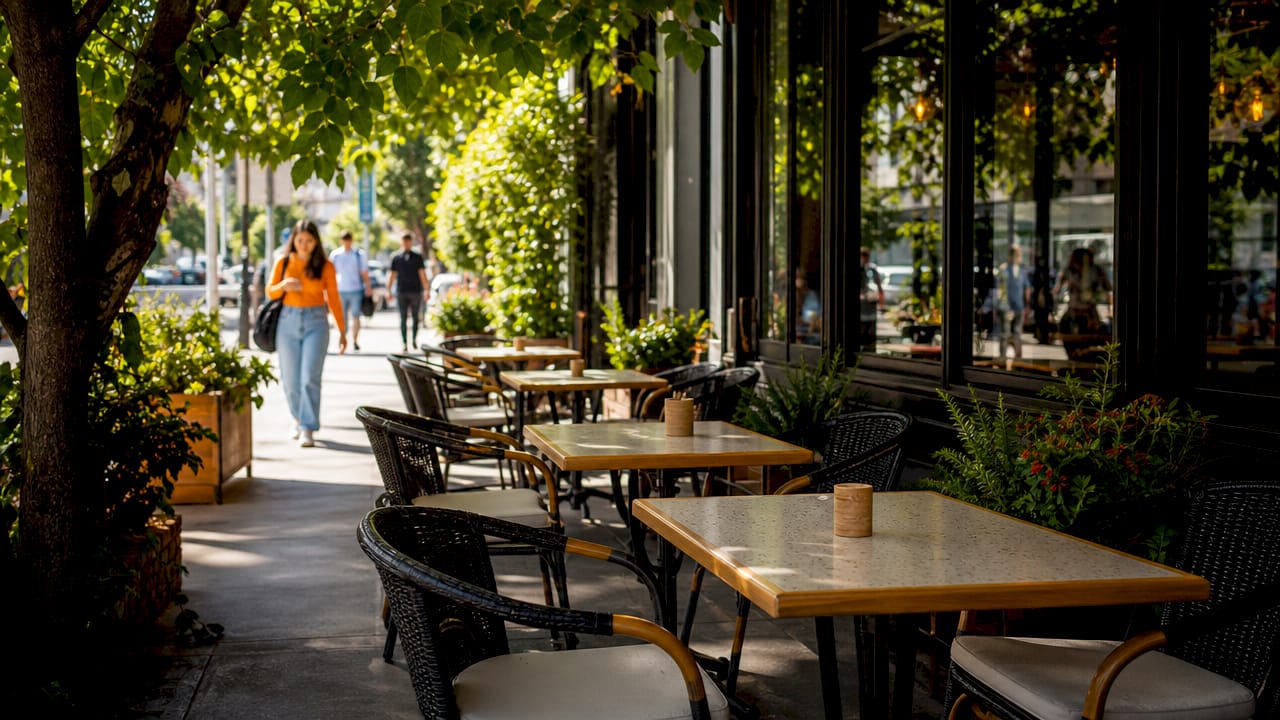
Seating choice directly controls how long guests stay. Firmer seats and smaller tables suit fast-casual models where turnover is the priority. Cushioned seating and larger tables encourage longer stays, which suits a neighbourhood bistro aiming for a relaxed atmosphere. Choose your seating type based on your business model, not on what looks appealing in a catalogue.
Key criteria when selecting bistro chairs:
Table base selection is more technical than most operators expect. Pedestal and tulip bases reduce leg conflicts and are preferred for two-top tables that are frequently pushed together. The base should cover at least one-third of the tabletop diameter to prevent tipping. A four-leg base on a small square table is stable in isolation but becomes a trip hazard the moment two tables are joined.
Pro Tip: Specify table tops with a melamine or laminate finish rated for commercial use. These resist heat, moisture, and scratching far better than solid wood in a busy service environment.
Successful bistro layouts are engineered around movement and service flow rather than aesthetics alone. Aesthetics follow function in every well-run venue.
Furniture quantity is a calculation, not a guess. Standard planning for a 50-cover bistro uses 20–25 tables and 50–60 chairs to allow for flexibility and replacements. Smaller cafés of approximately 400 square feet typically need 8–12 chairs, 4–6 tables, and 4–6 bar stools.
| Venue size | Tables | Chairs | Bar stools |
|---|---|---|---|
| Small café (approx. 400 sq ft) | 4–6 | 8–12 | 4–6 |
| Mid-size bistro (50 covers) | 20–25 | 50–60 | 6–10 |
| Larger venue (80+ covers) | 30–40 | 80–100 | 10–16 |
Always order a buffer of 10–15% above your calculated need. Chairs break, tops get damaged, and layouts change. Having spare pieces on hand avoids service disruption and costly emergency orders.
Key quantity decisions to make before ordering:
For guidance on calculating quantities for your specific footprint, the café seating design guide covers the methodology in detail.
Arrangement is where planning meets reality. The goal is a layout where guests find their table easily, servers move without obstruction, and the kitchen pass-through never becomes a collision point.
Follow this sequence when arranging furniture:
“The best restaurant layouts are invisible to the guest. They sit down, eat, and leave without ever noticing that every movement they made was planned.”
Defining circulation spines and seating zones avoids bottlenecks that slow service and frustrate guests. A bottleneck at the entrance, for example, creates a poor first impression before a guest has even been seated.
If your bistro has outdoor space, treat it as a separate zone with its own circulation logic. Outdoor furniture should be lightweight enough to reconfigure quickly and heavy enough not to shift in wind.
Most furnishing errors fall into three categories: wrong furniture grade, poor circulation planning, and underestimating quantities.
Pro Tip: Before placing your final order, walk through a pre-order checklist: floor plan confirmed, aisle widths measured, table base types specified, upholstery rated for commercial use, quantities include a 10–15% buffer, and all pieces carry a commercial warranty.
For a full breakdown of what separates commercial from residential pieces, the commercial-grade furniture guide is worth reading before you finalise any specification.
Furnishing a bistro successfully requires layout planning before furniture selection, commercial-grade specifications throughout, and a 10–15% quantity buffer to handle breakages and layout changes.
| Point | Details |
|---|---|
| Plan before you purchase | Create a scale floor plan and test layouts with tape mockups before ordering anything. |
| Specify commercial grade | Require metal frames, 250lb+ weight capacity, and reinforced joints on every piece. |
| Match seating to your model | Use firmer seats for fast turnover and cushioned seating for longer, relaxed dining stays. |
| Use pedestal or tulip bases | These prevent tipping and eliminate leg conflicts when tables are joined for larger groups. |
| Order a quantity buffer | Buy 10–15% more chairs and tables than your cover count to cover breakages and reconfigurations. |
The operators who get this right share one habit: they plan obsessively before they spend a penny. The ones who struggle almost always start with a mood board and end up with furniture that looks good in isolation but creates a service nightmare in practice.
The most underrated step in any bistro fit-out is the floor-marking mockup. I have seen experienced restaurateurs completely rethink their layouts after spending two hours walking a taped-out floor plan. It costs nothing and changes everything.
Flexibility matters more than most owners expect at the outset. A layout that works perfectly for a Tuesday lunch crowd will need reconfiguring for a Friday evening. Lightweight, stackable chairs and tables with pedestal bases make that reconfiguration a five-minute job rather than a half-hour disruption.
My strongest advice: treat your seating as an operational tool, not a decorative one. The firmness of a chair, the height of a table, and the width of an aisle all affect how long guests stay and how efficiently your team works. Those variables directly affect your revenue. Choose them with the same rigour you apply to your menu or your pricing.
The hospitality furniture checklist is a useful reference point when you are ready to move from planning to procurement.
— Furniture
Furnitureforbusiness supplies commercial-grade seating and tables to hospitality businesses across the UK, with free delivery to the UK mainland. Every piece in the range is built to withstand the demands of daily commercial use, from repeated cleaning cycles to high guest volumes.
Whether you are fitting out a new bistro from scratch or refreshing an existing venue, Furnitureforbusiness offers bulk order pricing and expert guidance to help you specify the right pieces for your space. The commercial chair range includes options suited to fast-casual and relaxed dining environments alike. Browse the full range to find durable, design-led furniture that meets UK commercial standards and arrives ready to use.
The minimum recommended aisle width is 36 inches. This measurement supports staff workflow and reduces fatigue during busy service periods.
Always use commercial-grade furniture. Residential pieces lack the reinforced joints and weight capacity needed for daily commercial use and typically fail within months.
A 50-cover bistro typically requires 20–25 tables and 50–60 chairs, including a buffer for replacements and layout flexibility.
Pedestal and tulip bases are the best choice for bistro tables. They cover at least one-third of the tabletop diameter, prevent tipping, and eliminate leg conflicts when tables are joined.
A realistic budget ranges from £150 to £400 per cover, depending on venue tier, materials, and whether you include bar stools and banquette seating.

Phone: 0330 043 4114
VAT no. GB 991 8681 60
Company no. 07250570