Stand for short intervals throughout the hour, progressively increasing total standing time during the workday towards a moderate duration that balances benefits and comfort. That’s the practical target backed by ergonomics research and occupational health guidance, and it’s the one figure worth remembering if you read nothing else here.
The verdict: more standing isn’t automatically better. Static standing for long, unbroken stretches causes the same fatigue and discomfort that static sitting does, just in different muscles. Start low, build slowly, and alternate rather than commit to marathon standing sessions.
Avoid standing continuously for long periods without breaks, and transition gradually from predominantly sitting to more standing time. Progress in small steps and let your body set the pace.
Standing desk time guidelines work best when readers start at roughly 2 hours of standing per day and build gradually towards 4 hours using short, alternating blocks rather than long static sessions.
| Point | Details |
|---|---|
| Start at 2 hours, build to 4 | Follow the progressive daily target backed by the British Journal of Sports Medicine consensus. |
| Use short, frequent blocks | Try 15–30 minutes per hour or the 20‑8‑2 pattern rather than long standing sessions. |
| Avoid continuous standing over an hour | Standing beyond 45–60 minutes without a break raises the risk of leg and joint discomfort. |
| Match tasks to posture | Stand for calls and admin, sit for deep-focus work that needs sustained concentration. |
| Fix the setup first | Correct desk height, a monitor arm, and an anti-fatigue mat from Furnitureforbusiness extend comfortable standing time. |
There isn’t one universal rule, and that’s worth knowing upfront. Different agencies and researchers propose slightly different ratios, but they converge on the same underlying principle: short, frequent standing bouts beat long, rare ones.
The three most common frameworks:
On an 8‑hour day, the 15–30 minute rule lands you somewhere between 2 and 4 hours of standing, which matches the British Journal of Sports Medicine consensus on progressive daily targets. The 20‑8‑2 pattern, run consistently, produces a similar total while forcing in more movement, an approach outlined in ergonomics practice guidance.
Here are three sample schedules to try, depending on where you’re starting from:
Beginner (week one): four 15‑minute standing blocks spread through the day, roughly one hour of total standing.
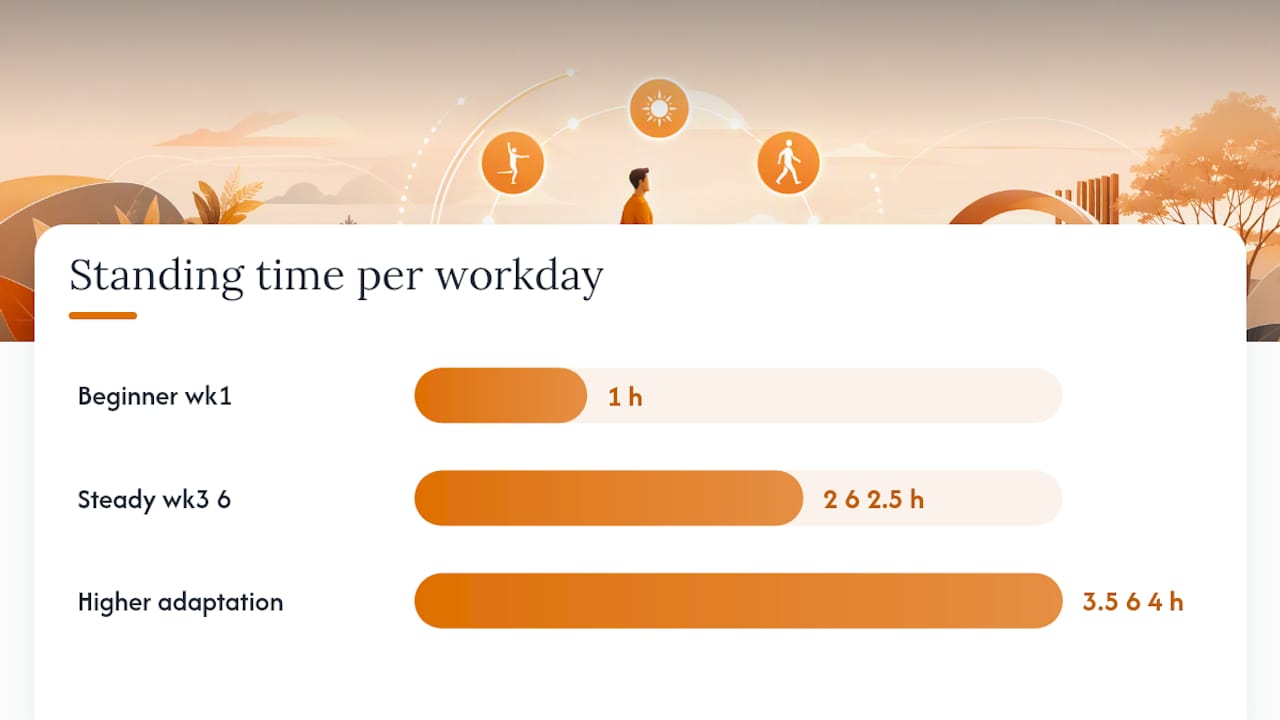
Steady‑state (weeks three to six): six to eight 20‑minute blocks, totalling 2 to 2.5 hours of standing, alternated with focused sitting sessions.
Higher‑adaptation (after a few months): 30‑minute standing blocks every hour, pushing towards 3.5 to 4 hours total, with deliberate movement breaks built in.
Match the task to the posture, not the clock. Phone calls, routine admin, and email triage suit standing fine because they don’t demand sustained concentration. Deep‑focus work, detailed spreadsheet analysis, or anything requiring sustained fine motor precision usually goes better seated, where your body isn’t quietly competing for attention with your brain.
Pro Tip: Set a recurring timer and batch your lowest‑concentration tasks into your standing blocks in advance. Deciding when to stand in the moment rarely works. Deciding the night before does.
The British Journal of Sports Medicine expert consensus is the anchor point for most modern advice: start with at least 2 hours of standing and light activity per workday, and build towards roughly 4 hours as your tolerance improves. That’s a progressive target, not a day‑one expectation.
It’s worth understanding what kind of evidence sits behind that number. Most of it comes from short‑term comfort trials and biomechanical studies measuring things like vascular responses and muscle activity during standing versus sitting, not decades‑long trials tracking heart disease or diabetes outcomes. Physiological research on acute vascular and muscle responses gives us the mechanism, but the leap from “standing changes blood flow in the short term” to “standing prevents disease long term” hasn’t been nailed down by large randomised trials.
What the numbers show: Occupational studies link continuous standing beyond 45 to 60 minutes, and daily totals above roughly 4 hours, with higher rates of leg pain, joint complaints, and venous symptoms.
That’s the flip side of the consensus figure. Four hours is a sensible upper target, not a floor to push past. Systematic reviews confirm alternating postures cuts musculoskeletal discomfort and reduces sedentary time, but the same reviews are candid that long‑term cardiometabolic benefits remain unproven at this stage.
None of that undermines the advice. It just means the guidance is sensible and evidence‑informed, not a guaranteed cure for anything.
Trials that successfully increase standing tolerance almost always use a gradual, staged protocol rather than a sudden switch. Jumping from sitting eight hours a day to standing eight hours a day is the single most common mistake, and it’s exactly the mistake that causes the back, leg, and foot pain that puts people off standing desks entirely within a fortnight.
Here’s a conservative four‑week plan that mirrors what practitioner programmes typically recommend:
| Week | Daily standing total | Typical block length |
|---|---|---|
| Week 1 | 45–60 minutes | 10–15 minutes |
| Week 2 | 1 hour | 15–20 minutes |
| Week 3 | 2 to 2.5 hours | 20 minutes |
| Week 4 | 2–3 hours | 20–30 minutes |
Add five to ten minutes to a block, or one extra block to your day, roughly every few days. Not every day, and not in big jumps.
Consistency beats intensity here. A modest, sustainable routine you actually keep up beats an ambitious one you abandon after ten days.
Most of the discomfort people blame on “standing desks not working for me” actually comes from a desk set at the wrong height, not from standing itself. Get the fundamentals right first.
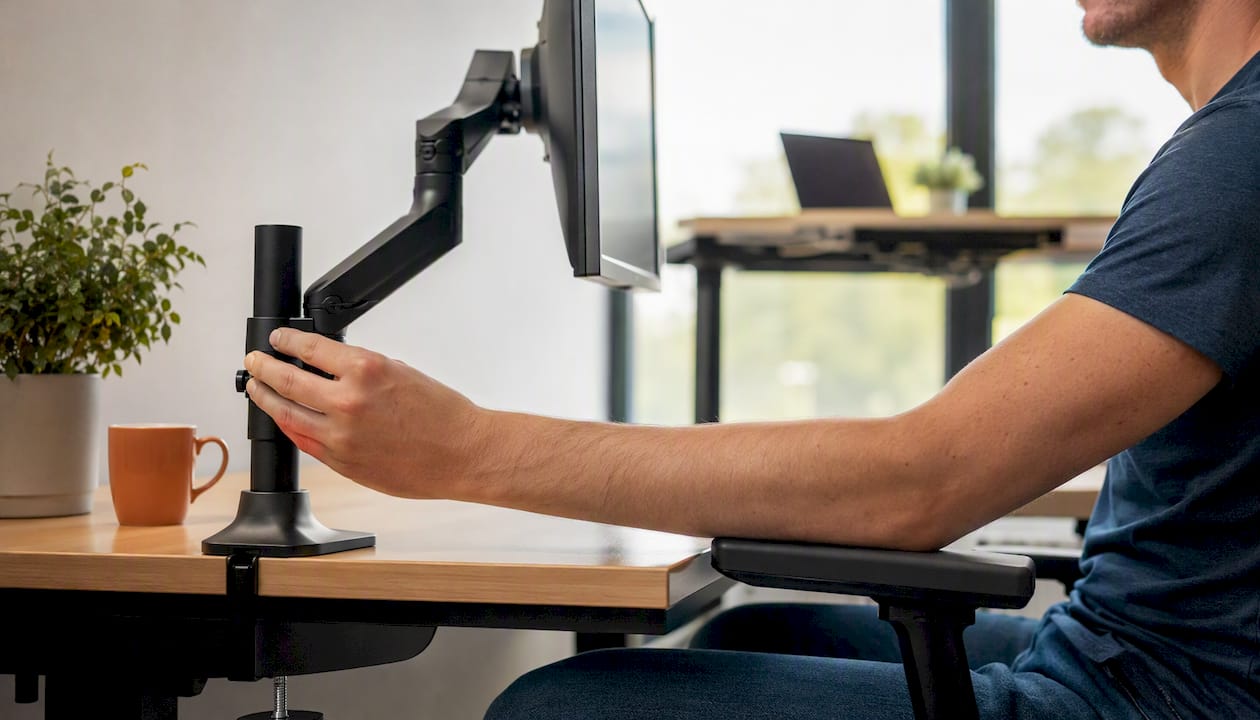
Desk and monitor height. Your elbows should sit at roughly a 90 degree angle when your hands rest on the keyboard, with your forearms parallel to the floor. Your monitor’s top edge should sit at or just below eye level, about an arm’s length away, so you’re not tilting your neck up or down. If you’re constantly hunching towards a screen, a monitor arm solves that faster than any posture reminder ever will.
Footwear and flooring. Standing on a hard floor in unsupportive shoes shortens your comfortable standing window dramatically. Research on anti‑fatigue mats and supportive footwear shows both materially extend how long you can stand comfortably, which matters more than most people expect when they’re setting up.
Micro‑movement while standing. Don’t lock your knees and stay rigid. Shift your weight from foot to foot every 10 to 15 minutes, do a few calf raises, pump your ankles, or rock gently heel to toe. Cornell’s ergonomics guidance treats these small, cue‑based movements as central to any sit-stand programme, not an optional extra.
A quick checklist worth pinning near your desk:
Pro Tip: Reserve your standing blocks for calls, admin, and email, and protect your seated time for anything that needs sustained concentration. Standing while trying to think hard rarely works for either.
The mistakes tend to repeat: standing rigidly still for long stretches, skipping a mat on hard flooring, leaving desk height unadjusted from someone else’s setting, and pushing through pain because “it’s supposed to feel odd at first.”
If you notice persistent sharp pain, numbness, swelling, or new varicose vein symptoms, stop increasing your standing time and get it checked. These aren’t things to push through.
If you have existing vascular, joint, or lower-limb issues, consult a health professional to determine appropriate standing durations, avoiding excessive standing time. Public health guidance on posture and back pain is clear that individual adjustment matters more than hitting a specific number.
Hardware alone rarely changes behaviour. Workplace feasibility studies show most people drift back to sitting most of the day unless something prompts them otherwise, which is why a timer or cue matters as much as the desk itself.
Morning: short standing blocks paired with email triage. Midday: your longest standing block, paired with calls. Late afternoon: shorter, more frequent blocks as fatigue builds, paired with a short walk to reset focus.
Getting a height-adjustable desk into an office solves half the problem. The other half is habit, which is why we always pair desks with an anti‑fatigue mat and a decent chair for the seated stretches either side of standing blocks.
Two things worth doing from day one: keep a spare pair of supportive shoes at your desk, and slot your standing blocks against calls or admin rather than anything demanding real concentration.
When you’re procuring for a team, prioritise desks with a fast, reliable height transition and consider bundling in the accessories rather than treating them as an afterthought later.
A good schedule only works if the desk cooperates. Furnitureforbusiness supplies height-adjustable standing desks built for smooth, quick transitions between sitting and standing, which matters far more day to day than people expect when a slow motor turns a 20‑second switch into a two‑minute chore you start avoiding.

Pair a desk with the right office chair for your seated blocks and the office accessories that make standing comfortable, an anti‑fatigue mat and a monitor arm, and you’ve covered most of what this guide recommends in one order. Furnitureforbusiness delivers free to the UK mainland and handles bulk orders for teams fitting out multiple desks at once, so equipping five people or fifty follows the same straightforward process. Browse the height-adjustable desk range and get a quote for your office today.
How long should I stand at my desk each day?
Aim for 2 hours of standing initially, progressing towards 4 hours over several weeks, using short 15 to 30‑minute blocks rather than one long session.
Is standing all day worse than sitting all day?
Yes, in a specific sense. Continuous standing beyond 45 to 60 minutes is linked to leg pain and venous symptoms in occupational studies, so alternating beats either extreme.
What’s the 20-8-2 rule?
It’s a 30‑minute cycle: 20 minutes sitting, 8 minutes standing, 2 minutes moving, repeated through the day to keep movement frequent rather than relying on static standing.
Do I need an anti-fatigue mat for a standing desk?
It helps considerably. Studies on anti-fatigue mats and supportive footwear show both extend how long you can stand comfortably before fatigue sets in.
Should I stand for deep-focus work?
Generally, no. Reserve standing blocks for calls, admin, and routine tasks, and keep seated time for work that needs sustained concentration.
This article is general information, not a substitute for advice from a qualified doctor. Consult a qualified healthcare professional about your own circumstances before acting on anything here.

Phone: 0330 043 4114
VAT no. GB 991 8681 60
Company no. 07250570