For carpet, the best all-round choice is a large-diameter hard wheel, ideally a single or rollerblade-style castor of 65mm or more. That size copes with standard commercial pile without dragging or seizing. Go to 75mm or above for thicker residential-grade carpet. Switch to a chair mat entirely once the pile gets genuinely deep. Where a chair might slip on its own, glides or locking castors are the safer call.
TL;DR:
- Hard nylon or high-durometer polyurethane wheels of at least 65mm diameter are optimal for commercial carpet, with larger sizes recommended for thicker pile.
- Single-wheel or rollerblade-style castors resist fibre entanglement better than twin wheels and are easier to roll over soft, thick carpets.
- Locking or brake-loaded castors and glides are safer options in static areas or where safety and stability are priorities.
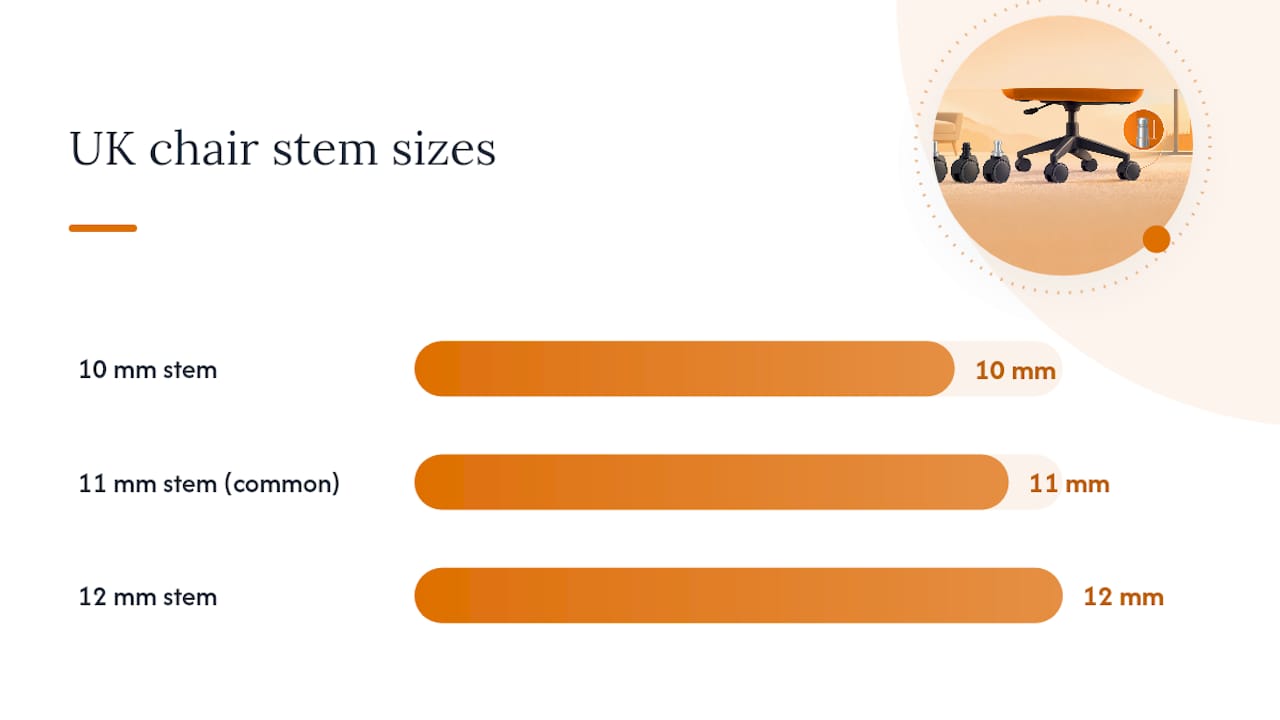
- Accurate stem measurement, especially grip ring or threaded types, is critical before ordering replacement castors to ensure proper fit.
- Carpet-mounted chair mats outperform castors on very deep pile, and regular maintenance helps identify when castors need replacement due to wear or grit buildup.
The material and hardness of the wheel decide whether it rolls or fights the pile. Hard nylon, or a high-durometer polyurethane rated around Shore A 95 or above, is the material to look for on carpet. Soft PU wheels (roughly Shore A 80 to 85) are designed for hard floors; put them on carpet and they sink into the fibres, and rolling resistance shoots up rather than down.
Diameter is just as decisive. A minimum 65mm diameter is recommended for commercial carpet, because a bigger wheel simply rides over the top of the fibres instead of ploughing through them. For thicker pile, go bigger still.
The interaction between wheel hardness, pile depth and the weight the chair carries is what actually determines how well it rolls, so treat diameter and material as strong starting rules rather than guarantees. If in doubt, check the chair manufacturer’s own stem and load specification before matching a castor to it.
Not every carpet behaves the same way under a rolling chair, and matching the castor to the pile saves you from returns and premature wear.
Castors are not always the right answer, and treating wheel choice purely as a comfort decision misses half the point. HSE guidance on seating notes that glides can be a safer alternative where a chair’s stability is compromised, and that seating safety sits squarely within an employer’s wider duty of care.
HSE guidance in brief: where a chair risks slipping away from a user, particularly on softer or uneven flooring, glides or braked castors are a recognised control measure rather than a design compromise.
Some situations call for locking or brake-loaded castors instead of free-rolling wheels:
Before swapping fittings across an office, check your organisation’s own health and safety policy, and see the wider workplace safety guidance from Appenate for a practical checklist covering seating and general hazard reviews.
Getting the stem right matters more than getting the wheel right, because the wrong stem simply will not seat.
Pro Tip: Buy one extra castor beyond what you need and test it under the heaviest person likely to use the chair before ordering the full set. A wheel that feels fine under light load can still bog down under someone twice the weight.
If a set feels wrong once fitted, most reputable suppliers offer a returns window, so check that before disposing of the packaging.
Watch for flat spots, embedded grit, or a noisy, uneven roll. Any of those three means it is time to replace, not clean.
Most castor problems we hear about from UK offices come down to one thing: nobody measured the stem before ordering. Get that right first, and the rest of the decision, diameter, material, single or twin, follows fairly naturally from the carpet type in front of you.
For procurement teams handling more than a handful of chairs, our advice is simple. Order one sample set before committing to bulk quantities, test it on the actual carpet in the actual room, and only then place the full order. Bulk pricing on office chairs and accessories makes far more sense once you know the fit works, and a sensible returns policy should always be checked before you commit to volume, not after something arrives that does not fit.
— Furniture
Castor sets and accessories are available from some suppliers built for the fitting checks covered above, so you’re never guessing at stem sizes from a photo. The Brunswick Deluxe Castors set covers standard grip ring fittings for offices moving away from soft PU wheels, and the wider office accessories range covers mats, gas lifts, and other fit-out essentials for teams refurbishing multiple desks at once.

Some suppliers offer free delivery to the UK mainland, and returns within 14 days if a castor set turns out to be the wrong stem type once it arrives, which happens more often than most procurement teams expect. Bulk pricing may apply when fitting out several desks or a full floor, so it’s worth asking before ordering rather than after. If you’re not certain which stem your current chairs use, contacting a customer service team with a photo of the existing castor can help with matching before purchase, rather than after a set turns up that does not fit.
Hard nylon or high-durometer polyurethane wheels, ideally 65mm or larger in diameter, work best on carpet. Soft PU wheels are built for hard floors and drag noticeably once placed on carpet fibres.
Single-wheel, rollerblade-style castors roll best because their larger diameter and simple profile avoid the fibre entanglement that twin wheels tend to cause. They also shed less resistance than double-wheel designs on thicker pile.
Look for a grip ring or threaded stem that matches your existing fitting exactly, paired with a hard nylon wheel of 65mm or above. Our swivel wheel castor sets are built to common UK stem sizes for straightforward replacement.
For most offices, a 65 to 75mm hard nylon or rollerblade-style single wheel offers the best balance of glide and durability. For pile deeper than about 20mm, a rigid chair mat usually outperforms any castor upgrade.
Glides make sense where stability matters more than mobility, such as reception seating or heavy static furniture near equipment. HSE guidance treats this as a legitimate safety choice, not a downgrade, particularly where a rolling chair could slip away from the user.

Phone: 0330 043 4114
VAT no. GB 991 8681 60
Company no. 07250570