Many businesses assume any office chair will do, yet musculoskeletal disorders account for 31% of work-related ill health in the UK. Operator seating is purpose-built to address this challenge, offering adjustable ergonomic features that reduce strain and boost productivity. This guide explores what defines operator seating, the EN1335 standard, and practical selection criteria to help UK office managers invest wisely in workforce wellbeing.
| Point | Details |
|---|---|
| Health benefits | Ergonomic operator seating reduces musculoskeletal disorders by 30-50%, cutting sick days and improving focus. |
| Adjustability matters | Multiple adjustments accommodate diverse body types and tasks, maintaining neutral posture throughout the workday. |
| EN1335 compliance | This European standard ensures chairs meet proven ergonomic dimensions and adjustment ranges for broad user compatibility. |
| Investment value | Quality operator seating prevents long-term health costs and enhances productivity, delivering measurable ROI. |
Musculoskeletal disorders remain the leading cause of work-related illness across the UK, with back pain and repetitive strain injuries affecting thousands of employees annually. Poor seating contributes directly to these conditions, creating unnecessary discomfort and driving up absenteeism. When workers spend seven to eight hours daily at their desks, the chair becomes a critical health intervention, not merely a convenience.
Research demonstrates that ergonomic operator seating significantly reduces musculoskeletal disorders, with interventions cutting MSD incidents by 30% to 50% in controlled studies. This translates into fewer sick days, lower health insurance claims, and sustained workforce availability. Beyond preventing injury, proper seating enhances productivity right office chairs 2026 by enabling employees to maintain focus without distraction from discomfort.
The ergonomic principle centres on maintaining a neutral position, where joints align naturally and muscles work efficiently. Operator seating achieves this through adjustable lumbar support, seat depth, and armrests that adapt to individual anatomy. Studies show that employees using ergonomic seating experience a 15-20% increase in focus and work efficiency, a compelling return on investment for any organisation.
Pro Tip: Conduct a seating audit to identify employees experiencing discomfort, then prioritise ergonomic upgrades for those roles first to demonstrate immediate impact.
Key benefits of operator seating include:
“Investing in ergonomic seating is not just about comfort; it’s about safeguarding employee health and maximising productivity. The evidence is clear: proper seating reduces injury rates and enhances workplace performance.” Dr Emily Carter, Ergonomics Consultant
Understanding what is ergonomic furniture uk guide provides broader context for how seating fits within a comprehensive workplace wellness strategy, complementing standing desks and monitor positioning.
Operator seating distinguishes itself through comprehensive adjustability designed to accommodate diverse body types and task requirements. Unlike basic office chairs with fixed dimensions, operator chairs offer multiple adjustment points that enable each user to customise their sitting position. This adaptability proves essential in shared workspaces or hot-desking environments where different employees use the same chair throughout the day.
Core adjustable features include seat height, which allows feet to rest flat on the floor with thighs parallel to the ground. Adjustable lumbar support, armrests, and seat height are essential for preventing discomfort and promoting good posture, according to physiotherapy guidance. Seat depth adjustment ensures proper thigh support without pressure behind the knees, whilst armrest height and width prevent shoulder elevation and wrist strain during keyboard work.
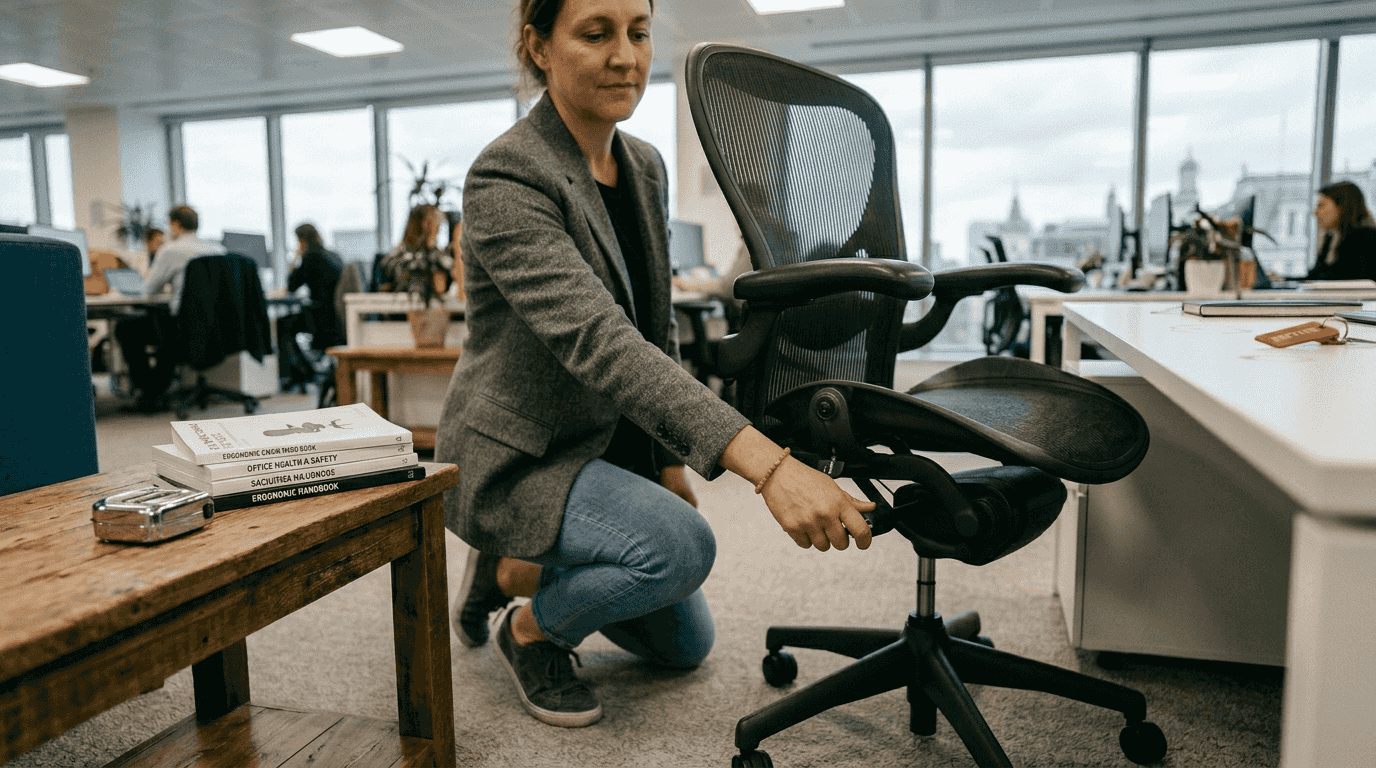
Tilting mechanisms add another dimension, enabling users to recline slightly and shift weight distribution throughout the day. Synchronised tilt, where seat and backrest move together, maintains the hip-to-trunk angle and reduces spinal compression. This dynamic seating approach counters the risks of prolonged static posture, encouraging micro-movements that support circulation and reduce fatigue.
Pro Tip: Train employees on proper chair adjustment during onboarding to ensure they maximise the ergonomic benefits from day one.
Essential operator seating features:
Ergonomic furniture is designed to facilitate a neutral position to minimise muscle and skeletal stress, supporting natural spinal curves rather than forcing unnatural alignment. Different office tasks place varying demands on seating; telephone-intensive roles may benefit from headrest support, whilst keyboard-focused work requires precise armrest positioning to prevent wrist extension.
Understanding task seating guide ergonomic chairs clarifies how operator seating fits within the broader spectrum of workplace seating solutions, from executive chairs to specialist task seating for technical roles.
The European EN1335 standard specifies chair dimensions and adjustment ranges to ensure office seating accommodates the broadest possible user population. This multi-part standard addresses safety, dimensions, and testing methods, providing manufacturers and buyers with objective criteria for ergonomic performance. For UK offices, EN1335 compliance offers assurance that chairs meet evidence-based ergonomic requirements.
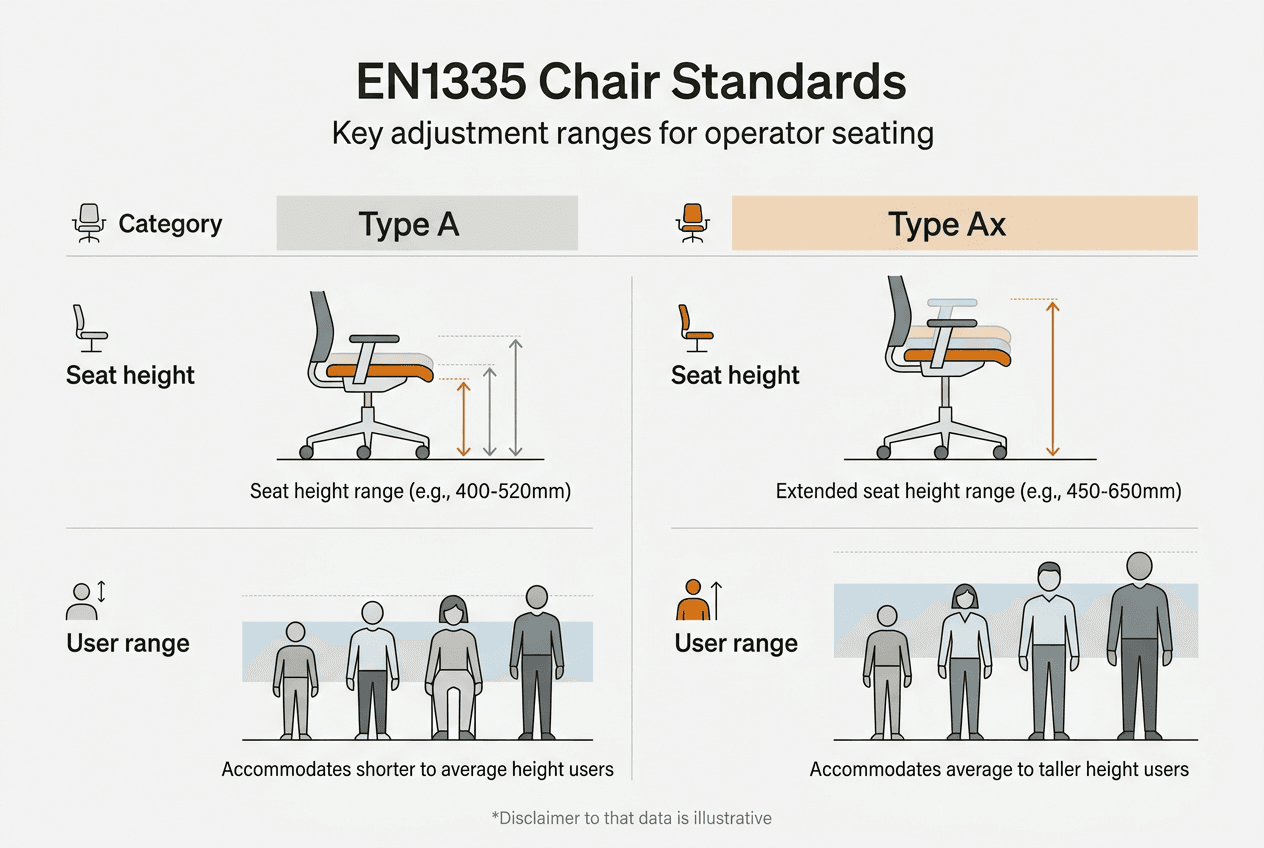
The standard defines two chair types: A and Ax. Type A chairs suit users within the 5th to 95th percentile height range, covering most adults. Type Ax extends this range, accommodating smaller and taller individuals through enhanced adjustment capabilities. This distinction matters in diverse workforces where standard chairs may not fit all employees comfortably.
EN1335 specifies minimum adjustment ranges for critical dimensions. Seat height must adjust from 400mm to 510mm for type A, extended to 420mm to 550mm for type Ax. Achieving this range often requires two gas springs or telescopic cylinder mechanisms, adding cost but delivering superior adaptability. The standard also mandates tilting seat and backrest functions, recognising that posture variation throughout the day reduces static loading on spinal structures.
Pro Tip: Request EN1335 certification documentation when purchasing operator seating in bulk to verify compliance before committing to large orders.
| Feature | Type A | Type Ax |
|---|---|---|
| Seat height range | 400-510mm | 420-550mm |
| User height range | 5th-95th percentile | Extended range |
| Backrest height | 480-520mm | 500-560mm |
| Adjustment complexity | Standard | Enhanced |
Compliance with EN1335 ensures chairs support dynamic sitting, where users shift position naturally rather than remaining rigidly fixed. This standard has influenced global office seating design, establishing baseline expectations for quality and functionality. When evaluating office chairs, EN1335 compliance serves as a reliable quality indicator, separating genuinely ergonomic products from basic seating marketed with ergonomic claims.
The standard’s testing protocols verify durability under repeated adjustment cycles, ensuring mechanisms maintain performance over years of daily use. This longevity consideration proves particularly relevant for UK businesses managing large seating inventories, where premature failure creates replacement costs and user disruption.
Selecting operator seating requires balancing ergonomic requirements, aesthetic preferences, budget constraints, and specific task demands. Start by assessing your workforce demographics: height and weight distributions, prevalent tasks, and any existing discomfort patterns reported through occupational health channels. This data-driven approach ensures seating investments address actual needs rather than assumed requirements.
Prioritise chairs offering multiple adjustable features that meet or exceed EN1335 standards. Whilst basic task chairs may cost less initially, inadequate adjustability leads to discomfort, reduced productivity, and potential health claims that far exceed the price difference. Consider operator seating an investment in human capital, with returns measured in sustained performance and reduced absenteeism.
Steps for selecting operator seating:
Aesthetic integration matters in client-facing environments and modern office designs where furniture contributes to brand identity. Fortunately, contemporary operator seating combines ergonomic functionality with clean lines and material choices that complement diverse interior schemes. Mesh backrests offer breathability and visual lightness, whilst upholstered options provide traditional comfort and sound absorption.
Budgeting considerations:
Dynamic seating options, which encourage active sitting through flexible bases or balance mechanisms, may suit roles involving varied tasks and frequent position changes. However, these specialised designs work best as complements to traditional operator seating rather than wholesale replacements, as some tasks require stability that dynamic seating cannot provide.
Pro Tip: Negotiate bulk pricing and extended warranties when ordering for multiple locations, and establish a relationship with suppliers who can provide consistent models for future expansion.
Consider products like the Austin heavy duty task operator office chair, designed for users requiring enhanced weight capacity and durability, or the Vegalite executive office chair with arms, which combines operator functionality with executive styling for management offices.
Furniture For Business offers an extensive range of operator seating solutions designed to meet the diverse needs of UK workplaces. Our collection includes chairs compliant with EN1335 standards, ensuring your team benefits from proven ergonomic design. Whether you’re furnishing a new office, upgrading existing seating, or accommodating hybrid working arrangements, our product range balances functionality, durability, and contemporary aesthetics.
Explore our full office chairs collection to find operator seating that matches your specific requirements and budget. Complement your seating investment with office desks featuring height adjustment capabilities for optimal ergonomic pairing. Visit Furniture For Business to discover how our expertise in commercial furniture can support your workplace wellness objectives.
Operator seating refers to ergonomic office chairs specifically engineered to support workers performing varied seated tasks throughout extended periods. These chairs feature multiple adjustment mechanisms including seat height, lumbar support, armrests, and tilt functions that adapt to individual body dimensions and work requirements. The term distinguishes these comprehensive ergonomic solutions from basic task chairs or executive seating with limited adjustability.
Ergonomic seating reduces musculoskeletal disorders and improves focus and efficiency, according to Health and Safety Executive guidance and ergonomics research. Proper operator seating prevents common workplace injuries like lower back pain and repetitive strain, reducing absenteeism and associated costs. Enhanced comfort enables employees to maintain concentration on tasks rather than managing discomfort, directly improving work quality and output.
Adjustable lumbar support, armrests, seat height, and tilting mechanisms are essential features identified by physiotherapy guidance. Seat depth adjustment accommodates different leg lengths, whilst tilt tension control allows users to customise recline resistance. Look for durable materials, breathable upholstery, and smooth adjustment mechanisms that maintain settings throughout the day. Compliance with EN1335 standards provides objective assurance of ergonomic capability.
EN1335 defines ergonomic dimensions and adjustment ranges to accommodate diverse users, establishing minimum requirements for seat height, backrest dimensions, and adjustment capabilities. This standard ensures chairs support proper posture across a broad user population, from the 5th to 95th percentile in height. Choosing EN1335-compliant seating removes guesswork from procurement, providing confidence that chairs meet evidence-based ergonomic criteria rather than marketing claims alone.

Phone: 0330 043 4114
VAT no. GB 991 8681 60
Company no. 07250570