Ergonomic task seating reduces work-related musculoskeletal disorders by up to 60% when properly implemented. Yet many UK offices still purchase chairs that fail to deliver genuine ergonomic support. Task seating refers to specially designed office chairs that support prolonged desk work through adjustable features targeting posture, comfort, and injury prevention. This guide explains what distinguishes true task seating from standard office chairs, explores the health and productivity benefits backed by research, and provides practical procurement guidance for office managers seeking to improve workplace wellbeing.
| Point | Details |
|---|---|
| Task seating definition | Ergonomic office chairs specifically engineered to support extended desk-based work through adjustable features. |
| Health impact | Proper task seating with adjustability and lumbar support significantly reduces musculoskeletal strain and injury risk. |
| Productivity gains | Research links ergonomic seating to 8-12% productivity improvements alongside reduced absenteeism. |
| Selection criteria | Choosing effective task seating requires evaluating adjustment ranges, materials, certifications, and user training programmes. |
| Common mistake | Not all chairs labelled ergonomic meet genuine task seating standards for prolonged office use. |
Task seating represents a specific category of office chairs designed explicitly for desk-based work lasting several hours daily. These chairs prioritise ergonomic support over aesthetics or status symbolism. Unlike executive chairs that emphasise visual impact or guest chairs intended for brief visits, task seating focuses on adjustability and biomechanical support.
The primary purpose centres on maintaining healthy posture during prolonged sitting. Task chairs achieve this through features supporting natural spine curvature and reducing pressure points. They allow users to customise settings matching individual body dimensions and work patterns.
Key characteristics distinguishing task seating include:
These features transform task seating into the foundation of workplace health initiatives. When office workers spend 6-8 hours daily at desks, proper seating becomes essential infrastructure rather than optional comfort. Task chairs serve as the first line of defence against repetitive strain injuries and chronic discomfort that plague modern offices.
Ergonomic task seating incorporates specific design elements that directly address musculoskeletal health risks. Understanding these features helps procurement teams distinguish genuine ergonomic solutions from marketing claims.
Adjustable seat height stands as the most fundamental feature. Proper height positioning ensures feet rest flat on the floor with thighs parallel to the ground. This alignment prevents circulation problems and knee strain affecting comfort and concentration.
Lumbar support mechanisms provide crucial lower back protection. The lumbar region bears significant stress during sitting. Adjustable lumbar support maintains the spine’s natural S-curve, preventing the slouching that causes chronic back pain. Ergonomic task seating reduces work-related musculoskeletal disorders by up to 60% when these features match user needs correctly.
Backrest adjustment enables users to recline slightly throughout the day. Movement prevents static loading on muscles and joints. Dynamic sitting, supported by adjustable backrests, reduces fatigue more effectively than rigid upright postures.
Key ergonomic features and their benefits:
Pro Tip: Even the best ergonomic chair requires proper adjustment. Allocate time for users to learn their chair’s features and customise settings to their body dimensions for maximum benefit.
These ergonomic elements work synergistically. A chair with excellent lumbar support but fixed armrests still leaves users vulnerable to shoulder strain. Comprehensive adjustability across all contact points delivers the documented health improvements. Research on musculoskeletal health confirms that organisations implementing proper task seating alongside training programmes can cut absenteeism with ergonomic chairs substantially whilst improving employee satisfaction.
Comfort and productivity connect more directly than many organisations realise. Discomfort creates constant distraction, pulling attention from work tasks to physical sensations. Task seating eliminates these distractions through thoughtful design.
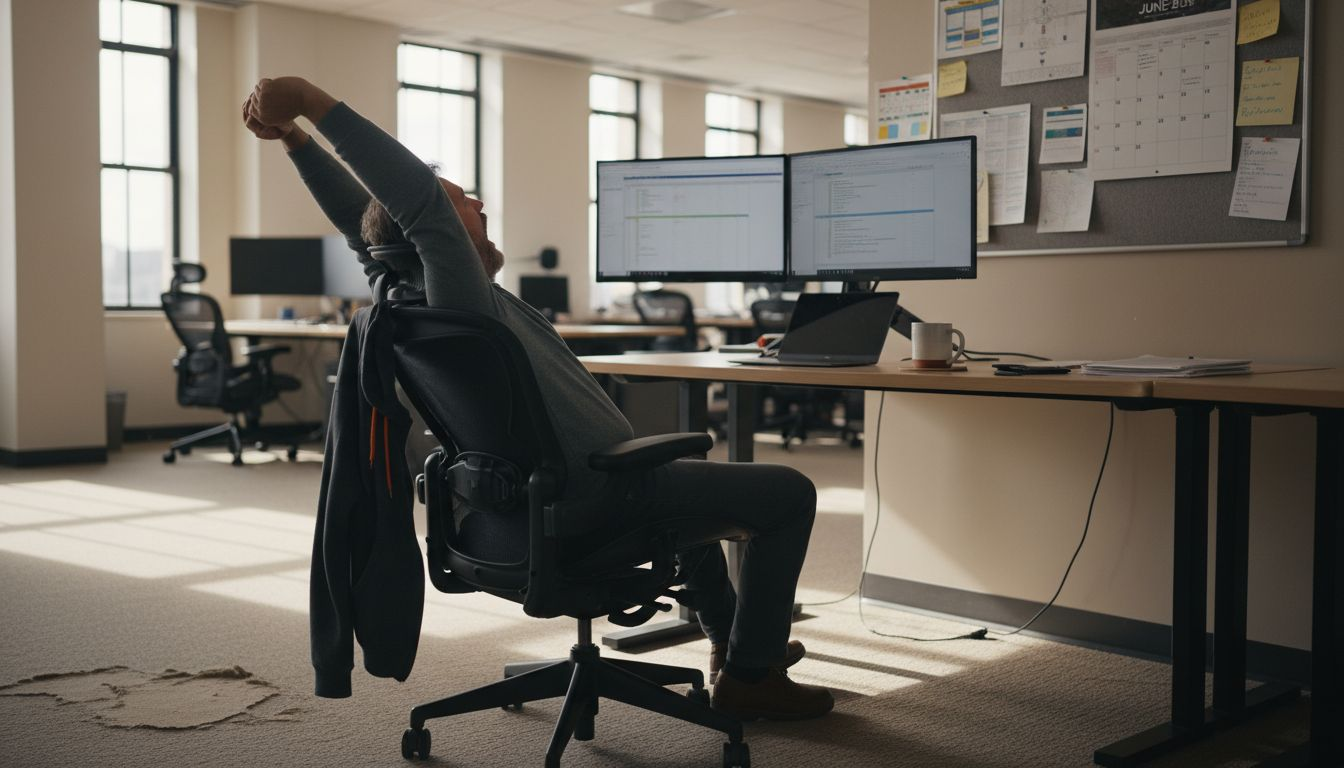
Pressure distribution represents a primary comfort factor. Standard chairs concentrate weight on small areas, creating hot spots and circulation problems. Task seating distributes body weight across larger surface areas through contoured seats and backrests. This reduces pressure points that cause numbness and fidgeting.
Ventilation significantly impacts comfort during extended sitting. Breathable mesh backrests and perforated seat materials prevent heat and moisture buildup. Users remain comfortable without temperature-related distractions throughout the workday.
Research demonstrates measurable productivity improvements from ergonomic seating. Studies link properly specified task chairs to 8-12% productivity gains across various office environments. These gains stem from reduced discomfort, fewer breaks needed for pain relief, and improved concentration.
Comfort and productivity benefits include:
Real-world implementations validate these findings. Organisations upgrading to quality task seating report noticeable drops in health complaints within weeks. Employees express higher job satisfaction when employers invest in their physical wellbeing. The productivity gains often offset the initial investment within 12-18 months through reduced absenteeism and improved output.
Task seating creates a positive feedback loop. Comfortable employees work more efficiently, experience less strain, and maintain better health. This reduces costs whilst improving workplace culture and retention.
Several persistent myths undermine effective task seating procurement. Addressing these misconceptions helps organisations make informed investments.
All ergonomic labels guarantee proper support. Many chairs marketed as ergonomic lack essential adjustability features. True task seating requires multiple adjustment points, not just a curved backrest. Verify specific features rather than trusting marketing terminology.
Expensive executive chairs provide better ergonomics than task chairs. Executive chairs often prioritise appearance and status over biomechanical support. Their padding and design may actually restrict movement and adjustability compared to purpose-built task seating. Price and prestige do not equal ergonomic effectiveness.
Comfort alone indicates proper ergonomic function. Initial comfort without correct adjustment provides false security. A chair might feel comfortable whilst supporting poor posture that causes problems over weeks or months. Proper adjustment and posture training matter more than immediate comfort sensations.
One-size-fits-all task chairs work for diverse workforces. Bodies vary significantly in dimensions and proportions. Effective task seating requires wide adjustment ranges to accommodate the 5th to 95th percentile of users. Chairs with limited adjustability exclude many workers from full ergonomic benefits.
Buying quality chairs eliminates the need for training. Even the best task seating fails without user education. Most people lack knowledge to adjust chairs properly. Providing chairs without training wastes much of the investment’s potential value.
Pro Tip: Include adjustment training as part of task seating rollout. Brief demonstrations showing proper height, lumbar, and armrest positioning multiply the ergonomic benefits substantially.
Understanding these misconceptions prevents costly procurement mistakes. Organisations sometimes purchase impressive-looking chairs that fail to deliver health benefits. Others buy excellent task seating but skip training, leaving adjustment features unused. Addressing both equipment quality and user education ensures successful outcomes.
Office chairs serve different purposes. Understanding these distinctions guides appropriate selection for each workplace role.
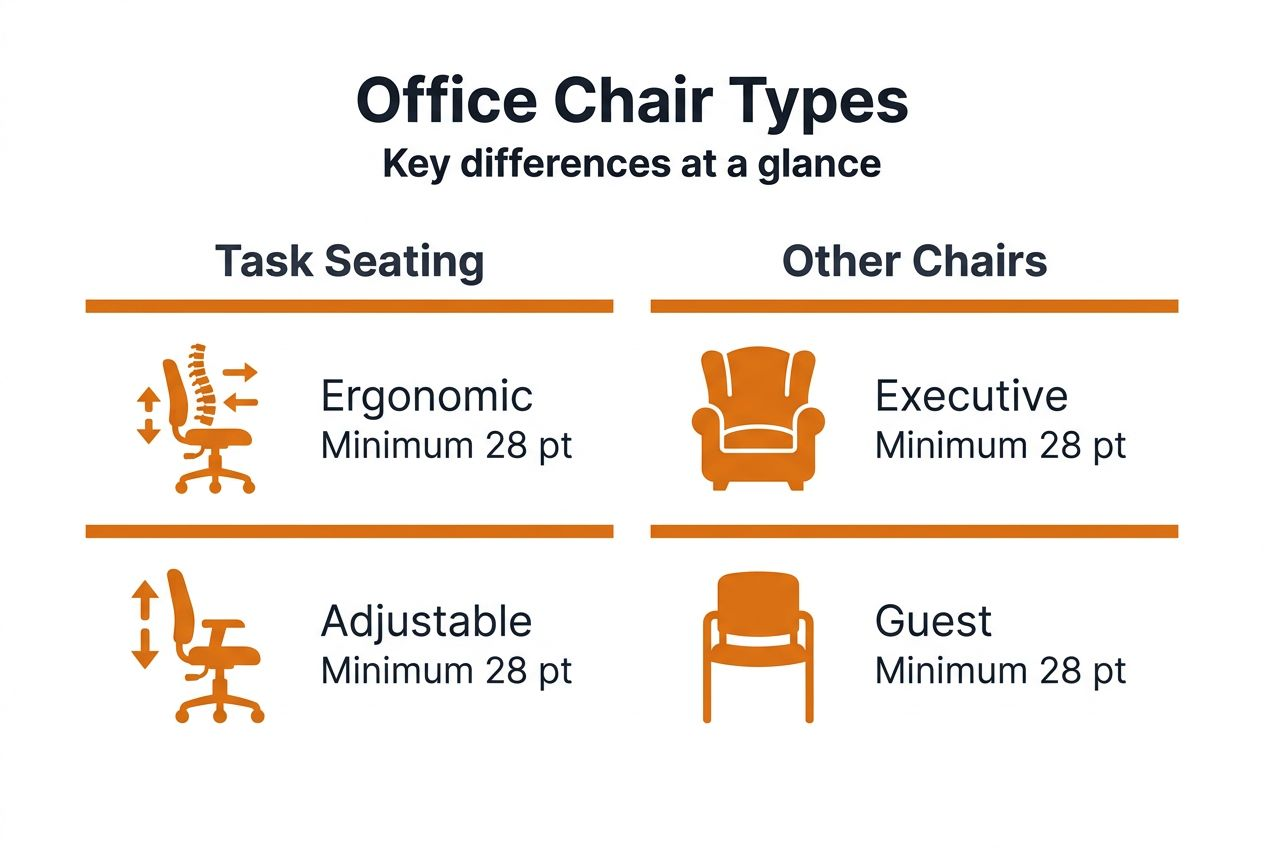
Task seating focuses specifically on prolonged desk work. These chairs maximise adjustability and ergonomic support for users spending most of their day seated. They typically feature moderate pricing reflecting functional design over luxury materials.
Executive chairs emphasise visual impact and status. They often include premium leather, high backs, and substantial padding. Whilst some executive chairs incorporate ergonomic features, many sacrifice adjustability for appearance. They suit occasional use in private offices but often underperform for extended desk work.
Guest chairs and conference room seating prioritise aesthetics and space efficiency for short-duration use. They rarely include adjustment mechanisms beyond basic height. These chairs work well for meetings and visitor areas but fail to support all-day sitting.
| Feature | Task Seating | Executive Chairs | Guest Chairs |
|---|---|---|---|
| Adjustability | Extensive (height, lumbar, arms, depth) | Limited (mainly height and tilt) | Minimal (usually fixed) |
| Ergonomic focus | High priority | Variable, often secondary | Low priority |
| Typical use duration | 6-8 hours daily | 2-4 hours daily | Under 2 hours |
| Price range | £150-£500 | £300-£1200+ | £50-£200 |
| Material emphasis | Breathable, durable | Luxury (leather, wood) | Aesthetic, cleanable |
| Movement support | Dynamic sitting encouraged | Static, limited recline | Fixed position |
Cost comparisons reveal task seating’s value proposition. A £300 task chair providing proper ergonomic support delivers better health outcomes than a £600 executive chair lacking adjustment features. The functional design approach concentrates budget on features that matter for daily desk work.
Material choices also differ significantly. Task seating typically uses breathable mesh or technical fabrics supporting long-term comfort. Executive chairs favour leather or premium upholstery that may trap heat during extended use. Guest chairs use easy-clean materials suited to multiple users but sacrifice personalised comfort.
Browsing office chair types helps visualise these distinctions. Each category serves legitimate purposes, but task seating specifically addresses the ergonomic demands of modern office work.
Procuring effective task seating requires systematic evaluation beyond price comparisons. Following structured criteria ensures investment delivers intended health and productivity benefits.
Start by identifying must-have ergonomic features. Prioritise chairs offering adjustable seat height, lumbar support depth and height, armrest positioning in three dimensions, seat depth, and backrest angle. These adjustments enable proper fitting across diverse body types.
Evaluate adjustment ranges carefully. A chair with adjustable lumbar support that only moves 2cm provides limited benefit. Look for specifications covering the 5th to 95th percentile of user populations. Manufacturers should provide adjustment range measurements.
Material quality impacts both comfort and longevity. Breathable mesh backrests suit warm offices and users who perspire easily. Quality foam maintains support over years rather than compressing. Durable casters and mechanisms withstand daily use without failure.
Certification provides objective quality validation. Look for chairs tested to BIFMA standards or equivalent European certifications. These verify structural integrity and adjustment mechanism durability through standardised testing protocols.
Key procurement considerations:
Pro Tip: Involve end users in selection when possible. Trial programmes where employees test shortlisted chairs improve satisfaction and adoption whilst revealing practical issues procurement teams might miss.
Avoid common procurement mistakes. Selecting chairs based solely on lowest price often yields inadequate adjustability. Buying impressive-looking chairs without verifying ergonomic features wastes budget. Neglecting training means adjustment features go unused, negating the investment.
Resources on choosing ergonomic office chairs provide additional guidance for procurement teams. Combining thorough research, user involvement, and proper implementation planning maximises return on task seating investments.
Successful task seating implementation extends beyond purchasing quality chairs. Organisations achieving best outcomes follow systematic rollout strategies.
Case studies demonstrate substantial benefits from comprehensive approaches. A UK financial services firm equipping 200 desk workers with adjustable task seating and mandatory ergonomic training reported 35% reduction in back pain complaints within six months. Their absenteeism related to musculoskeletal issues dropped by 28% over 12 months.
Another example involves a technology company implementing task seating alongside standing desk options. They documented 40% fewer ergonomic-related health complaints and 15% improvement in employee satisfaction scores. The key factor was comprehensive ergonomic education accompanying the equipment upgrades.
Training programmes prove essential for maximising benefits. Effective training covers proper adjustment procedures, posture principles, and the importance of movement throughout the day. Brief 15-20 minute sessions, either in person or via video, significantly improve outcomes. Providing adjustment quick-reference cards at each workstation reinforces training.
Maintenance and feedback systems sustain long-term benefits:
Building an ergonomic culture amplifies individual chair benefits. When organisations demonstrate commitment to workplace health through quality equipment and ongoing support, employees engage more seriously with ergonomic practices. This cultural shift extends beyond seating to encompass desk setup, break patterns, and overall wellbeing awareness.
Return on investment calculations validate task seating expenditure. Reduced absenteeism alone often recovers costs within two years. Adding productivity improvements and reduced health insurance claims strengthens the business case substantially. Organisations viewing ergonomic seating as infrastructure investment rather than discretionary spending achieve better outcomes.
Implementation success requires coordinating equipment quality, user education, maintenance systems, and cultural support. This comprehensive approach transforms task seating from simple furniture into a strategic workplace health initiative.
Upgrading your office seating supports both employee wellbeing and business performance. Furniture For Business offers extensive selections of ergonomic task seating designed for UK office environments.
Our ergonomic office chairs collection features adjustable task seating meeting the criteria discussed throughout this guide. Each chair includes detailed specifications covering adjustment ranges, materials, and certifications helping you make informed procurement decisions.
Complementing proper seating with appropriate desk solutions maximises ergonomic benefits. Browse office desks for ergonomic setups including height-adjustable options supporting movement throughout the workday. Complete your workspace optimisation with office accessories to complement seating such as monitor arms, keyboard trays, and footrests.
Free UK mainland delivery and straightforward returns simplify procurement for projects of any size. Invest in equipment proven to reduce injury risk whilst improving productivity and employee satisfaction.
Task seating prioritises ergonomic adjustability specifically for prolonged desk work, offering features like lumbar support depth adjustment and armrest positioning. Executive chairs emphasise visual presence and luxury materials, often sacrificing comprehensive adjustability for aesthetic impact. Task seating typically delivers better value for daily office use whilst executive chairs suit occasional use in private offices.
Adjustable lumbar support maintains the spine’s natural curvature during sitting, reducing strain on lower back muscles and ligaments. This prevents the slouching that causes chronic back pain affecting concentration and comfort. Proper lumbar positioning significantly lowers musculoskeletal disorder risk amongst desk workers spending six or more hours daily seated.
Prioritise chairs with extensive adjustment ranges accommodating the 5th to 95th percentile of user body dimensions, particularly in seat height, depth, and armrest positioning. Select materials balancing breathability and comfort across different preferences and climates. Include comprehensive ergonomic training ensuring all users understand adjustment procedures and proper positioning for their individual needs.
Yes, even advanced ergonomic chairs fail to prevent discomfort or injury without correct adjustment and posture awareness. Chairs left at default settings rarely match individual user dimensions properly. User education covering adjustment procedures and healthy sitting habits proves critical for realising the full protective benefits of quality task seating investments.

Phone: 0330 043 4114
VAT no. GB 991 8681 60
Company no. 07250570