Entry-level electric standing desks in the UK generally start below £200, mid-range models suitable for most offices cost several hundred pounds, and premium or bespoke commercial desks typically start around £1,000 and can go higher. For most UK business purchases, the mid-range band gives the best mix of stability, warranty cover, and desktop size without paying for features you won’t use. Whatever budget you land on, check the frame’s payload rating and warranty length before size or colour.
TL;DR:
- Most mid-range electric standing desks in the UK cost between £350 and £495, offering a balance of stability, warranty, and desktop quality suitable for most offices.
- Dual-motor lifts, reinforced frames, larger or non-standard desktop shapes, and integrated features like advanced controls significantly increase the price compared to basic models.
- Warranty length, payload capacity at maximum height, and compliance with standards like EN 527 are key indicators of a desk’s reliability and suitability for heavy or frequent use.
- Delivery often does not include VAT or outside mainland UK, so buyers should confirm these costs upfront to avoid budget overruns on larger orders.
- Investing in higher-end desks pays off when used heavily by multiple users, for long shifts, or in client-facing spaces, as durability and stability reduce downtime and replacement costs.
The UK market for height-adjustable desks splits fairly cleanly into three price bands, and knowing which one you’re shopping in saves a lot of wasted browsing.
Entry-level (£150–£280): This band covers basic electric sit-stand desks with single-motor lifts, laminate tops, and limited memory presets. IKEA’s UK range sits right at the accessible end here, with the TROTTEN model starting around £179. KOWO advertises electric desks from roughly £145 to £270 on sale, which confirms that genuinely usable electric height adjustment is available well under £200 if you’re not fussy about desktop finish or frame heft. These desks suit satellite offices, hot-desking zones, or businesses testing whether standing desks will actually get used before committing budget to a full rollout.
Mid-range: This is where most commercial buyers should be looking. Desks in this bracket typically bring dual-motor lifts, sturdier steel frames, better desktop materials (thicker laminate or real wood veneer), and more reliable memory height settings. IKEA’s higher-specification lines, including the MITTZON and IDÅSEN ranges, have models priced up to about £495 depending on size and finish. This range balances upfront cost with daily reliability for typical office orders.
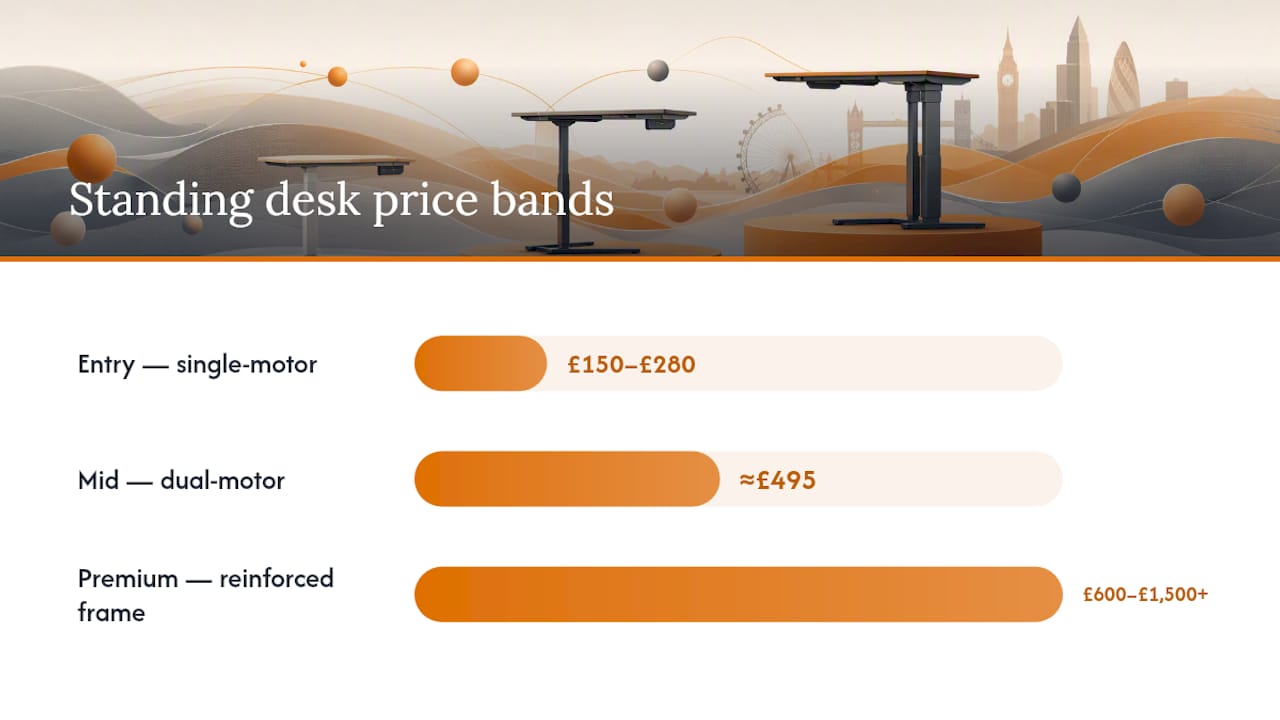
Premium (£600–£1,500+): Specialist and design-led brands push well past £1,000 for commercial-grade desks with reinforced frames, premium desktop options, and longer warranties. Herman Miller’s UK standing desk collection lists models from around £1,012, reflecting the added engineering, materials, and brand positioning at this end. You’d typically justify this tier for executive offices, client-facing spaces, or desks that will run multiple shifts a day for years without a replacement cycle.
A few things push a desk from one band into the next:
One thing worth flagging early: most listed prices you’ll find while browsing are shown ex VAT or with delivery quoted separately, particularly on B2B-facing retailer pages. Desktronic’s UK listings are a good example of the “from £X” pricing style that’s common across the sector. Always check whether the headline figure includes 20% VAT and UK mainland delivery before comparing quotes side by side, because a £350 “from” price with VAT and delivery added can easily land closer to £450.
If you’re weighing whether the extra spend on a mid-range or premium desk is worth it at all, it helps to look at the ergonomic case for height-adjustable desks before deciding your budget ceiling — the productivity and wellbeing argument often justifies moving up a band.
Two desks that look near-identical in a product photo can differ by £300 once you look at what’s underneath the top. Here’s what actually drives the price difference.
Motor system. Single-motor desks use one motor and a synchronising bar to raise both legs together. They’re cheaper to make and buy, but they tend to feel less stable at full height and struggle more with heavier loads. Dual-motor desks put a motor in each leg, which lifts more evenly, handles higher payloads, and generally lasts longer under repeated daily use. Product testing on commercial-spec frames consistently flags dual-motor lifts and T-style leg designs as the features that matter most for stability once you’re loading a desk with dual monitors, a laptop dock, and a desk lamp.
Frame and leg design. T-leg frames are common and cost-effective; C-leg and heavier box-section frames cost more but resist wobble better, especially at the top of the height range. For any desk that will be raised and lowered multiple times a day by different users, frame rigidity matters more than most buyers expect until they’ve lived with a wobbly one.
Desktop material and size. Laminate is the budget default. Veneer and solid wood cost considerably more but wear better and look sharper in client-facing spaces. Larger tops (1600mm+) and non-rectangular shapes both add cost regardless of material.
Controls and presets. Basic desks offer up/down buttons only. Better ones add digital displays, multiple memory-height presets, and sometimes app or scheduling integration, all of which nudge the price upward.
Cable management and power. Integrated cable trays, grommets, and built-in USB or mains sockets are small additions individually but add up quickly across a multi-desk order.
Payload and stability at height. Cheaper desks often quote generous payload figures but visibly flex when fully extended with a real-world load. Industry guidance on commercial buying consistently points out that low-cost frames often compromise stability at full height, which is exactly the scenario an office desk hits every single day.
Warranty terms. This is the trust signal too many buyers skip. Consumer-grade desks often carry a 2 to 5-year warranty on the motor and frame; genuinely commercial-spec desks tend to offer longer cover reflecting daily multi-user use. Look for desks tested against EN 527, the European standard covering dimensions and stability for office work tables, since compliance signals the frame has actually been load-tested rather than just marketed as “heavy duty.”
Pro Tip: Before comparing two desks on price alone, check the stated payload weight at maximum height, not just the flat-desk figure. A desk rated 80kg flat can behave very differently at 1250mm with monitors on board.
Getting the right desk for a UK office isn’t about finding the cheapest option that technically adjusts. It’s about matching the desk to how it will actually be used, then stress-testing your shortlist with the right questions before you commit budget.
Start with these criteria:
Once you’ve narrowed a shortlist, put these questions to any supplier before ordering:
Watch for a handful of red flags that tend to separate a reliable purchase from a regretted one:
For commercial buyers, the real comparison isn’t sticker price. It’s total cost of ownership, meaning purchase price plus delivery, assembly, expected lifespan, and the cost of replacing a desk that fails after eighteen months. A £220 desk that needs replacing in two years costs more over five years than a £420 desk that’s still solid after five. If you’re speccing more than a handful of desks, our guide to setting up height-adjustable desks properly is worth a read before you finalise quantities, since getting the setup right the first time avoids costly retrofits later.
Logistics catch out more UK business buyers than the desk price itself, mostly because “free delivery” rarely means what people assume.
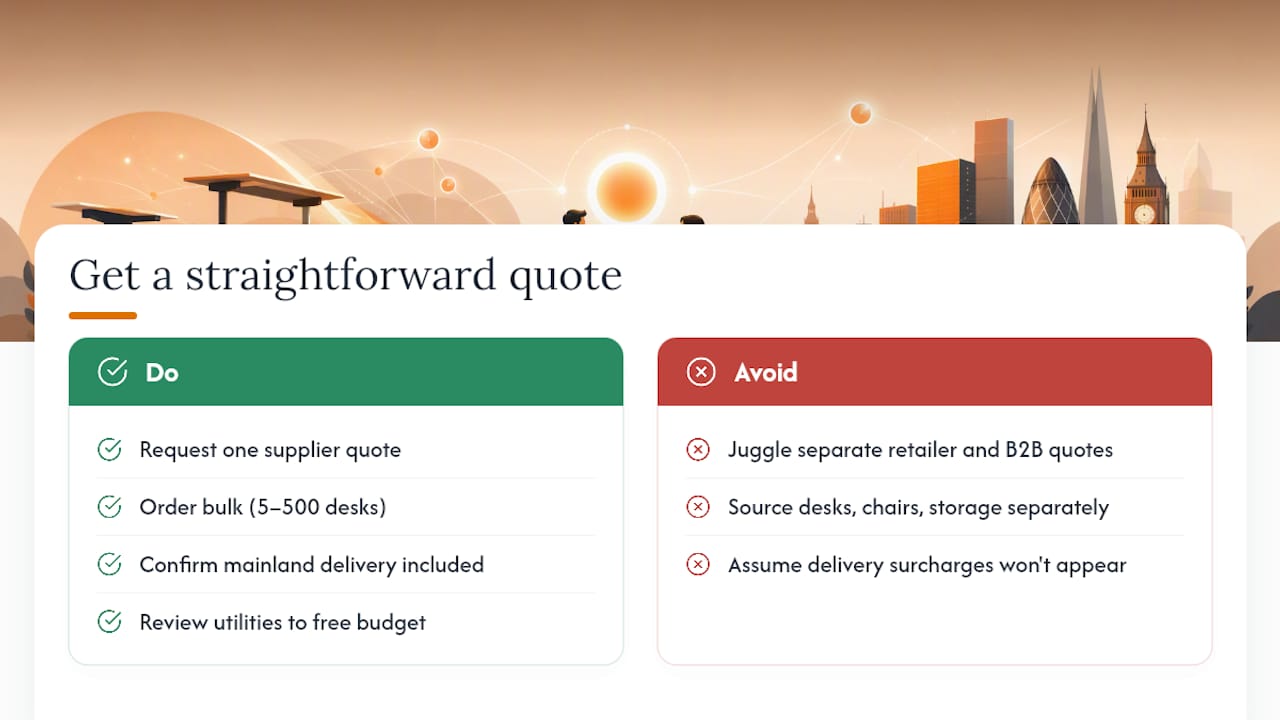
Delivery coverage. Most UK retailers advertise free delivery, but that typically applies to UK mainland addresses only. Northern Ireland and the Channel Islands frequently incur additional charges or longer transit times, and it’s worth confirming this explicitly before you order for a multi-site business with locations outside mainland Britain.
Assembly. Many desks arrive flat-packed, and while single-user assembly is often manageable in 30 to 60 minutes with basic tools, a bulk office order of twenty or more desks is a different proposition. Some suppliers offer paid assembly services; others leave it entirely to the buyer. Factor this into your total cost and your project timeline, particularly if desks need to be ready before staff return from a refurbishment.
Lead times. Standard stock desks typically ship within a few days to a couple of weeks. Bespoke desktop finishes or large bulk orders can extend that considerably, so build lead time into any office fit-out schedule rather than assuming next-week delivery is guaranteed.
VAT and invoicing. UK retail prices for desks are usually shown inclusive of 20% VAT for consumer listings, but B2B and trade pricing pages often quote ex-VAT figures. Before approving a purchase order, check whether the quoted price includes VAT and whether delivery is itemised separately. This single check prevents budget overruns on larger office orders where the VAT difference alone can run into hundreds of pounds.
Furniture for Business supplies height-adjustable desks specifically for UK organisations, not individual home shoppers, which shapes how the range is built. The office desks category covers standing desks alongside bundles and accessories, so procurement teams can spec an entire room in one order rather than piecing it together across multiple suppliers.
Options for pricing adjustments on larger fit-outs may be available, which matters when you’re ordering desks for a floor of fifty rather than a single home office. Free delivery to the UK mainland removes one of the most common budgeting surprises covered above, and the range aligns with EN 527 stability and dimension guidance.
If you’re specifying desks for a refurbishment, check the standing desk dimensions guide for EN 527-aligned sizing before finalising quantities. For teams wanting a specific starting point, the Air height-adjustable slimline desk with cable ports is a practical mid-range option worth reviewing as a benchmark against other quotes.
Higher spend earns its keep in specific circumstances, not universally. If a desk will be shared by multiple people, adjusted several times daily, or used across long shifts in a busy office, the extra cost of a dual-motor frame and a longer warranty pays for itself in avoided downtime and replacement costs. The same logic applies to any desk that’s visible to clients, where a laminate top starting to peel after two years is a worse outcome than the price difference ever was.
An entry-level desk is entirely defensible for satellite spaces, occasional-use rooms, or situations where standing is genuinely occasional rather than routine. Not every desk in a building needs to be commercial-grade.
For larger rollouts, buy two or three models from your shortlist first and run them for a few weeks before committing to the full order. It’s the cheapest insurance against discovering, fifty desks in, that the motor whines or the top flexes more than anyone noticed on a spec sheet.
— Furniture
Furniture for Business exists for exactly the buying situation this article covers: a procurement team that needs real UK prices, bulk pricing on multiple units, and delivery that actually reaches every mainland site without a surprise surcharge on the invoice.

Rather than juggling separate quotes from a home-focused retailer and a specialist B2B supplier, you can spec desks, chairs, and storage from one range built for UK businesses buying five to five hundred desks at a time. The office desks range covers entry through commercial-spec standing desks, and if you’re planning a wider office refresh, the office chairs collection and office storage range sit alongside it so you’re not sourcing furniture from three different suppliers. If budgeting across a wider refurbishment, it’s also worth reviewing your other overheads, since guides on switching business utilities often free up budget that can go straight into better desks and chairs.
Visit the office desks category to check current stock and bulk pricing, or get in touch through Furniture for Business to request a quote for your specific desk count and delivery address.
Prices and examples in this guide are drawn directly from current UK retailer listings and industry references, including IKEA’s standing desk range for entry pricing, KOWO’s electric desk listings for sub-£200 examples, and Herman Miller’s UK store for premium benchmarks. Buyer experience data comes from Trustpilot reviews of UK desk suppliers, useful for checking delivery and reliability before ordering.
Most UK buyers pay between £280 and £600 for a solid mid-range electric standing desk, with entry models available from around £150 and premium commercial desks running £1,000 or more.
There’s no single “best” desk for every office, but for shared or heavy-use commercial spaces, a dual-motor desk with a tested frame and a commercial-grade warranty consistently outperforms single-motor entry models on stability and lifespan.
It’s a workplace guideline suggesting a balance of seated, standing, and moving or stretching time in every 30-minute cycle, aimed at breaking up prolonged static posture through the working day.
Cost mainly reflects the motor system, frame gauge, and desktop material: dual-motor lifts, heavier steel frames, and premium veneer or solid tops all cost more to manufacture than the single-motor, laminate-topped desks found at the entry end of the market.

Phone: 0330 043 4114
VAT no. GB 991 8681 60
Company no. 07250570