Vacuum first, match your cleaner to the chair’s material, and log every clean against the asset. That order matters more than the products you buy. Get the sequence wrong and you’ll grind dust into fabric, void a warranty with the wrong chemical, or replace a chair that only needed its castors cleared.
TL;DR:
- Vacuum the chair thoroughly before using any cleaning products to prevent grinding dirt into fabrics or meshes.
- Match cleaning methods and chemicals to the specific material, avoiding excess moisture on fabric and handling leather with minimal water.
- Conduct regular inspections of mechanisms like castors and gas lifts monthly to catch issues early and keep detailed maintenance records.
- Deep-clean high-traffic or shared chairs at least weekly, with a full annual professional service for upholstery and overall condition.
- Repair parts costing less than 40% of a new chair and withstand routine cleaning to prolong furniture life and maintain warranty coverage.
Every clean starts the same way, regardless of what the chair is upholstered in: vacuum the seat, backrest and crevices around the base first. Wetting a dusty chair before removing loose debris just grinds grit into the weave, turning something you could have lifted with suction into a stain you’re now scrubbing at, according to practitioner guidance on efficient cleaning and disinfection. Once that’s done, the method splits by material.
Mesh backs and seats. After vacuuming, spot treat with a mild soap solution on a soft cloth, working in small sections. Avoid saturating the weave, and never use high heat to speed drying. Mesh dries fastest left in open air near a window or under a ceiling fan.
Fabric upholstery. Vacuum thoroughly, then blot spills rather than rubbing them, which spreads the stain and pushes it deeper into the padding. Use a manufacturer-approved upholstery cleaner and test it on a hidden patch first. Never soak the foam underneath. Once wet, foam can take days to dry properly, and damp padding is where mould gets a foothold.
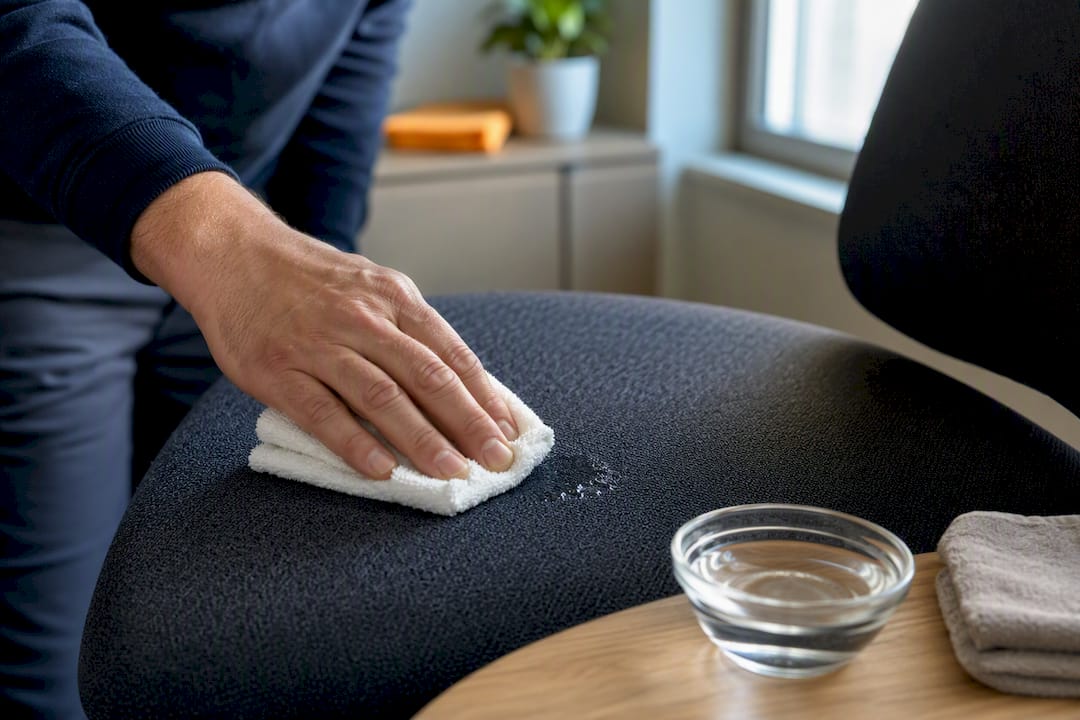
PU and vinyl. A pH-neutral cleaner handles most day-to-day marks on PU/vinyl office chairs. For heavier soiling, a diluted alcohol solution works if the manufacturer confirms it’s safe for that finish. Skip bleach entirely unless the product specification explicitly states it’s bleach-safe, since many vinyls discolour or crack under it.
Genuine leather. Use as little water as possible. A pH-balanced leather cleaner lifts most marks, and a quarterly conditioning treatment stops the hide drying out and cracking, which is the single most common way commercial leather seating fails early.
Hard plastic and metal. Armrests, bases and control levers respond well to a mild detergent or standard disinfectant wipe. Keep solvents away from powder-coated metal frames, which strip and dull far faster than most people expect.
Cleaning cadence matters as much as method. Guidance on cleaning shared office seating recommends weekly to biweekly deep cleans for high-traffic chairs in hot desking or visitor areas, dropping to quarterly or annual for chairs assigned to a single person. The material protocol above stays fixed, but how often you run it depends entirely on who’s sitting in the chair.
The schedule below assumes shared or hybrid seating; assigned desk chairs in low-traffic areas can stretch these intervals, as noted above.
That tiered structure, daily visual checks through to annual deep-clean cycles, mirrors what commercial cleaning standards guidance recommends for reducing lifecycle costs across a chair fleet.
Pro Tip: Put a small cleaning station, wipes, a spray bottle of approved cleaner, a cloth, near breakout areas or shared meeting rooms rather than locking supplies in a cupboard. Convenience is what actually drives staff to wipe a chair down between uses.
A monthly clean is only half the job. Mechanisms fail quietly long before upholstery looks dirty, and a five-minute check catches most of it before it becomes a breakdown or a safety issue.
Keep a record for each chair: asset tag, model number, purchase date, a log of cleaning dates, and photos of any defect found. Many manufacturers will void warranty cover if the wrong chemicals were used or if there’s no maintenance record to support a claim. A basic spreadsheet with photos is usually enough to satisfy that requirement, and it’s far cheaper than losing a warranty claim on a fifty-chair order because nobody wrote anything down.
Run the numbers before you commit either way. If parts plus labour come to less than 30 to 40% of the cost of a new equivalent chair, and the repair doesn’t compromise the ergonomics the chair was bought for, repair it.
Hygiene overrides cost, though. Upholstery that’s torn beyond repair, or cushioning that’s absorbed moisture and can’t be brought back to a clean, odour-free standard, needs to leave the fleet regardless of what the repair invoice would look like. No spreadsheet justifies keeping a chair nobody wants to sit in.
For chairs built to a higher original spec, reupholstery or swapping worn parts, gas lifts, castors, arm pads, is often the better long-term move. It extends the working life of furniture that was worth the investment the first time, and it’s usually a fraction of the cost of a full replacement.
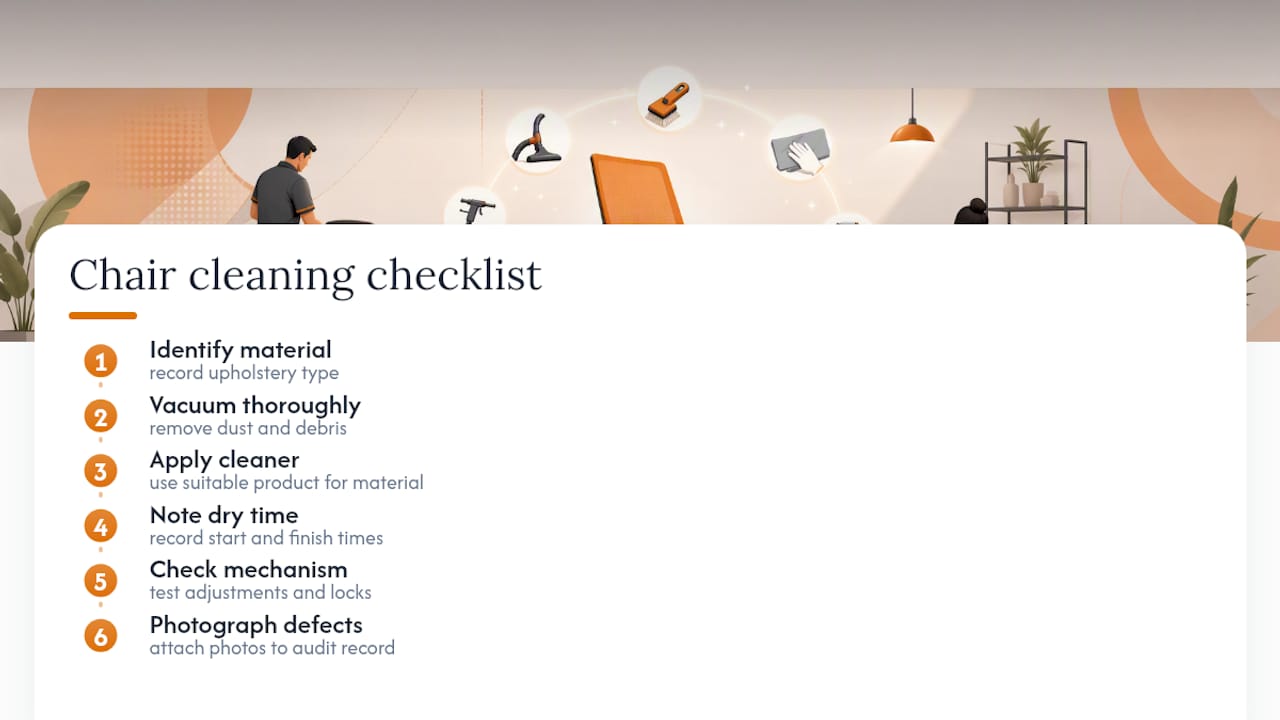
A workable cleaning checklist doesn’t need to be complicated: material identified, vacuum done, cleaner applied, dry time noted, mechanism checked, defects photographed. That five-line structure covers most of what an audit will ever ask for.
For mesh seating specifically, Furnitureforbusiness’s mesh chair cleaning routine walks through the eight steps in more depth than space allows here. If you’re specifying replacements or additions to a fleet, the office chairs range covers ergonomic and task seating built with commercial use in mind. Bulk-order pricing, spare-part access and free UK mainland delivery all matter more once you’re maintaining dozens of chairs rather than one.
Most guidance on this subject treats cleaning as a one-off task: get the stain out, move on. That’s the wrong frame for a commercial fleet. The chairs costing you money aren’t the ones with a coffee mark on the seat, they’re the ones with a gas lift that’s started to sink, unnoticed for months because nobody was checking mechanisms on a schedule.
The order of operations matters more than the product you buy. Vacuum before you clean, match the chemical to the material, and write down what you did. Skip any one of those three and you’re either damaging upholstery you didn’t need to, or you’re one chemical mismatch away from a voided warranty on a fifty-unit order.
If there’s one place to put your effort first, it’s the monthly mechanism check, not the weekly wipe-down. A dirty chair is a nuisance. A gas lift that fails under someone is a liability. Prioritise accordingly, and build the paperwork habit early: it’s far easier to log a clean the day you do it than to reconstruct three years of maintenance history when a warranty claim depends on it.
— Furniture
Commercial seating should be chosen to withstand thorough cleaning and inspection routines, rather than furniture that deteriorates quickly after deep cleaning. Options such as bulk ordering, sample ordering, and spare parts support can help businesses test chairs against their cleaning regimes and manage mechanical repairs more feasibly.

The OE Austin Heavy Duty Task Operator Office Chair in Black PU is a solid example of what to look for: a PU finish that wipes clean with a pH-neutral cleaner, no delicate fabric weave to worry about, and a build rated for the kind of daily turnover shared desks see. Browse the full office chairs range or request a quote or sample for your team to see how it holds up against your own cleaning schedule before you order at scale.

Phone: 0330 043 4114
VAT no. GB 991 8681 60
Company no. 07250570