Phased furniture installation delivers and fits out an office in stages rather than all at once, so staff can keep working while some floors or zones are still being furnished. It’s the right call for occupied buildings, wave moves between departments, or sites where construction handover happens area by area. If any of that describes your project, the first move is to appoint a named project lead and commission a phased installation plan before you order a single chair.
That plan needs to answer a few things straight away:
Phased furniture installation works because it separates delivery, staging and fit-out into stages that match construction handover, keeping the business operational throughout.
| Point | Details |
|---|---|
| Appoint a project lead early | Give one named person authority to sign off site readiness and approve changes. |
| Plan sequencing beyond phase one | Map every phase to the actual construction release schedule, not an estimate. |
| Treat warehousing as a project line | Budget staging and receiving inspection as a workstream, not an afterthought. |
| Run a readiness checklist per phase | Confirm construction, protection, access and power before installers arrive. |
| Budget for day-2 follow-up | Include snagging visits and adjustment work in the initial contract. |
| Work with a phased-install specialist | Furnitureforbusiness supports staged delivery, bulk ordering and follow-up visits across seating, desks and storage. |
A phased project runs through four broad stages, though the detail changes depending on how many zones you’re staggering and how tight the construction schedule is.
Cost and timeline decisions sit mostly at stages one and two. Getting the sequencing wrong here is what causes a phased install to run over budget, because FF&E logistics (freight, receiving, staging and installation) determine whether the whole package lands on schedule, not just the on-site labour.
The mistake most office managers make is planning phase one in detail and treating everything after that as “we’ll sort it later.” That’s how furniture ends up in the wrong place twice, which is the single most expensive error in a staged install.
Map your phases against the actual construction release schedule or occupancy waves, not against a generic project timeline someone built in a spreadsheet. If floor three hands over six weeks after floor two, your furniture order and delivery slots need to reflect that gap exactly, not an estimate of it.
Before you commit to a sequence, get answers to three questions:
Then decide between just-in-time delivery and a receiving warehouse. Just-in-time works when your construction schedule is reliable. A warehouse buys you a buffer when it isn’t, at the cost of storage fees.
Pro Tip: Avoid double-handling wherever you can. Moving furniture twice because a zone wasn’t ready adds labour, damage risk and cost that rarely gets budgeted for upfront.
Warehousing isn’t an afterthought bolted onto delivery. It’s a project workstream in its own right, and treating it as an explicit line item rather than a logistics detail is what keeps a multi-phase project on schedule.
Receiving inspection has to happen the moment goods arrive, not weeks later when a zone finally opens:
A staged plan built around the construction release schedule avoids the classic failure mode: furniture delivered into a space that isn’t ready, or missing items discovered only at handover.
Before installers move into any new zone, someone needs to physically confirm it’s ready. That means construction is genuinely finished (not “nearly”), floors are protected, access routes and lifts work, and power and data points are live where they need to be.
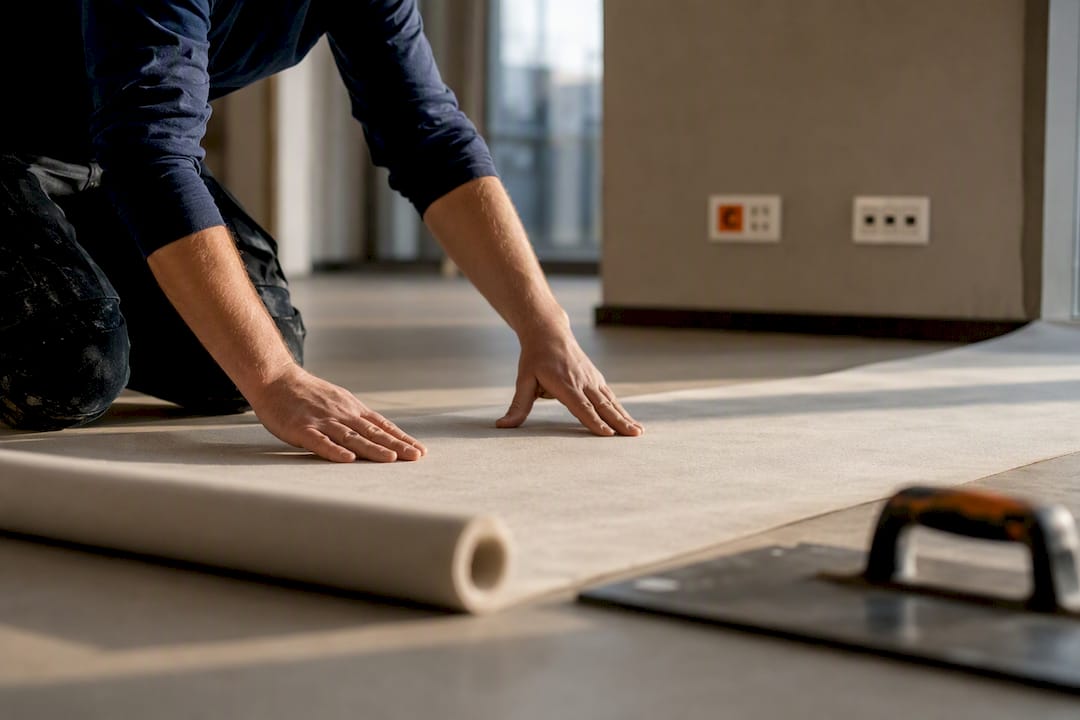
Assign one named person the authority to sign off readiness for each phase. Without that, you get disputes about who caused a delay and who pays for it.
| Readiness item | Who confirms it |
|---|---|
| Construction and snagging complete | Site manager or main contractor |
| Floor protection in place | Installation project lead |
| Power and data live | Electrician or IT contractor |
| Access, lifts and loading confirmed | Facilities or building manager |
A five-minute checklist run before each phase can save hours of rework, because catching an unfinished floor before furniture arrives is far cheaper than moving it out again afterwards.
Communication failures, not furniture problems, are what actually derail phased installs. Every stakeholder, from the main contractor to the office manager, needs one point of contact for the furniture workstream, and that person needs authority to make decisions without waiting for a committee.
Build a change control process before you need one:
Immediate information flow between project managers, contractors and installers is what prevents a delay in one phase from cascading into every phase after it. For phased construction projects generally, the same principle holds: the schedule only survives if information moves faster than problems do.
Every phase should close with a punch list, not just a delivery note. Walk the space with whoever signed off readiness and note anything that isn’t right: a wobbly desk leg, a chair with the wrong cylinder, a missing cable tray.
Expect a handful of common day-2 issues:
Build follow-up visits into the contract from the start, not as a favour requested afterwards. Project case studies consistently show phased approaches let occupancy begin on schedule, with installers returning after move-in to finish remaining items and close out snagging. Put that return visit in writing, with a timeframe, before you sign anything.
Furnitureforbusiness works with UK office managers and procurement teams across ergonomic seating, height-adjustable desks, meeting-room furniture and storage, which matters here because a phased project touches all four categories at once, often in different zones on different weeks.
Before briefing any supplier, have these ready:
Pro Tip: Ask any supplier upfront how they handle receiving, staging and day-2 visits. If they can’t describe a process, that’s your answer.
A specialist B2B supplier with warehousing capability and product depth across desks and storage removes a genuine coordination headache from your plate.
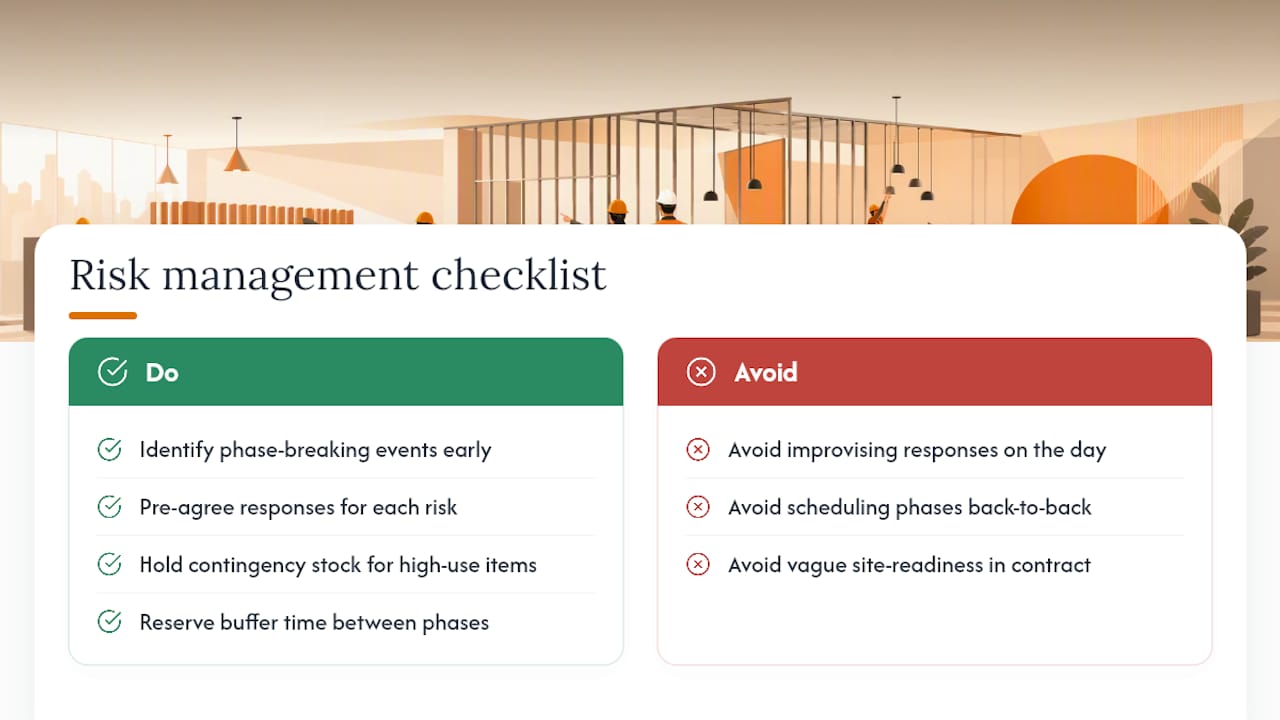
The biggest risk in a phased install isn’t a single failure point, it’s accumulation. A two-day delay in phase one becomes a two-week problem by phase four if nothing absorbs the slippage. Build contingency into the schedule itself, not just into your patience.
Start by identifying what actually breaks a phase: late construction handover, damaged stock discovered at receipt, a contractor clash over access, or a spec change that arrives after ordering has closed. Each of these needs a pre-agreed response, not an improvised one on the day.
Hold a contingency stock buffer for high-use items like task chairs and desk accessories, since these are the easiest to reorder quickly if something arrives damaged. Reserve buffer time between phases rather than scheduling them back-to-back, so a delay in one doesn’t automatically eat into the next. Define, in writing, who absorbs the cost if a phase is delayed through no fault of the furniture supplier, such as late construction handover.
Contractual clarity matters more here than most procurement teams expect. Defining “site readiness” conditions and the acceptance process for each phase in the contract prevents disputes later about who’s responsible when double-handling costs appear. It also gives your project lead something concrete to point to when a contractor pushes back on a delay.
Review risk at every phase gate, not just at the start. What looked low-risk in the planning stage can change once phase one reveals how the building actually behaves under construction.
Installing furniture around working staff carries risks that a full, empty-building fit-out simply doesn’t have. People are walking through zones with pallets, tools and partially assembled furniture, often on the same day.
Segregate installation zones from occupied areas wherever the floor plan allows, using barriers or signage rather than trusting people to notice work in progress. Schedule the noisiest or most disruptive tasks, drilling, panel assembly, heavy lifting, outside core working hours when the floor is quieter. Brief installers on fire escape routes and any building-specific hazards before they start, not after they’ve already begun unloading.
Keep walkways genuinely clear at all times, not just at the end of the day. A pallet left in a corridor overnight is a trip hazard for the cleaning crew and the first person in the following morning. Anyone using power tools or lifting equipment near occupied desks needs a visible, understood cordon, and staff need to know it’s there before they arrive at their desk.
Communicate installation days to affected staff in advance, including which routes will be blocked and for how long. This isn’t just courtesy, it reduces the chance of someone wandering into an active work zone because nobody told them. Where a phase involves electrical or IT work alongside furniture assembly, confirm isolation procedures with the relevant contractor before anyone starts, so nobody is working live cabling near an area where desks are being drilled and fitted.
Disruption during a phased install rarely comes from the furniture itself. It comes from the knock-on effects: noise interrupting calls, blocked walkways, or staff not knowing where they’re supposed to sit that week.
Scheduling work in low-activity windows, evenings, weekends, or quieter parts of the working day, and using departmental point people, gives installers timely access to areas without constantly interrupting people mid-task. A departmental point person also means installers aren’t chasing five different people to find out where a desk should go.
Give staff advance notice of exactly what’s changing and when, not a vague “works ongoing this week” email. Specifics reduce anxiety and stop people improvising workarounds that then need undoing.
Stagger moves by team rather than by floor where possible, so a whole department isn’t displaced at once. Keep a small pool of spare chairs and basic desk accessories on hand during the transition, since minor shortages during a phase are common and a five-minute fix beats a half-day wait for a reorder. Finally, protect at least one quiet working area throughout the entire project, even if it means temporarily repurposing a meeting room. Staff tolerate a lot of disruption if they know somewhere in the building still works normally.
The conventional advice on phased furniture installation treats it as a scheduling problem: get the delivery dates right and the rest follows. That’s backwards. The projects that actually stay on budget treat warehousing, sequencing and day-2 follow-up as line items with their own cost and their own owner, not as details that sort themselves out once the desks turn up.
Most of the failures I’d point to trace back to one thing: nobody named a single person with authority to say “this zone isn’t ready” and make it stick. Committees don’t sign off site readiness well. A named project lead does, because they own the consequence of getting it wrong.
If you take one thing from this, prioritise the contract language before you prioritise the delivery dates. Define site readiness, define who pays for double-handling, and budget for a day-2 visit from the start. Everything else, sequencing, staging, communication, becomes far easier to manage once those three things are locked down in writing rather than assumed.
Furnitureforbusiness supplies ergonomic seating, height-adjustable desks, meeting-room furniture and storage to UK businesses running exactly this kind of staged fit-out, with bulk-order pricing and free delivery to the UK mainland built in.

What sets a phased project up to succeed is a supplier who treats staging and day-2 follow-up as part of the job rather than an extra you have to negotiate for. That means confirming receiving and inspection processes upfront, staging deliveries against your actual construction release dates, and returning after move-in to handle snagging, whether that’s a chair needing adjustment or a desk that arrived a fitting short.
If you’re planning a multi-phase office fit-out, start by browsing office chairs and office desks for bulk-order options, or request a site survey and phased-install quote directly through Furnitureforbusiness to get your zone-by-zone plan and delivery schedule confirmed before you order.
What is phased furniture installation?
It’s a staged approach to fitting out an office, where furniture is delivered and installed zone by zone or floor by floor rather than all at once, usually to keep a space operational during the work.
How long does a phased installation take compared to a single install?
It generally takes longer overall because of the coordination between phases, though it lets occupancy and normal business activity continue throughout rather than pausing completely.
Do I need a warehouse for a phased delivery?
Not always, but a receiving warehouse gives you a buffer when construction dates are uncertain, letting you take delivery on schedule even if a zone isn’t ready to receive furniture yet.
Who should sign off each phase before installation starts?
A named project lead with authority over the furniture workstream, working alongside the site or facilities manager who can confirm construction, access and services are genuinely ready.
What should be included in a punch list after each phase?
Any item that isn’t right at handover, desk levelling, missing parts, chair adjustments, or storage anchoring, along with an agreed timeframe for the supplier to return and resolve it.

Phone: 0330 043 4114
VAT no. GB 991 8681 60
Company no. 07250570