TL;DR:
- Ergonomic audits significantly reduce employee turnover and absenteeism, delivering strong financial returns.
- Implementing regular assessments and involving workers helps prevent musculoskeletal injuries and improve safety culture.
Ergonomic audits pay back far more than they cost. Organisations that run comprehensive ergonomics programmes achieve about a 48% reduction in employee turnover and a 58% reduction in absenteeism. Those are not marginal gains. They represent a direct hit to two of the largest hidden costs in any UK business: replacing staff and covering absence.
The core case for investing in ergonomic audits rests on three pillars:
The numbers: musculoskeletal injuries account for nearly 30% of all serious workplace injury and illness cases, making them one of the leading causes of lost productivity across every sector, including UK offices.
The most immediate benefit is the reduction in musculoskeletal disorders (MSDs). These injuries develop gradually through repetitive motion, awkward postures, and prolonged static positions, and they rarely announce themselves until the damage is done. A structured ergonomic workplace evaluation catches those risks before they become claims.
Beyond injury prevention, the evidence points to five consistent outcomes from well-run ergonomics programmes:
The case study evidence is striking. Research published by North Carolina State University’s Ergonomics Centre found that companies implementing ergonomics programmes achieved notable productivity gains through more efficient workstations, alongside significant reductions in lost workdays and workers’ compensation costs.
| Outcome | Typical improvement |
|---|---|
| Employee turnover | About 48% reduction |
| Absenteeism | About 58% reduction |
| Lost workdays | Significant reduction |
| Workers’ compensation costs | Significant reduction |
| Productivity | Notable increase |
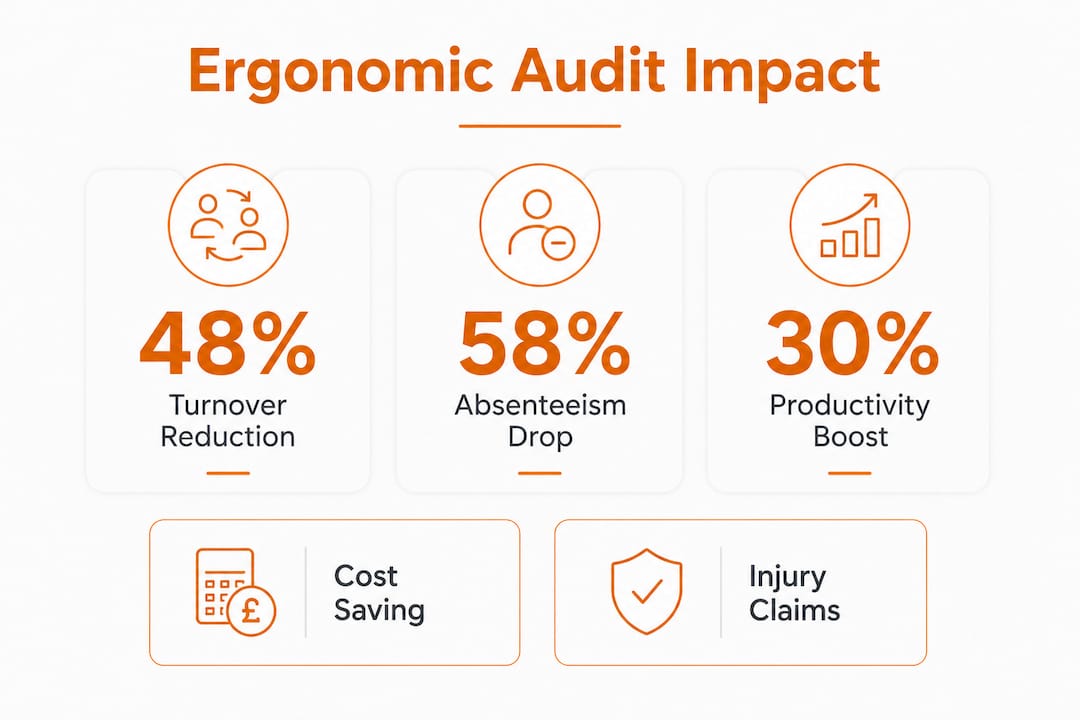
Source: North Carolina State University Ergonomics Centre, based on compiled case study data.
The importance of ergonomic assessments goes beyond compliance. Academic analysis frames the ergonomic audit as a genuine management function, one that integrates human capability into organisational strategy rather than simply ticking a regulatory box.
The single biggest mistake organisations make is treating an ergonomic audit as a one-off exercise. It works best as an ongoing process embedded in routine safety management, not a project that gets filed away after the consultant leaves.
A practical implementation follows a clear sequence:
The participatory element deserves particular attention. OSHA’s ergonomics guidance identifies worker involvement as the core of any successful programme. Employees can identify hazards, suggest practical solutions, and evaluate whether changes actually work in practice.
Pro Tip: Supervisors can be trained to perform ergonomic risk identification in a matter of hours using tools like the ERAT. This makes ongoing risk management accessible without requiring a specialist ergonomist on-site every time.
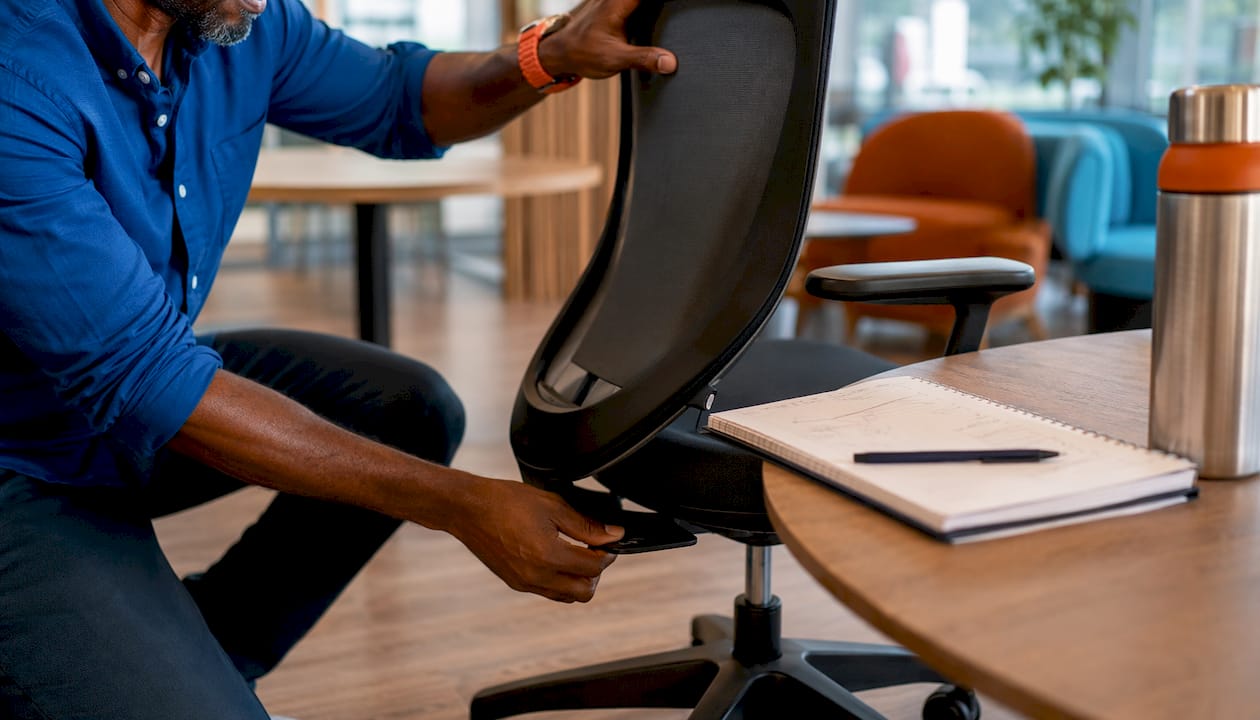
Avoid the trap of over-analysis. The goal is practical solutions, not a perfect academic assessment. A less precise tool that leads to a real fix outperforms a sophisticated one that produces a report nobody acts on.
Reactive injury management is expensive and unpredictable. A single MSD claim can generate costs across immediate treatment, rehabilitation, HR administration, temporary cover, and lost output, none of which appear on a single line in the budget. Ergonomic risk reduction shifts that spend from reactive to planned, making budgets far more stable.
The financial scale of the opportunity is significant. Independent research cited by OSHA, WCRI, Liberty Mutual, and the NSC shows that proactive injury prevention programmes can deliver $9–$23 billion in potential annual savings for US employers alone. The underlying dynamic applies equally in the UK: prevention consistently costs less than treatment.
Specific budget and risk management advantages include:
Cost reality: musculoskeletal injury costs are routinely under-attributed in financial systems. Combining injury data with worker feedback and task observations is the most reliable way to quantify the true cost burden and build a credible business case for investment.
UK employers also carry legal obligations under the Health and Safety at Work Act 1974 and the Manual Handling Operations Regulations 1992. Proactive ergonomic assessment directly supports compliance with both, reducing exposure to enforcement action and civil claims.
An audit without follow-through is just a report. The physical changes that actually reduce risk, in a UK office context, usually come down to furniture: the chair, the desk height, the monitor position, and the accessories in between.
Audit findings consistently point to the same categories of intervention:
Pro Tip: When acting on audit findings, prioritise the highest-risk workstations first rather than attempting a full office refresh at once. A phased approach aligned with your audit’s risk prioritisation delivers faster results and is easier to budget. For a practical starting point, ergonomic home office setup guidance from The Alto Home covers the core principles that apply equally to commercial settings.
Furnitureforbusiness can support the furniture side of your ergonomic strategy, from bulk seating orders to full fit-out packages, with free delivery to the UK mainland.

Browse Furnitureforbusiness’s full range of ergonomic office chairs and height-adjustable desks to act on your audit findings with furniture built for commercial use.
UK employers operate under a clear legal framework that makes ergonomic assessment not just good practice but a statutory obligation in many cases. The Health and Safety at Work Act 1974 places a general duty on employers to protect employee health, safety, and welfare. The Management of Health and Safety at Work Regulations 1999 require employers to conduct suitable and sufficient risk assessments, which explicitly includes ergonomic risks.
The Display Screen Equipment (DSE) Regulations 1992 go further for office environments, requiring employers to assess workstations used by DSE workers, reduce identified risks, and provide regular eye tests and training. Most UK office workers fall within scope. Non-compliance carries enforcement risk from the Health and Safety Executive (HSE), and civil liability where injury results from a failure to assess and act.
The HSE’s own guidance frames ergonomic risk assessment as a practical tool for meeting these obligations, not an optional extra. Regular assessments, combined with worker involvement and documented follow-up, demonstrate the “suitable and sufficient” standard the regulations require. For HR managers, that documentation also provides a clear audit trail in the event of a dispute or claim.
Ergonomic audits deliver measurable returns across health, productivity, and cost, making them one of the highest-value investments a UK employer can make in 2026.
| Point | Details |
|---|---|
| Turnover and absenteeism fall sharply | Comprehensive ergonomics programmes achieve about a 48% reduction in employee turnover and a 58% reduction in absenteeism. |
| MSDs drive most serious workplace injuries | Musculoskeletal disorders account for nearly 30% of all serious workplace injury cases, making prevention a financial priority. |
| Prevention beats reactive spend | Shifting from reactive injury management to planned prevention stabilises budgets and reduces unpredictable medical costs. |
| Worker participation improves outcomes | Involving employees in assessments surfaces hazards that observation and data alone miss, particularly static posture risks. |
| Furniture choices translate findings into results | Ergonomic chairs, height-adjustable desks, and accessories are the primary physical interventions that audit recommendations point to. |
Phone: 0330 043 4114
VAT no. GB 991 8681 60
Company no. 07250570