TL;DR:
- Active workstations encourage movement during office tasks, reducing sedentary behavior and improving health. They include sit-stand, treadmill, cycling, and elliptical desks, each suited for different environments. Implementing both the furniture and a supportive office culture maximizes their health and productivity benefits.
An active workstation is defined as a desk-level setup designed to integrate physical movement into standard office tasks, replacing or supplementing the traditional fixed seated desk. The term covers sit-stand desks, treadmill desks, cycling desks, and elliptical workstations. Office employees spend 82% of working hours sedentary, a figure that makes the case for active workstations more compelling than any marketing claim. For UK office managers and business decision-makers, understanding what these setups involve, what they deliver, and how to implement them effectively is the starting point for a healthier, more productive workforce.
An active workstation is any desk configuration that enables or encourages movement during the working day, rather than locking the user into a fixed seated position. The industry also uses the term “active office furniture” to describe this category. Traditional desks fix employees at one height and one posture for hours at a time. Active workstations break that pattern by introducing adjustability, motion, or both.
The most common types found in UK offices are:
| Type | Key feature | Best suited for | Consideration |
|---|---|---|---|
| Sit-stand desk | Height adjustability | Most office roles | Lowest disruption to workflow |
| Treadmill desk | Slow walking belt | Focus-heavy tasks at low speed | Requires adaptation period |
| Cycling desk | Under-desk pedals | Open-plan offices | May cause distraction |
| Elliptical workstation | Low-impact motion | Wellness-focused environments | Higher cost and footprint |
The core difference between an active workstation and a traditional desk is intentionality. A standard desk is passive. An active setup requires the user to make choices about posture and movement throughout the day. That shift in behaviour is where the health benefit begins.
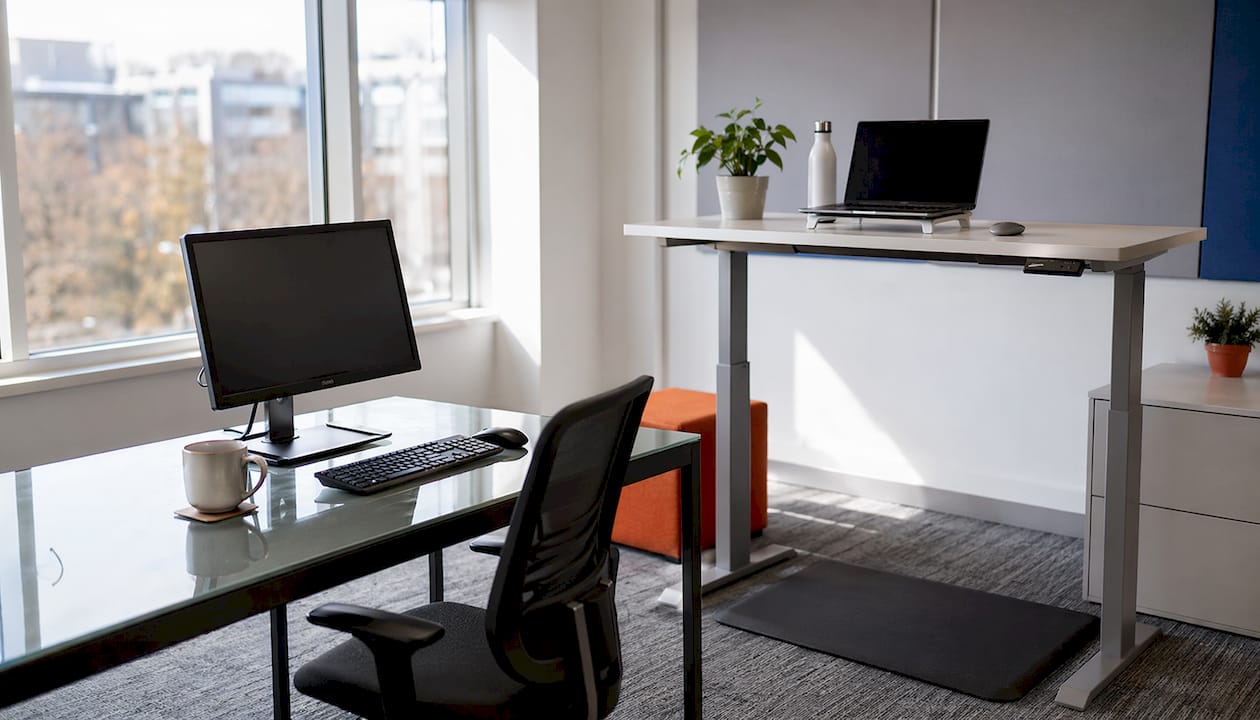
Pro Tip: Choose the workstation type based on your office culture first, not the technology. A treadmill desk in a quiet, focused environment may cause more disruption than benefit. Sit-stand desks suit the widest range of office settings.
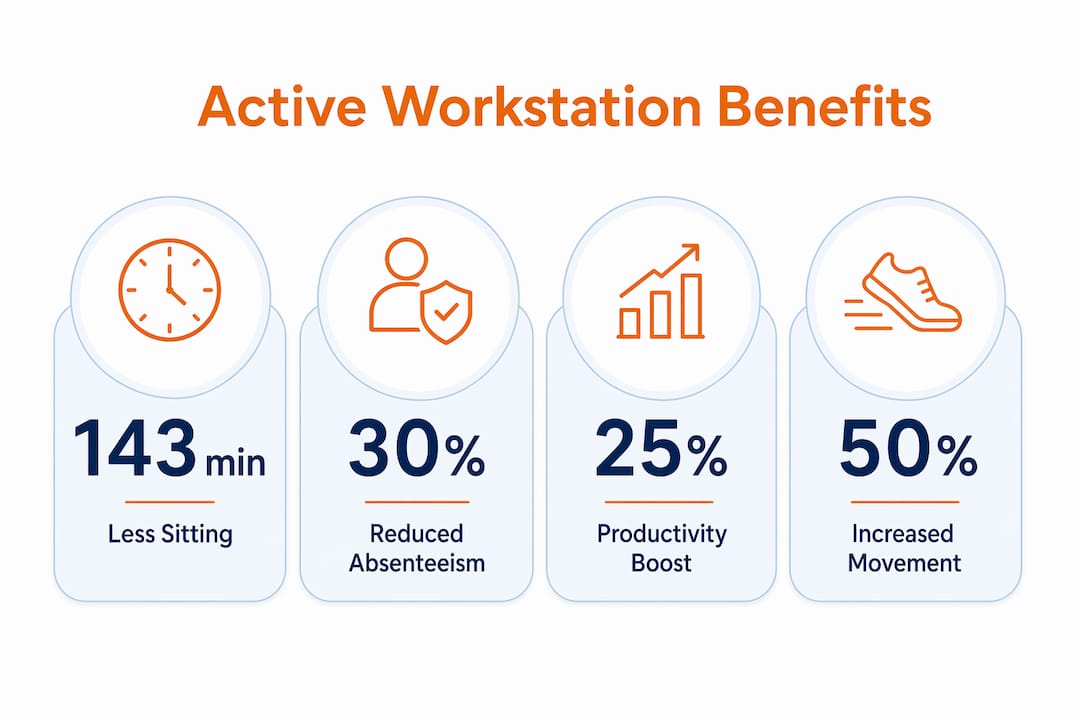
The health case for active workstations is well supported by research. Sit-stand desks reduce sitting time by up to 143 minutes per day in pilot studies. That is a substantial shift in daily behaviour achieved without asking employees to leave their desks or change their working patterns significantly.
The Mayo Clinic recommends keeping sitting time under three to four hours daily as a practical and effective goal for reducing the health risks associated with sedentary work. Most UK office workers far exceed that threshold without intervention. Active workstations make the target achievable within a normal working day.
Key health benefits for employees include:
For employers, the benefits translate into reduced absenteeism, lower presenteeism, and stronger staff retention. These are measurable outcomes that justify the capital investment in ergonomic furniture.
Productivity is a common concern when office managers consider active workstations. The evidence is reassuring. Sit-stand workstations show no detrimental effect on productivity. Treadmill and cycling desks may cause a small initial dip in performance as employees adjust to the motion, but this resolves with familiarity. The broader picture is that productivity is generally maintained or improved once employees adapt.
Physical activity at work does not require constant motion. Even standing intermittently increases spontaneous movement and breaks up sedentary time effectively. This is an important point for office managers who worry that active workstations demand constant effort from employees. The bar is lower than most assume.
A successful active workstation setup starts with an honest assessment of your office space and your team’s working patterns. Rushing straight to a furniture purchase without this step is the most common reason implementations fail.
Pro Tip: Avoid the trap of buying active workstations and leaving adoption to chance. Assign a wellness champion within each team to model the behaviour and encourage consistent use. Cultural buy-in drives results far more reliably than the furniture specification alone.
Ergonomic accessories matter as much as the desk itself. Anti-fatigue mats reduce discomfort during standing periods. Monitor arms maintain correct screen height across sitting and standing positions. Cable management keeps the workspace tidy as the desk surface moves. For remote or garden office setups, the principles of designing for productivity apply equally to active workstation integration.
These two terms are often used interchangeably, but they describe different things. An active workstation is a desk-level setup. An active workspace refers to the broader office environment, including layout, culture, and organisational policies that support movement throughout the day.
The distinction matters because buying a sit-stand desk does not automatically create an active workspace. An active workspace requires:
An active workstation is the most direct and measurable intervention available to an office manager. An active workspace is the environment that makes that intervention stick. Intentional design integrating behavioural nudges and culture shifts is what separates offices where active workstations are used daily from those where they become expensive coat hangers.
The most effective approach combines both. Invest in the furniture, then build the culture around it. Without the cultural layer, even the best sit-stand desk will default to its lowest setting within a fortnight.
Active workstations reduce sedentary time, protect employee health, and maintain productivity when implemented with clear ergonomic guidance and cultural support.
| Point | Details |
|---|---|
| Active workstation definition | A desk-level setup designed to integrate movement into standard office tasks during the working day. |
| Sitting time reduction | Sit-stand desks can reduce daily sitting by up to 143 minutes, supporting the goal of under four hours seated per day. |
| Productivity impact | Sit-stand desks show no productivity loss; treadmill desks require a short adaptation period before performance stabilises. |
| Long-term success factor | Multilevel interventions combining furniture, training, and culture sustain sitting reductions for up to 24 months. |
| Workstation vs workspace | An active workstation is the furniture; an active workspace is the broader environment and culture that makes it effective. |
The most consistent pattern I see across UK office fit-outs is this: the businesses that get the most from active workstations are not the ones that spent the most. They are the ones that thought hardest about why they were buying them.
A sit-stand desk installed without any guidance, training, or cultural reinforcement will be used in its lowest position within weeks. I have seen it happen repeatedly. The furniture is not the problem. The absence of intention is.
The offices that sustain genuine behaviour change treat the desk as one part of a wider commitment to employee wellbeing. They run short training sessions. They appoint wellness leads. They make standing during a catch-up call feel normal rather than conspicuous. These are not expensive interventions. They cost time and leadership attention, not budget.
My honest recommendation to any office manager considering active workstations is to start with a pilot, measure the results honestly, and build the cultural scaffolding before scaling. The benefits of standing desks are real and well evidenced. Realising them takes more than a purchase order.
— Furniture
Furnitureforbusiness supplies height-adjustable desks, ergonomic seating, and office accessories to businesses across the UK, with free delivery to the mainland.

The office desks range includes sit-stand models suited to open-plan offices, individual workstations, and hybrid working environments. Pair a height-adjustable desk with the right ergonomic office chair and the correct desk accessories to complete a properly specified active workstation setup. Furnitureforbusiness works with office managers and procurement teams sourcing furniture for teams of five to five hundred, with bulk order pricing and straightforward returns.
An active workstation is a desk setup that encourages movement during the working day, typically through height adjustment, walking, or cycling. The most common example is a sit-stand desk.
Research shows sit-stand desks can reduce daily sitting time by up to 143 minutes in the first week of use. Sustained reductions are achievable with multilevel workplace support over 24 months.
Sit-stand desks show no detrimental effect on productivity. Treadmill and cycling desks may cause a small initial dip as employees adapt, but performance typically stabilises with regular use.
The Mayo Clinic recommends keeping total sitting time under three to four hours daily. Alternating between sitting and standing throughout the day, rather than standing continuously, produces the best outcomes.
An active workstation is the desk-level furniture and equipment. An active workspace is the broader office environment, including layout, culture, and policies, that supports movement across the whole working day.

Phone: 0330 043 4114
VAT no. GB 991 8681 60
Company no. 07250570